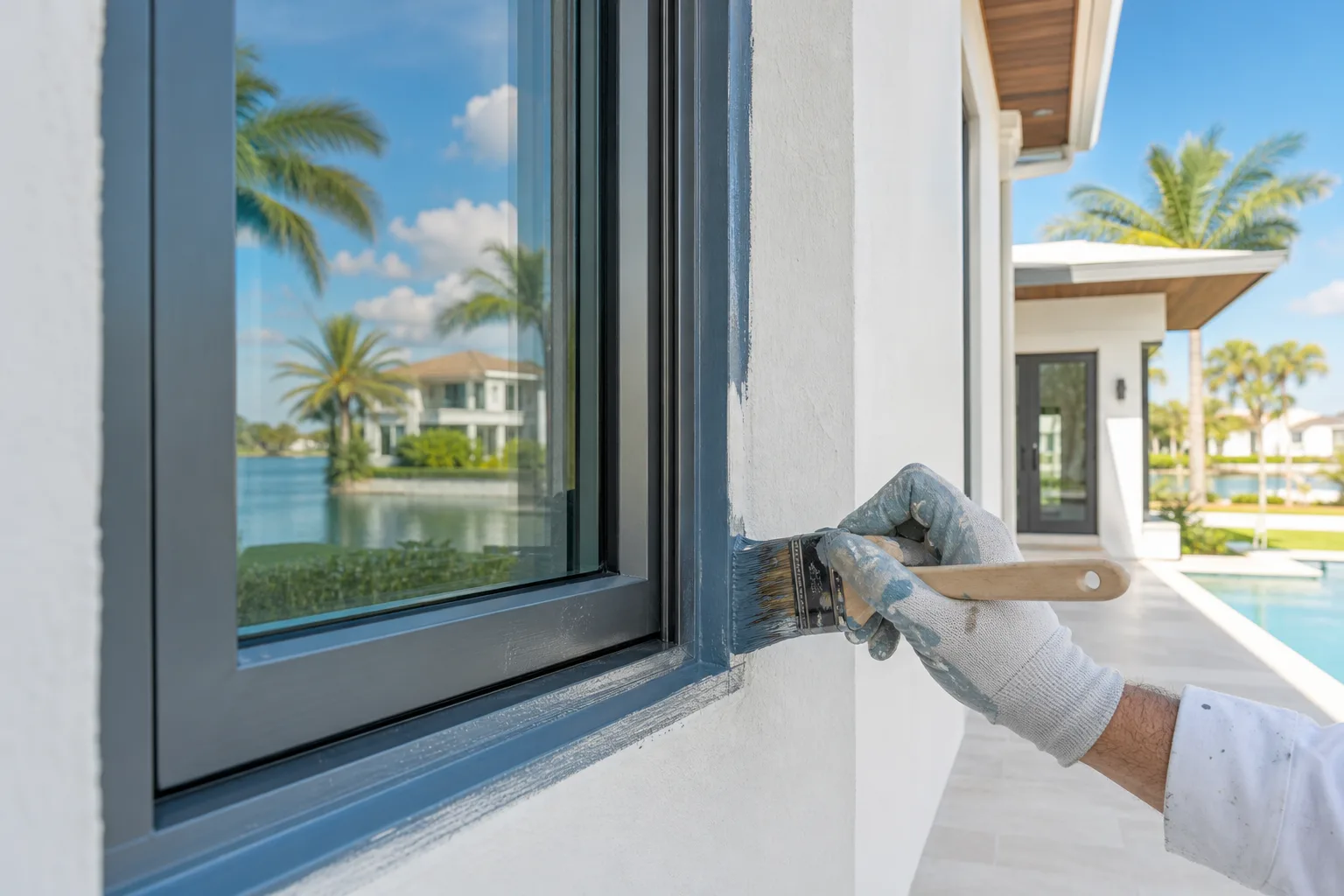
TL;DR: Most impact window manufacturer warranties contain finish and coating exclusions. Applying paint or a third-party coating to the exterior frame can void the finish warranty, and in some cases the structural or hardware warranty too. Read your specific warranty document and contact the manufacturer before applying any coating.
What Happened
Homeowners in South Florida frequently want to repaint or touch up exterior window frames to match a new exterior color, cover chalking, or refresh a faded finish. The question of whether that affects the warranty comes up during home improvement projects, re-roofing, and exterior repaints.
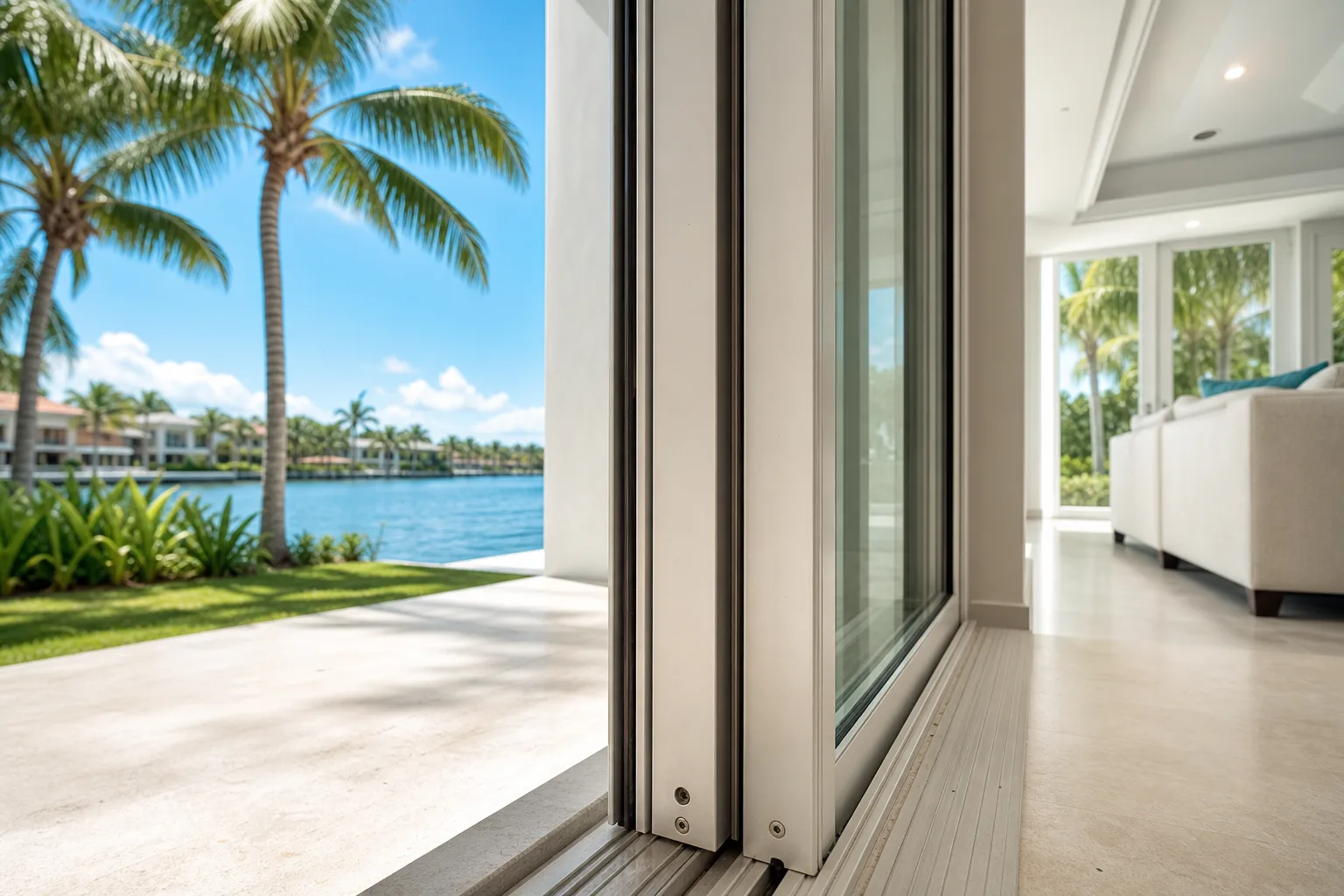
Manufacturers of aluminum-framed impact windows, including brands used across Palm Beach, Broward, and Miami-Dade counties, typically apply a factory finish, most commonly an anodized or liquid paint finish rated to AAMA 2604 or AAMA 2605 standards. That factory finish is what the finish warranty covers.
Applying a field-applied coating over that finish changes the surface in ways the manufacturer did not test, approve, or warrant.
Why It Matters
Impact window warranties are not a single document. Most products carry separate coverage periods for different components:
- Glass and laminate: Covers delamination, seal failure, and similar defects in the insulated glass unit.
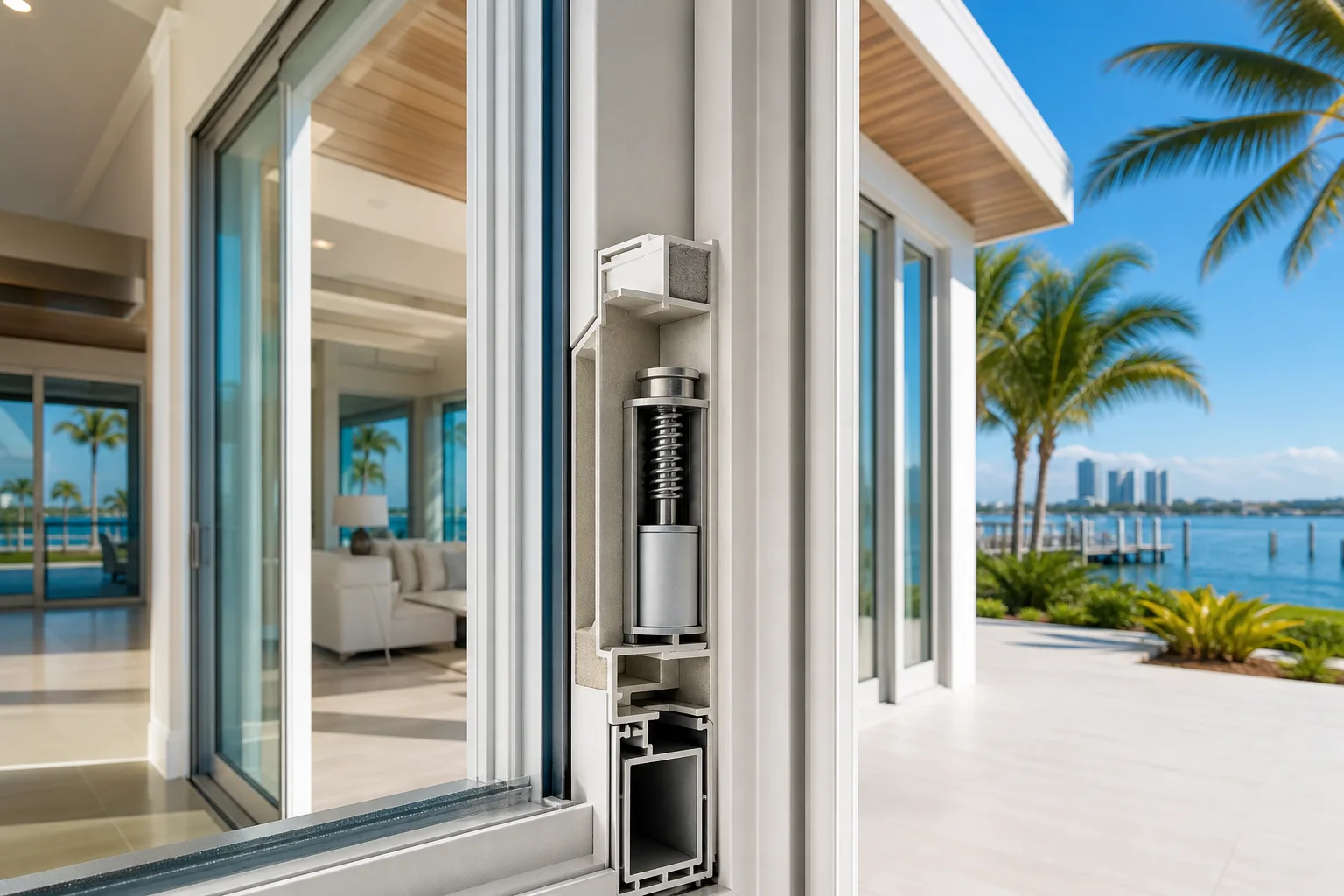
- Hardware: Covers locks, hinges, and operators under normal use.
- Finish: Covers the factory-applied frame coating against chalking, fading, and adhesion failure within defined limits.
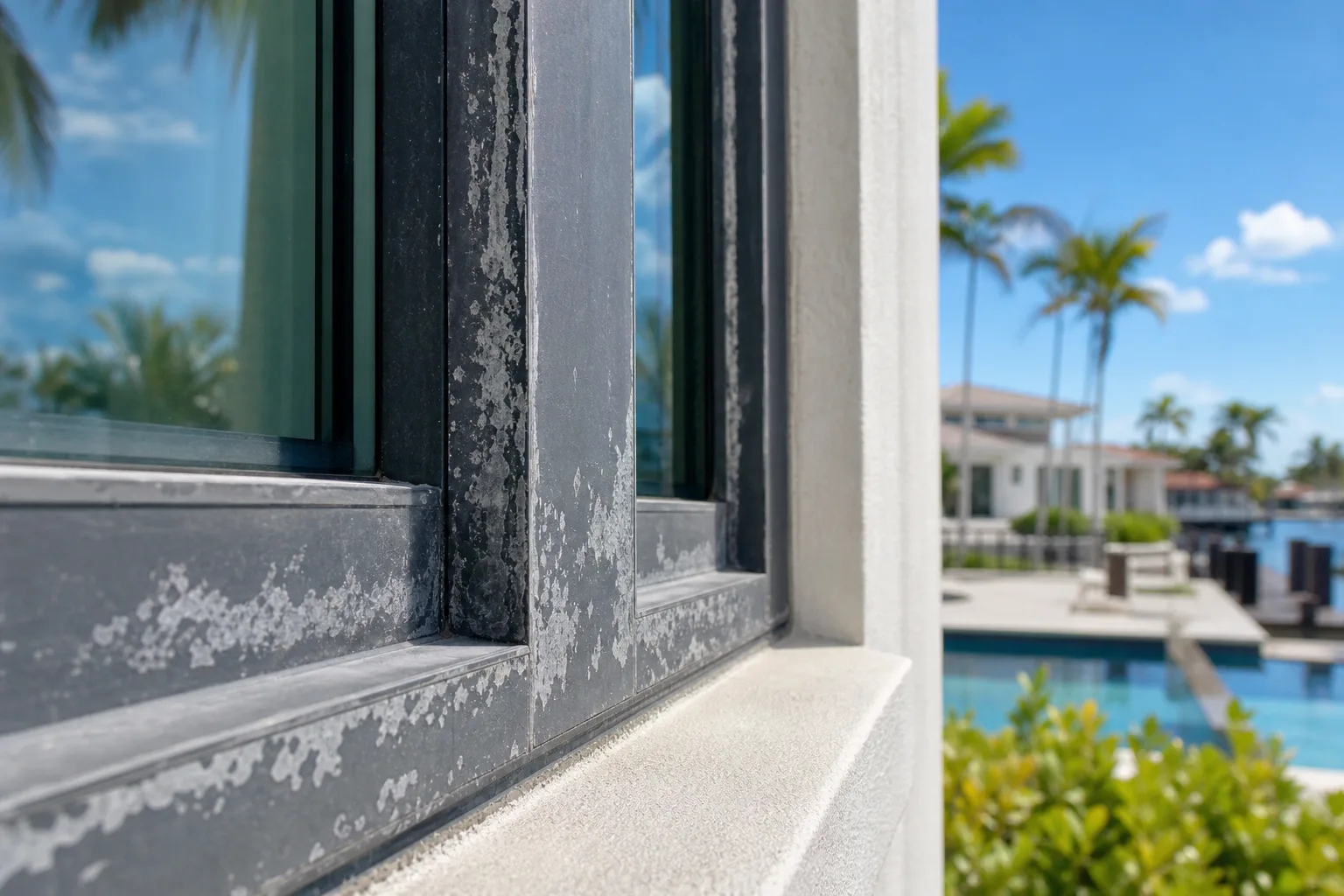
The finish warranty is the one most directly at risk when you paint an exterior frame. If adhesion fails or the frame corrodes under a field-applied coating, the manufacturer can argue the failure resulted from the third-party product, not a defect in their finish. That argument is usually supported by the exclusion language already written into the warranty.
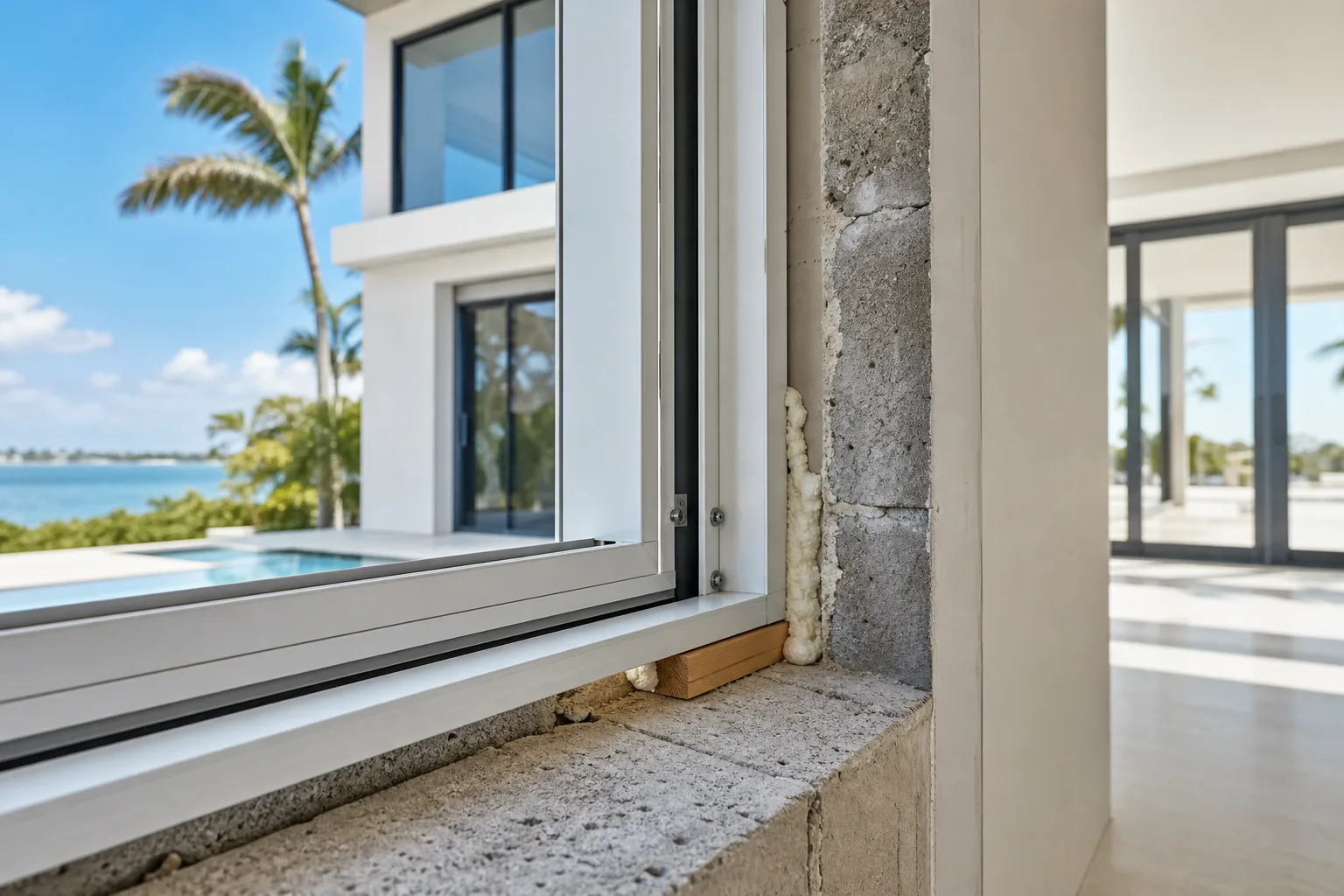
Some manufacturers go further. If a field coating traps moisture against the frame or interferes with weep and drainage function, any resulting structural or hardware failure could also be excluded, depending on how the warranty's exclusion language is written.
The aluminum frame corrosion variable is specific to South Florida. Coastal salt air accelerates corrosion in ways that do not apply in inland markets. A field-applied coating that works fine in a central Florida neighborhood can trap chlorides against an aluminum frame in a Boca Raton or Dania Beach installation and produce galvanic corrosion the original warranty was not written to cover. See aluminum vs. vinyl frame trade-offs for South Florida coastal conditions for more context on how frame material affects long-term performance near salt air.
Compare impact-window options for your project. Request a free estimate
What We Don't Know Yet
There is no single universal rule across manufacturers. The following variables change the answer:
| Variable | Why It Matters |
|---|---|
| Manufacturer and product line | Each company writes its own warranty language. PGT, CGI, SIW, and ES products each have separate documents. |
| Warranty tier | A 10-year AAMA 2605 finish warranty may have different exclusion language than a 5-year AAMA 2604 finish warranty. |
| Type of coating applied | A breathable elastomeric paint behaves differently from a standard acrylic latex. Some manufacturers have approved specific coatings; most have not. |
| Application method | Brush or roller application near glazing lines introduces different risks than spray application with proper masking. |
| Age of the original finish | An older frame past its warranty period may have different practical considerations than a recently installed unit still under full coverage. |
Without reading the actual warranty document for your specific product, no general guidance can accurately tell you whether painting voids your coverage. Manufacturer customer service lines are the correct first stop. Some manufacturers will give written confirmation that a specific coating applied in a specific way does not affect warranty coverage. That written confirmation is worth getting before you proceed.
What to Do About It
Use this sequence before applying any coating to your impact window frames:
Locate your warranty documents. These should have been delivered with your window purchase or installation paperwork. If you do not have them, your installer may have copies, or you can request them directly from the manufacturer using your product model and series.
Read the finish and exclusion sections specifically. Look for language around "field-applied coatings," "third-party products," "maintenance modifications," and "alterations." These are the sections most likely to contain relevant exclusions.
Call or email the manufacturer before you proceed. Ask specifically whether the coating product you intend to use is compatible with their factory finish and whether applying it affects any portion of your warranty. Request the answer in writing.
Check whether your installer has guidance. A licensed contractor who installed your windows may have encountered this question before and can point you toward manufacturer contacts or known approved products.
Consider whether the goal can be achieved another way. If the aim is to address chalking or oxidation, some manufacturers sell touch-up products or recommend cleaning compounds that do not affect warranty coverage. If the frame finish has genuinely failed before the warranty period expired, that may be a warranty claim rather than a repainting project.
If your windows are approaching end-of-life and the finish has deteriorated significantly, that may be a signal to evaluate the frames overall. See 5 signs it may be time to replace your windows in Florida for a broader diagnostic.
For a new installation where finish longevity is a priority, raising the question of approved field coatings and warranty terms before signing a contract is reasonable. You can request an estimate and ask about warranty documentation as part of that process, or contact us with specific questions about products we install.
Compare impact-window options for your project.
Request a written estimate that identifies the quoted assembly, opening, design pressure, product approval, exposure, installation scope, and applicable project requirements.
Frequently asked questions
Does touching up a chip or scratch in the frame finish void the warranty?
Minor touch-up with a manufacturer-supplied touch-up product is generally treated differently than a full field-applied coating, but the distinction depends on your specific warranty language. Contact the manufacturer and ask whether their touch-up product is considered a warranty-safe repair before using any product not supplied by them.
If my window is out of warranty, can I paint the frame freely?
Once the warranty period has expired, painting the frame no longer creates a warranty conflict. However, compatibility between the coating and the factory finish still matters for practical reasons: poor adhesion, moisture trapping, and interference with weep drainage can cause frame problems regardless of warranty status.
Does a licensed installer have authority to approve a coating that the manufacturer has not approved?
No. Installer authorization does not override manufacturer warranty terms. The warranty is a document between the manufacturer and the product owner, and only the manufacturer can confirm whether a specific coating is covered or excluded under that document.
Can I ask about warranty terms before choosing a window product?
Yes, and it is reasonable to do so. Requesting the actual warranty document, not just a summary, before purchase lets you compare finish warranty periods, exclusion language, and approved maintenance products across different product lines.