
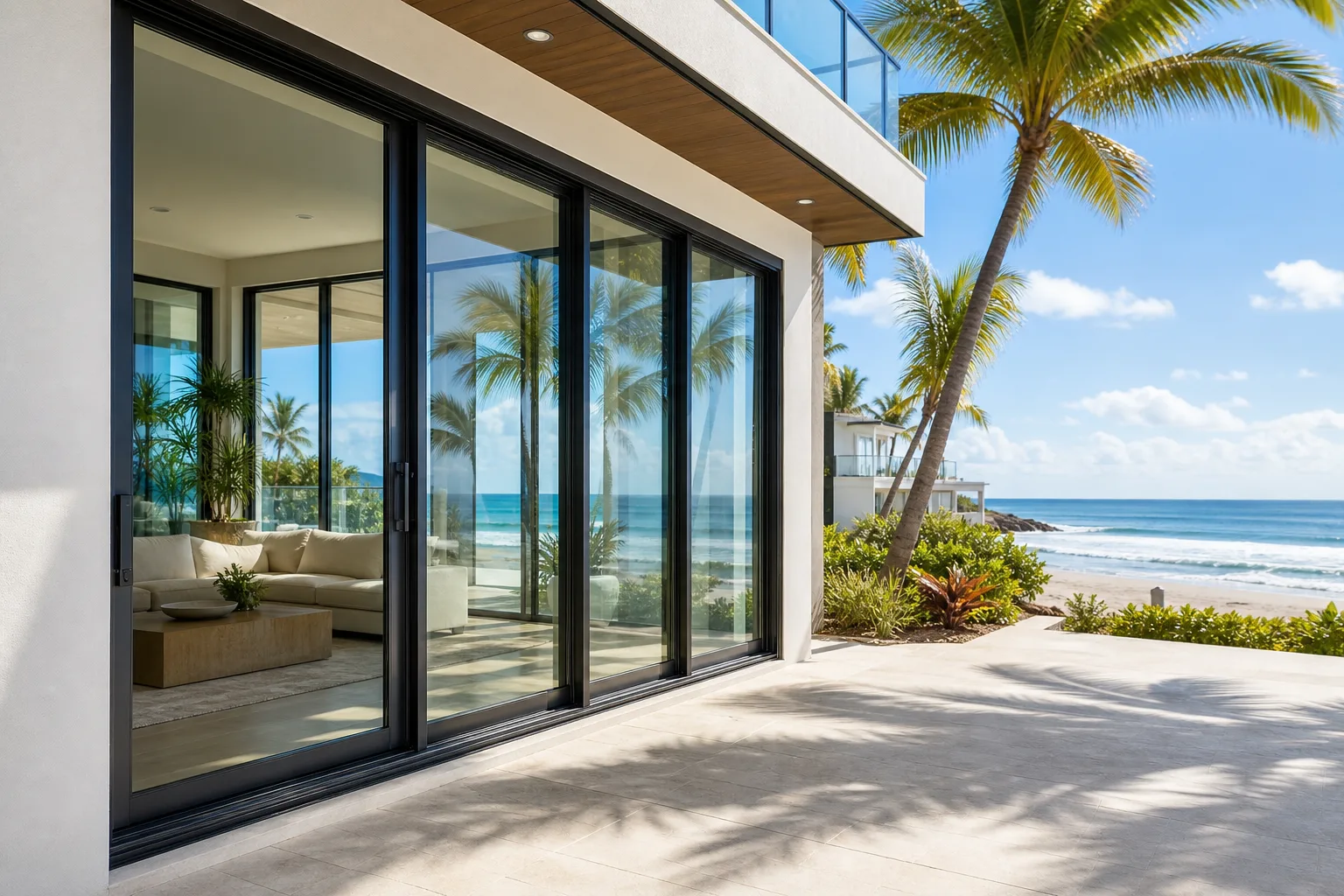
TL;DR: Aluminum window frames resist South Florida's salt air, heat cycling, and structural wind-load demands better than vinyl in most coastal applications. Vinyl can be appropriate in certain interior or lower-exposure settings, but aluminum is the dominant frame material in Florida impact window products for documented engineering reasons. Verify specific product performance details with the manufacturer's NOA and your contractor before purchasing.
What Happened
For decades, vinyl frames gained popularity in northern U.S. markets primarily because of their thermal insulation properties and lower upfront cost. Manufacturers marketed vinyl aggressively, and many homeowners assumed the same advantages would carry over to South Florida.
The reality is more complicated. South Florida's coastal environment combines sustained salt-laden humidity, intense UV radiation, and Florida Building Code wind-load requirements that place different stresses on window frames than most other U.S. climates do. Over time, contractors, engineers, and product manufacturers in this region have gravitated toward aluminum for most impact window applications, and the reasons are grounded in material science rather than preference.
Why It Matters
Salt Air and Corrosion Resistance
Vinyl itself does not corrode, but that is only part of the story. Vinyl frames still contain aluminum or steel reinforcing inserts in the structural sections that handle load transfer. Those inserts can corrode if the frame is not properly sealed, and the vinyl cladding can obscure early signs of internal deterioration.
Extruded aluminum frames used in Florida impact products are typically treated with anodizing or high-quality powder coating specifically rated for coastal environments. When that finish is maintained, aluminum resists salt-air corrosion effectively. The difference is that the structural member and the visible surface are the same material, so inspection is more straightforward.
Thermal Expansion and Dimensional Stability
Vinyl expands and contracts significantly with temperature swings. South Florida regularly sees surfaces heated well above ambient air temperature in direct sun, then cooled by afternoon thunderstorms. That repeated cycling stresses the joints, hardware anchors, and glazing seals in a vinyl frame over time.
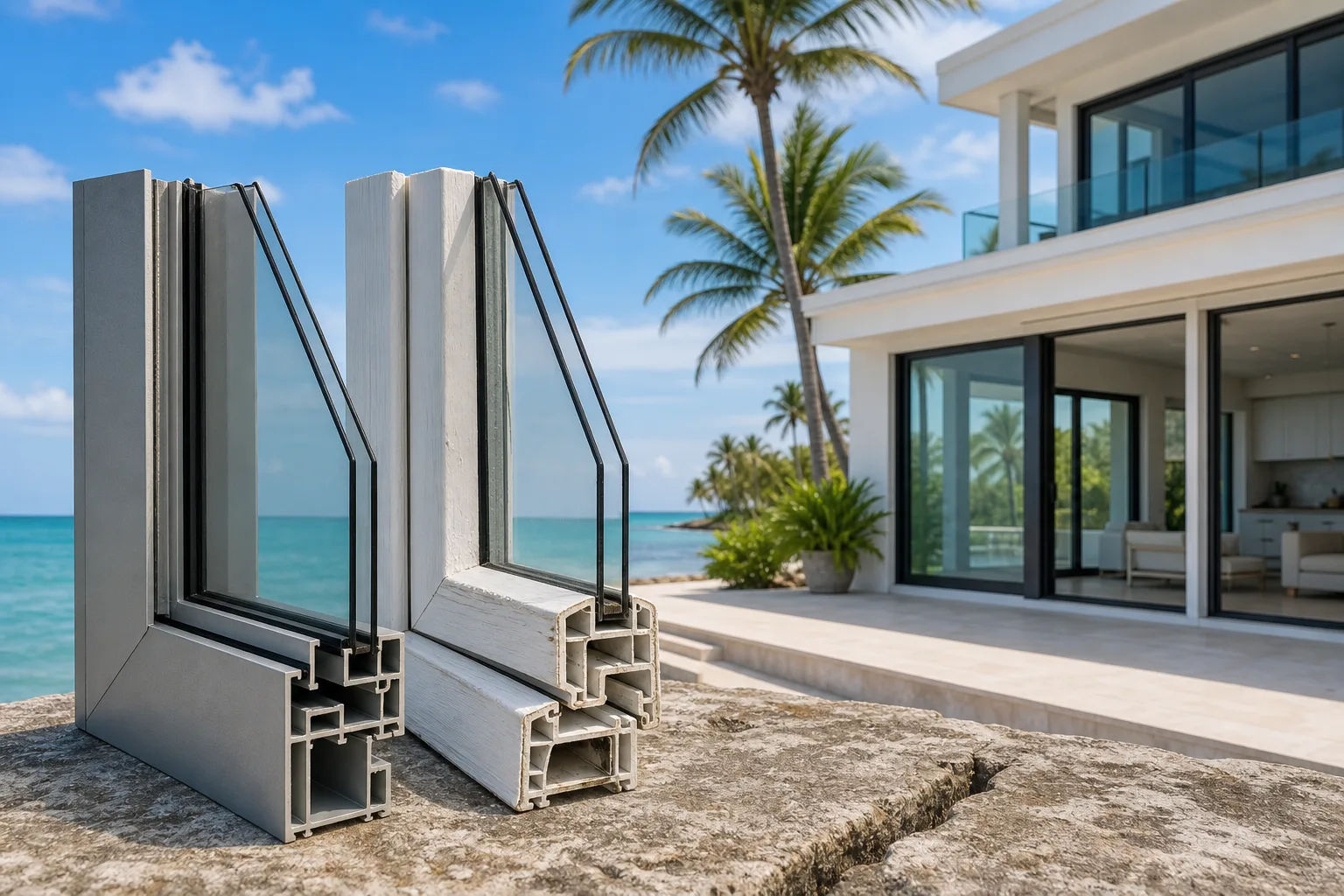
Aluminum expands with heat as well, but at a lower rate relative to the cross-sectional size of the extrusion. Aluminum impact frames are also engineered with thermal break designs that reduce heat transfer through the frame without relying on the base material to flex and absorb temperature movement.
Wind-Load and Structural Requirements
Florida Building Code wind-load requirements in Palm Beach, Broward, Miami-Dade, and neighboring counties are among the most demanding in the country. Impact windows must carry a Notice of Acceptance (NOA) from Miami-Dade County or a Florida Product Approval documenting tested performance at specific design pressures.
Aluminum extrusions can be engineered to achieve high design pressure ratings in narrower profiles, which matters both for structural performance and for preserving sightlines. Vinyl frames typically require larger cross-sections to achieve equivalent stiffness, and at the highest pressure ratings required for upper floors or High-Velocity Hurricane Zone (HVHZ) locations, the aluminum extrusion is the more common solution in tested and approved products.
For high-rise or above-grade installations with elevated pressure requirements, the structural case for aluminum becomes even more pronounced. See balcony and high-rise impact window considerations for more on the pressure and sway factors involved.
UV Degradation
South Florida's UV index is among the highest measured anywhere in the continental United States, according to EPA UVIndex data. Prolonged UV exposure causes vinyl to become brittle and, in lower-quality formulations, to fade or chalk. Premium vinyl manufacturers add UV stabilizers, but aluminum with a factory powder coat or anodized finish is generally more resistant to surface degradation over a 20-plus-year product lifespan.
Where Vinyl Can Still Be Appropriate
Vinyl is not universally wrong for Florida. Interior applications, low-exposure openings in protected areas, and projects where thermal performance takes priority over peak wind-load rating may still be good candidates for vinyl products. The key is verifying that the specific product carries the required Florida Product Approval or NOA for the actual design pressures at that location, not assuming that a vinyl product that performed well in another climate will meet HVHZ or high-pressure requirements here.
Review opening-protection options before storm season. Request a free estimate
What We Don't Know Yet
Manufacturers continue to improve both aluminum thermal break technology and high-performance vinyl formulations. A product approved and installed in 2025 may perform differently over 20 years than products installed a decade ago, and long-term field data for the newest formulations is still accumulating.
Finish quality varies significantly between manufacturers, and a poorly anodized or inadequately powder-coated aluminum frame can fail prematurely in a marine environment. The frame material alone does not determine outcome. Finish specification, installation quality, sealant maintenance, and site exposure all contribute. Product-specific warranty terms, finish ratings, and maintenance requirements should be reviewed before selecting any frame material. Window Guys of Florida works with PGT, CGI, SIW, and ES products, but specific product approval and performance details should be confirmed for any given project scope.
Insurance and code requirements can also shift. Homeowners should verify current Florida Building Code requirements and insurer documentation needs with their contractor and insurer at the time of the project.
What to Do About It
If you are replacing windows or doors in a South Florida coastal location, here is a practical decision sequence:
- Identify your wind zone and required design pressure. Your contractor pulls this from the Florida Building Code based on your address, floor height, and opening location. This single step often narrows frame material options significantly.
- Ask for the Florida Product Approval or Miami-Dade NOA for any product under consideration. Confirm that the approval covers your specific design pressure, not just a lower-pressure variant of the same product line.
- Review the frame finish specification for coastal environments. Ask whether the finish is anodized or powder-coated, what the warranty covers for finish degradation, and what maintenance the manufacturer recommends.
- Compare profiles. If thermal performance matters to you, ask specifically about thermal break design in aluminum options rather than assuming vinyl wins on insulation.
- Ask about long-term maintenance differences at your specific site exposure.
For residential impact window replacement, see hurricane impact windows or window replacement services. For doors, see hurricane impact doors. Commercial projects with higher design pressure requirements are covered under commercial services.
If you are ready to compare specific products for your address and opening conditions, request an estimate to get project-specific documentation reviewed.
Review opening-protection options before storm season.
The performance and responsibilities for permits, engineering, documentation, installation, and inspections depend on the exact assembly and written project scope.
Frequently asked questions
Do aluminum frames corrode in South Florida's salt air?
Aluminum frames can corrode if the protective finish is damaged or poorly applied. Frames with quality anodizing or powder coating rated for coastal environments hold up well, but inspecting the finish condition periodically and addressing any chips or scratches early is recommended. The specific finish warranty and maintenance schedule should be confirmed with the manufacturer.
Are aluminum frames more expensive than vinyl for impact windows in Florida?
Aluminum impact frames typically carry a higher material cost than standard vinyl, but price varies significantly by product line, design pressure rating, and project scope. The relevant comparison in Florida is usually between different aluminum product tiers rather than aluminum versus vinyl, since vinyl options at the highest required design pressures are limited. Get project-specific quotes to compare actual costs.
Can vinyl impact windows meet Miami-Dade HVHZ requirements?
Some vinyl products carry Miami-Dade NOA approvals, but the range of tested and approved vinyl options at the highest design pressure ratings required in HVHZ locations is narrower than aluminum. Always verify the specific NOA or Florida Product Approval for the exact product and pressure rating before purchasing, rather than relying on a general product line claim.
How does frame material affect impact window energy efficiency in South Florida?
Aluminum conducts heat more readily than vinyl, but modern aluminum impact frames use thermal break technology, a non-conductive separator within the frame profile, to reduce heat transfer. In South Florida's cooling-dominated climate, solar heat gain through the glass is typically a larger factor in energy performance than frame conduction, so the glass package specification often matters more than the frame material alone.