TL;DR
Impact glass reduces noise mainly through added mass, a laminated interlayer, and in some configurations a wider airspace between panes, not through any special soundproofing coating. In a coastal neighborhood, that combination typically softens traffic hum, boat engines, and airport flyover noise more than it eliminates deep, low-frequency rumble. The amount of reduction depends on glass thickness, frame installation quality, and what's actually causing the noise outside.
What happened
South Florida homeowners near coastal roads, marinas, and flight paths increasingly ask about impact windows specifically for noise control, not just storm protection. This shift makes sense given how many coastal and near-airport neighborhoods across Palm Beach, Broward, and Miami-Dade counties deal with a mix of traffic, marine, and aviation noise depending on wind direction and time of day.
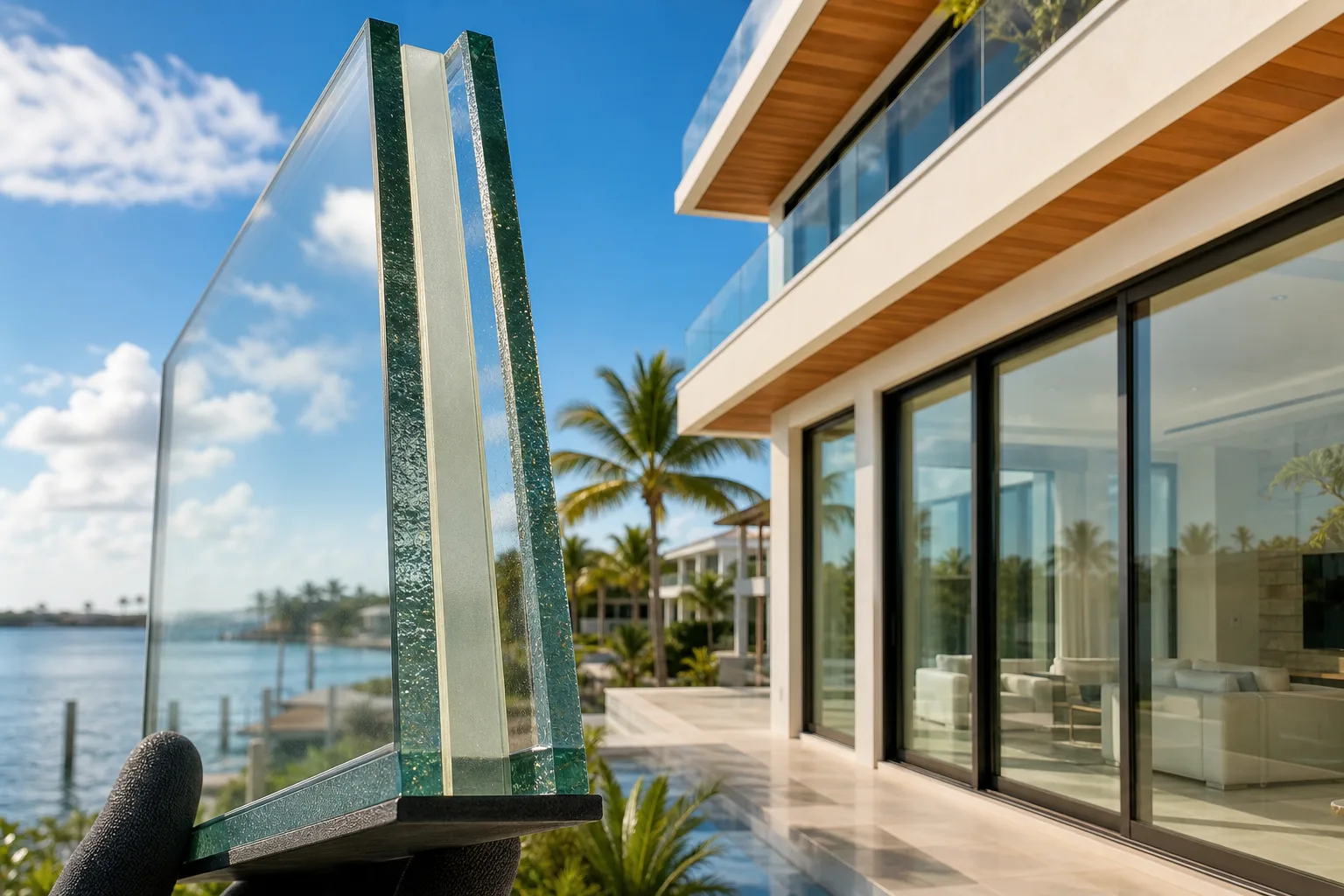
The short version of why impact glass helps: standard single-pane glass is thin and uniform, so it vibrates easily and transmits sound efficiently. Impact-rated glass used for Florida Building Code compliance is laminated, meaning two glass layers are bonded with an interlayer (commonly PVB or a similar material). That interlayer dampens vibration instead of just passing it through. Thicker overall glass makeups, which are common in impact products built to meet local pressure and wind-borne debris requirements, also add mass, and mass resists sound transmission.
Compare impact-window options for your project. Request a free estimate
Why it matters
Sound transmission through a window depends on a few measurable factors, and understanding them helps you judge whether a given window will actually solve your noise problem.
Mass: Heavier, thicker glass is harder to vibrate. Impact glass is almost always thicker than the single-pane glass it replaces, so there's an inherent noise benefit even before considering lamination.
Damping: The laminated interlayer between the two glass layers absorbs vibrational energy rather than transmitting it cleanly from outside pane to inside pane. This is the main reason laminated glass outperforms non-laminated glass of similar thickness for sound control.
Airspace: In insulated glass impact units with two separate panes and a gap between them, a wider airspace generally improves sound dampening, up to a point. Narrow airspaces can actually create resonance at certain frequencies, so airspace design matters as much as its presence.
Frame and seal quality: Glass gets most of the attention, but gaps around a poorly installed frame, degraded weatherstripping, or an old frame that's warped from humidity cycling will leak sound regardless of how good the glass itself is. This is one of the more overlooked variables homeowners don't ask about when comparing quotes.
Frequency of the noise source: Impact glass tends to perform noticeably better against mid and high-frequency sounds like tire noise, voices, and most aircraft noise than against very low-frequency sources like idling diesel engines, bass-heavy music, or certain boat engines. Low frequencies are physically harder for any glass assembly to block because of how sound waves interact with mass and panel size.
For homeowners near airport flight paths specifically, these distinctions matter even more because aircraft noise profiles vary by aircraft type and altitude. If airport noise is your main concern, see our breakdown on airport noise and hurricane protection impact windows near PBI and FLL flight paths for more on that specific scenario.
What we don't know yet
No manufacturer or contractor can promise an exact decibel reduction for your specific home without knowing your current window condition, the glass makeup being proposed, the frame type, and the dominant noise source in your location. Sound Transmission Class (STC) ratings published by manufacturers are measured under laboratory conditions and give a useful comparison between products, but real-world results vary with installation quality, wall construction, and even landscaping between your home and the noise source.
It's also worth being honest that
Compare impact-window options for your project.
Request a written estimate that identifies the quoted assembly, opening, design pressure, product approval, exposure, installation scope, and applicable project requirements.
Frequently asked questions
Will impact windows make my house completely silent?
No. Impact glass reduces noticeable noise but does not create a soundproof room. Low-frequency sources like idling engines or heavy bass still transmit more than higher-pitched sounds like traffic or voices.
Does impact glass need a special noise-reduction coating to work?
No. The noise benefit mainly comes from the laminated interlayer and added glass mass required for impact resistance, not from a separate acoustic coating. Some manufacturers offer glass makeups optimized further for sound, which is a separate conversation from storm protection.
Is impact glass or shutters better for blocking noise?
Shutters are a storm protection product you deploy before a storm, not a daily noise barrier, since they're not in place most of the year. Impact glass stays installed year-round, so it's the relevant comparison for everyday noise concerns, not shutters or film.
Can a poor installation cancel out the noise benefits of impact glass?
Yes. Gaps around the frame, worn weatherstripping, or an improperly sealed installation can let sound leak in regardless of glass quality, which is why installation details matter as much as the glass spec itself.