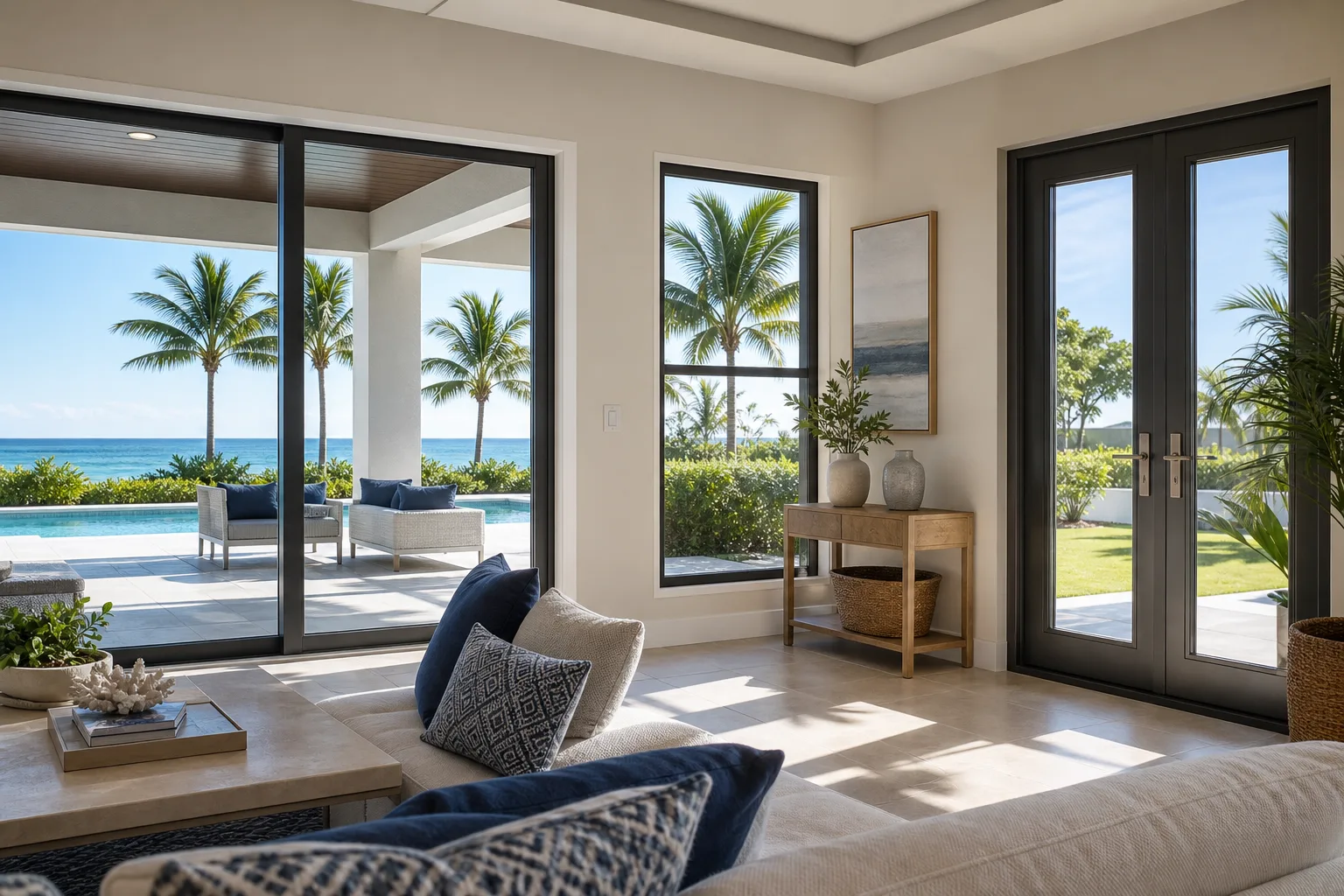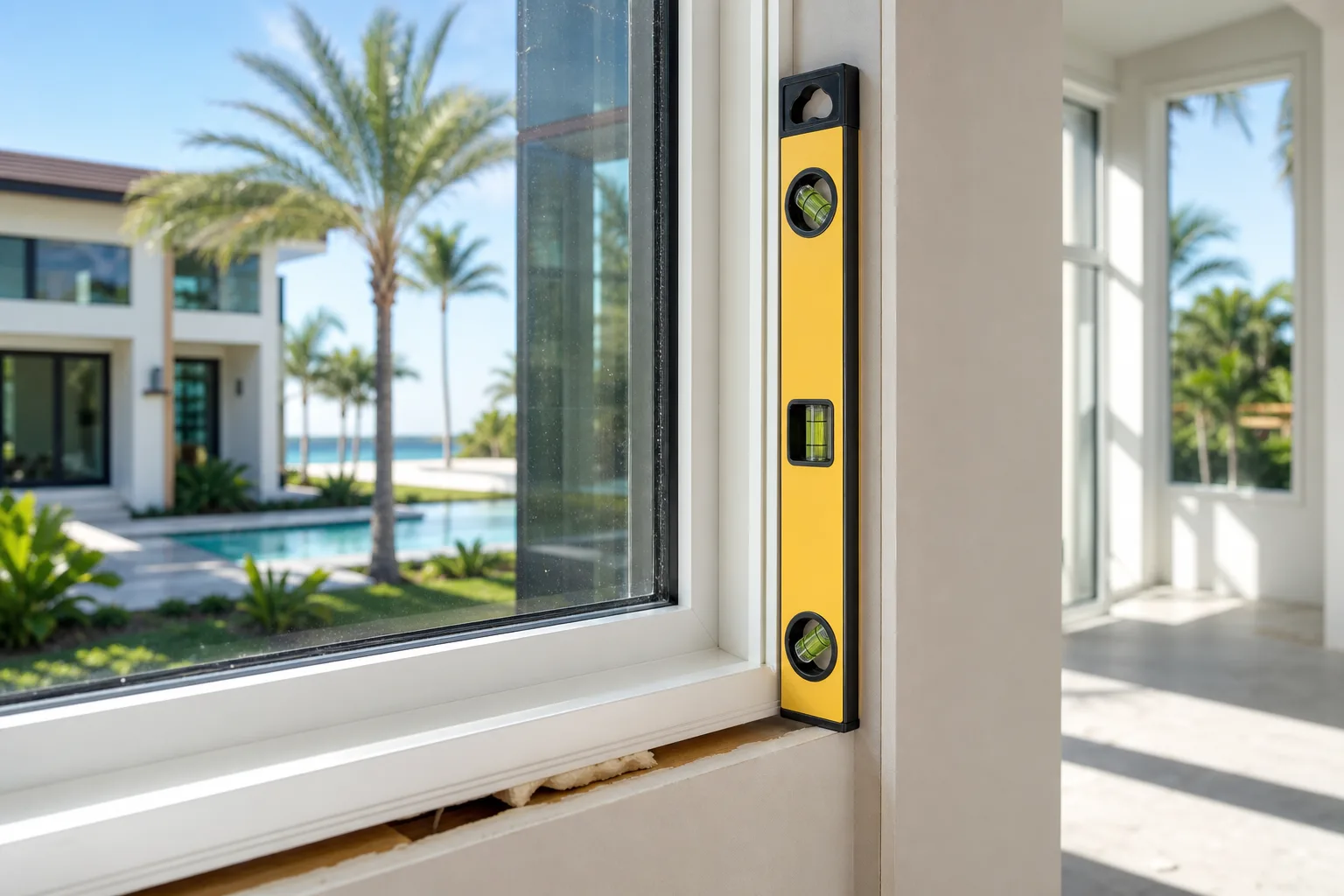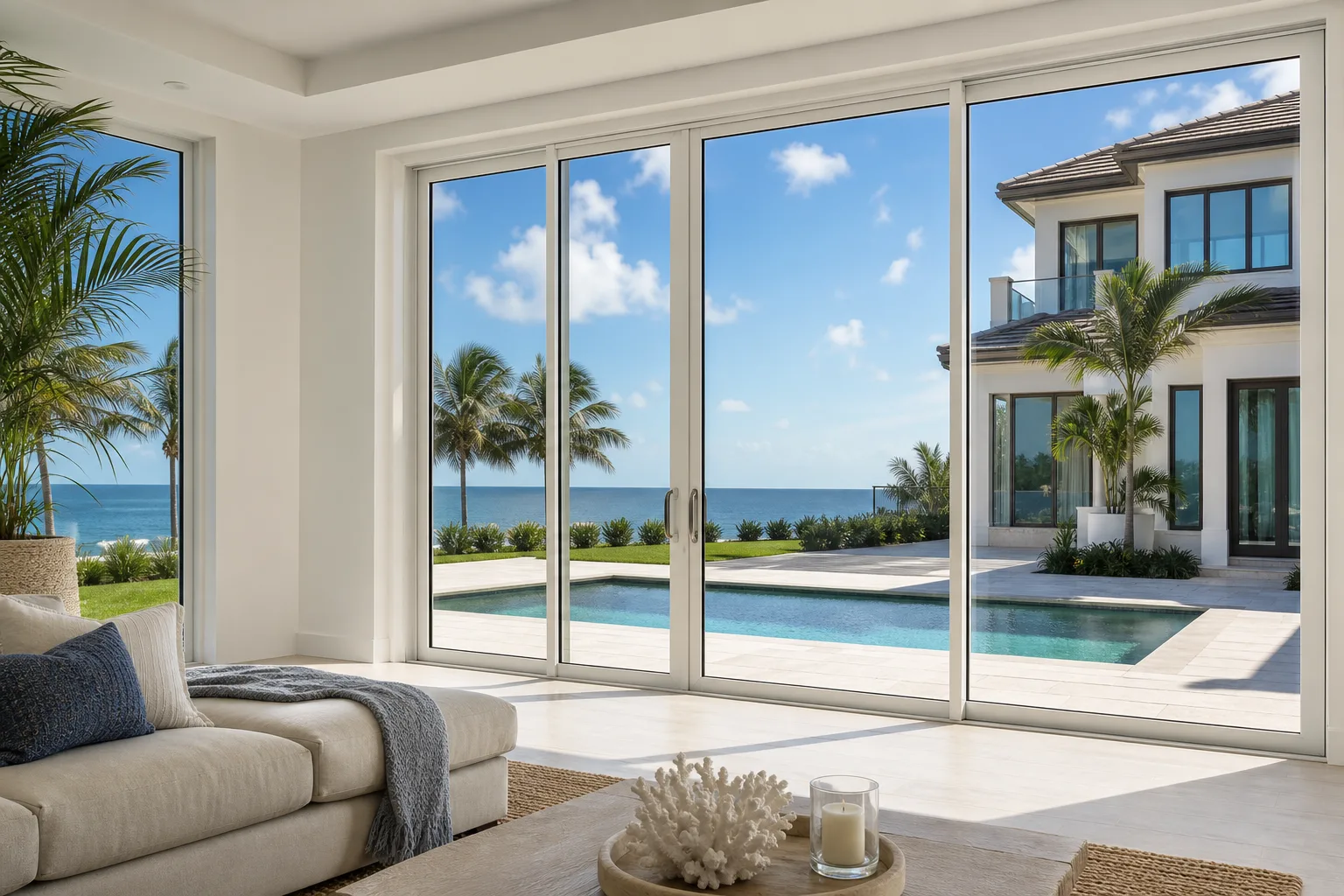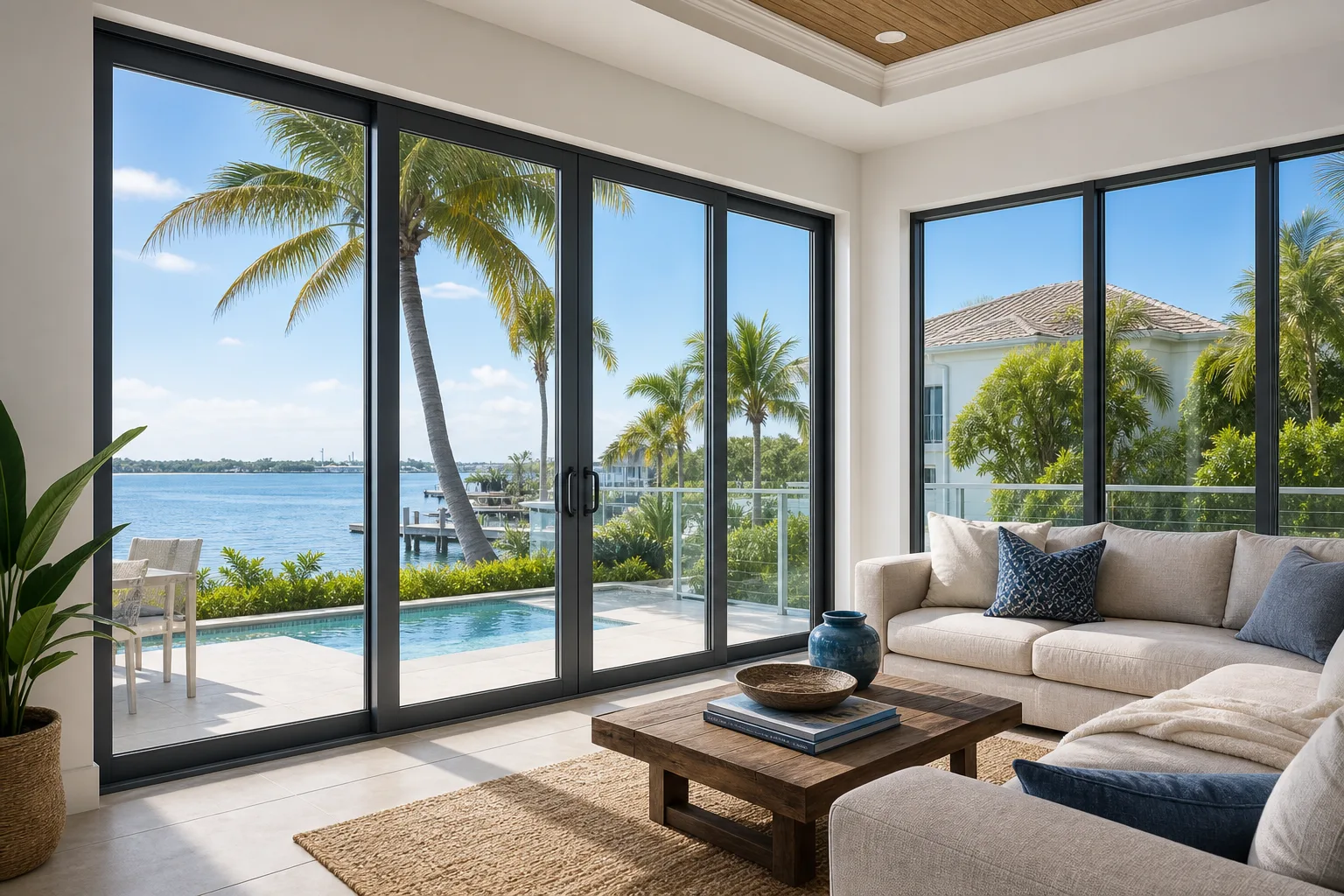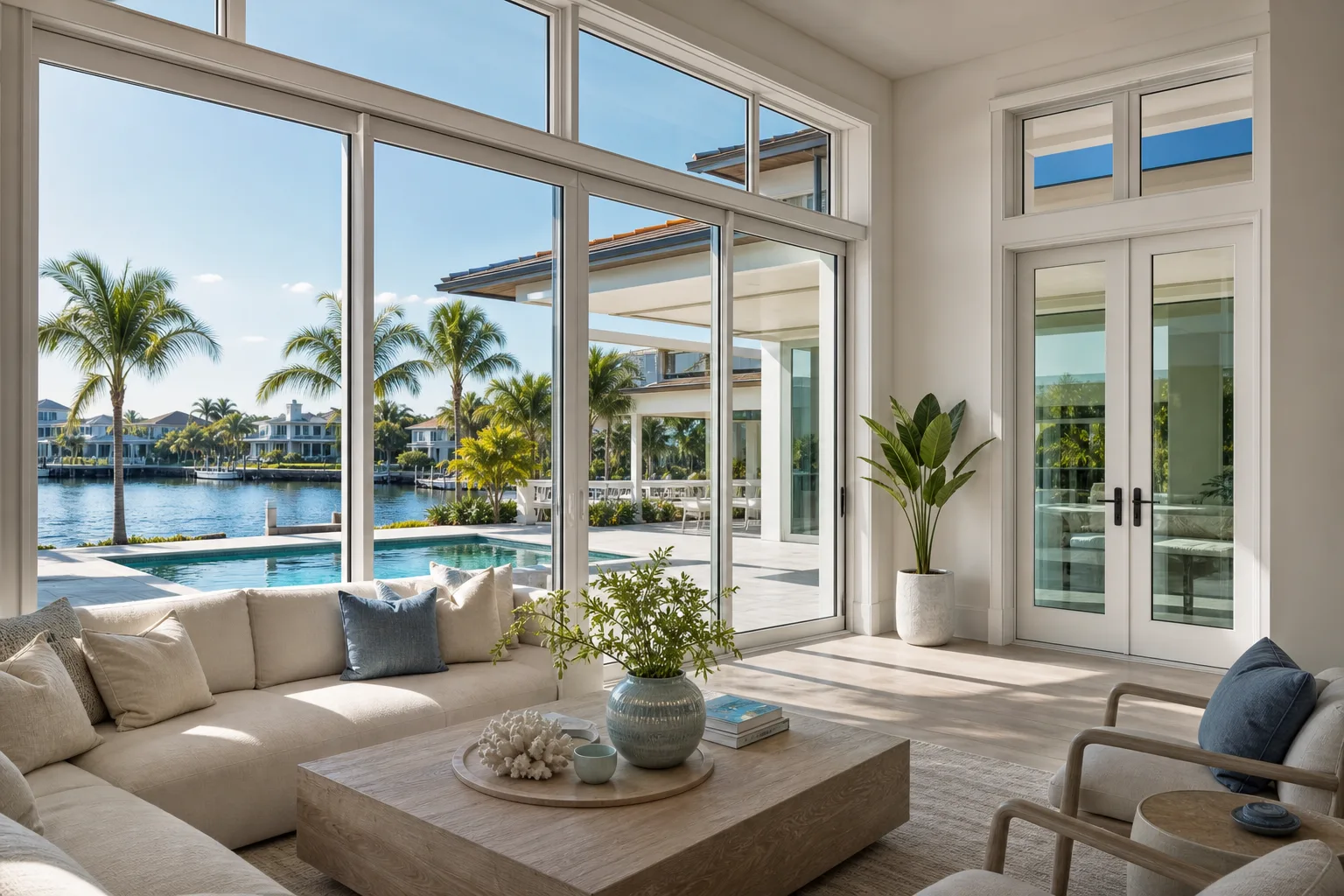
TL;DR: Impact glass transmits slightly less visible light than standard single-pane glass, but the difference is often minor with current laminate technology. UV blocking increases significantly. Glare can go up or down depending on the glass package you choose. Tint and coating options let you tune the result.
What Happened
When Florida homeowners replace standard windows with hurricane impact windows, the glass itself changes in a fundamental way. Standard residential glass is typically a single lite of annealed or tempered glass. Impact glass is a laminated assembly: two lites bonded with one or more interlayers of polyvinyl butyral (PVB) or ionoplast. That laminate layer is what keeps the glass from scattering during a wind event.
The interlayer and the additional glass lite both absorb and scatter a small fraction of incoming light. Modern laminates have improved substantially since earlier generations, but the physics still applies: more material in the light path means slightly less visible light transmission (VLT).
Products from manufacturers such as PGT, CGI, SIW, and ES are available in the South Florida market and typically publish performance data for each glass option including VLT percentages, solar heat gain coefficients (SHGC), and UV rejection rates. Those published numbers are the reliable reference, not generalizations.
Why It Matters
Visible Light Transmission
A clear impact laminate typically transmits somewhere in the high 70s to low 80s percent of visible light, compared to roughly 88 to 90 percent for a single-pane clear annealed lite. That gap is real but usually not dramatic in a lived-in room. Rooms that already receive generous daylight tend to feel similar after installation. Rooms that are darker by orientation or shading may show a more noticeable shift.
Tinted impact glass drops VLT further, often into the 50s or 60s depending on the tint density. Bronze, gray, and blue-green tints each shift color temperature as well as brightness. If you are sensitive to color rendering, request glass samples or ask your contractor to show the published spectral data before you commit.
UV Rejection
This is where the change is most pronounced and, for most homeowners, genuinely useful. The PVB interlayer blocks the majority of ultraviolet radiation. Many manufacturers' data sheets cite 99 percent or higher UV-A and UV-B rejection, but this figure varies by product and interlayer type , always verify the specific UV rejection figure on the product data sheet for whatever glass package you select before drawing conclusions. Standard annealed glass blocks UV-B reasonably well but allows significant UV-A transmission.
The practical result: fabrics, flooring, and artwork near windows fade more slowly after the switch. This follows directly from the laminate's optical properties, though the degree of improvement depends on the specific product chosen.
Solar Heat Gain and Glare
SHGC and glare are related but not identical. A low-e coating applied to the glass surface reduces SHGC, which means less solar heat enters the home. Low-e coatings also shift the color of light slightly, usually toward a slightly cooler or more neutral tone.
Glare depends on the ratio of brightness between the window and the surrounding interior surfaces. Impact glass with a reflective or tinted coating can actually reduce glare compared to clear single-pane glass by cutting the peak brightness of direct sun. On the other hand, a highly reflective coating in a room with low ambient light can create a mirror effect that some occupants find uncomfortable.
Frame Material and Its Effect on Light
The glass is not the only variable. A white or light-colored vinyl frame reflects more ambient light into the room than a dark aluminum frame. If you are optimizing for interior brightness, frame color is worth discussing alongside glass selection. The article on aluminum vs. vinyl window frames for South Florida coastal conditions covers material trade-offs in more depth.
Compare impact-window options for your project. Request a free estimate
What We Don't Know Yet
The exact change you will experience depends on variables that cannot be stated generally:
- Your existing glass. Single-pane clear versus double-pane tinted versus old jalousie louvers all have different starting points.
- Orientation and shading. A north-facing room and a west-facing room behave very differently under the same glass specification.
- The specific glass package chosen. Each manufacturer offers multiple laminate thicknesses, tint options, and low-e configurations with distinct performance numbers.
- Interior finishes. Light wall colors and reflective flooring compensate for reduced VLT more than dark finishes do.
No contractor can give you an honest final answer without knowing your existing window type and which impact glass product and configuration you are actually selecting.
What to Do About It
Step 1. Get the published performance data. Ask for the product data sheet for each glass option under consideration. Look at VLT, SHGC, and UV rejection side by side, not just the marketing summary.
Step 2. Identify your priority rooms. If a home office or studio depends on accurate color rendering, that room may warrant a different glass package than a west-facing living room where glare and heat gain are the main concerns.
Step 3. Ask about the low-e options specifically. Low-e coatings vary in where they are positioned within the glass assembly and how much they shift color. Some are nearly invisible; others produce a noticeable tint.
Step 4. Consider orientation room by room. South Florida's sun angle means east and west exposures receive intense direct light for long portions of the day. A tinted or low-e package that feels right on the south side may feel too dark on a north-facing bedroom.
Step 5. Request a physical sample if available. Holding a sample lite against an existing window in your actual space is more useful than any chart.
If you are replacing multiple windows across different orientations, a conversation with a licensed contractor about your specific floor plan is a practical starting point. Request an estimate to discuss glass options and performance data for your project.
For context on the full scope of what changes during a window replacement, the guide on things to know before installing hurricane impact windows covers code, permitting, and product considerations alongside the glass selection questions.
Compare impact-window options for your project.
Request a written estimate that identifies the quoted assembly, opening, design pressure, product approval, exposure, installation scope, and applicable project requirements.
Frequently asked questions
Will my rooms look noticeably darker after impact windows are installed?
For most rooms with clear or lightly tinted impact glass, the brightness difference is subtle because modern laminates have relatively high visible light transmission. Rooms that are already light-limited by orientation or exterior shading are more likely to show a change. Choosing a clear laminate with a light-colored frame minimizes the reduction.
Does impact glass block enough UV to protect furniture and flooring?
The PVB interlayer used in laminated impact glass typically blocks a very high percentage of UV-A and UV-B radiation, with many manufacturers' data sheets citing 99 percent or more , though this figure varies by product and interlayer type. This is a meaningful improvement over standard single-pane glass, which transmits significant UV-A. Always check the UV rejection figure on the specific product data sheet for whatever glass package you select.
Can I get impact glass that reduces glare without making the room feel cave-like?
Yes. Tinted and low-e glass packages reduce peak glare by cutting the brightest incoming light, but they do lower overall visible light transmission. The right balance depends on your room's orientation, interior finishes, and how much direct sun it receives. Reviewing VLT percentages across available options and, if possible, comparing physical samples helps narrow the choice.
Does the interlayer color affect how light looks inside the home?
Most standard PVB interlayers are optically clear or very lightly tinted and have minimal effect on perceived color. However, some specialty interlayers and certain tinted glass combinations can introduce a warm, cool, or green cast. Ask the manufacturer for the spectral data or a physical sample if color accuracy matters for the intended use of the room.