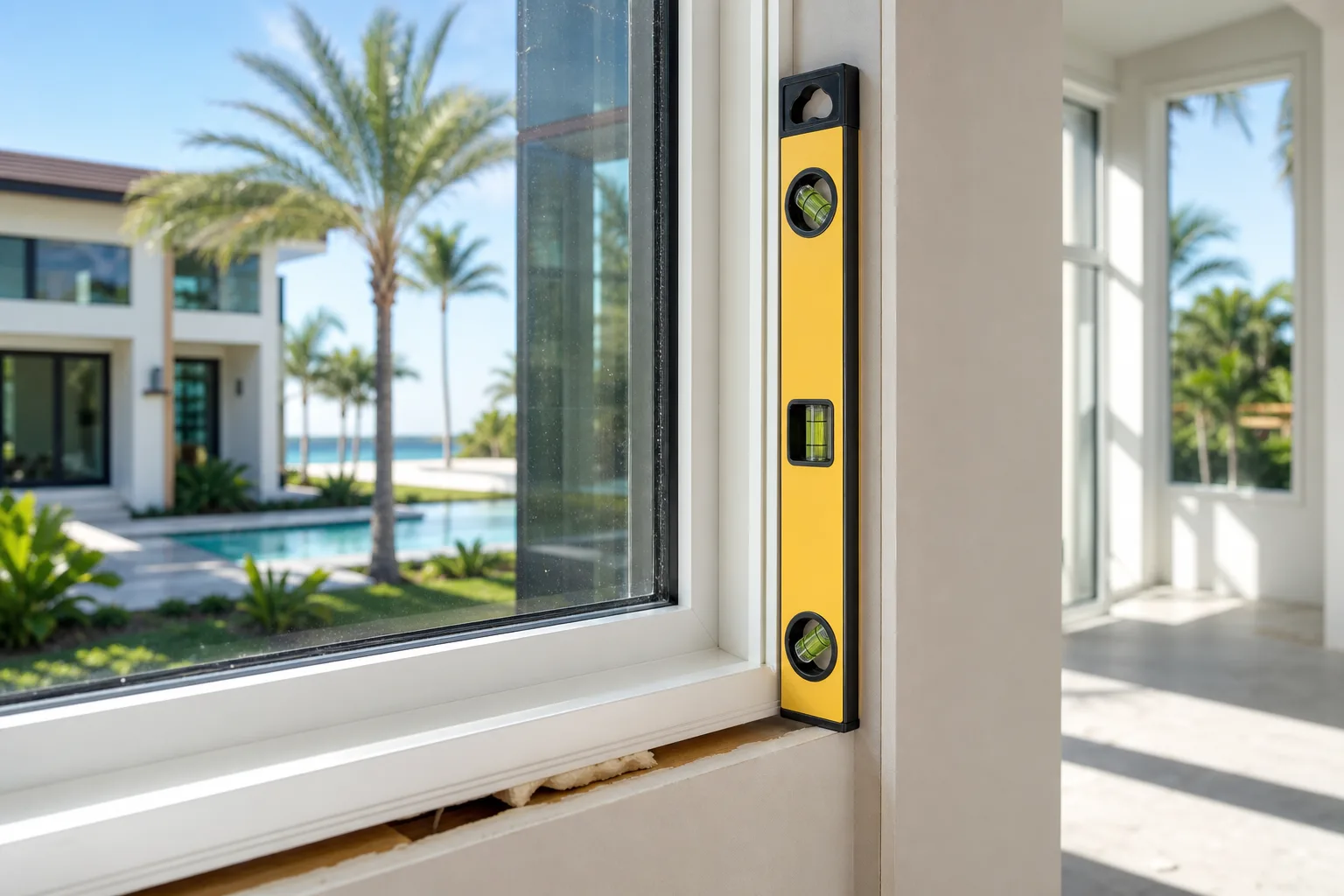
TL;DR: A window that is not plumb (vertically straight) or level (horizontally straight) puts uneven stress on the frame, sash, and weatherstripping. Over time this can cause air and water infiltration, hardware binding, and failed inspections on permitted work. The severity depends on how far out of tolerance the installation is and what type of window is involved.
What Happened
Window installation tolerances are tighter than most homeowners realize. Industry guidelines, including those published by the American Architectural Manufacturers Association (AAMA), specify that frames should be installed plumb, level, and square within defined limits, often a fraction of an inch across the frame width or height.
When a frame is set out of plumb or out of level, the opening it creates is no longer the shape the sash was manufactured to fill. The sash, hinges, rollers, or locks then have to accommodate that distortion every time the window is operated or every time wind load pushes against it.
For impact-rated windows specifically, this matters more than it would for a standard single-pane unit. The frame system and the glazing compound work together as an engineered assembly. Distorting the frame geometry changes how load is transferred through the system.
Why It Matters
Water and Air Infiltration
Weatherstripping and glazing seals are designed to compress evenly around a square, plumb frame. A frame that is racked or tilted leaves gaps on one side and over-compresses on the opposite side. The under-compressed side becomes a path for driven rain and wind, which is exactly the condition impact windows are installed to prevent.
In South Florida's wet season, even a minor seal gap at a sill or head can allow enough water entry to damage drywall, framing, or insulation before the problem is visible from inside.
Hardware Wear and Sash Operation
Single-hung and sliding windows depend on level tracks and balanced sash weight distribution. A sash that hangs in a tilted frame drags on one side of its track and barely contacts the other. This accelerates wear on rollers, operators, and locking hardware.
Casement and awning windows rely on hinges set at precise geometry. A frame that is out of plumb by even a quarter inch can make the sash feel stiff to open and prevent it from latching securely.
Structural Load Transfer
Impact window frames are anchored to the rough opening in a pattern specified by the product's Florida Product Approval documentation. That anchor pattern assumes the frame is square within the opening. A twisted or racked frame may concentrate load at fewer anchor points than the design intended, particularly during a high-wind event.
This is not a theoretical concern in South Florida. Hurricane-force wind loads are real design inputs, not margin items.
Code Compliance and Inspection Outcomes
If the installation is on a permit, the inspector is looking at whether the finished product matches the approved shop drawings and installation instructions. An obviously racked or unlevel frame is a deficiency that can result in a failed inspection or a required correction.
A failed inspection means the work is not legally closed out. That has implications for homeowner's insurance, future sale disclosure, and any warranty the contractor offered.
Compare impact-window options for your project. Request a free estimate
What We Don't Know Yet
The threshold at which misalignment causes a meaningful performance problem varies by product, frame size, and material. A small vinyl single-hung in a four-foot opening may tolerate minor misalignment better than a large aluminum sliding glass door in a ten-foot opening. Manufacturers publish specific tolerances in their installation instructions, and those documents should be the reference point, not general rules of thumb.
It is also not always clear whether a window that appears out of level is actually installed incorrectly or whether the rough opening itself is out of level and the installer shimmed to the best available condition. Distinguishing those two situations matters when determining responsibility.
Additionally, some degree of building movement over time is normal in Florida construction, particularly in older CBS homes. A window that was plumb at installation may read slightly off years later due to foundation settlement or framing shifts. That is a different problem than a careless installation.
What to Do About It
Diagnostic Sequence
Use this order of checks before calling anyone:
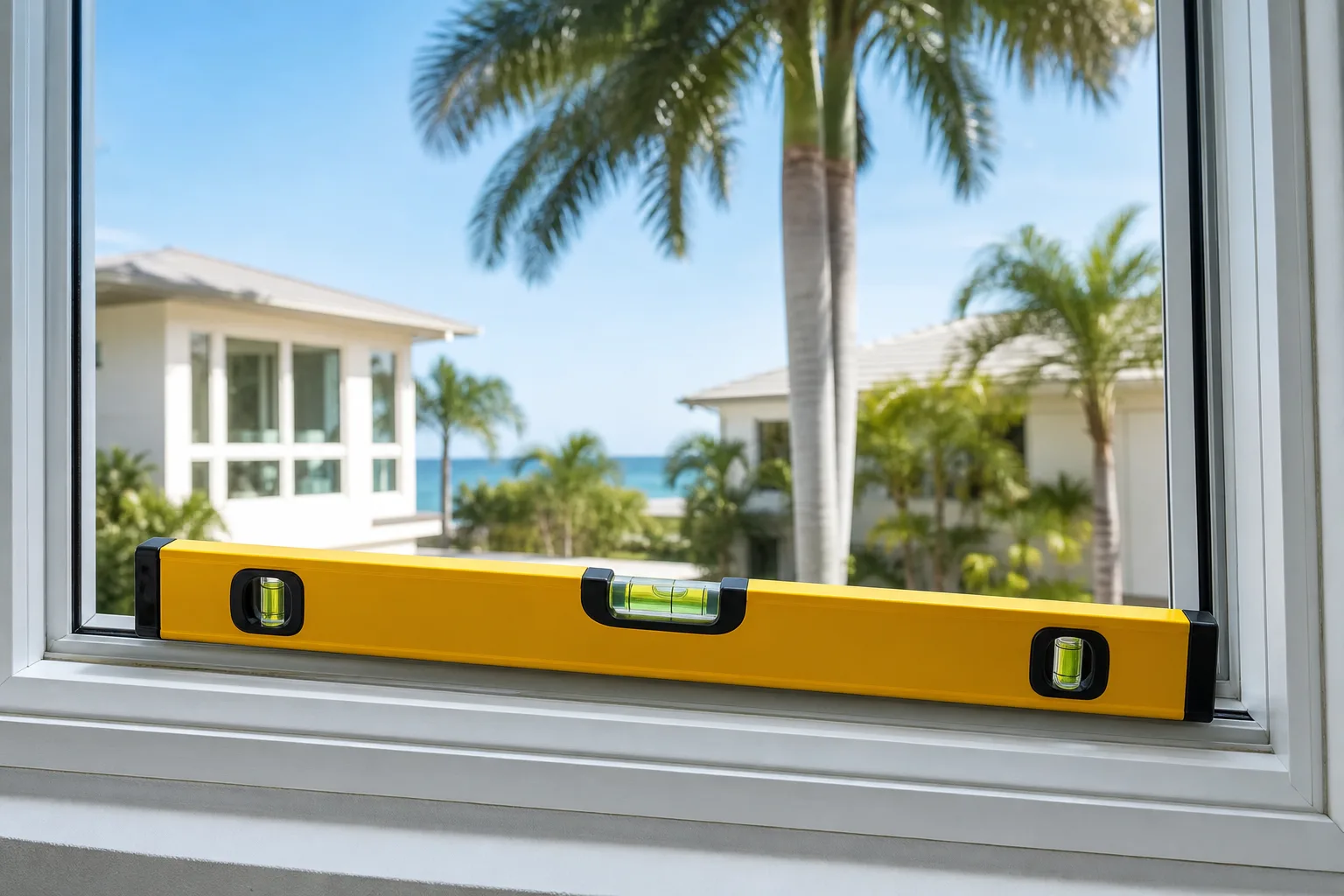
- Place a 4-foot level on the sill track and on the jamb. Note the bubble position and estimate how far off level or plumb the frame reads.
- Operate the sash through its full range. Note whether it binds, drags, or fails to latch at any point.
- Inspect the perimeter seal from inside and outside. Look for daylight gaps, uneven weatherstrip compression, or staining that suggests water has been entering.
- Check whether the installation is on a permit. If a permit was pulled, confirm the inspection was closed out with your local building department. In Palm Beach, Broward, Miami-Dade, Martin, and St. Lucie counties you can search permit status through the county or municipal building department portal.
- Photograph everything with a timestamp before contacting the installer or a second opinion contractor.
Decision Table: How Serious Is the Problem?
| Observation | Likely Severity | Suggested Action |
|---|---|---|
| Level reads off by less than 1/8 inch, sash operates smoothly, no seal gaps | Low, monitor | Document and recheck in 12 months |
| Level reads off by 1/4 inch or more, sash binds or drags | Moderate | Contact installer; request correction per installation specs |
| Visible daylight gap or water staining at frame perimeter | High | Request immediate correction; do not wait for next inspection cycle |
| Permit inspection not closed out | Potentially serious regardless of other observations | Contact contractor and building department |
When to Bring In Another Contractor
If the original installer disputes the finding or is unresponsive, a second licensed contractor can measure and document the condition. A written report from a licensed contractor is more useful than a homeowner's photographs alone if the matter escalates to a warranty claim or complaint.
For impact windows specifically, the manufacturer's technical support line is also a resource. They can clarify the published tolerance for that product and whether the observed condition falls within it.
If you are planning a new installation and want to understand what a correctly executed project looks like from start to finish, the 8 tips for a flawless impact window installation article covers the checkpoints a careful installer follows before and during the job. You can also review what to look for before approving shop drawings to understand the documentation that should precede any installation.
For a new project estimate or to discuss a suspected installation problem with a licensed contractor, request an estimate or contact us directly. Window Guys of Florida holds Florida licenses CGC1518491 and SCC131151139 and serves Palm Beach, Broward, Miami-Dade, Martin, and St. Lucie counties.
Compare impact-window options for your project.
Request a written estimate that identifies the quoted assembly, opening, design pressure, product approval, exposure, installation scope, and applicable project requirements.
Frequently asked questions
Can an out-of-plumb window be corrected after installation without full replacement?
Sometimes. If the frame is anchored but not yet stuccoed or trimmed, an installer may be able to remove and reset it. Once the surrounding finish work is complete, correction becomes more invasive and expensive. The feasibility depends on the product, the degree of misalignment, and whether the frame or the rough opening is the underlying problem.
Does an out-of-level window void the manufacturer's warranty?
It can. Most impact window manufacturers require installation to be performed according to their published instructions, which specify plumb, level, and square tolerances. An installation that falls outside those tolerances may give the manufacturer grounds to deny a warranty claim for seal failure or hardware wear. Review the specific warranty document for the product involved.
Who is responsible if a permitted window installation fails inspection due to alignment issues?
The licensed contractor who pulled the permit is responsible for bringing the work into compliance before the permit can be closed. If a homeowner hired an unlicensed installer, the homeowner may bear more of the exposure. This is one reason Florida law requires licensed contractors for this work.
How do I tell if my existing windows were installed correctly if no inspection was done?
Start with the diagnostic sequence in this article: check level and plumb with a 4-foot level, operate the sash, inspect perimeter seals for gaps or water staining, and confirm permit status with your local building department. A licensed contractor can also measure and document the condition if you need a written assessment.