TL;DR: Move or tie back anything within four to six feet of each window opening before your installation day. Trim overgrowth that blocks ladder or scaffold placement. Protect plants you cannot move with cloth covers or plastic sheeting. Most outdoor prep is homeowner work, done the day before crews arrive.
What You Need
- Loppers, hand pruners, or a hedge trimmer
- Rope, zip ties, or plant stakes for tying back shrubs
- Drop cloths, burlap, or plastic sheeting to cover ground plants
- A garden hose to water and stake soft ground before heavy equipment is placed
- A clear path from your driveway or street to each work area
- Somewhere to stage removed pots, furniture, and decorative stone
Review your window replacement project scope before this step if you are unsure which elevations are being worked.
Step 1: Walk the Perimeter and Mark Every Opening Being Replaced
Do this at least two days before installation. Note which windows are on the ground floor versus upper floors. Upper-floor work usually requires a ladder or scaffold set directly against the wall. Ground-floor crews often work from a flat surface just outside the opening.
For each opening, draw an imaginary four-foot bubble outward from the wall. Everything inside that bubble is a potential obstruction. Mark it for trimming, removal, or protection.
Step 2: Trim Overgrowth That Blocks Wall Access
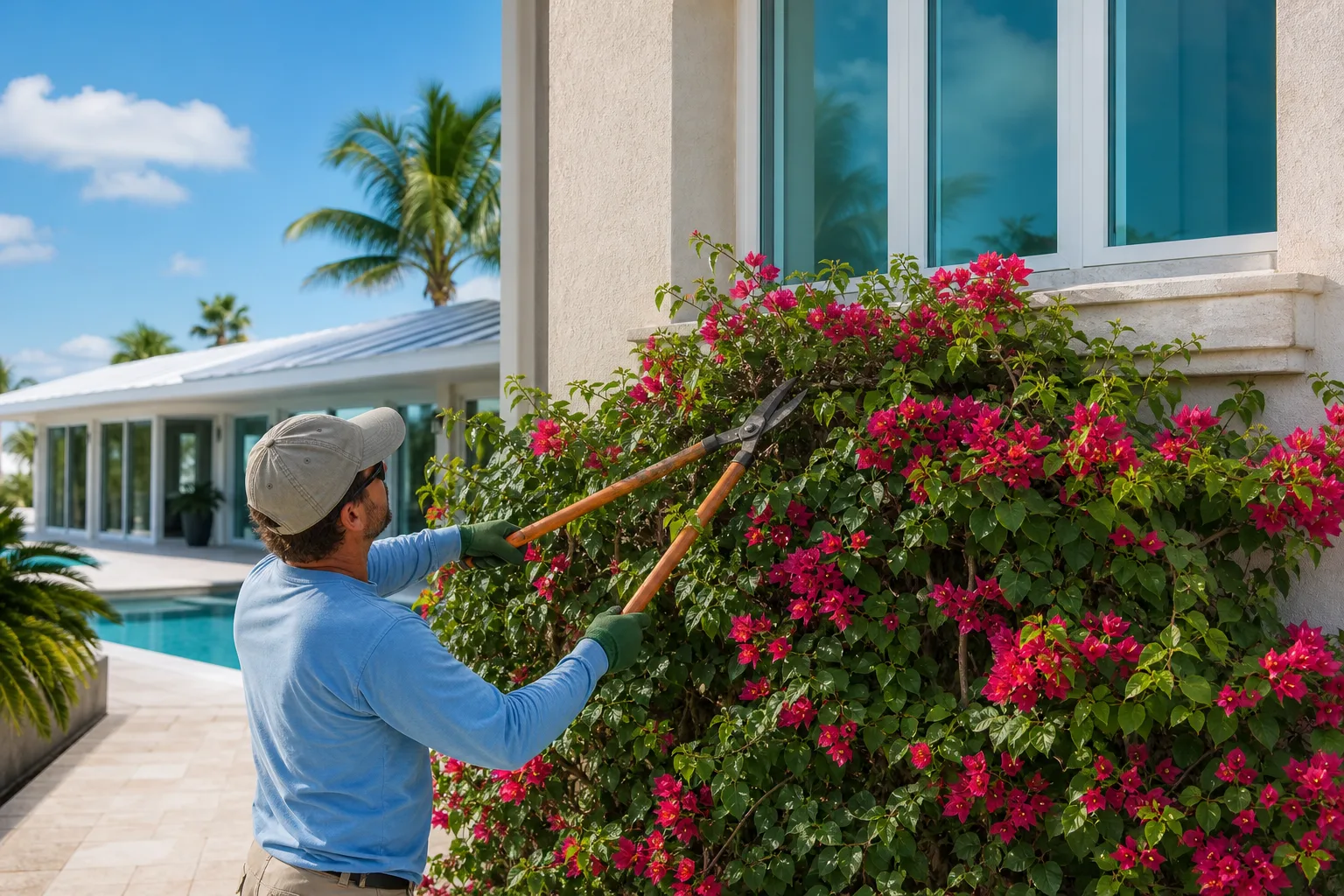
South Florida landscaping grows fast. Ficus hedges, bougainvillea, podocarpus, and palms can press tight against exterior walls and sills. Crews need clear wall contact to set ladders securely and to carry glass panels without catching branches.
Trim back any growth that:
- Touches the exterior wall or window frame
- Hangs over a ladder placement zone
- Would catch a full-size glass panel during carry-in
Do not cut back more than is needed. Most ornamental shrubs in South Florida recover quickly, but aggressive pruning on specimen plants like large crotons or mature palms should be avoided unless necessary.
Step 3: Remove or Relocate Potted Plants and Planters
Large ceramic or concrete planters near windows are a practical hazard. They can be cracked by dropped tools or by crews maneuvering long glass panels. Move them at least six feet from the work zone, or into the garage or a covered patio area.
Group them together so they do not become a separate obstacle in a different part of the yard.
Step 4: Protect Ground Plants You Cannot Move
For established in-ground plants that sit close to a window, use burlap or drop cloths the morning of installation. Secure them loosely so air can still circulate. This reduces the risk of caulk, glass fragments, stucco dust, or tool drops reaching the plant.
Water the plants the night before. Well-hydrated plants handle mechanical stress better than drought-stressed ones.
Review opening-protection options before storm season. Request a free estimate
Step 5: Clear Hardscape and Decorative Rock From Ladder Zones
Loose river rock, stepping stones, and decorative pavers shift underfoot. Crews may need to reposition ladders several times during a single opening. Unstable ground increases fall risk and can lead to work stoppages.
Rake rock back from the wall or temporarily move pavers to give crews a stable, flat surface. If the soil is soft from recent rain, let your contractor know in advance. They may need to use standoff pads for ladders.
Step 6: Secure or Remove Irrigation Heads Near the Work Zone
Irrigation pop-up heads near the foundation can be snapped off by ladder feet or equipment staging. Walk the zone and flag or mark any heads within the work area. If your irrigation runs on a timer, disable the zones near each work area for the duration of the job.
Also note any visible irrigation lines near the surface. Crews digging or removing exterior stucco for full-frame replacements can nick shallow lines.
Step 7: Create a Clear Path From Street or Driveway to Each Opening
Installation crews carry glass panels, frames, and tools from their truck to the opening. A clear, unobstructed path reduces handling time and risk of damage. Remove:
- Bicycles, scooters, or vehicles blocking the path
- Garden hoses coiled across walkways
- Lawn furniture, fire pits, or outdoor speakers
- Potted plants lined along a walkway
If your home has a gated yard, arrange for the gate to be unlocked and propped open before crew arrival. Confirm this with your contractor the day before.
Step 8: Notify Your Crew of Anything You Could Not Move
If a large tree or permanent feature sits in a work zone, tell your project manager before installation day. They can plan around it, bring different equipment, or adjust the work sequence. A surprise on arrival day can push your job to a later date.
For projects involving multiple elevations or upper-floor openings, also ask your contractor whether they will be bringing a boom lift or scaffold. These require additional clearance and sometimes temporary removal of fence sections.
Common Mistakes
Waiting until the morning of installation. Trimming, moving planters, and clearing paths takes more time than most homeowners expect. Start two days before, especially for homes with mature landscaping.
Leaving irrigation on a timer. Crews who get wet from a mid-morning irrigation cycle lose time. Disable the relevant zones the night before and restore them after the job.
Assuming the crew will work around everything. Professional crews will try to minimize disturbance to your yard, but they are not landscapers. Protect what matters to you before they arrive.
Forgetting the front entry or side-yard gates. If a crew cannot access the work zone, the job stops. Confirm gate access and any lock codes the day before.
Not accounting for glass staging. New glass panels are often staged flat on the ground near each opening before installation. If your ground cover is rough stone or there is no flat area, crews may need to stage farther away and carry longer distances. A cleared grassy or paved area near each opening helps.
Bottom Line
Outdoor prep is owner-managed work that takes a couple of hours and prevents delays, plant damage, and tool-related accidents. The core tasks are trimming, relocating pots, protecting ground plants, clearing paths, and disabling irrigation. Do it two days before, not the morning of.
If your project involves full-frame window removal or exterior stucco work, ask your contractor specifically what access they need before you finalize your yard plan. For new projects still in the planning phase, request an estimate to confirm scope before scheduling outdoor prep.
Review opening-protection options before storm season.
The performance and responsibilities for permits, engineering, documentation, installation, and inspections depend on the exact assembly and written project scope.
Frequently asked questions
How far back do shrubs need to be trimmed from a window for installation crews to work safely?
A clear zone of at least four feet from the wall on each side of the opening gives crews enough room for ladder placement and panel carrying. For large or fixed windows that require two-person carries, six feet is safer. When in doubt, ask your contractor to walk the perimeter with you before installation day.
Will window installation crews move landscaping items themselves?
Most window installation crews are not contracted to move or protect landscaping. Their scope covers the windows and related opening work. Anything in the yard is the homeowner's responsibility to clear before crew arrival. Confirm this with your specific contractor since scopes vary by company and project.
What should I do about irrigation lines that might be near the work area?
Flag or mark visible irrigation heads near each work zone and disable those irrigation zones for the duration of the job. If your system runs on a timer, turn off the relevant zones the evening before installation. Alert your project manager if you know shallow lines run near the foundation, especially for full-frame replacements that involve exterior work.
Do I need to do anything special for second-floor window installations?
Upper-floor installations sometimes require a boom lift or exterior scaffold, both of which need additional ground clearance beyond what a standard ladder requires. Ask your contractor what equipment they plan to use and whether any fence sections need to be temporarily removed for access. This conversation should happen before installation day, not the morning of.