TL;DR: Weep holes are drainage openings at the bottom of window frame sill channels. They route water that enters the frame cavity out through the exterior wall instead of into your home. When debris blocks them, water backs up and can saturate drywall, wood framing, or stucco. Clearing them is a straightforward maintenance task, but persistent leaks after clearing may point to a larger installation or sealing problem.
What Happened
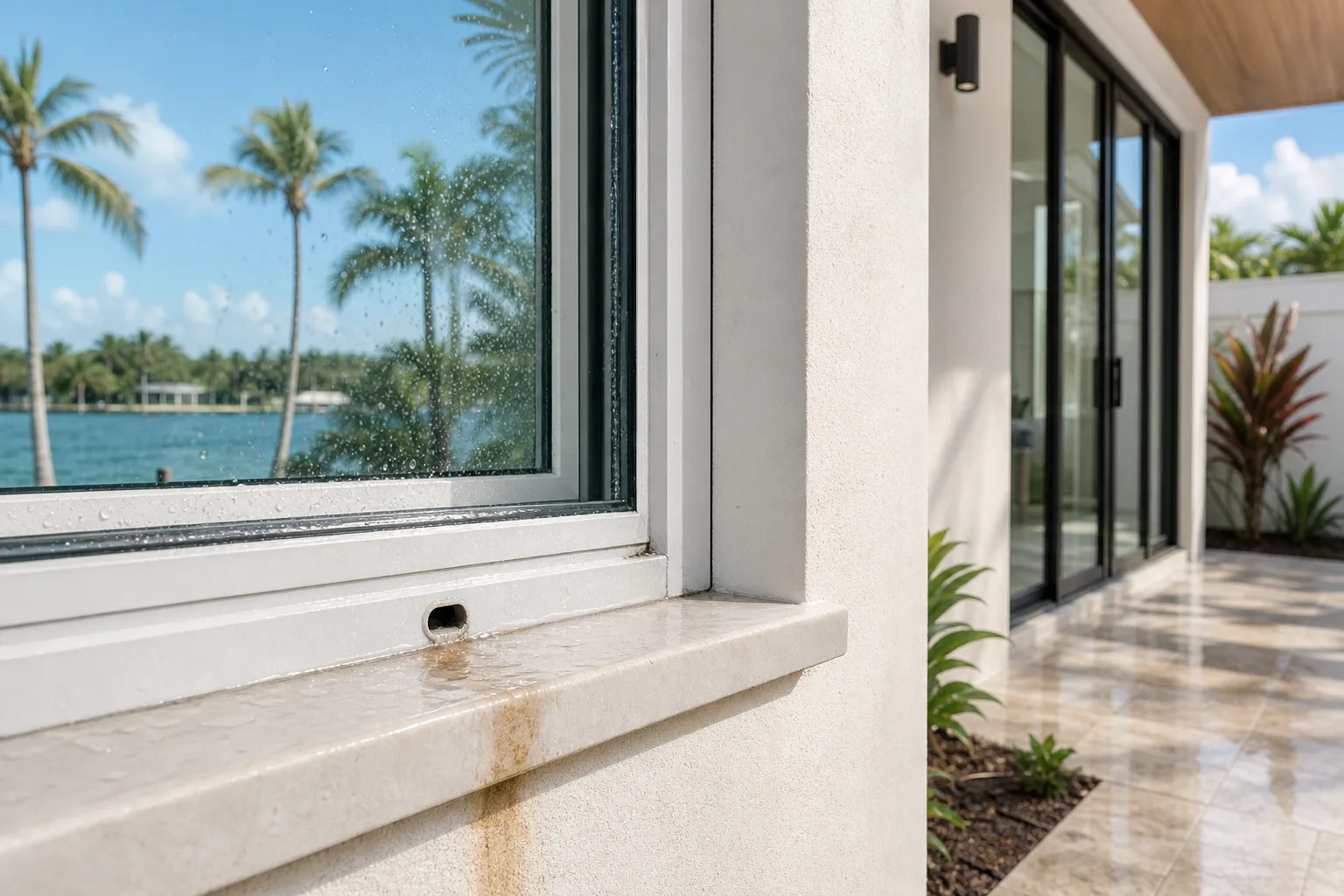
A weep hole is a small slot, typically a few millimeters wide and several millimeters tall, cut or molded into the bottom rail of a window frame. Most aluminum window frames used in South Florida impact windows include multiple weep holes spaced along the sill channel.
Driving rain does not just hit the glass. It finds its way into the gap between the frame and the glazing bead, into the sill track, and into the space between the frame and rough opening. Those cavities collect water during a storm. The weep hole is the designed exit point. Gravity pulls collected water toward the sill, and the slot lets it drain to the exterior.
Without that exit, water has nowhere to go except sideways into the wall cavity or upward past the sill threshold and onto the floor.
Why It Matters
South Florida sees rainfall totals and wind-driven rain events that are among the highest in the continental United States. During a single afternoon thunderstorm, significant water volume can enter frame channels even on windows that are otherwise performing correctly.
When weep holes are blocked, a few things can happen depending on how water accumulates.
Water migrates inward. The sill channel fills until water finds the path of least resistance, which is often the joint between the frame and the rough opening or the sill stop gasket. From there it reaches drywall or wood blocking.
Prolonged saturation causes structural damage. Drywall softens and grows mold within days of sustained moisture contact. Wood framing and blocking can begin to rot. In concrete block construction, water trapped at the sill can migrate into the block cells and wick upward or outward.
The damage hides. Because window sills in Florida homes are often finished with drywall returns or tile, water damage may not be visible until it is significant. A homeowner may notice peeling paint, soft drywall, or a musty smell before seeing actual water.
This is not a failure of the glass itself. Impact glazing performs its structural role. The issue is the drainage system in the frame, which is a maintenance-dependent component.
Common Causes of Blockage
- Dirt, insect debris, and seed material carried by wind and rain
- Paint applied during exterior repaints that fills or partially seals the slots
- Silicone or caulk applied by a previous contractor or homeowner who did not understand the slot's function
- Foam backer rod or sealant from the original installation placed too close to the weep opening
- Condensation residue and mineral deposits that build up over years in hard-water areas
Review opening-protection options before storm season. Request a free estimate

What We Don't Know Yet
The exact location, number, and size of weep holes varies by manufacturer and frame profile. PGT, CGI, SIW, and ES products, the lines Window Guys of Florida works with, each have their own frame extrusions. A homeowner inspecting their own windows should not assume a universal slot size or location.
Some frames use a weep hole cover or baffle, a small plastic flap that allows water out but resists wind-driven water entry. These baffles can themselves become stuck in the closed position after years of exposure to UV and salt air. If your frame has covered weep holes, confirming the cover moves freely is part of the inspection.
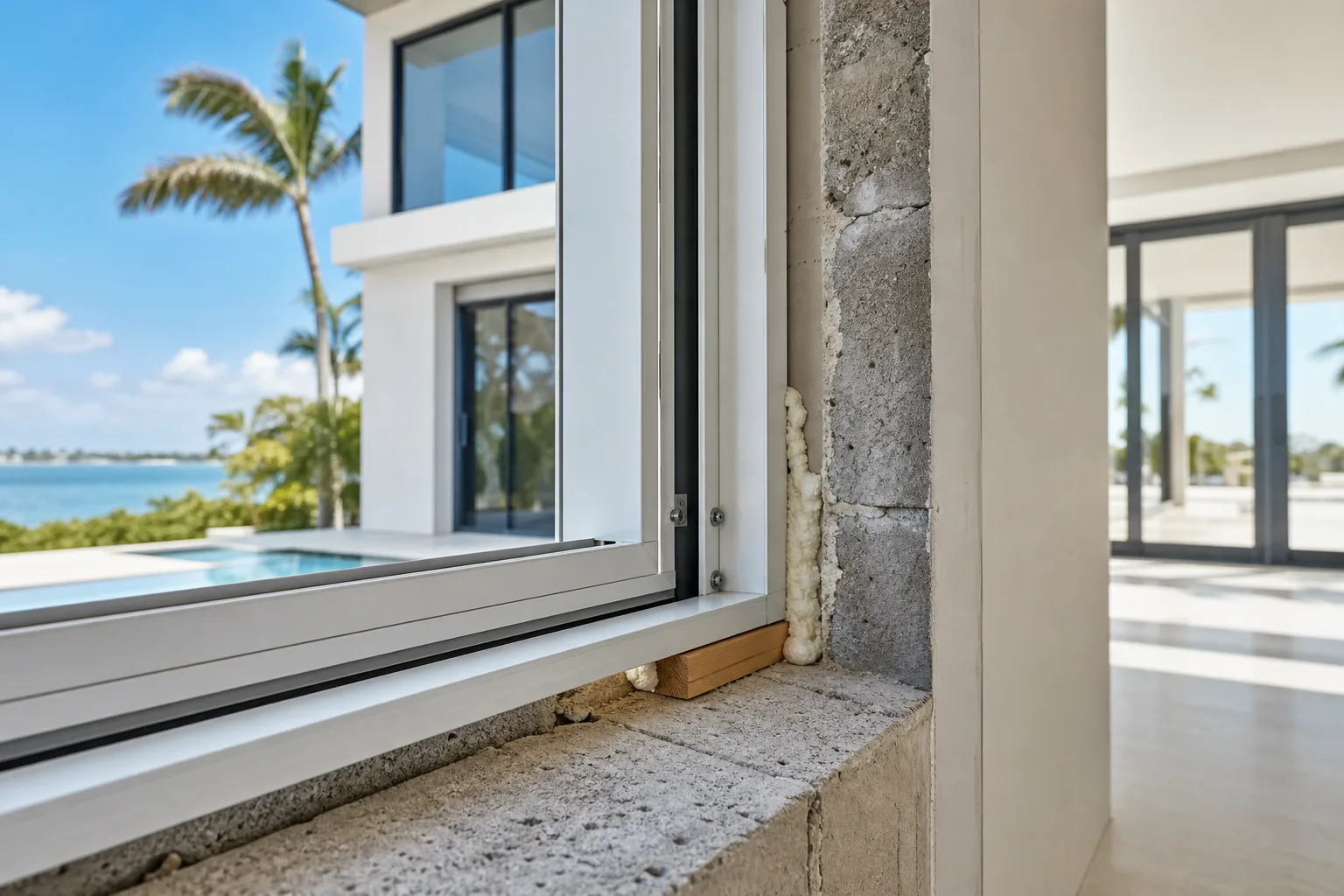
Where a window is installed in a masonry opening with a subsill, water management also depends on that subsill draining correctly. A blocked subsill can defeat properly functioning frame weep holes. For more context on subsill function, see the recent post on what a subsill does in concrete block homes.
Finally, if water entry continues after weep holes are confirmed clear, the source may not be the weep system at all. Sealant failure at the perimeter, flashing problems above the window, or frame deflection at the corners can all cause leaks that look similar on the interior.
What to Do About It
Below is a diagnostic sequence for South Florida homeowners who suspect a weep hole issue.
Step 1: Locate the weep holes. Stand outside and look at the bottom frame rail of the window, the horizontal extrusion that sits at sill height. Weep holes are typically on the exterior face of that rail. They may be open slots, slots with a plastic cover, or round holes depending on the frame profile.
Step 2: Check for visible blockage. Look for dirt plugs, paint film, or caulk. Use a flashlight if the slot is in shadow.
Step 3: Test drainage. Pour a small amount of water into the interior sill channel or track. It should drain out through the weep holes within seconds. If it pools and sits, the holes are restricted.
Step 4: Clear the blockage carefully. A wooden toothpick, a thin plastic probe, or a small brush can clear soft debris. Do not use metal tools that can score the aluminum or enlarge the slot. Do not apply additional caulk to or near the weep holes.
Step 5: If water still enters the interior after clearing, stop and document. Take photos of where water appears inside. Note which window, which wall, and whether it occurs during rain, sprinkler operation, or both. That documentation helps a contractor identify whether the problem is the weep system, the perimeter seal, or the flashing above.
If you are unsure whether your existing windows are draining correctly, or if you are planning a window replacement in South Florida, it is worth asking your contractor to walk you through the weep and drainage design for the specific frame being proposed. During any windows and doors replacement project, the installation crew should confirm weep holes are unobstructed before finishing work.
For questions about a specific window or frame condition, you can request an estimate or contact the team directly.
Keeping weep holes clear is a low-effort maintenance task. Missing it, or accidentally sealing the holes during a repaint, is one of the more common sources of unexplained interior water damage in otherwise sound South Florida window installations.
Review opening-protection options before storm season.
The performance and responsibilities for permits, engineering, documentation, installation, and inspections depend on the exact assembly and written project scope.
Frequently asked questions
How many weep holes should a window frame have?
The number varies by frame width and manufacturer specification. Wider frames typically have more slots spaced along the sill rail. Your window's installation documentation or the manufacturer's product approval drawings will show the required configuration for that specific frame profile.
Can I seal a weep hole if water blows in during a storm?
No. Sealing a weep hole trades one problem for a worse one. Any water that enters the frame channel during a storm needs an exit path. If wind-driven water is entering through the weep holes, the more likely issue is a missing or damaged weep baffle cover, which is a replaceable component on most frames.
Will blocked weep holes void a window warranty?
Warranty terms vary by manufacturer and installer, so you would need to check the specific warranty documentation for your windows. Generally, damage caused by failure to maintain drainage components may fall outside coverage. Keeping weep holes clear is a standard homeowner maintenance responsibility.
Does this apply to impact doors as well?
Many sliding glass door frames and some swing door thresholds include similar drainage features. The function is the same: route water that enters the frame cavity to the exterior. If you are evaluating hurricane impact doors, ask the installer to explain the threshold drainage system for the specific product being proposed.