TL;DR: The plastic interlayer sandwiched inside laminated glass is not decorative. Its thickness and stiffness determine how much energy the panel absorbs on impact, how long it holds broken glass in place after a strike, and which Florida product approval a window assembly qualifies for. Thicker or stiffer interlayers generally improve post-breakage performance, but the full assembly, including glass thickness, frame, and anchoring, must be tested and approved together.
What Happened
Florida updated its building code requirements for opening protection after Hurricane Andrew in 1992 and refined them through subsequent code cycles. Those requirements do not simply specify "laminated glass." They require documented test results from approved testing protocols, most commonly ASTM E1886 and ASTM E1996, and they specify performance levels tied to design wind speed for a given location.
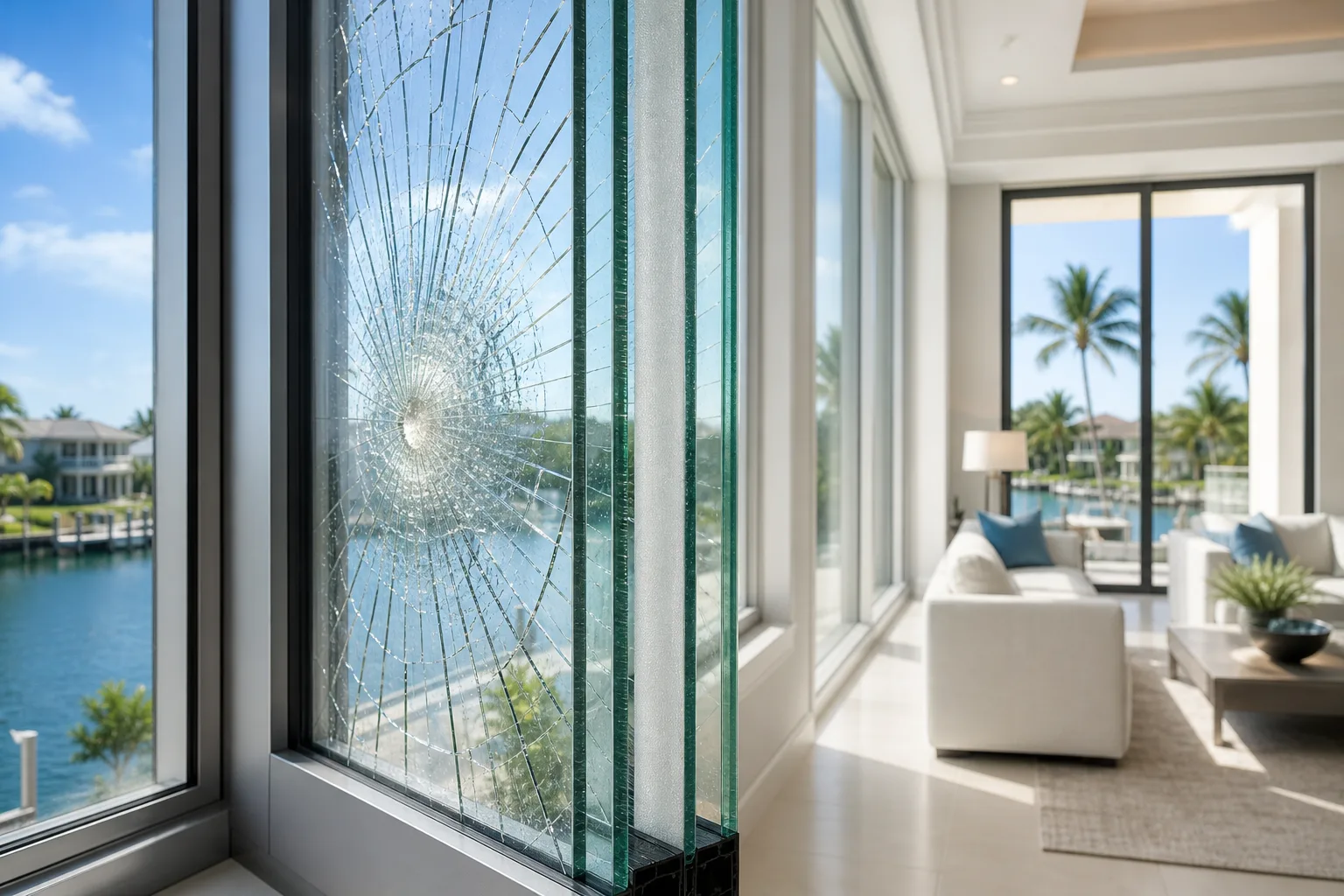
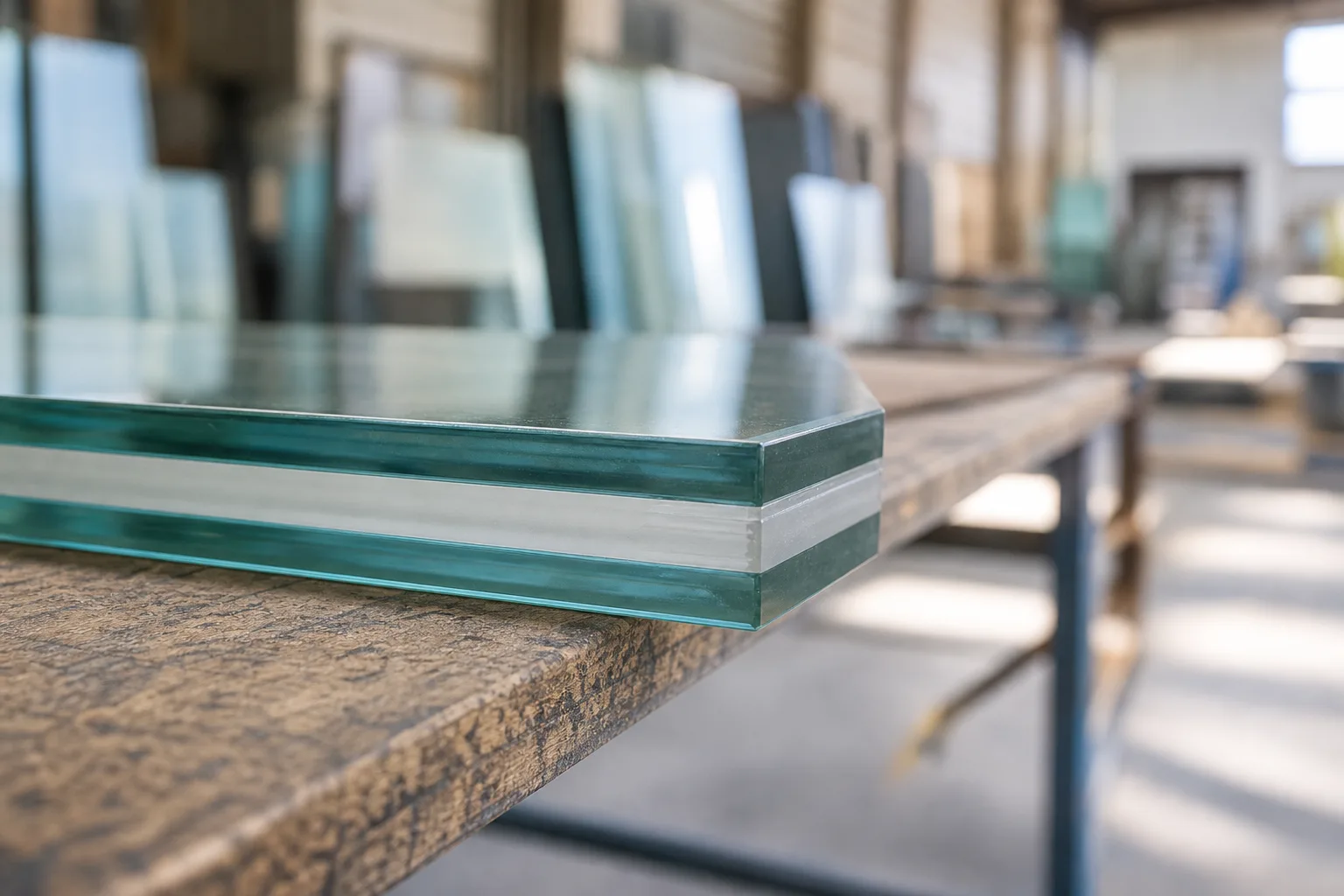
The interlayer is the component that makes laminated glass different from ordinary annealed or tempered glass. When a laminated lite breaks, the interlayer holds the fragments in the frame rather than allowing them to become airborne. That post-breakage integrity is what earns laminated glass its status as opening protection under Florida law.
Two interlayer materials dominate the market:
- PVB (polyvinyl butyral): The standard material in most residential impact glass. Flexible, well-understood, widely tested.
- SGP (SentryGlas or ionoplast): Stiffer and significantly stronger in tear resistance than standard PVB at comparable thickness. More common in large-format or high-performance assemblies.
Thickness is measured in mils (thousandths of an inch) or millimeters. Common residential PVB interlayers run from 60 mils (about 1.52 mm) to 90 mils (about 2.28 mm). Some high-performance applications use multiple plies or thicker SGP cores.
Why It Matters
Interlayer thickness affects three measurable outcomes.
1. Energy Absorption on Impact
When a projectile, such as a 9-pound 2x4 timber traveling at speeds specified by the applicable test protocol, which vary by wind zone under ASTM E1996, strikes the glass, the interlayer is what arrests the fragment field after the glass lites crack. A thicker or stiffer interlayer deforms more gradually, absorbing more kinetic energy before tearing. A thinner or softer interlayer may allow penetration under the same load.
This is not a simple "thicker is always better" equation. The glass thickness on each side of the interlayer, the number of glass plies, and the total assembly stiffness all interact. A tested and approved assembly specifies all of those dimensions together.
2. Post-Breakage Integrity Duration
After a strike that cracks the glass, the interlayer must continue holding the assembly in the frame long enough to maintain the weather envelope for the duration of the storm. SGP interlayers generally outperform standard PVB in this area because their higher stiffness resists tearing even after the glass has fractured. This matters most for large openings where wind load continues to act on the broken panel.
3. Product Approval Scope
Florida requires that impact windows carry a Notice of Acceptance (NOA) from Miami-Dade County or a Florida Product Approval (FPA) from the state. Those approvals are tied to specific tested configurations. A manufacturer cannot substitute a thinner interlayer for the one in the approved assembly without re-testing. When you review shop drawings or product cut sheets, the interlayer specification should match what appears in the approval documentation.
This is one reason why the 9 details to review before approving window shop drawings matter: a substitution that looks minor on paper can void the approval that your permit depends on.
Review opening-protection options before storm season. Request a free estimate
What We Don't Know Yet
The industry is not static. Manufacturers are developing multi-layer interlayer systems that combine PVB and ionoplast layers to target specific performance-to-cost ratios. Research into acoustic and UV-filtering interlayer formulations is ongoing, and some of those formulations interact with impact performance in ways that standard PVB testing does not fully capture.
Florida's high humidity and heat also affect long-term interlayer performance. PVB is known to absorb moisture at exposed edges over time, which can cause delamination or yellowing at the perimeter. Proper edge sealing and glazing details matter as much as the interlayer specification itself. The rate at which those effects degrade structural performance in South Florida's specific climate is not yet reflected in standardized long-term testing.
Design wind speed maps are also periodically updated. As each hurricane season approaches, it is worth remembering that code minimum performance is a floor, not a ceiling. See the 2026 hurricane season outlook for South Florida home prep for current advisory context.
What to Do About It
If you are evaluating impact windows or reviewing an existing installation, here is a practical diagnostic sequence.
Step 1. Locate the product approval number. It should appear on the window label, the shop drawings, or the permit package. Cross-reference it against the Florida Building Commission's product approval database or the Miami-Dade NOA database to confirm the interlayer specification in the approved assembly.
Step 2. Check the interlayer material and thickness against the approval. The cut sheet or NOA will list the glass construction, for example, "5/16 inch laminated consisting of two lites of 1/8 inch annealed glass with 0.090 inch PVB interlayer." Verify that what was installed matches.
Step 3. Inspect edge conditions on existing glass. Yellowing, bubbling, or milky haze near the perimeter can indicate interlayer moisture intrusion. This does not automatically mean the glass has failed its structural function, but it warrants evaluation by a licensed glazing contractor.
Step 4. For new installations, ask about interlayer specifications before comparing prices. Two windows at different price points may carry the same design pressure rating but use different interlayer materials. The approval documents will show which configuration was tested and to what performance level. For large openings or coastal exposures in South Florida's hurricane zone, the interlayer specification is worth understanding before you sign.
If you have questions about product approval documentation or need an estimate for impact window replacement, contact Window Guys of Florida or request an estimate online. We serve Palm Beach, Broward, Miami-Dade, Martin, and St. Lucie counties and have completed projects involving product lines such as PGT, CGI, SIW, and ES, among others; we do not claim any manufacturer authorization or official partner status with these brands. Specific approval and configuration details depend on the scope of each project.
Review opening-protection options before storm season.
The performance and responsibilities for permits, engineering, documentation, installation, and inspections depend on the exact assembly and written project scope.
Frequently asked questions
Can I upgrade just the interlayer in an existing impact window without replacing the whole unit?
No. The interlayer is bonded between glass lites during manufacturing and cannot be replaced in the field. If the interlayer has degraded or the assembly no longer matches its product approval, the full insulated or laminated unit must be replaced.
Does a thicker interlayer automatically mean a higher design pressure rating?
Not automatically. Design pressure ratings result from the full tested assembly, including frame, anchoring, and glass construction. A thicker interlayer in an otherwise weaker frame system may not produce a higher approved rating than a thinner interlayer in a stiffer, well-anchored system.
Is SGP interlayer required by Florida code, or is PVB acceptable?
Florida code specifies performance levels derived from ASTM testing, not a specific interlayer material. Both PVB and SGP assemblies can meet code requirements if they carry the appropriate product approval for the design wind speed of the installation location. SGP tends to appear in larger or higher-performance assemblies where post-breakage stiffness matters most.
How does interlayer thickness relate to the sound reduction I can expect from impact windows?
Thicker and stiffer interlayers, particularly SGP, can contribute to improved acoustic performance because they damp vibration differently than thinner PVB. However, the overall sound reduction depends on total glass thickness, any airspace in an insulated unit, and frame sealing. See the article on whether impact windows reduce airport noise for more context on acoustic performance.