TL;DR: Glass tint reduces solar heat gain and can increase daytime privacy, but no standard tint provides nighttime privacy without additional treatments. The right choice depends on window orientation, interior light preferences, and how much visible light reduction you can tolerate. Clear glass with a low-E coating is often the baseline comparison point.
At a glance
| Tint color | Solar heat reduction | Daytime privacy | Visible light transmission | Common trade-off |
|---|---|---|---|---|
| Clear (no tint) | Lowest | None | Highest | Full glare and heat exposure |
| Bronze | Moderate | Moderate | Moderate reduction | Warm interior color cast |
| Gray (Charcoal) | Moderate | Moderate | Moderate reduction | Neutral but can darken rooms |
| Blue-green (Azurite/Aqua) | Moderate | Low-moderate | Moderate reduction | Cool color cast; coastal aesthetic |
| Dark or high-performance tint | Higher | Higher daytime | Significant reduction | Noticeable interior dimming |
Note: Specific solar heat gain coefficients (SHGC) and visible light transmission (VLT) percentages vary by manufacturer and glass unit construction. Ask your glazing contractor for the published data sheet for each specific product you are considering.
How tint actually works
Tint is a colorant added to the glass body during manufacturing. It absorbs a portion of solar radiation before it passes through the glass. Absorbed energy turns into heat within the glass itself, some of which radiates inward and some outward.
This is different from a low-E coating, which is a thin metallic layer applied to a glass surface that reflects infrared energy. Many impact glass units combine a tinted lite with a low-E coating to get both absorption and reflection benefits. Asking whether a product is "tinted" or "low-E" is not an either-or question.
The key published numbers to compare are:
- SHGC (Solar Heat Gain Coefficient): Lower is better for blocking heat. Florida Energy Code sets minimum standards for replacement windows.
- VLT (Visible Light Transmission): A percentage of visible light that passes through. Lower VLT means a darker interior.
- U-factor: Measures insulating value. Less relevant in South Florida than SHGC, but still a code requirement.
Clear glass
Clear glass without tint transmits the most visible light and has the highest SHGC of the standard options. In South Florida, uncoated clear glass in a west- or south-facing window will deliver significant heat load in the afternoon.
Clear glass with a quality low-E coating can perform competitively on SHGC while keeping the interior brighter than tinted alternatives. This is a common choice for homeowners who prioritize natural light and plan to use window treatments for privacy.
Limitation: Provides no inherent privacy at any time of day or night.
Bronze tint
Bronze is a traditional tint widely used in Florida commercial and residential glazing. It absorbs a meaningful portion of solar radiation and gives the glass a warm amber tone when viewed from outside.
Inside, the bronze cast is subtle in most lighting conditions but can shift the color of objects near the window. Daytime privacy from the street is moderate because the exterior reflection is stronger than the interior view, but this effect disappears at night when interior lighting is on.
Bronze pairs well with traditional or Mediterranean-style homes common in Palm Beach and Martin counties.
Gray (charcoal) tint
Gray tint performs similarly to bronze in SHGC terms but produces a neutral color rendering rather than a warm cast. Objects viewed through gray glass appear closer to their true color.
The trade-off is that gray glass can make interior spaces feel noticeably darker on overcast days. For rooms that already receive limited direct light, such as north-facing rooms or shaded rear elevations, gray tint may reduce comfort more than it reduces heat.
Gray is a practical choice for east- and west-facing windows where heat load is high and color neutrality matters.
Blue-green (aqua or azurite) tint
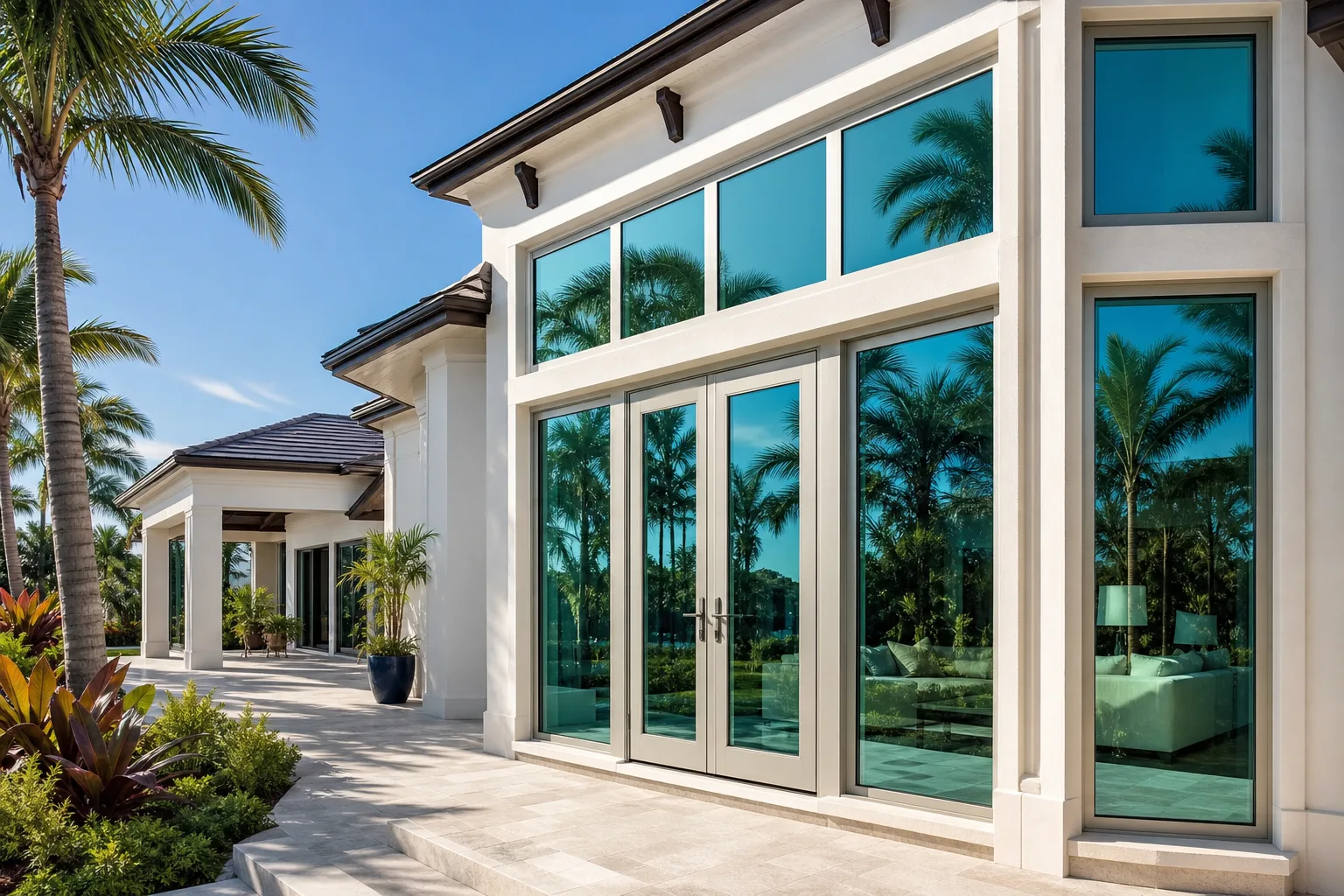
Blue-green tints have a coastal aesthetic popular in Miami-Dade and Broward construction. The exterior appearance reads as a reflective blue-green that fits well with contemporary architecture.
The privacy and heat performance is broadly comparable to bronze and gray, but the interior color cast is cool rather than neutral. This can complement white or blue interiors but may clash with warm-toned finishes.
Daytime privacy is similar to other mid-range tints. The reflective exterior appearance does not reliably block views at night.
Compare documented window energy performance. Request a free estimate
Dark or high-performance tints
Some manufacturers offer darker tint options that push SHGC lower and increase daytime privacy more noticeably. These are more common in commercial applications but are available for residential use.
The primary limitation is interior dimming. A very dark tint on a room's primary windows can require supplemental electric lighting during daylight hours, which partially offsets any energy benefit.
If a room has strong glare issues from a west-facing exposure and privacy is also a concern, a darker tint combined with a low-E coating may be worth evaluating. Verify that the product carries a Florida Product Approval for your county's wind zone before specifying it.
Privacy: what tint can and cannot do
This is the most commonly misunderstood point. Tint provides one-way daytime privacy only when exterior light is significantly brighter than interior light. At night, with lights on inside, any standard tint becomes transparent from the outside.
For true privacy in both conditions, homeowners need to layer solutions: tint or low-E glass to reduce heat and glare, plus interior shades, blinds, or exterior shutters for nighttime or full privacy situations.
Window film applied over existing glass is a separate product category and is not the same as a factory-tinted or coated impact glass unit. Film applied to impact laminate glass may affect the glass unit's warranty and should be discussed with your contractor before application.
Orientation matters more than tint color
Before selecting a tint, map your window orientations:
- South-facing: High solar exposure year-round. Prioritize low SHGC. Tint combined with low-E coating is typical.
- West-facing: Afternoon heat load is highest. This is where heat reduction tint has the clearest benefit.
- East-facing: Morning sun only. Heat load is lower. Tint choice is often more aesthetic here.
- North-facing: Minimal direct sun in South Florida. Clear or lightly tinted glass preserves natural light without significant heat penalty.
A single tint choice applied to the whole house is a compromise. Some projects specify different glass packages by elevation, though this adds specification complexity and is worth discussing with your contractor.
Tint and Florida Energy Code
Florida's Energy Code (based on the Florida Building Code, Energy Conservation volume) sets maximum SHGC and U-factor requirements for replacement windows. The specific values depend on climate zone. South Florida falls in Climate Zone 1, which has stricter SHGC requirements than northern Florida.
Your glazing contractor should provide documentation confirming that the selected glass unit meets or exceeds these requirements for permit purposes. If you are reviewing shop drawings, this is one of the items covered in the 9 details to review before approving window shop drawings.
How impact glass construction affects tint choices
Impact glass units typically consist of two lites of glass bonded with a polyvinyl butyral (PVB) or ionoplast interlayer. Tint can be in one or both glass lites, and the low-E coating is usually on an interior surface of the unit.
The interlayer itself can also affect light transmission and is slightly yellow-tinted in standard PVB. Some premium interlayers are clearer. Ask to see a physical sample of the assembled unit under natural light before finalizing a choice, because published color descriptions and actual appearance can differ.
Manufacturers such as PGT, CGI, SIW, and ES each publish glass option specifications. Comparing their published data sheets side by side for SHGC and VLT is more useful than comparing tint names, because naming conventions vary by brand.
Verdict
For most South Florida homes, the best starting point is a low-E unit with a moderate tint (bronze or gray) on west- and south-facing windows, and clear or lightly tinted low-E on north- and east-facing windows. This balances code compliance, heat reduction, and interior light quality without committing the whole house to a single compromise.
Daytime privacy from tint is a secondary benefit, not a replacement for window treatments. Confirm SHGC numbers against Florida Energy Code requirements for Climate Zone 1 before finalizing any glass package.
If you are selecting glass options as part of a broader window replacement project, ask your contractor to provide the published data sheet for each glass unit option so you can compare actual performance numbers rather than color descriptions.
Request an estimate if you want to review specific glass packages for your home's orientation and design.
Compare documented window energy performance.
High-performance glass and insulated frames can help manage heat transfer and cooling use. Results vary by product, property, HVAC system, climate, and use.
Frequently asked questions
Does window tint affect a Florida product approval or NOA?
The glass unit, including its tint and coating configuration, is part of what is tested and listed in a Florida Product Approval or Miami-Dade NOA. Changing the glass specification after approval can void the listing. Confirm that the specific tint and low-E combination you select is covered under the product's approval documentation.
Can I add tinted film to my existing impact windows to increase privacy?
Window film can be applied to many surfaces, but applying aftermarket film to impact-laminated glass may affect the glass unit warranty and could interact with the interlayer. Check with your window manufacturer and contractor before applying any film to impact glass units.
Will a darker tint lower my electric bill?
A lower SHGC generally reduces cooling load, which may reduce air conditioning runtime. However, if a darker tint causes you to use more interior electric lighting during the day, some of that benefit is offset. The net effect depends on your home's specific conditions and how your HVAC system operates.
Is blue-green tint suitable for HOA-governed communities in South Florida?
Some HOAs in Palm Beach, Broward, and Miami-Dade counties have exterior appearance guidelines that restrict or specify window glass appearance. Before selecting a tint, check your HOA's architectural review requirements. Your contractor can usually provide a sample or rendering to support an approval request.