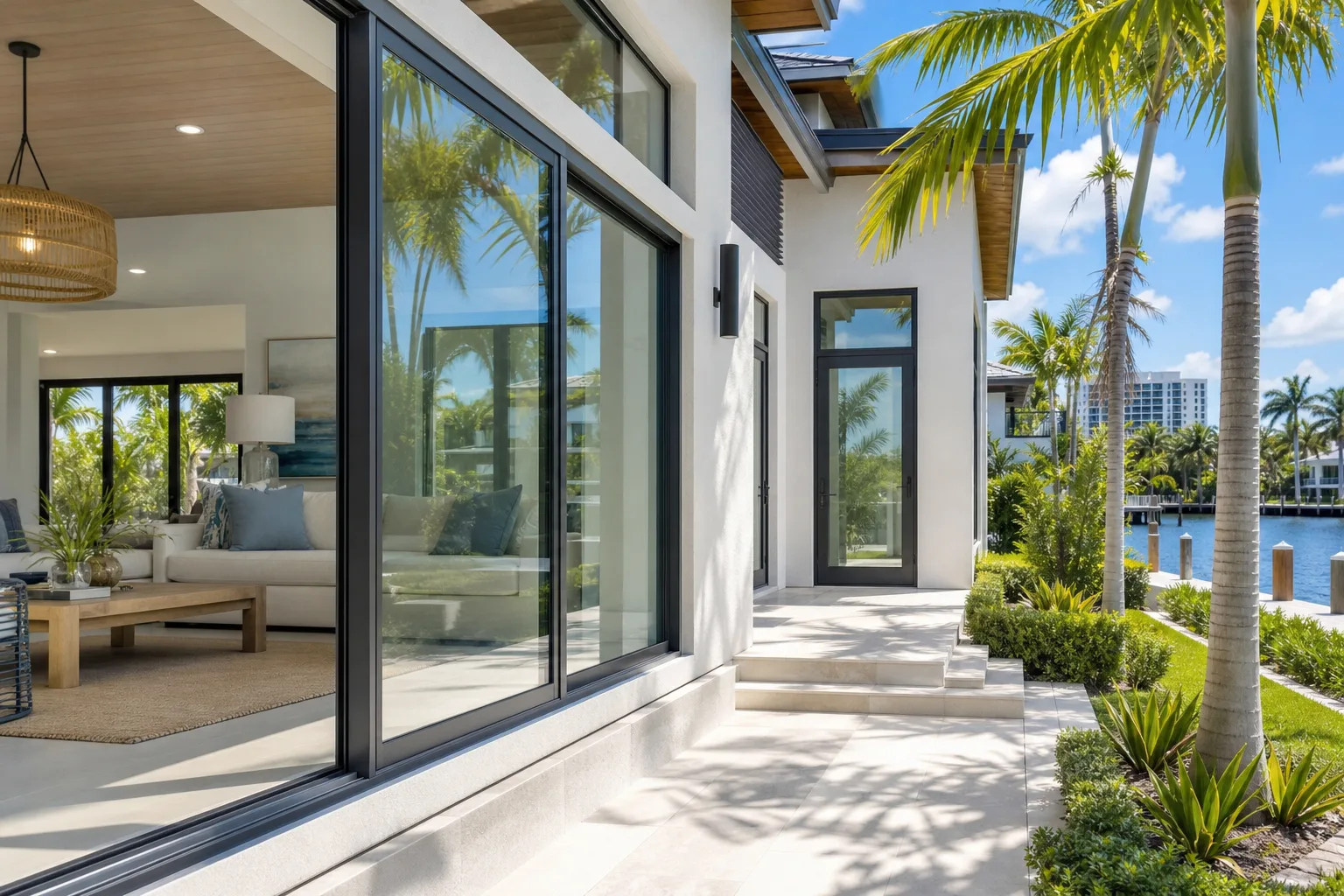
TL;DR: Frame color affects how much solar energy a window frame absorbs and re-radiates into your home. In South Florida's high-UV, high-solar-load climate, this matters more than in most U.S. regions. Color choice interacts with frame material, glass performance ratings, and orientation, so no single option is right for every project.
Most homeowners selecting replacement windows focus on glass specifications: solar heat gain coefficient (SHGC), U-factor, and impact certification. Frame color often gets treated as a finish decision made after the performance specs are locked in. In South Florida's climate, that sequence can work against you.
The five points below explain the specific mechanisms. None of them is a promise of energy savings. Actual results depend on your home's orientation, shading, HVAC system, insulation, and how the finished frame interacts with the glass unit you select.
1. Darker Colors Absorb More Solar Radiation at the Frame Surface
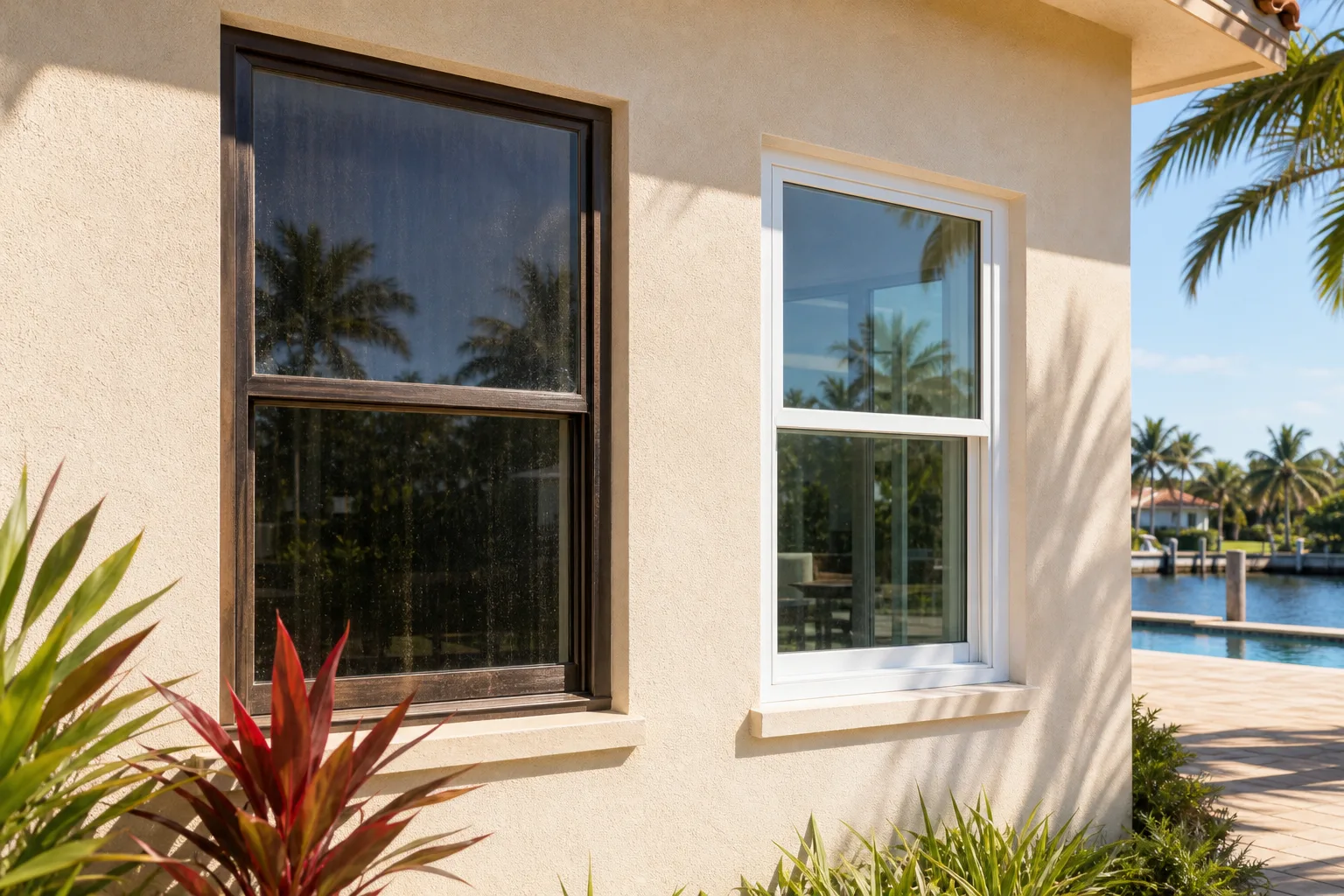
Color determines how much shortwave solar radiation a surface absorbs versus reflects. A standard dark-bronze or black frame finish can reach surface temperatures well above the ambient air temperature on a Florida afternoon. Lighter colors, particularly whites and tans, reflect a larger share of that solar energy before it enters the frame material.
This is a direct consequence of solar absorptance, the fraction of incident solar radiation a surface absorbs. Manufacturers do not always publish this value for specific color options, so you may need to ask your contractor for any available test data or thermal modeling for the specific product and color you are considering.
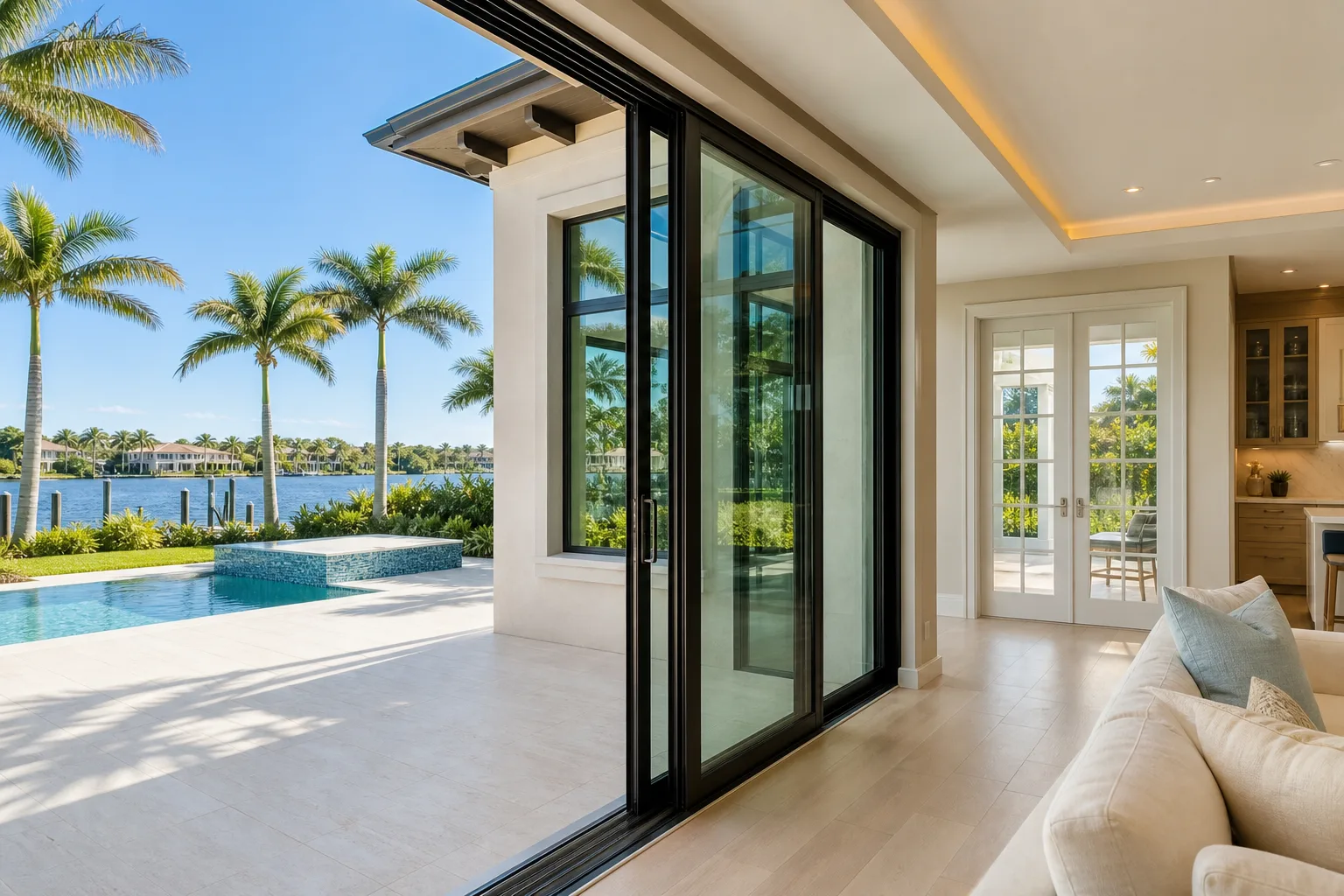
The relevance in South Florida is magnified by the angle and duration of sun exposure. Homes in Palm Beach, Broward, or Miami-Dade counties receive intense direct solar radiation for much of the year, including on west- and south-facing walls where frame temperatures are highest in the afternoon.
2. Heat Absorbed by the Frame Conducts Inward Depending on Frame Material
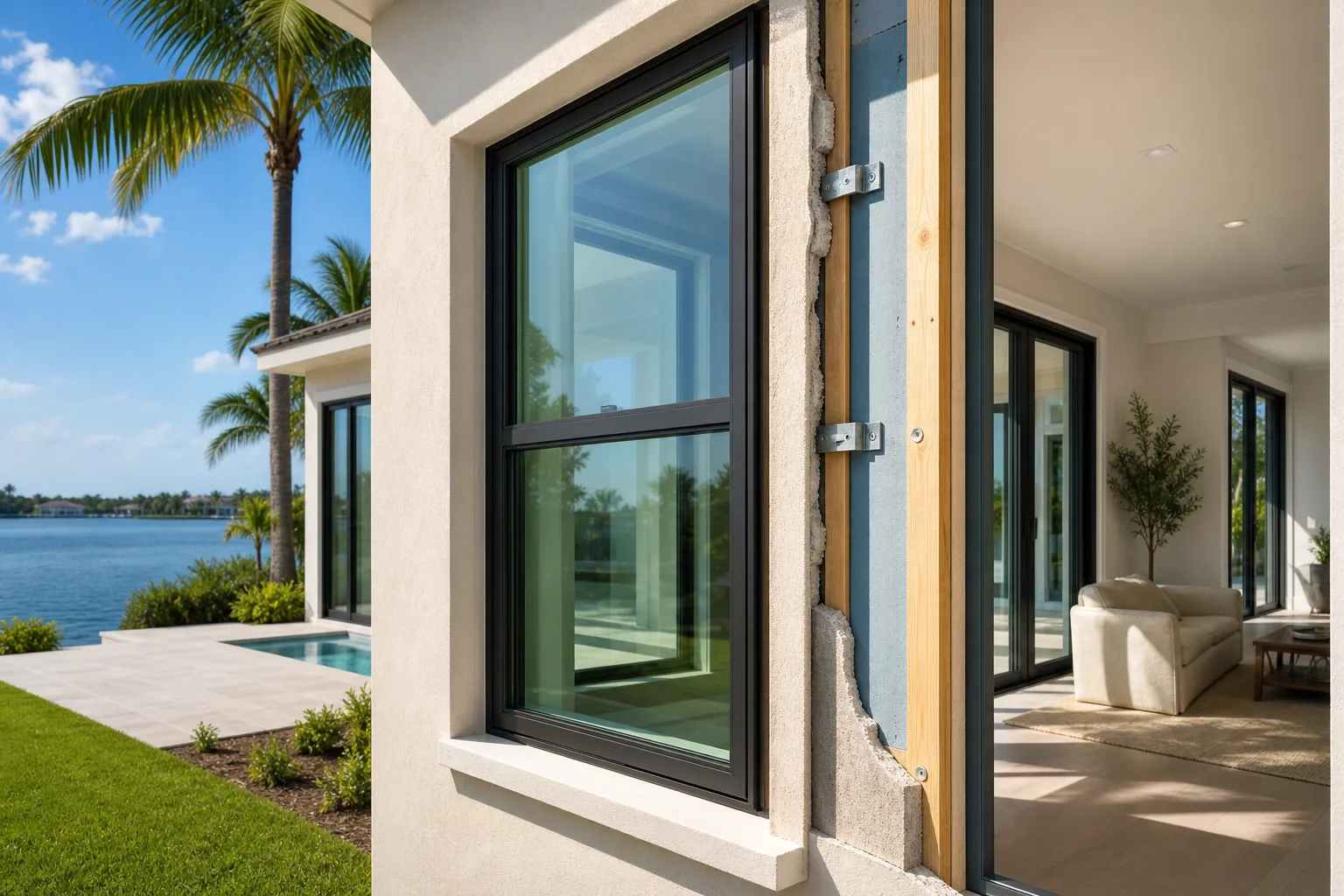
Once a frame surface absorbs solar energy, how much of that heat moves inward depends on the frame material's thermal conductivity. Aluminum frames conduct heat readily. A dark-colored aluminum frame on a west-facing wall can transfer meaningful heat to the interior more efficiently than a vinyl or fiberglass frame of the same color, because aluminum's conductivity is significantly higher.
This is one reason the aluminum-versus-vinyl comparison is relevant not just to corrosion resistance and structural performance but also to thermal behavior. The aluminum vs. vinyl window frame comparison goes into more detail on how material choice plays out in South Florida coastal conditions.
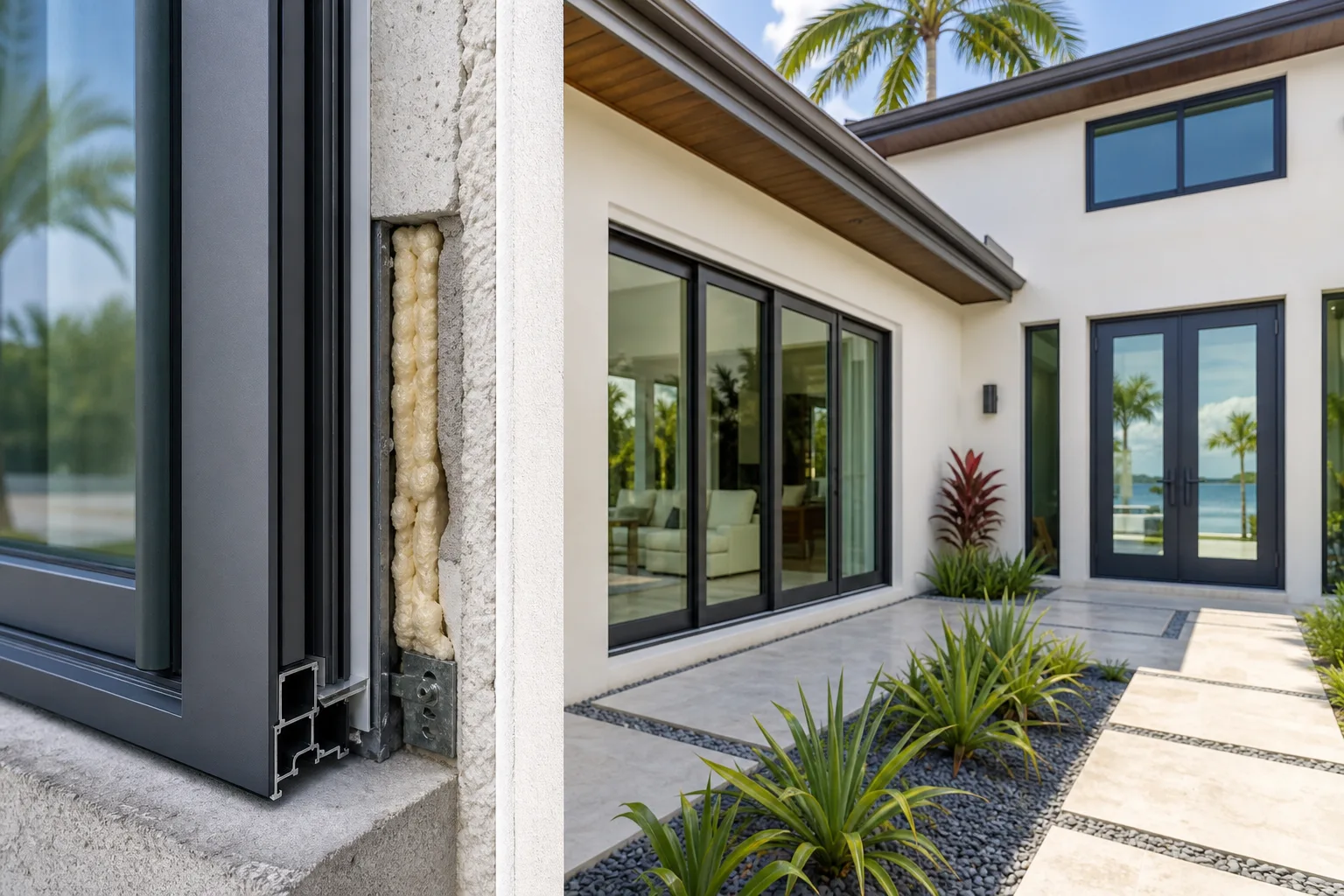
For a dark frame in an aluminum product, the combination of high absorptance and high conductivity is worth evaluating explicitly. Some aluminum systems include thermal breaks that interrupt the conductive path, which partially offsets this effect. Confirm whether a thermal break is present in any aluminum product you are comparing.
3. Radiated Heat From the Frame Interior Surface Adds to Room Load
Even after heat passes through the frame material, the interior face of the frame continues to radiate longwave infrared energy into the room. A frame that has been heated to a high surface temperature by absorbed solar energy will radiate more heat toward occupants and interior surfaces than a cooler frame would.
This is a different mechanism from conduction. It operates even when the frame material is not in direct contact with anything inside the home. Occupants sitting near a large, south-facing window wall with a dark-framed system may notice radiant warmth from the frame independent of air temperature near that window.
The effect is proportional to the frame's surface area and temperature. Larger frames, wider sightlines, or products with more frame area relative to glass area will amplify this mechanism. Consider the frame-to-glass ratio when comparing products for a given opening size.
Compare documented window energy performance. Request a free estimate
4. Color Choice Interacts With Glass SHGC in Ways That Are Not Always Additive
The Solar Heat Gain Coefficient rating published for a window unit applies to the whole window, including a specific frame and glass combination tested together. When a manufacturer rates a window at a given SHGC, that rating was produced under standardized conditions that may not match the actual color or finish you select.
Some manufacturers test and rate their products in a standard color and do not re-rate every custom color variant. If you select a darker frame color that was not part of the rated assembly, the published SHGC may understate the total solar heat gain the installed window produces. Ask your contractor and the manufacturer whether the color you want was included in the rated assembly or tested separately.
Florida Building Code energy compliance requires window products to meet specific performance thresholds. Verify that the rated assembly, not just the glass unit alone, reflects the actual color and configuration you are ordering. This step is easy to overlook when color is treated as a late cosmetic decision.
5. UV and Heat Cycling Degrade Darker Finishes Faster in Florida's Climate
South Florida's UV index and thermal cycling, the daily swing between cooler nights and intense afternoon heat, place frame coatings under sustained stress. Darker colors, which absorb more energy, experience greater thermal expansion and contraction cycles than lighter colors on the same material.
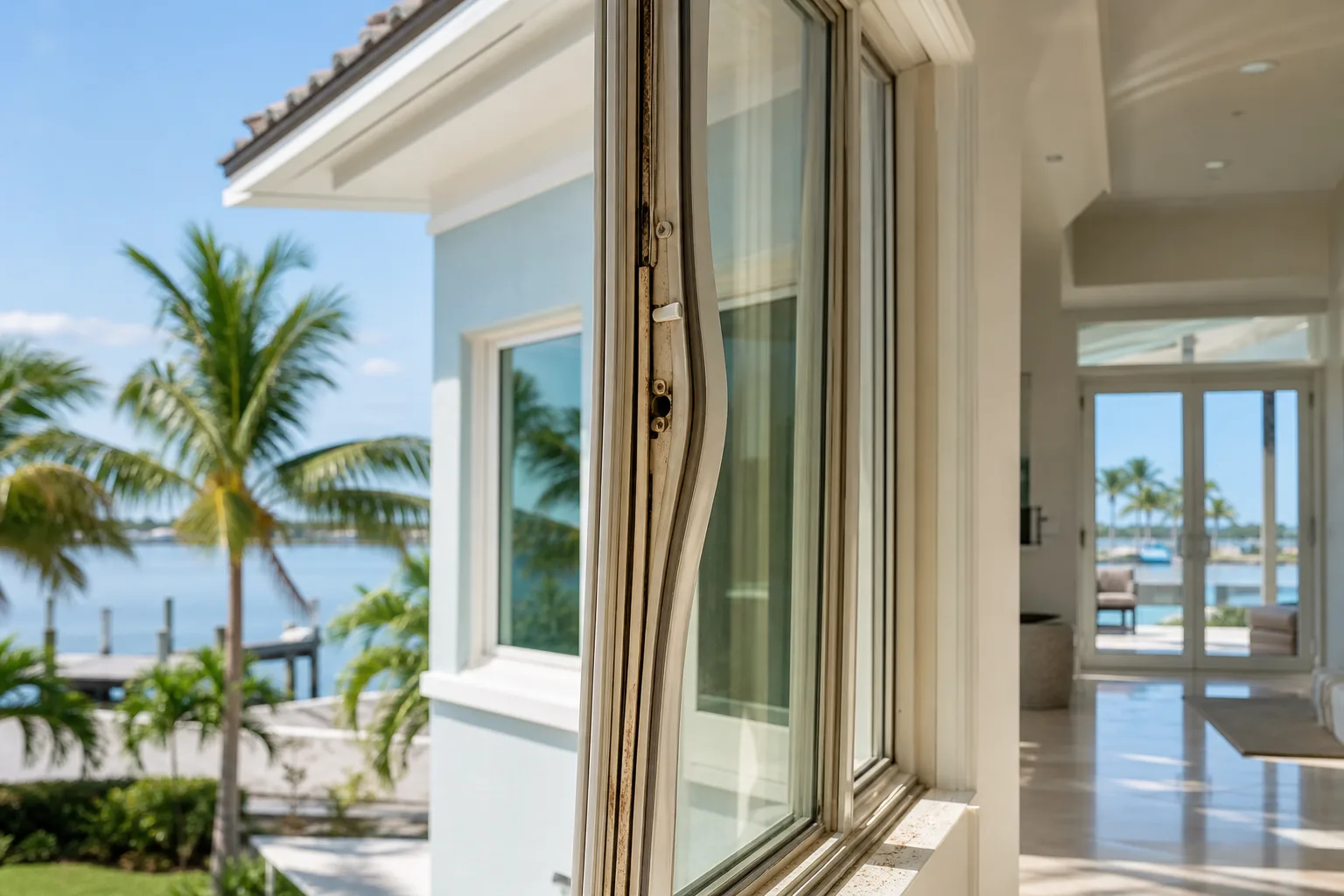
Over time this can affect coating adhesion, particularly on aluminum frames with painted or powder-coated finishes. Fading, chalking, or peeling on a dark frame is not just a cosmetic issue. A degraded coating changes the surface's reflectance properties, potentially increasing solar absorptance as the finish weathers.
Manufacturers warranty their coatings for varying durations. Ask specifically what the warranty covers for the color you are selecting and whether any color options carry shorter coating warranties than others. Some premium anodized finishes and high-durability powder coats perform better under Florida conditions than standard painted finishes, regardless of color, but the durability data should come from the manufacturer, not be assumed.
Bottom Line
Frame color is a genuine performance variable in South Florida, not just an aesthetic one. The five mechanisms above, surface absorptance, conductive transfer by material, interior radiant load, interaction with rated SHGC, and coating durability under UV and thermal cycling, each affect how a window system performs thermally over its service life.
No single color is right for every project. Orientation, shading, frame material, glass specification, and budget all bear on the decision. A lighter color on a west- or south-facing frame in an aluminum product reduces absorbed heat and can simplify the thermal performance picture, but trade-offs in appearance and availability are real.
If you are working through a window replacement project in Palm Beach, Broward, or Miami-Dade, it is worth raising frame color as a performance question alongside glass specifications rather than after them. Request an estimate to discuss product options, including frame material and color combinations, for your specific project.
Compare documented window energy performance.
High-performance glass and insulated frames can help manage heat transfer and cooling use. Results vary by product, property, HVAC system, climate, and use.
Frequently asked questions
Does frame color affect my window's official SHGC rating?
It can. Manufacturers test and rate window assemblies in specific configurations. If the color you select was not part of the tested assembly, the published SHGC may not reflect your actual installed performance. Ask the manufacturer whether your chosen color was included in the rated assembly or tested separately.
Are there frame colors that perform better specifically in South Florida?
Lighter colors, whites, tans, and light grays, reflect more solar radiation and reach lower surface temperatures than darker finishes. However, performance also depends on frame material, orientation, and coating quality. There is no universal best color independent of those variables.
Does a thermal break in an aluminum frame eliminate the color-related heat gain problem?
A thermal break reduces conductive transfer through the frame by interrupting the metal path, which helps. It does not eliminate heat absorbed at the outer surface or the radiant load from a hot interior frame face. Color and thermal break together affect performance, but neither negates the other.
How do I verify a frame coating will hold up to Florida UV before buying?
Ask the manufacturer for the specific coating warranty for the color and product you are considering, and confirm whether it covers fading, chalking, or adhesion loss. Some anodized and high-durability powder-coat finishes carry longer coverage periods than standard painted finishes; get that in writing before ordering.