TL;DR: Early 2026 Atlantic hurricane season forecasts lean toward above-normal activity. South Florida homeowners who haven't yet upgraded to impact-rated windows and doors are running out of low-pressure runway before June 1. If you're already protected, now is the time to inspect, document, and close any gaps.
What Happened
Colorado State University's Tropical Weather and Climate Research group, one of the most closely watched seasonal forecast teams, has been signaling elevated Atlantic basin activity heading into the 2026 season. Warmer-than-average sea surface temperatures in the main development region of the Atlantic, combined with reduced wind shear forecasts, set up favorable conditions for hurricane formation.
We are still months out from peak season. Forecasts issued before June carry real uncertainty. But the pattern here is consistent with what we've seen building over the past several years: warmer water, more storms, and a South Florida coastline sitting squarely in the crosshairs.
For context, the 2024 season delivered Milton and Helene in rapid succession. The 2025 season continued that trend of late-season intensification. The point isn't to alarm you. It's to point out that "waiting to see how the season develops" stopped being a reasonable strategy a few years back.
If your home in West Palm Beach, Boca Raton, Delray Beach, Fort Lauderdale, or anywhere in between still has older single-pane windows or accordion shutters as the primary protection, this article is aimed at you.
Why It Matters
South Florida's Specific Exposure
Palm Beach and Broward counties sit on a peninsula surrounded by warm Atlantic water on one side and the Gulf on the other. There is no geographic buffer. A storm that tracks up from the Bahamas or cuts across the Keys can reach the metro corridor with very little warning time for weakening.
The build environment here is also mixed. Older CBS homes from the 1960s and 1970s often have original jalousie windows or single-pane aluminum frames that would fail well below Category 1 wind speeds. Newer construction built after the 2001 Florida Building Code updates has impact glazing baked in. Everything in between is a wildcard.
Here's what we actually see on real homes: a homeowner installs impact windows on the main living areas and forgets about the garage side door, the master bedroom slider, or the laundry room window. Any unprotected opening is a breach point. It only takes one.
What the Code Actually Requires
Florida's High-Velocity Hurricane Zone designation covers Miami-Dade and Broward counties. Palm Beach County falls under the standard Florida Building Code wind zone, which still mandates impact-rated or protected openings for new construction and permitted replacements.
Any window or door that gets a permit pulled in these counties needs a valid Notice of Acceptance, the NOA, from Miami-Dade or a Florida Product Approval from the state's system. That document confirms the product was tested to the wind speeds and impact requirements specific to your zone.
When you're shopping installers, ask to see the NOA for the product they're proposing. A cut-rate outfit will sometimes spec a product approved for a lower wind zone than your location requires. It passes inspection on paper because the inspector doesn't always catch it. But in a real storm, the product wasn't tested for what's coming at it. That's a shortcut worth asking about directly.
You can read a more detailed breakdown of the product approval and NOA process in our complete guide to hurricane impact windows.
The Insurance Angle in 2026
Florida's homeowners insurance market has been in disruption mode for several years. Carriers are non-renewing policies, adjusting wind mitigation credits, and tightening inspection requirements. One concrete lever homeowners have is a wind mitigation inspection that documents opening protection.
If you have fully permitted, code-compliant hurricane impact windows and doors throughout the home, a licensed inspector fills out the OIR-B1-1802 wind mitigation form. Line items covering roof covering, roof deck attachment, and opening protection each affect your premium. Opening protection, specifically "impact-rated on all openings," is typically the single largest credit line on that form.
The credit varies by carrier. Some are more generous than others. But the math on annual premium savings versus installation cost is worth running before your next renewal cycle.
The Energy Efficiency Factor
This is one people overlook when talking about hurricane prep. Single-pane or older insulated glass units in South Florida work against your AC system hard. The solar heat gain through non-Low-E glass in a south or west-facing wall is substantial. Impact glass with a quality Low-E coating reduces that load.
Most of the impact products we install carry ENERGY STAR certification for the South/Central climate zone. If you're replacing old windows before storm season anyway, you're also solving an energy problem. Our energy efficient windows page goes deeper on what to look for in glazing specs for South Florida's climate.
Get storm-ready before the next season. Request a free estimate
What We Don't Know Yet
Let me be straight with you here. Seasonal hurricane forecasts are probabilistic. A high-activity forecast does not guarantee a landfalling storm in Palm Beach or Broward. We've had hyperactive seasons where South Florida got clipped and quiet seasons with a direct hit. The forecast tells you about basin-wide conditions. It doesn't tell you about your street.
We also don't yet know how 2026 sea surface temperatures in the Gulf of Mexico will behave once we get into August and September. Rapid intensification events, storms that jump a category or two in 24 hours over warm shallow water, have become more common. That's the scenario that matters for South Florida, where a storm sitting in the Bahamas at Category 2 in the morning can arrive as a Category 4 by evening.
Supply chain on impact products has improved since the post-Ian and post-Idalia surge, but lead times for certain custom frame sizes or large commercial units can still run several weeks. If you wait until a storm is named and tracking toward Florida, you will not get windows installed in time. Installers fill up, product allocates out, and permit offices get slammed.
What to Do About It
If You Don't Have Impact Windows and Doors Yet
Get a quote now. Not in April. Now. The permitting process in Palm Beach and Broward counties can take anywhere from a few weeks to a couple of months depending on the jurisdiction and current backlog. The installation itself, for a typical single-family home, runs a few days to a week. You need that buffer before June 1.
Start with window replacement if budget requires you to phase the project. Prioritize the large openings first. Living room picture windows, sliding glass doors, and any opening larger than 40 square feet represent the highest failure risk and the biggest internal pressure consequences if they breach.
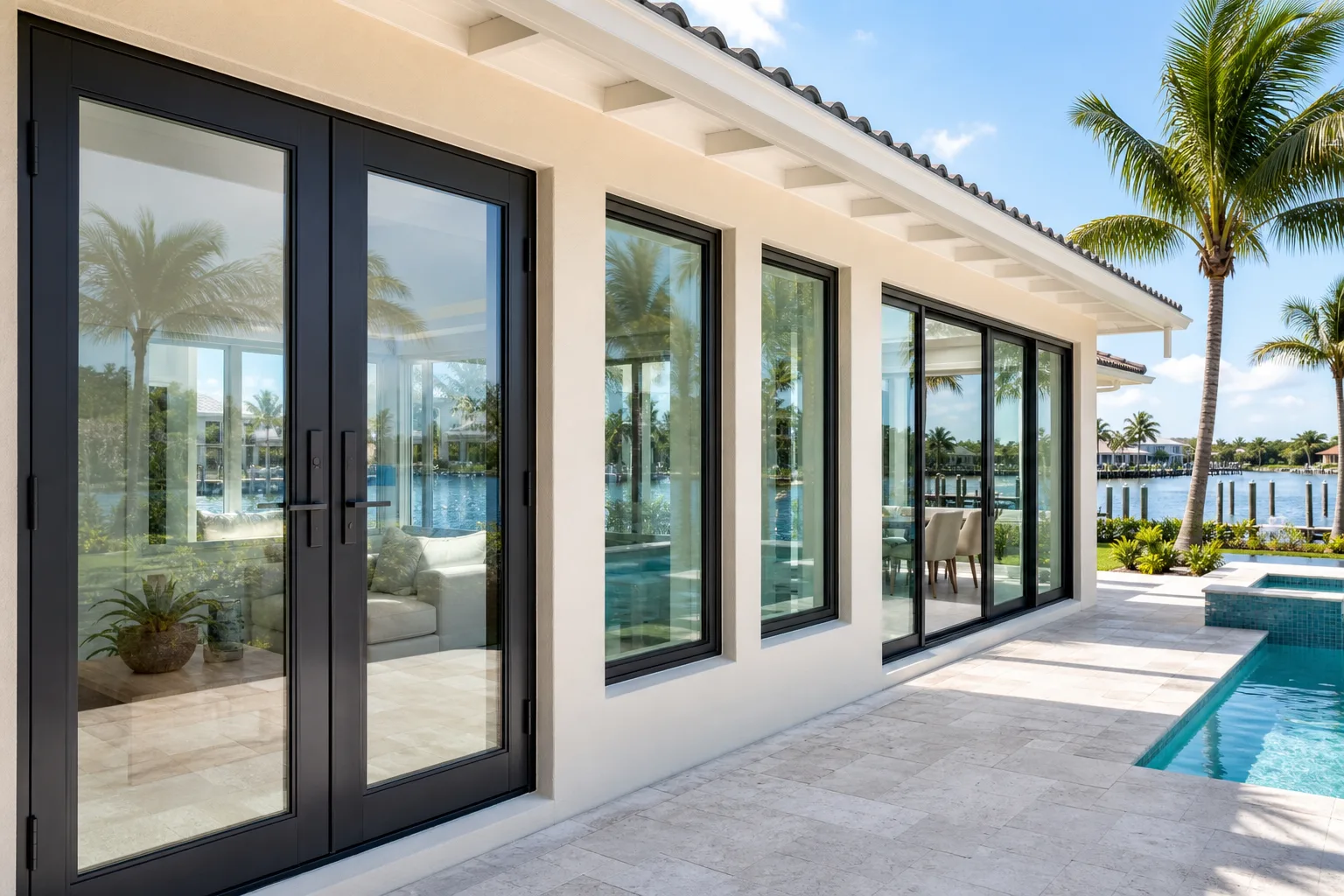
For sliding glass doors, our sliding glass doors page covers the specific glazing and frame requirements for Florida's wind zones. That opening is often the weakest point on older homes.
For the front entry, look at solid-core or impact-rated entry doors. A steel or fiberglass impact door with a reinforced frame and multipoint locking hardware is a significant upgrade over a standard hollow-core unit, even with hurricane shutters over it.
If You Already Have Impact Windows and Doors
Inspect every unit before season starts. Look at the glazing compound around the glass perimeter. On older installations, that compound can dry, crack, and lose its bond. The glass doesn't fall out, but water infiltration follows in a storm, and water intrusion causes its own category of damage.
Check all the weep holes on aluminum frames. They're small slots along the bottom track that let water escape. They clog with dirt and debris in South Florida's environment. A clogged weep hole in a heavy rain event means water backs up into the frame and can find its way inside.
Check hardware. Multipoint locking mechanisms on French doors and sliding doors include cam locks, keeper strikes, and sometimes a top-and-bottom shoot bolt. If any of those feel loose or don't engage cleanly, a storm is not the time to find out.
Make sure you have your permit cards and inspection records accessible. If your home takes damage in a storm and you're filing a claim, the insurance adjuster will ask about the install. Your paperwork is your proof.
Get the Wind Mitigation Inspection
If you've completed a full impact installation but haven't had a licensed wind mitigation inspector out since, schedule that before renewal. The request an estimate page is the right starting point if you also need us to close any remaining gaps in your protection before that inspection happens.
For homeowners in Broward County specifically, our Broward County impact window installation service page covers jurisdiction-specific details that affect your permit and inspection process.
The 2026 season forecast is a data point, not a guarantee. But South Florida's exposure is real, and the preparation window is shorter than people think. Do the work now, while you have time to do it right.
Get storm-ready before the next season.
Impact glass protects your home 24/7 with no panels to put up. Window Guys of Florida handles permits, code, and install end to end.
Frequently asked questions
When should I start a window replacement project to be ready before hurricane season?
Start as early as possible. Permitting alone in Palm Beach and Broward counties can take several weeks to a couple of months. Add installation time and you're looking at two to three months from contract to final inspection. Waiting until spring means you may not get finished before June 1.
Do impact windows qualify for a homeowners insurance discount in Florida?
They can, through the wind mitigation credit process. After a licensed inspector completes the OIR-B1-1802 form and documents impact-rated opening protection on all openings, carriers typically apply a credit to your wind premium. The dollar amount varies by carrier and policy structure.
What is an NOA and why does it matter for my impact window installation?
An NOA, or Notice of Acceptance, is issued by Miami-Dade County and confirms a product has been tested to specific wind speed and impact requirements. It is the benchmark document for South Florida impact products. If your installer cannot produce an NOA or a Florida Product Approval for the product they're proposing, that's a red flag.
Are hurricane shutters still acceptable if I already have them on my home?
Code-compliant shutters are still a permitted form of opening protection in Florida. The practical trade-offs are the time and effort required to deploy them before a storm and the fact that they provide no everyday benefit like energy savings or noise reduction. Many homeowners in Palm Beach and Broward are phasing shutters out in favor of permanent impact glazing.
What openings do people most commonly forget when going impact-resistant?
Garage side doors, laundry room windows, and secondary bathroom windows are the most common gaps we find on homes that were partially upgraded. Any unprotected opening is a breach point. One failed opening in a hurricane creates interior pressure that can damage the roof structure from inside.
How do I know if my existing impact windows still meet current Florida Building Code requirements?
Check the permit documentation and the product label on the frame for the NOA number or Florida Product Approval number. If the installation was permitted and passed final inspection under the code in effect at the time, it generally remains grandfathered for existing openings. Any new replacement work requires compliance with the current code.