TL;DR: Most sliding impact door operation problems trace back to a dirty or dented track, a failed roller, a misaligned frame, or a roller height adjustment that has drifted. You can clean and re-adjust yourself; roller replacement and frame corrections require a licensed contractor familiar with the door's approval documentation.
What You Need
- Flat-blade screwdriver and Phillips screwdriver
- Silicone-based lubricant (not WD-40 or oil-based spray, which attract dirt)
- Stiff nylon brush or old toothbrush
- Flashlight
- Tape measure
- Level (optional but useful)
- Phone camera to document anything unusual before touching it
Step 1: Inspect the Track Before Anything Else
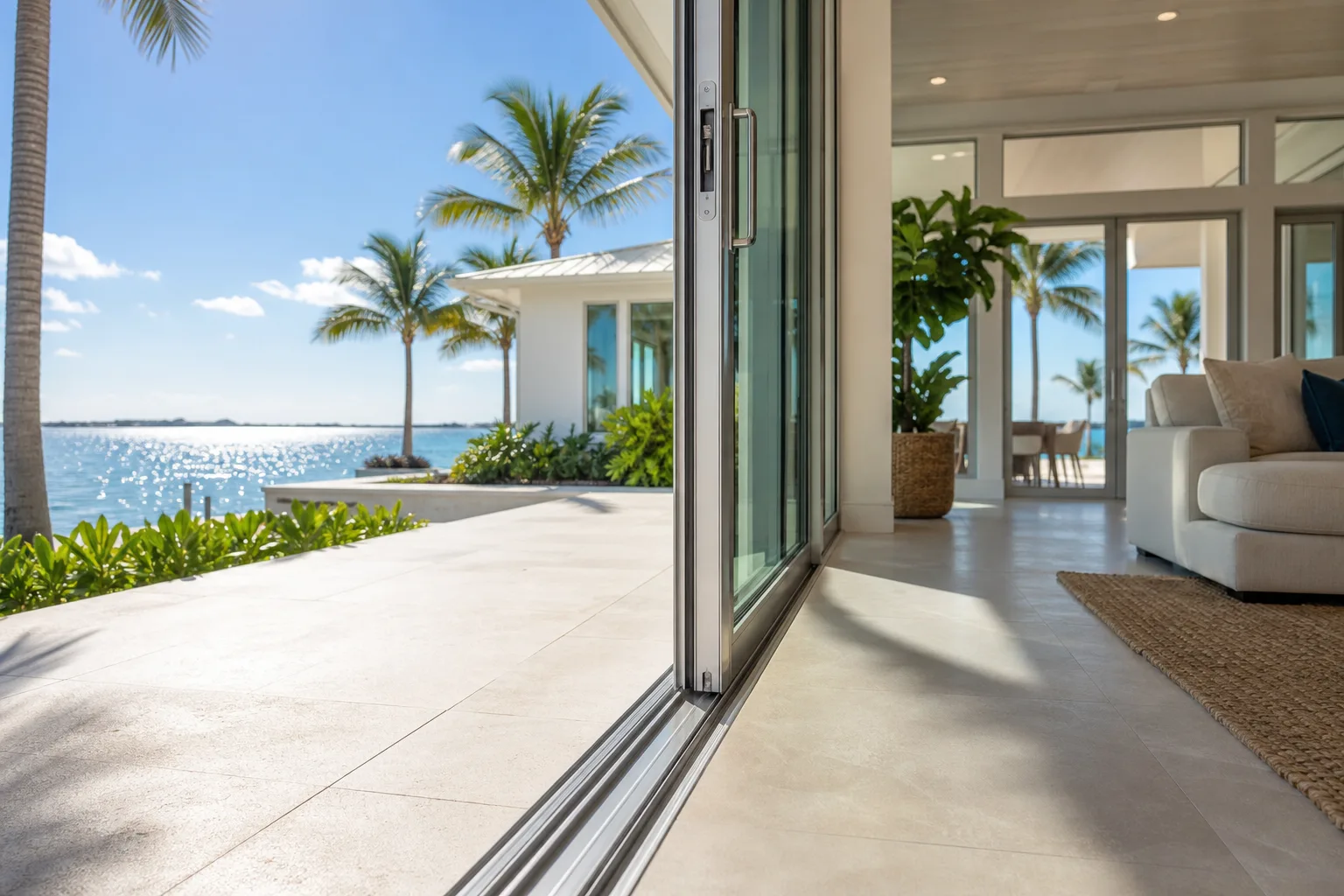
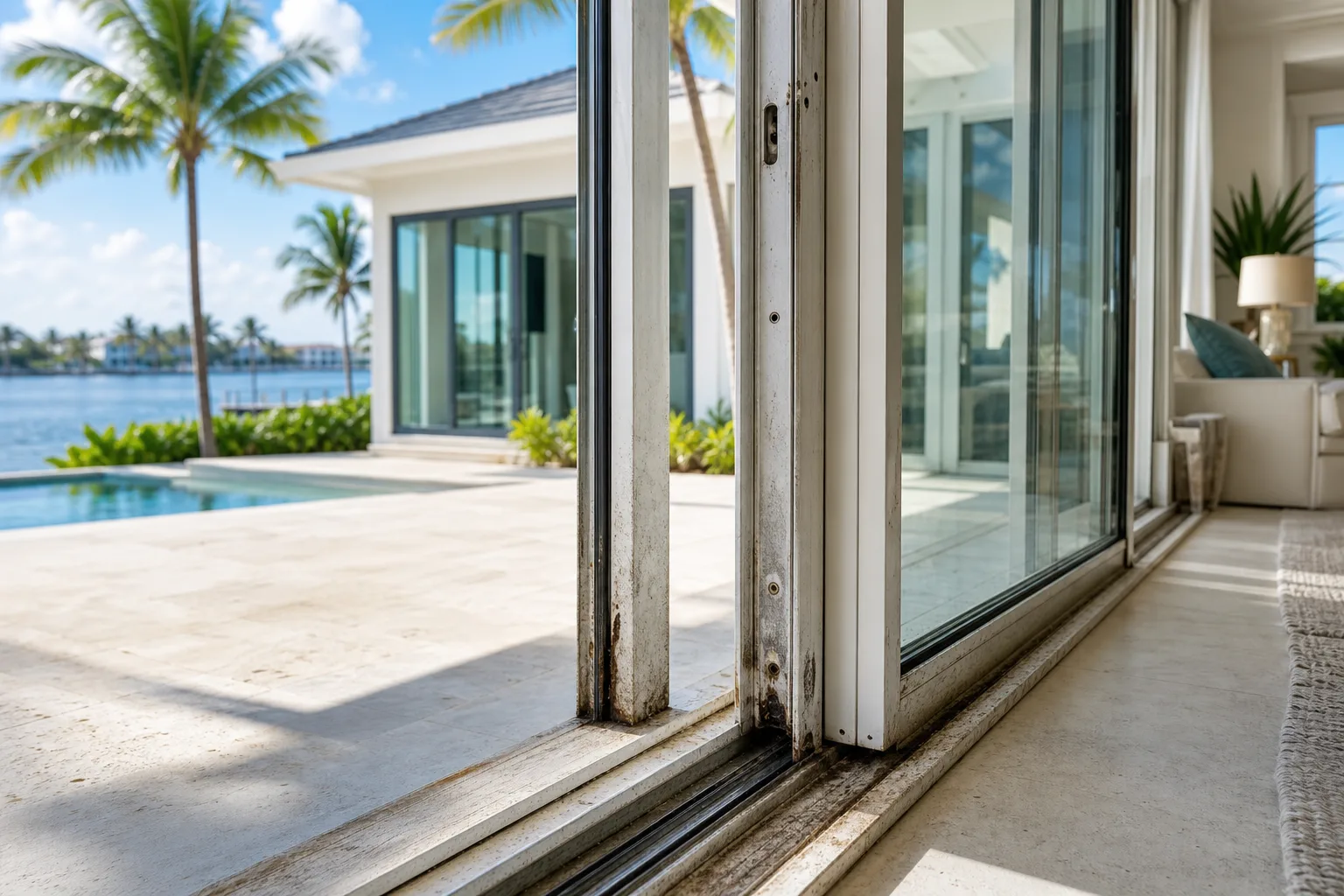
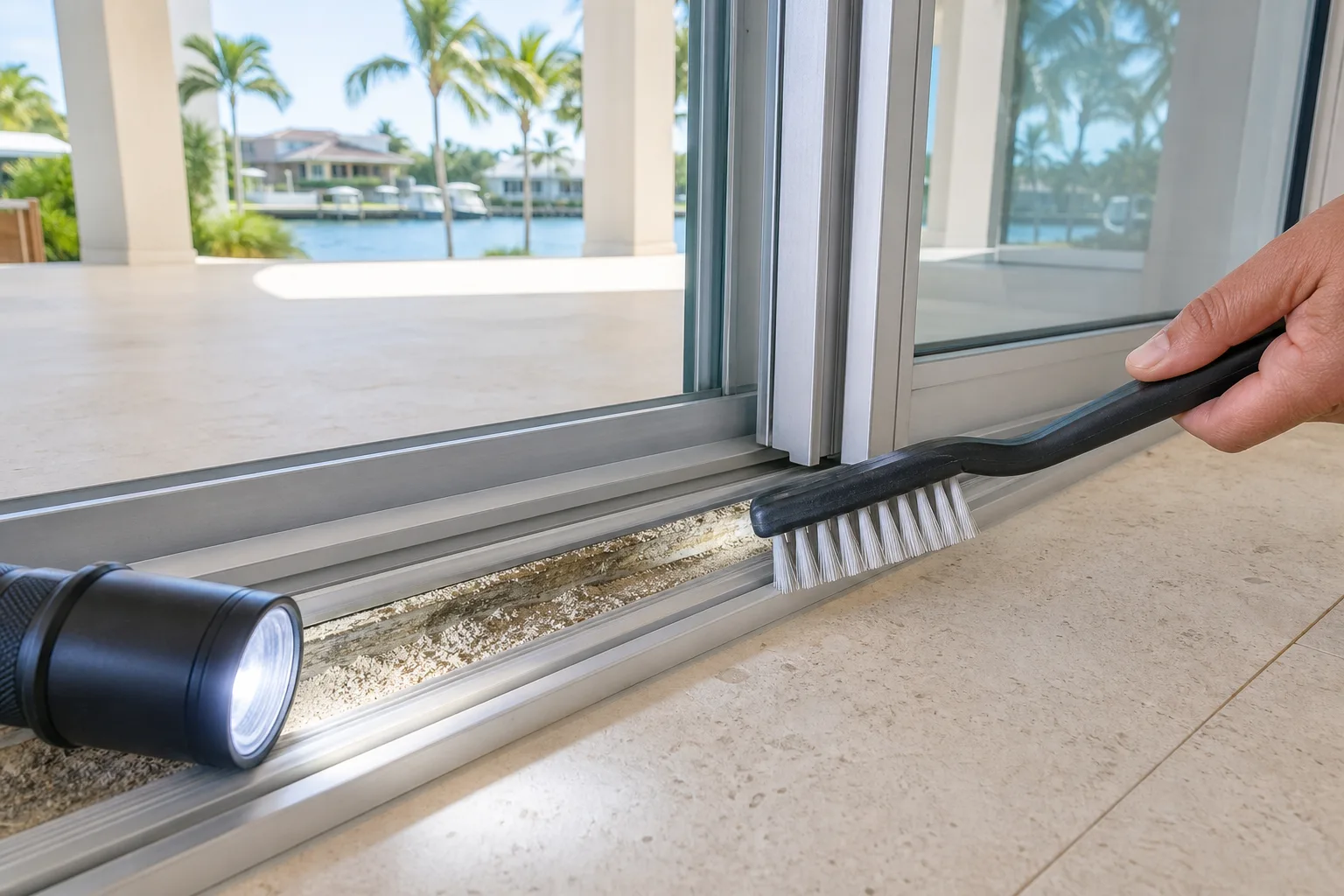
Lay a flashlight along the bottom track and look from one end. You are checking for:
- Sand, grit, and debris packed into the channel (very common near the coast)
- Bent or dented track sections from impact or foot traffic
- Corroded aluminum that has swollen or pitted
- Screws or hardware that have backed out and protrude into the channel
Brush the track clean with the nylon brush, then vacuum or blow out the debris. Run a dry cloth through the channel. If the track has visible dents or the aluminum has corroded through, cleaning will not restore smooth operation. Note that location and move to the next step.
Step 2: Check the Roller Adjustment Screws
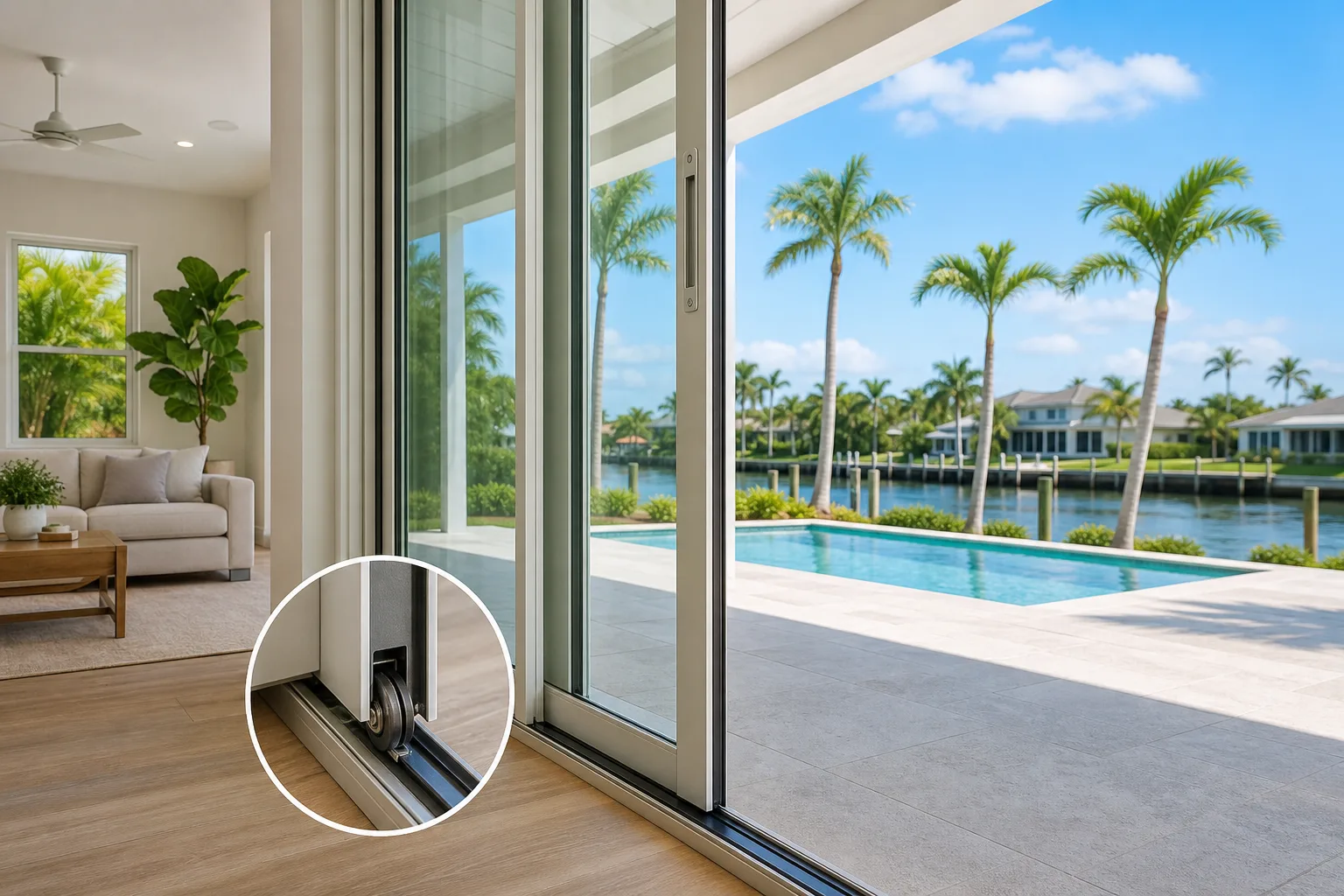
Every sliding impact panel rides on two or more rollers. Most manufacturers include an adjustment screw, usually accessible through a plug hole at the bottom corner of the panel face or through the door edge. Turning it raises or lowers the panel relative to the track.
What to look for:
- Too low: The panel bottom drags on the track surface or the weatherstrip catches.
- Too high: The top of the panel loses contact with the upper guide and can walk off-track.
- Uneven side to side: One corner lower than the other causes the panel to cock and bind.
Turn the adjustment screw in small increments (one-quarter turn at a time). Slide the door after each adjustment. The panel should glide with light, even pressure and the top guide should stay seated throughout the travel.
Note: adjustment screw location and range vary by manufacturer. PGT, CGI, SIW, and ES panels each have their own roller cassette designs. Check the manufacturer's installation or owner documentation if you cannot locate the screw.
Step 3: Examine the Rollers Themselves
If adjustment does not fix the drag, the roller wheel may be worn, cracked, or seized. You can often see roller condition by tilting the panel slightly and looking at the wheel, or by removing the panel from the frame entirely.
Panel removal on most sliding impact doors: lift the panel up into the upper track until it clears the lower track, then tilt the bottom out. Impact panels are heavy. A standard 6-foot sliding impact door panel can weigh 80 to 150 pounds or more depending on glass thickness and frame size. Do not attempt removal without a second person and a plan to set the panel down safely.
Worn rollers show:
- Flat spots on the wheel
- Cracked or brittle plastic or nylon wheels
- A wheel that does not spin freely when you push on it
- Roller housing that is broken or bent
Replacement rollers must match the original cassette. Using an incorrect roller can affect the panel's ability to meet its Miami-Dade or Florida Product Approval rating in a storm. Source replacement parts from the door manufacturer or a licensed dealer.
Compare impact-door options for your project. Request a free estimate
Step 4: Check the Frame for Level and Square
A frame that has racked or settled will force the track out of plane. Even a small shift, 1/8 inch or less, can cause a panel to bind or come off-track repeatedly.
How to check:
- Place a level on the bottom track along its full length. Note any rise or dip.
- Measure the diagonal corners of the rough opening or the door frame. If the two diagonals differ by more than 1/4 inch, the frame is out of square.
- Look at the gap between the panel edge and the frame jamb. A gap that is wider at the top than the bottom (or vice versa) suggests racking.
Frame issues are not a DIY fix. Adjusting a structural rough opening involves the fastener pattern that holds the door's wind-load approval in place. Work that disturbs the installation anchors can void the Miami-Dade or Florida Building Code approval. A licensed contractor who can pull the original permit and product approval documentation should assess and correct frame problems.
See /3-reasons-shouldnt-diy-your-impact-windows for a broader look at where DIY stops being appropriate on impact products.
Step 5: Evaluate the Upper Guide and Anti-Lift Blocks
The upper track or guide keeps the panel from lifting off the lower rollers. Over time the guide channel can:
- Accumulate debris that prevents the panel from seating fully
- Develop corrosion that narrows the channel
- Lose its anti-lift block if a screw backed out
Clean the upper channel the same way you cleaned the lower track. If the panel rocks or lifts more than a few millimeters when you push up on it, the anti-lift hardware may need adjustment or replacement. This is typically a straightforward screw adjustment but requires knowing the correct clearance specification for the panel model.
Common Mistakes
Using oil-based lubricants. WD-40 and similar products feel like they help initially but attract grit and accelerate debris buildup. Use silicone spray only.
Adjusting one side only. If you raise the roller height on one corner without checking the opposite corner, you introduce a cant that binds the panel at a different point in the travel.
Forcing a panel that resists. If the panel will not move after cleaning and adjustment, stop. Forcing it can crack the glazing, break the roller housing, or damage the frame seal. A cracked impact glass unit must be replaced, not repaired.
Removing the panel alone. Impact panels are significantly heavier than standard sliding glass door panels. Solo removal risks panel drop and glass breakage.
Assuming the problem is cosmetic. A door that does not fully close and latch does not meet its rated air and water infiltration performance, and in a storm event it may not hold its wind-load rating. Treat an inoperative sliding impact door as a functional safety issue, not a convenience issue.
Bottom Line
Start with track cleaning and roller height adjustment. Those two steps resolve the majority of sliding impact door operation complaints and are within most homeowners' capability. If cleaning and adjustment do not fix the problem, or if you find dented track, seized rollers, or a frame that is out of level or square, the next call should be to a licensed contractor.
Window Guys of Florida installs impact doors across Palm Beach, Broward, Miami-Dade, Martin, and St. Lucie counties, working with a range of impact door products. If your sliding impact door needs evaluation or you are weighing a replacement, request an estimate or review our impact door options to understand what current product lines offer.
Compare impact-door options for your project.
Review entry, French, and sliding-door assemblies against the exact opening, approval, design pressure, exposure, glass, hardware, and installation scope.
Frequently asked questions
Can I use any replacement roller, or does it have to match the original?
It should match the original manufacturer's roller cassette. Impact door panels carry a Florida Product Approval or Miami-Dade Notice of Acceptance tied to specific hardware. Installing an incorrect roller can affect the door's rated performance and may not be code-compliant. Contact the door manufacturer or a licensed dealer for the correct part number.
How often should I clean sliding impact door tracks in South Florida?
A general guideline is every one to three months in coastal or high-traffic settings, where salt air and sand accelerate debris buildup. After any tropical weather event, inspect and clean the track promptly regardless of schedule. Frequency depends on your specific environment and how often the door is used.
Will homeowner's insurance cover a damaged sliding impact door track or roller?
Coverage depends on the cause and your specific policy. Damage from a named storm event may fall under your windstorm policy, while wear-and-tear damage typically does not. Review your policy language and contact your insurer before assuming coverage; results vary by carrier and claim circumstances.
My door came off the track during a storm. Is the glass still impact-rated?
A panel that has been dislodged should be inspected by a licensed contractor before being returned to service. The glazing seal, roller housing, and frame anchors may have sustained damage that is not visible to the eye. Do not assume the unit is still fully rated without a professional assessment.