
TL;DR: A sliding glass door usually needs replacement, not another repair, when the frame is compromised, the glass has failed internally, or the door was never rated for wind pressure and impact in the first place. Cosmetic issues like a sticky roller or a worn weep hole can often be fixed. Structural, glazing, or code-related issues generally cannot.\n\nSliding glass doors take more abuse than almost any other opening in a South Florida home. They cycle open and closed thousands of times, sit exposed to salt air, and in older homes they were often installed decades before current wind-load codes existed. At some point, a homeowner has to decide whether to keep patching a door or replace it with something built for how the house is used today. Below are seven signs that point toward replacement rather than repair, along with an honest note on where a licensed contractor needs to look at the actual door before anyone commits to a scope of work.\n\n## 1. The frame is bent, bowed, or pulled away from the opening\n\nA sliding door frame that has separated from the rough opening, even slightly, is not something a hardware adjustment fixes. This usually happens after years of settling, a storm event, or an installation that was never properly anchored. Once the frame itself is out of square, the panels will not seal correctly no matter how many new rollers or weatherstrips get installed. If you can see daylight at the corners, feel the frame flex when you push on it, or notice the door rubbing unevenly across its track, the frame is the problem, and frames are not a repair item.
2. Glass has visible fogging or a cloudy haze between panes
Modern sliding doors use insulated glass units, two panes with a sealed air or gas space between them. When that seal fails, moisture gets trapped and the glass fogs permanently. No amount of cleaning removes it because the moisture is inside the sealed unit, not on the surface. This is a manufacturing or age-related seal failure, and while a glass-only unit swap is sometimes possible on newer doors, on older non-impact doors it is frequently more practical, and often similarly priced, to replace the whole door with a current impact-rated unit. For a closer look at diagnosing this specific issue, see our guide on spotting failed window seals and fogging.
3. The door was installed before your county's current wind-load code
South Florida's building codes tightened significantly after Hurricane Andrew, and they have been revised multiple times since. A sliding door installed in the 1980s or 1990s, even if it still operates smoothly, was very likely never engineered to current wind pressure or large-missile impact standards. This is not a cosmetic issue, it is a documentation and structural issue. If you do not know the age or approval status of your door, that is worth confirming before a storm season, not after one. Our overview on 10 reasons South Florida homeowners choose impact windows and doors explains why this distinction matters for insurance and code compliance, and the hurricane impact doors page covers what a current-code replacement looks like.
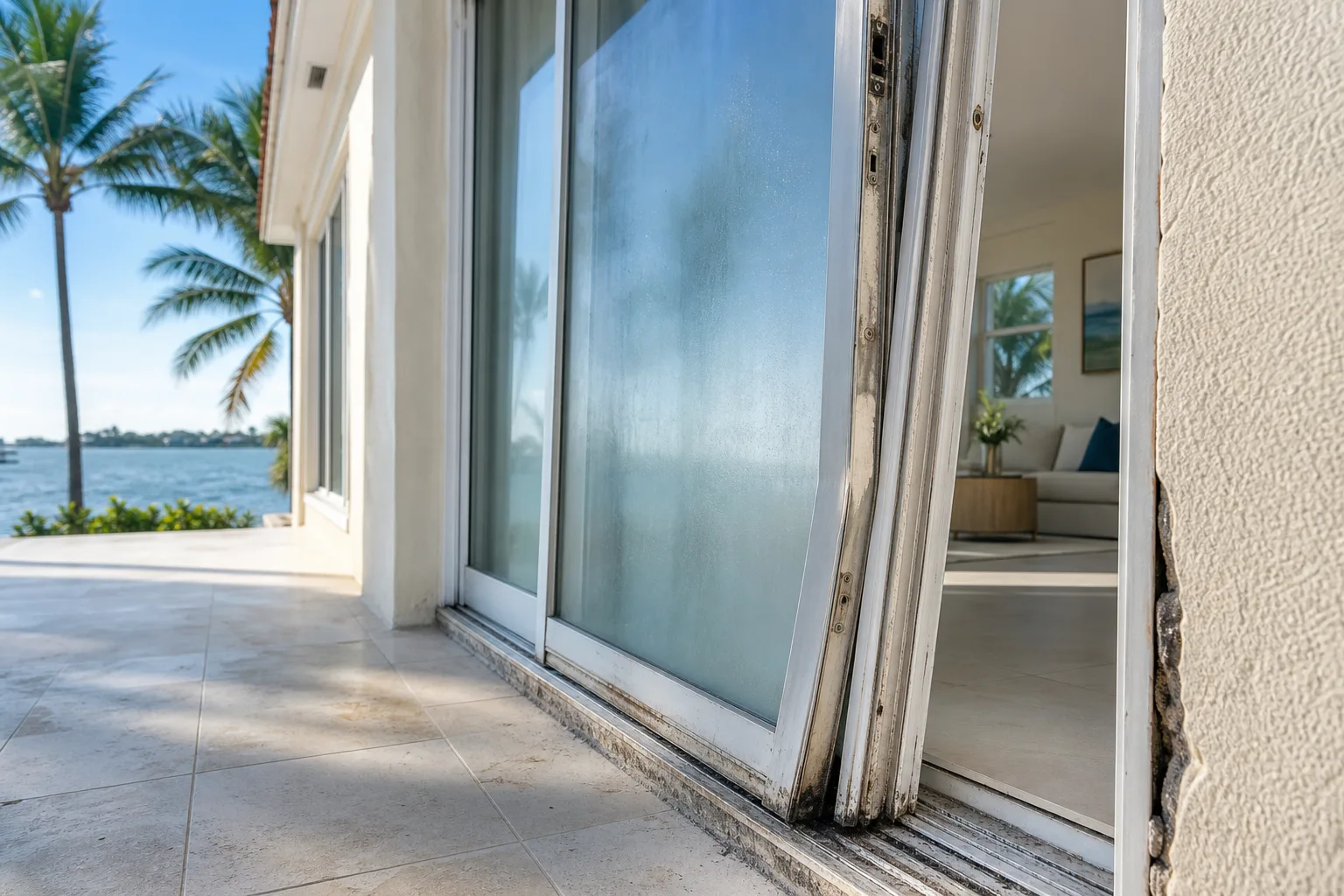
4. Water intrudes during heavy rain, not just wind-driven storms
A little water at the threshold during a sideways tropical storm might point to a worn sweep or a clogged weep hole, both repairable items. But if water is coming in during ordinary heavy rain, especially around the frame rather than just the sill, that usually means the sealant, flashing, or frame integration has failed at a structural level. Repeated water intrusion also risks wall and subfloor damage behind the door, which turns a door problem into a much larger repair. If you're already seeing signs of water damage elsewhere near openings, it's worth reading about the types of home damage that occur during a storm to understand how these issues compound.
5. The door is heavy, hard to slide, and the track is visibly worn or corroded
Some sliding resistance is a simple roller adjustment or track cleaning, both legitimate repairs. But if the track itself is pitted, corroded, or bent from years of salt air exposure, replacing rollers will not solve the underlying problem. Salt air is particularly hard on hardware in coastal Palm Beach, Broward, and Miami-Dade communities, and corrosion damage to tracks and frames tends to be progressive rather than something that stabilizes on its own. Our piece on how salt air corrodes window hardware walks through why this happens faster near the coast and what it means for aging doors specifically.
Compare impact-door options for your project. Request a free estimate
6. You've had the same door repaired more than once in a few years
One repair is normal maintenance. A second or third repair on the same door within a short window is a signal that the door is reaching the end of its practical service life. Rollers, locks, and weatherstripping are wear items, but when they keep failing on the same unit, it often means the frame is under stress, the door is past its intended lifespan, or the original installation had a flaw that keeps resurfacing. At that point, continued repair spending rarely makes sense compared to a single replacement that resets the clock and brings the opening up to current standards.
7. The door does not meet the DP rating or impact rating your home needs
Even a door in decent physical condition can be the wrong door for your address. Homes closer to the coast, in higher wind-borne debris regions, or in certain HOA and insurance categories need a specific design pressure rating, and an older non-impact slider often does not come close. This is not something you can eyeball, it requires knowing your home's wind zone and the door's actual tested rating, which should be documented on the label or in the manufacturer's approval paperwork. If you are unsure what your home requires, our guide on what DP rating your South Florida home needs is a good starting point, and a written scope from a licensed contractor should confirm the specific rating for your exact address and exposure category before any product gets ordered.
What repair can still handle
It's worth being fair to repair as an option, because not every issue on this list applies to every door. Sticky rollers, a torn screen, a failing lock mechanism, minor weatherstrip wear, or a clogged weep hole are all legitimate repair items on an otherwise sound door. The distinction that matters is whether the problem is in the moving parts and consumable seals, which are replaceable, or in the frame, glass unit, or code compliance, which generally are not. A contractor who inspects the door in person should be able to tell you honestly which category your issue falls into rather than defaulting to either extreme.
Bottom line
A sliding glass door doesn't have to be visibly broken to be a liability. Frame separation, internal glass fogging, pre-code installation, chronic water intrusion, salt-corroded tracks, repeat repairs, and an inadequate DP rating are all signs that point toward replacement rather than another patch job. If your door shows one or more of these signs, the next reasonable step is a written, project-specific evaluation, since engineering requirements, permit needs, and product options vary by address and exposure category. You can review options for windows and doors replacement or request an estimate to get a scope specific to your home, and if you have questions before that, our contact page is the fastest way to reach a licensed contractor for guidance.
Compare impact-door options for your project.
Review entry, French, and sliding-door assemblies against the exact opening, approval, design pressure, exposure, glass, hardware, and installation scope.
Frequently asked questions
How do I know if my sliding glass door needs repair or full replacement?
Repair usually makes sense for wear items like rollers, locks, screens, and weatherstripping. Replacement is the better path when the frame is bent or separated, the glass has internal fogging, the door predates current wind codes, or you've had repeated repairs on the same unit.
Can a foggy sliding glass door pane be fixed without replacing the whole door?
On some newer doors, a glass-only unit swap is possible if the frame and hardware are otherwise sound. On older non-impact doors, it's often comparably priced and more practical to replace the entire door with a current impact-rated unit, so it's worth getting both options quoted.
Does an old sliding glass door affect my homeowners insurance?
It can. Many insurers offer credits or require specific wind mitigation documentation for openings, and an older non-impact slider may not qualify. A licensed contractor or your insurance agent can confirm what documentation your specific policy requires.
How long do sliding glass doors typically last in South Florida?
Lifespan varies widely based on proximity to the coast, exposure to salt air, and how well the door was maintained, so we won't cite a specific number without knowing your situation. Coastal salt exposure tends to accelerate hardware and frame wear compared to inland locations.
Do I need a permit to replace a sliding glass door in Florida?
In most South Florida jurisdictions, replacing a sliding glass door requires a permit and product approval documentation, especially for impact-rated units. Permit requirements vary by county and municipality, so confirm specifics with your contractor before work begins.
What DP rating do I need for a sliding glass door replacement?
The required design pressure rating depends on your home's location, wind zone, and exposure category, and it should be confirmed for your specific address rather than assumed. A licensed contractor can review your home's requirements and match a door with documented, tested approval for that rating.