TL;DR: A successful wind mitigation submission depends on three categories of paperwork: proof that qualifying products were installed, proof that the installation met Florida Building Code, and a completed OIR-B1-1802 inspection form signed by a qualified inspector. Gathering those records before the inspector arrives helps avoid documentation gaps. This guide concerns requesting premium credits for protective features, not filing an insurance claim for storm damage. A qualifying inspection may support a credit; your insurer determines eligibility and any premium change.
What you need
Before scheduling a wind mitigation inspection, locate or request the following:
- Applicable product approval records for installed impact windows, impact doors, or shutters, including Florida Product Approval numbers or locally accepted approvals
- Permits pulled for each opening-protection project, with the final inspection sign-off from your local building department
- Miami-Dade Notice of Acceptance (NOA) documents, if used for your project, or Florida statewide product approvals that explicitly permit HVHZ use where required; confirm the applicable approval route with your local building department
- Manufacturer installation instructions that were on file at permit time, showing the product was installed per its tested parameters
- Photos taken during installation, especially of anchor clips, buck framing, sealant, and any structural connections
- A copy of the completed OIR-B1-1802 form from any prior inspection, if one exists
- Your current insurance declarations page, so the inspector and your agent are quoting against the same policy structure
If your contractor pulled the permit, the permit package including product approvals should already be in your local building department's records. You can request copies from your county's building division portal.
Step 1: Confirm which form your insurer uses
Florida's standard wind mitigation form is the OIR-B1-1802. The Florida Department of Financial Services says inspections performed from April 1, 2026 onward must use Rev. 04/26. It also explains that admitted insurers must accept a valid form completed and signed by an authorized inspector. Ask your agent about submission procedures and any supplemental documentation.
Call your insurance agent and ask two questions before scheduling an inspection:
- Do you accept the OIR-B1-1802, or do you require a supplemental form?
- Is the inspector authorized to complete and sign the current form? A home inspector license alone is insufficient without the required hurricane-mitigation training and proficiency requirements; other authorized categories are explained below.
This prevents paying for an inspection that your insurer won't accept.
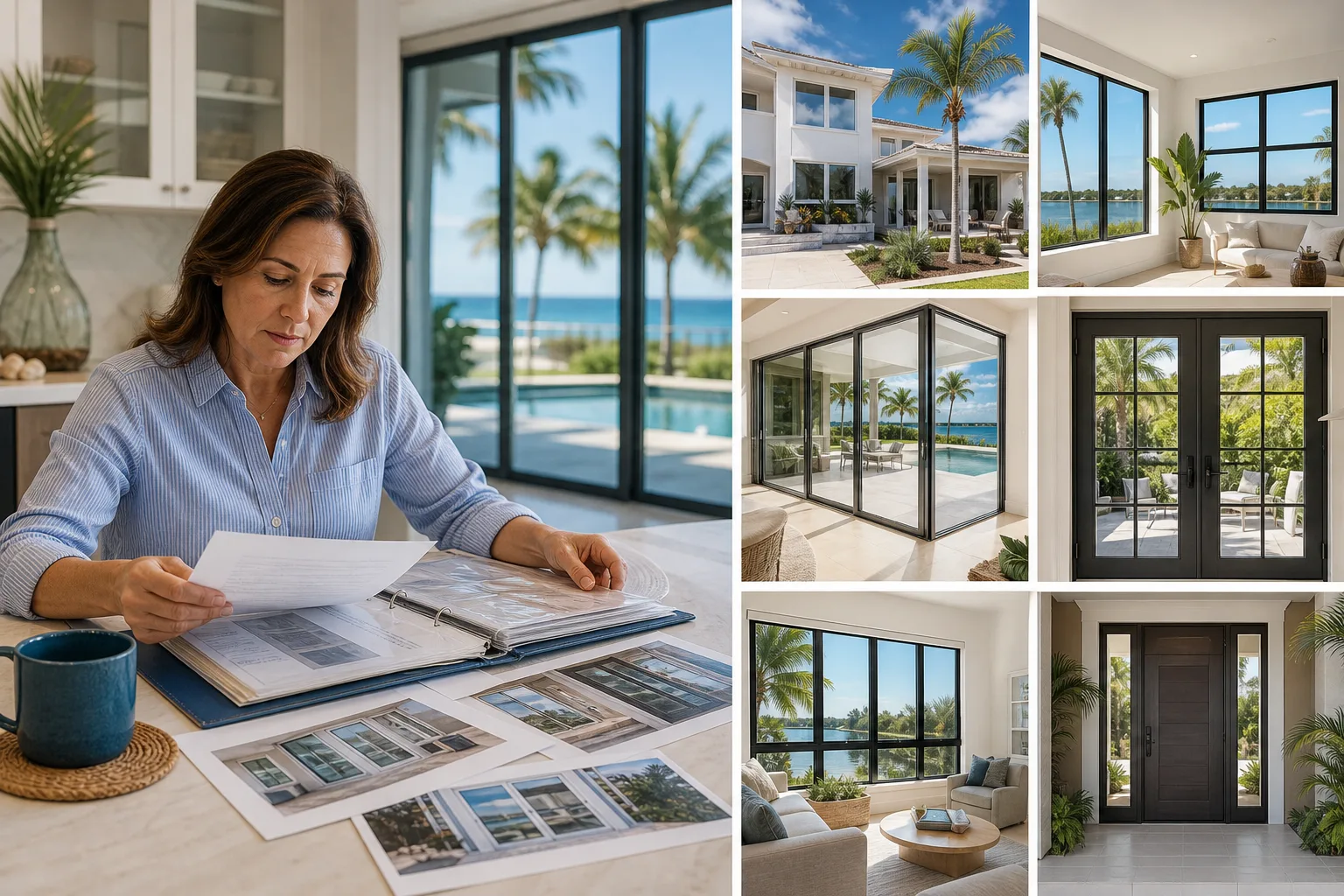
Step 2: Pull your permit and product approval records
For opening-protection documentation, start with the applicable product approval. The Florida Building Commission product approval search lets you search by FL number or manufacturer. Other mitigation features, including roof construction, have their own inspection and documentation requirements.
Miami-Dade also maintains a local product approval system. Check the actual approval documents and limitations for your opening and installation, rather than treating an approval number as a blanket compliance guarantee. The Miami-Dade windows, shutters and doors permit checklist accepts Florida Building Commission product approvals; a Miami-Dade NOA is not the only possible approval route.
What to look for in each record:
- The scope of approval (window type, door type, maximum size tested)
- The design pressure rating
- Whether the approval covers the specific frame material and glazing in your home
If a window was replaced but no permit was pulled at the time, the product approval record alone is unlikely to satisfy an inspector or insurer. Ask the inspector what evidence is needed for the specific feature, and ask the building department how to resolve missing permit records.
Step 3: Organize installation documentation
An inspector completing the OIR-B1-1802 must verify opening protection type, roof covering, roof deck attachment, roof-to-wall connection, roof shape, and roof age. The opening protection section is where impact windows and doors earn or lose credit.
For each protected opening, the inspector needs to identify:
- Protection type (impact glass, accordion shutter, panel shutter, fabric system, or other)
- Whether all openings including skylights, doors, and garage doors are protected
- The product approval or NOA number backing each product
Group your documents by opening type. A simple folder structure works: one folder per product line, each containing the FL approval or NOA, the permit number, and any installation photo you have.
If your project was installed by a licensed contractor, ask them for a copy of the job file. Ask your contractor whether permit packages, product approvals, and installation records are retained in the project file.
Ask your insurer about wind-mitigation documentation. Request a free estimate
Step 4: Schedule the inspection with the right inspector
The Florida Department of Financial Services lists authorized inspector categories: qualifying licensed home inspectors, building code inspectors, general/building/residential contractors, professional engineers, professional architects, and others recognized by the insurer as qualified. Check the category-specific requirements and current credentials before booking.
A few practical points:
- Home inspectors who include wind mitigation as a specialty typically charge separately for the wind mitigation component. Confirm the fee before booking.
- An inspector who is also a licensed contractor or engineer can usually interpret ambiguous installation details on-site, reducing back-and-forth.
- Schedule the inspection when you can be present to answer questions and hand over documents directly.
Ask the inspector how much time to allow and what access or documents to prepare for your property.
Step 5: Submit the completed form and follow up
Once you receive the signed OIR-B1-1802, follow the submission process your agent or insurer provides. Ask them to check the documents, explain any eligible credit, and confirm whether and when a premium adjustment applies.
Keep a copy of everything submitted: the signed inspection form, the product approval printouts, and the permit records. The Florida Office of Insurance Regulation (OIR) describes a maximum five-year validity period, conditional on the structure having no material changes and the form containing no inaccuracies. If you change insurers or alter the property, ask your agent whether the existing report remains valid and whether updated evidence or an inspection is needed.
If your insurer questions a credit or requests more evidence, the records you organized can help the inspector and agent review the issue. Documentation does not guarantee a particular credit or resolve every dispute.
Common mistakes
Skipping the permit record search. A product approval number without a matching permit is usually insufficient. Inspectors and carriers want to see that the installation was inspected by the local building department.
Assuming all openings are covered. A single unprotected opening, often a garage door or a skylight, can disqualify the "all openings protected" credit level. Walk every opening before the inspector arrives.
Confusing film with impact glass. Applying window film does not establish that a window assembly has a qualifying impact rating. Have the inspector verify the complete system and its documentation under the current form; do not assume film provides the same protection as an approved impact window or shutter.
Using an outdated form. For an inspection performed on or after April 1, 2026, confirm the inspector uses OIR-B1-1802 Rev. 04/26. Earlier inspections may use the prior revision, subject to the validity conditions described above.
Not checking HVHZ requirements. Miami-Dade and Broward counties are in the High Velocity Hurricane Zone (HVHZ). Florida DBPR explains that a statewide product approval specifically permitting HVHZ use can be used in Miami-Dade. An FL number alone does not establish suitability for every installation. Confirm the approval route, design pressures, size limits, anchoring and other project requirements with your local building department and contractor. Do not assume every project requires both a statewide approval and a Miami-Dade NOA.
Bottom line
A wind mitigation credit is only as strong as the documentation behind it. Gather your FL product approvals or NOAs, your permit records with final sign-offs, and your installation photos before the inspector arrives. Use the correct OIR-B1-1802 form, confirm your insurer's requirements, and keep copies of everything submitted.
If your impact windows or doors were recently installed and you are unsure whether the permit package is complete, contact Window Guys of Florida and we can tell you what records were filed for your project. If you are planning a new installation and want documentation that supports a future wind mitigation submission, request an estimate and ask about the permit and product approval process upfront.
For background on how opening protection affects your insurance renewal more broadly, see How Opening Protection Affects a Florida Homeowner Insurance Renewal.
Ask your insurer about wind-mitigation documentation.
Qualifying impact-rated installations may support wind-mitigation credits. Eligibility and premium changes vary by insurer, policy, property, inspection, documentation, and opening protection.
Frequently asked questions
How long is a wind mitigation inspection valid in Florida?
OIR gives the completed form a maximum five-year validity period if there have been no material structural changes and no inaccuracies are found. Re-roofing or changing opening protection can affect the report. Ask your agent and inspector whether an update is needed. New inspections from April 1, 2026 must use Rev. 04/26; an older report does not automatically guarantee a discount. See OIR guidance.
Can I request wind mitigation credits if my windows were installed without a permit?
An unpermitted installation creates a significant gap in the documentation chain that inspectors and insurers rely on. Without a permit and final inspection sign-off, the inspector may be unable to verify the installation met Florida Building Code, which limits or eliminates the credit. Consult a licensed contractor or your local building department about options for after-the-fact permitting before scheduling the inspection.
Does every window and door in the home need to be impact-rated to get the full credit?
Impact windows are one option; qualifying shutters may also protect glazed openings. The current OIR-B1-1802 form evaluates glazed and non-glazed openings separately, using the weakest protection in each group. Ask the inspector to assess windows, doors, skylights and garage doors under the applicable categories. Any resulting premium credit depends on the inspection and insurer.
Who is qualified to perform a wind mitigation inspection in Florida?
Authorized categories include qualifying licensed home inspectors, building code inspectors, general/building/residential contractors, professional engineers, professional architects, and others the insurer recognizes as qualified. Home inspectors must meet additional mitigation-training and proficiency requirements. Verify the applicable requirements and current credentials using the DFS inspector guidance.