
TL;DR: Florida wind mitigation inspections score several construction features independently. Soffit type and roof deck attachment method are two separate line items that directly affect the credit your insurer applies. Understanding what inspectors look for helps you know what upgrades, if any, are worth pursuing before your next inspection.
What Happened
Florida insurers have used the Uniform Mitigation Verification Inspection Form (OIR-B1-1802) for more than a decade. The form scores a home across multiple categories: roof covering, roof deck attachment, roof-to-wall connection, roof shape, opening protection, and secondary water resistance.
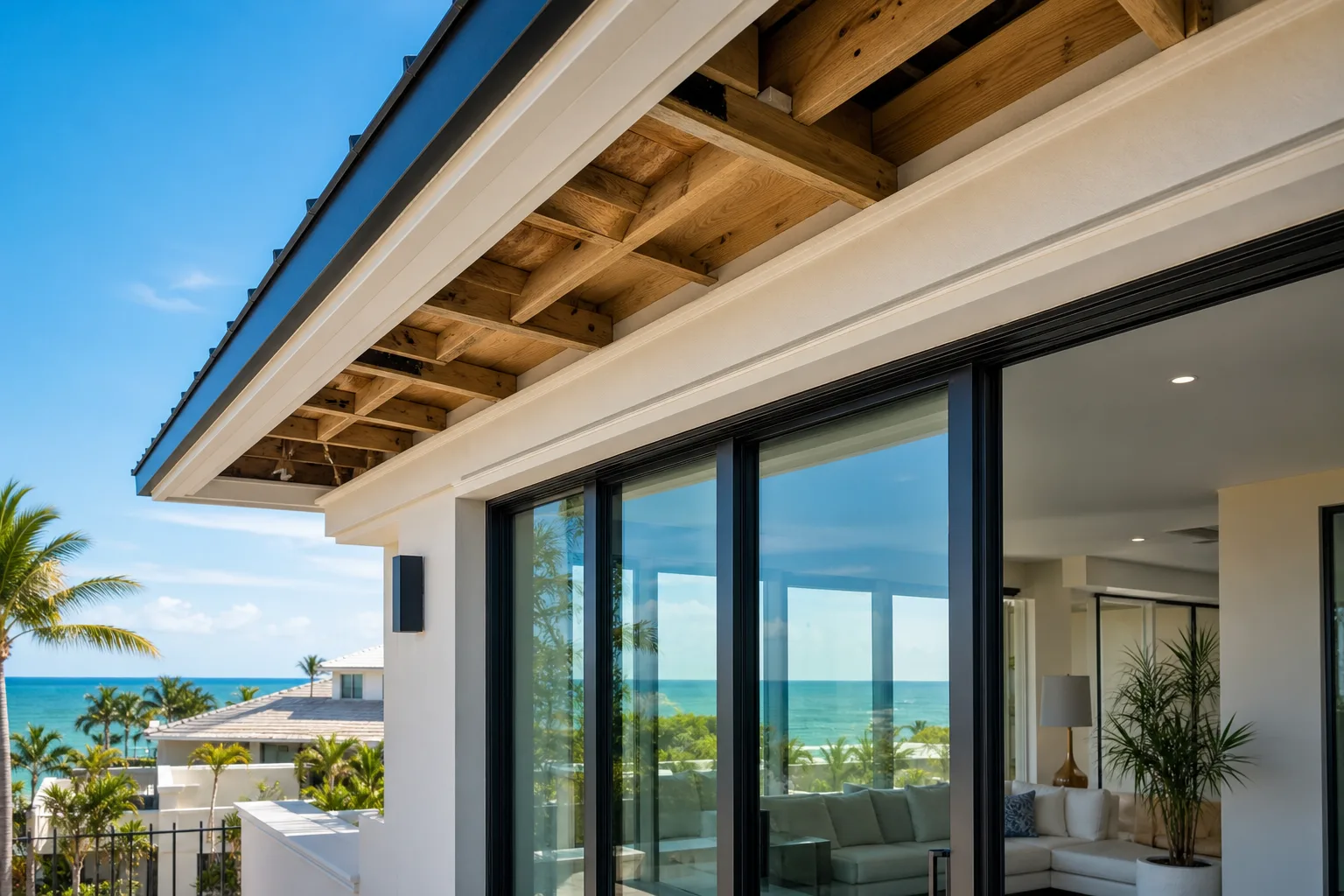
Soffit condition shows up indirectly across two of those categories. Roof deck attachment is scored directly on its own line. Both are evaluated during a physical inspection by a licensed inspector, not estimated from permit records alone.
After Hurricane Ian in 2022 and ongoing rate pressure from reinsurers, Florida insurers have scrutinized wind mit scores more closely. Some carriers began ordering re-inspections or tightening documentation standards, which brought renewed attention to categories like soffit and deck attachment that homeowners rarely think about.
Why It Matters
Roof Deck Attachment: What Inspectors Measure
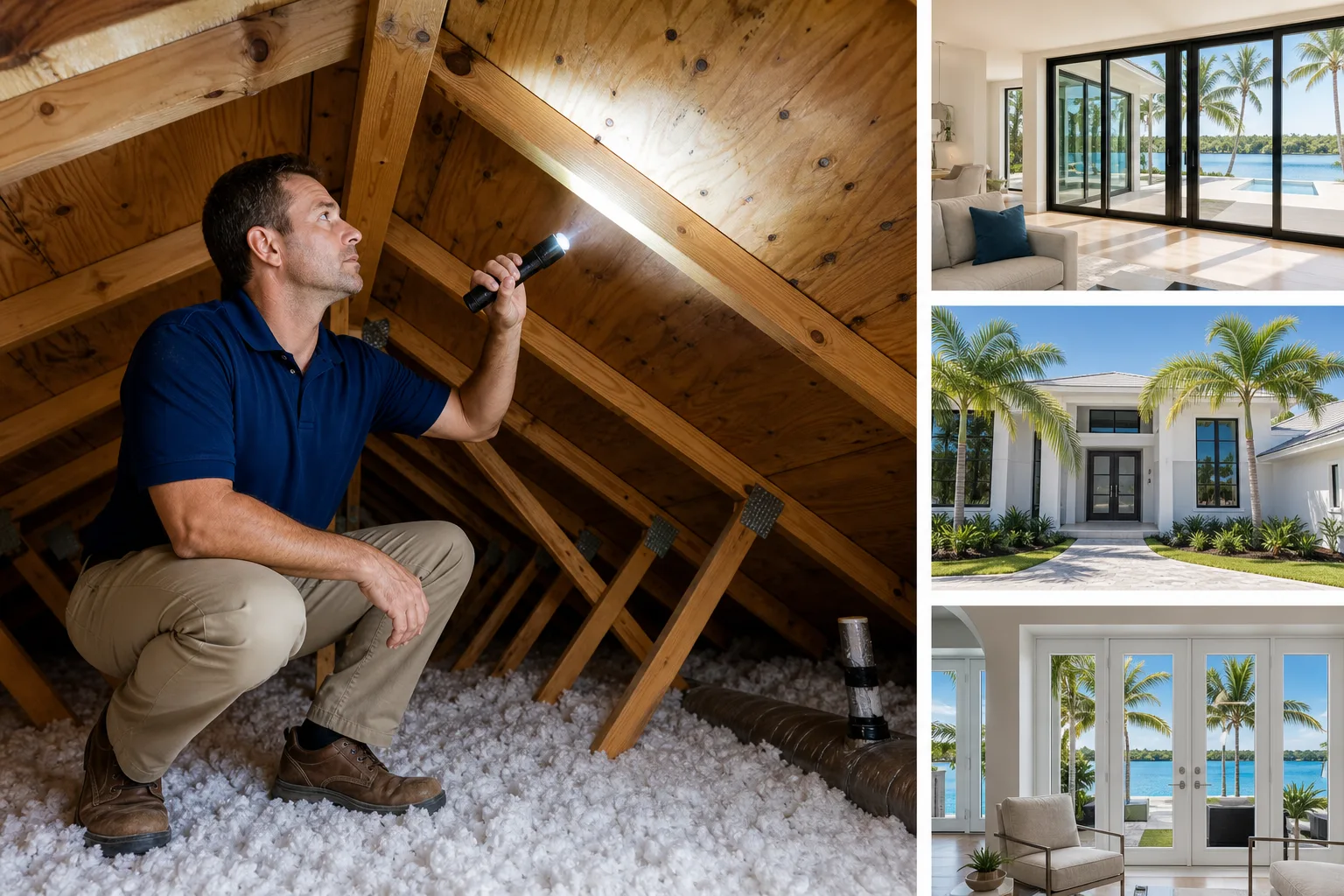
The roof deck attachment score reflects how securely the plywood or OSB panels are fastened to the rafters or trusses beneath them. Inspectors typically access the attic and look at nail type, nail spacing, and panel thickness.
The OIR-B1-1802 form uses three main classifications. The following descriptions are approximate summaries; always refer to the current published OIR-B1-1802 form or confirm details with your licensed inspector, as exact criteria may vary by form version:
- Category A: Lighter nails (such as 6d) or equivalent at wider spacing. This is the weakest classification and earns the least credit.
- Category B: Heavier smooth-shank nails (such as 8d) at moderate spacing in the field and at edges, or similar. A mid-tier result.
- Category C: 8d ring-shank nails or better with tighter spacing patterns. The strongest attachment and the highest credit.
Homes built before Florida adopted stricter code cycles , roughly before the early 2000s in many counties, though the exact applicable threshold varied by jurisdiction and county adoption timing , often have Category A decks. A re-roof that upgrades fasteners to ring-shank nails with tighter spacing can move a home into a better category, but only if the work is documented and the inspector can verify it in the attic.
If attic access is limited or the nailing pattern is obscured by insulation, the inspector is required to assign the most conservative category supported by visible evidence. This is one of the more common reasons homeowners receive a lower score than they expected.
Soffit Condition and Why It Appears Indirectly
Soffits are not a standalone line on the OIR-B1-1802 form, but their condition touches two scored areas.
First, deteriorated or improperly attached soffits can compromise the roof-to-wall connection zone. Inspectors evaluating that category look at whether the eave assembly holds together under uplift. Soffit panels that are loose, rotted, or incorrectly attached to the fascia can raise questions about the integrity of the connection detail even if the structural connection itself is sound.
Second, open or vented soffits without baffles affect internal pressure during a storm. The Florida Building Code and wind engineering research both recognize that air entering through eave vents during high-wind events raises pressure inside the attic space. That pressure, combined with external negative pressure on the roof surface, increases uplift load on the deck. A soffit that is simply in poor repair, with gaps or missing panels, makes this worse.
Some inspectors will note soffit condition in the remarks section of the form. While remarks do not change the scored categories directly, they can trigger follow-up questions from underwriters or influence a carrier's decision to apply discretionary surcharges.
The Combination Effect
A home with a Category A deck and compromised soffits is carrying two compounding vulnerabilities. Neither issue is catastrophic on its own in a moderate wind event, but together they represent the scenario wind engineering research associates with partial roof failures: deck panels lift at the edges where fastening is weakest, and once a panel goes, internal pressure spikes rapidly.
For South Florida homeowners, this matters because the region sits in the highest wind speed zones under ASCE 7. Palm Beach, Broward, and Miami-Dade counties all have design wind speeds that put older construction under real stress even in a mid-range hurricane.
Review opening-protection options before storm season. Request a free estimate
What We Don't Know Yet
The OIR-B1-1802 form has been under discussion for potential revision. The Florida Office of Insurance Regulation has historically updated the form after major storms when field inspections reveal patterns in failure modes. As of the time of publication, no finalized revision has been publicly released, but homeowners should verify the current form version directly with the Florida Office of Insurance Regulation or with their inspector before scheduling a new inspection.
It is also not always clear, without pulling permits and contractor documentation, whether a prior re-roof upgraded fasteners or simply replaced the covering material. If you purchased your home and do not have the full permit history, your inspector may be working from what is visible in the attic only.
Finally, carrier responses to wind mit scores vary. Two insurers can apply different premium calculations to the same inspection result. The discount structure is not uniform across the market, so the financial value of improving your deck attachment score depends on which carrier you use and their specific rate filing.
What to Do About It
Step 1: Pull your existing wind mitigation report. If your report is more than five years old, or if you have had roofing work done since the last inspection, a new inspection may produce a different result. Check the date on the form and the categories scored.
Step 2: Look at your attic access. Before scheduling an inspection, confirm you have a clear path for the inspector to view the deck from inside. Insulation piled against the eaves is a common obstacle. Clearing it out is a simple DIY step that can prevent a defaulted-to-worst-case score.
Step 3: Review any re-roof permits. If roofing work was permitted and passed final inspection, the permit record should specify nail type and pattern. In Palm Beach, Broward, and Miami-Dade counties, permit records are searchable online through each county's building department portal. Having that documentation on hand when the inspector arrives can support a better category assignment.
Step 4: Assess soffit condition before the inspection. Walk the eave line and look for loose panels, open gaps, or visible rot at the fascia. Repairs are straightforward for a licensed contractor and can eliminate the remarks that draw underwriter attention.
Step 5: Understand what impact windows do and do not affect. Opening protection is a separate scored category on the wind mit form. Upgrading to hurricane impact windows or hurricane impact doors affects that line item, not the deck or soffit categories. Each upgrade stands on its own. If your deck score is already limiting your total credit, opening protection upgrades still earn their own category credit independently.
If you are planning a window or door project alongside a roofing project, coordinating the timing so both are captured in a single new wind mit inspection can simplify the documentation process. See request an estimate if you want to discuss the window and door side of that picture for your South Florida home.
For background on what the full wind mitigation inspection covers and how it connects to insurance premiums, the 2026 hurricane season prep overview provides additional context on the Florida building code cycle and inspection timing.
Review opening-protection options before storm season.
The performance and responsibilities for permits, engineering, documentation, installation, and inspections depend on the exact assembly and written project scope.
Frequently asked questions
Can I fail a wind mitigation inspection?
Wind mitigation inspections do not have a pass or fail outcome. They document your home's construction features and assign a category to each scored item. Lower categories produce smaller insurance credits, but the inspection itself does not prevent you from obtaining coverage.
How does ring-shank nailing improve my wind mit score?
Ring-shank nails have ridged shanks that grip wood fibers more tightly than smooth-shank nails, increasing withdrawal resistance under uplift. When an inspector can verify ring-shank nails with appropriate spacing in your attic, your roof deck attachment may qualify for a higher category on the OIR-B1-1802 form, which typically translates to a larger insurance credit.
If my soffit is in good shape, does that guarantee a better inspection result?
Not directly. Soffit condition does not appear as a standalone scored category on the standard wind mit form. However, good soffit condition removes a potential negative remark from the inspector's notes and supports a cleaner evaluation of your roof-to-wall connection zone, which is scored directly.
Does replacing impact windows change my roof deck attachment score?
No. Opening protection and roof deck attachment are separate scored categories on the wind mitigation form. Impact window or door upgrades earn credit in the opening protection category only. Each category is evaluated independently, so improving one does not change the score in another.