TL;DR
Insurers across Florida are denying or scaling back wind mitigation credits when the uniform mitigation verification form (OIR-B1-1802) doesn't match what's actually on the house. Most rejections trace back to opening protection, roof-to-wall connections, or roof covering documentation that can't be verified. If you're relying on a wind mit discount to offset premiums, the paperwork has to match the physical building exactly, and that's where claims fall apart.
What happened
Florida homeowners carrying windstorm coverage have long been able to get a wind mitigation inspection, a report that documents specific storm-resistant features of a home, in exchange for a premium credit. The form itself, OIR-B1-1802, is a standardized document created by the Florida Office of Insurance Regulation. It covers things like roof shape, roof deck attachment, roof-to-wall connections, and opening protection (impact windows, doors, and shutters).
What's changed is enforcement. Insurers and their underwriters are increasingly cross-checking wind mit forms against permit records, prior inspection photos, and in some cases sending their own adjusters to verify claims before honoring the discount, particularly at renewal time or after a claim is filed. When the form says a home has impact-rated openings but permit history doesn't show a corresponding permit, or the inspector's photos are ambiguous about glazing type, carriers are pulling the credit or denying it outright.
This isn't a new law or a single announced policy change from one date. It's a pattern showing up across multiple carriers as Florida's property insurance market has tightened since 2022, with insurers scrutinizing every discount that affects their loss exposure. Homeowners in Palm Beach, Broward, Miami-Dade, Martin, and St. Lucie counties, where wind mitigation credits can meaningfully affect windstorm premium, are the ones most likely to notice when a credit disappears from a renewal notice or when a claim adjuster disputes coverage terms tied to opening protection.
Ask your insurer about wind-mitigation documentation. Request a free estimate
Why it matters
Wind mitigation credits are not small line items in South Florida. For homes in high-velocity hurricane zones, particularly along the coast in Palm Beach and Broward counties, opening protection credits alone can represent a meaningful share of the windstorm premium calculation. When a carrier reduces or removes that credit, the premium increase shows up at renewal, sometimes without much warning.```
More consequential is what happens during a claim. If a hurricane causes damage and the insurer discovers the wind mit form overstated the home's protection level, that discrepancy can affect the claim in a few ways. Some policies tie specific coverage terms or deductibles to the wind mit form's representations. If the form claimed impact-rated windows throughout and the adjuster finds a mix of impact and non-impact openings, the mismatch becomes a documentation problem right when the homeowner needs the claim paid.
The root causes are fairly consistent:
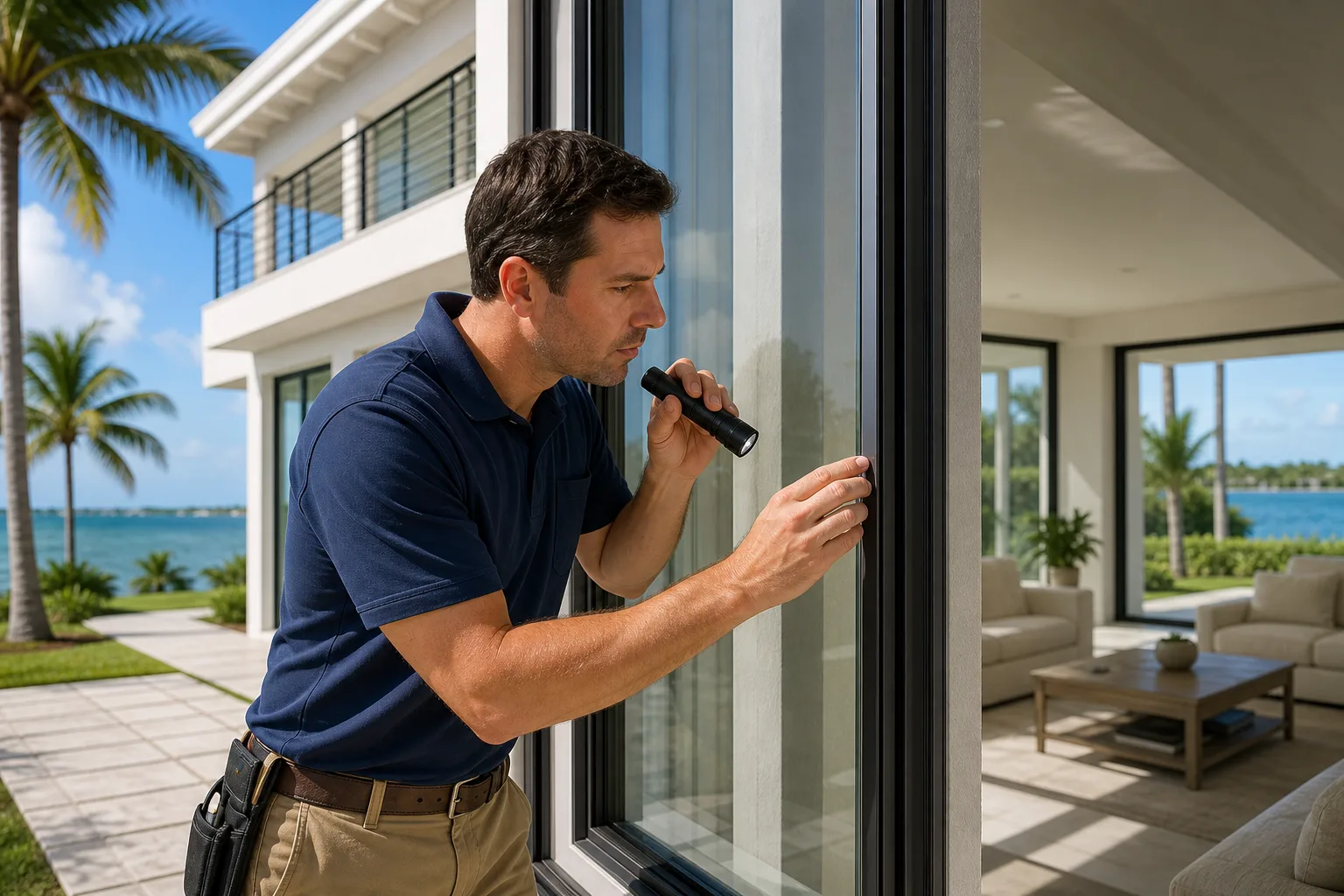
Opening protection ambiguity. A wind mit inspector marks a box for "impact glass" or "shutters" based on a visual check, but without a permit number, product approval sticker, or manufacturer label to confirm the glazing is actually rated for the region's wind speed, that box is vulnerable to dispute later.
Missing permits. Florida building departments require permits for impact window and door installations in most jurisdictions. If a homeowner replaced windows without pulling a permit, or the permit was closed out without a final inspection, the wind mit form's claim of protection has nothing behind it if a carrier asks for backup.
Mixed protection levels. A house where some openings are impact-rated and others rely on removable panels or plywood coverage often gets marked incorrectly on the form, either overstating protection across the board or missing partial credit the homeowner is actually entitled to.
Roof and structural items get flagged too. Roof-to-wall connection type, roof deck attachment, and secondary water resistance are all sections on the same form, and they carry their own documentation requirements separate from openings. A rejected wind mit claim isn't always about windows and doors.
For homeowners weighing whether to invest in hurricane impact windows or hurricane impact doors, this is a real consideration. The physical upgrade matters for storm performance regardless of what an insurance form says. But if the goal includes a premium credit, the documentation trail (permits, product approval numbers, final inspections) needs to be airtight from day one, not assembled after the fact when a carrier asks questions.
What we don't know yet
A few things are genuinely unsettled and vary by carrier, so treat any blanket claim about "the rules" with caution.
How aggressively individual carriers are re-verifying existing wind mit forms is not public information. Some insurers appear to be auditing more heavily than others, and there's no single published list of which companies are tightening enforcement or by how much. If you want a real answer for your policy, you have to ask your specific carrier or agent, not rely on general market commentary.
What counts as "sufficient" documentation for opening protection also isn't perfectly standardized across every insurer. Some accept a Florida product approval number (NOA, or Notice of Acceptance, particularly common in Miami-Dade and Broward counties under the Miami-Dade County Product Control program) paired with a matching permit. Others may want additional manufacturer labels or installation records. Ask before assuming your documentation will satisfy a given carrier.
We also don't know how this trend will interact with ongoing changes to Florida's property insurance market generally. Carriers have been adjusting underwriting standards, reinspection requirements, and rate filings independently over the past few years, and wind mit scrutiny appears to be one piece of a broader tightening rather than an isolated policy.
Finally, the specific financial impact of a denied or reduced wind mit credit varies enormously by home, location, and coverage. There's no fixed dollar figure that applies across Palm Beach, Broward, Miami-Dade, Martin, and St. Lucie counties. Anyone telling you an exact number without seeing your policy and your home's documentation is guessing.
What to do about it
Start by pulling your current wind mit form and comparing it line by line against what you can actually document. For every opening protection claim on the form, you want three things ideally: a permit number from your local building department, a product approval or NOA number for the glazing or shutter system, and photos or manufacturer labels confirming the product installed matches what's on the form.
If you're missing any of that for an existing installation, contact the company that did the work, if it still exists, or your local building department's records division. Permit records are usually public and searchable online in most South Florida counties. If a permit was never pulled, you may need to have the work reinspected or, in some cases, retroactively permitted, which your county's building department can advise on.
If you're planning new window or door work specifically to support a wind mit credit, treat the paperwork as part of the project from the start, not an afterthought. That means confirming the installer pulls a permit before work begins, keeping the product approval documentation for every unit installed, and requesting a copy of the final inspection once the county signs off. Our window replacement and windows and doors replacement pages outline what a documented installation typically involves, and it's worth asking any contractor directly how they handle permit closeout and product approval paperwork before you sign anything.
If you already have a wind mit inspection scheduled or completed, ask the inspector directly what documentation they used to mark each opening protection box. A reputable inspector should be able to explain, not just hand you a completed form. If they can't point to a permit or NOA number backing up a rating, ask what it would take to get that supporting paperwork in order before you submit the form to your insurer.
For homes with a mix of protection types, whether that's impact glass on some openings and shutters on others, make sure the form reflects that mix accurately rather than rounding up to the best-protected opening in the house. Partial credit that's accurately documented tends to hold up better under audit than a form that overstates uniform protection.
If you're mid-claim and a carrier has raised questions about your wind mit documentation, that's a conversation for a public adjuster or attorney familiar with Florida property claims, not something to navigate solely based on a contractor's advice. Contractors can speak to what was installed and when, but claim disputes involving policy language are outside that scope.
Finally, if you're evaluating whether new impact windows or doors make sense for your home at all, beyond the insurance angle, our 10 reasons South Florida homeowners choose impact windows and doors guide walks through the storm protection and practical tradeoffs. For a look at what's specifically driving demand ahead of the coming storm season, the 2026 hurricane season outlook covers regional prep considerations. If you want a straightforward look at your home's current openings and what documentation would be needed to support a future wind mit filing, you can request an estimate or contact us to talk through what's on your house now.
Ask your insurer about wind-mitigation documentation.
Qualifying impact-rated installations may support wind-mitigation credits. Eligibility and premium changes vary by insurer, policy, property, inspection, documentation, and opening protection.
Frequently asked questions
What is a wind mitigation inspection in Florida?
It's an inspection that documents specific storm-resistant features of a home, such as roof shape, roof-to-wall connections, and opening protection like impact windows or shutters, recorded on the standardized OIR-B1-1802 form. Insurers use it to apply premium credits tied to those features.
Why would an insurer reject a wind mitigation credit?
Most rejections happen when the form's claims can't be verified against permit records, product approval numbers, or physical inspection. If an opening is marked as impact-rated but there's no permit or matching documentation, a carrier may deny or reduce the credit, especially during a claim review.
Do I need a permit for impact windows to get insurance credit?
In most South Florida jurisdictions, yes, a permit is required for impact window and door installation, and that permit record is often what carriers check when verifying a wind mit form. Requirements and enforcement can vary by county, so confirm with your local building department.
Can a denied wind mit claim affect my hurricane damage claim?
It can complicate things if the wind mit form's representations don't match the actual condition of the home, since some policies tie coverage terms to those representations. Any dispute involving claim payment based on wind mit documentation is best handled with a public adjuster or attorney familiar with Florida property insurance.
How often should I update my wind mitigation inspection?
There's no single universal rule, since requirements vary by carrier and by how long ago the last inspection was done. Many homeowners get a new inspection after replacing windows, doors, or the roof, or when a carrier requests updated documentation at renewal.
Where can I find my home's permit history in South Florida?
Most counties, including Palm Beach, Broward, and Miami-Dade, maintain searchable online permit databases through their building department websites. If you can't locate a permit for prior window or door work, contact the building department directly to check for records or discuss next steps.