TL;DR: A reinforced corner joint mechanically ties frame members together so the assembly resists racking, air infiltration, and water intrusion over time. Without reinforcement, thermal cycling and wind pressure gradually open the joint. The construction method varies by manufacturer and material, so it is worth asking about before you specify a product.
What Happened
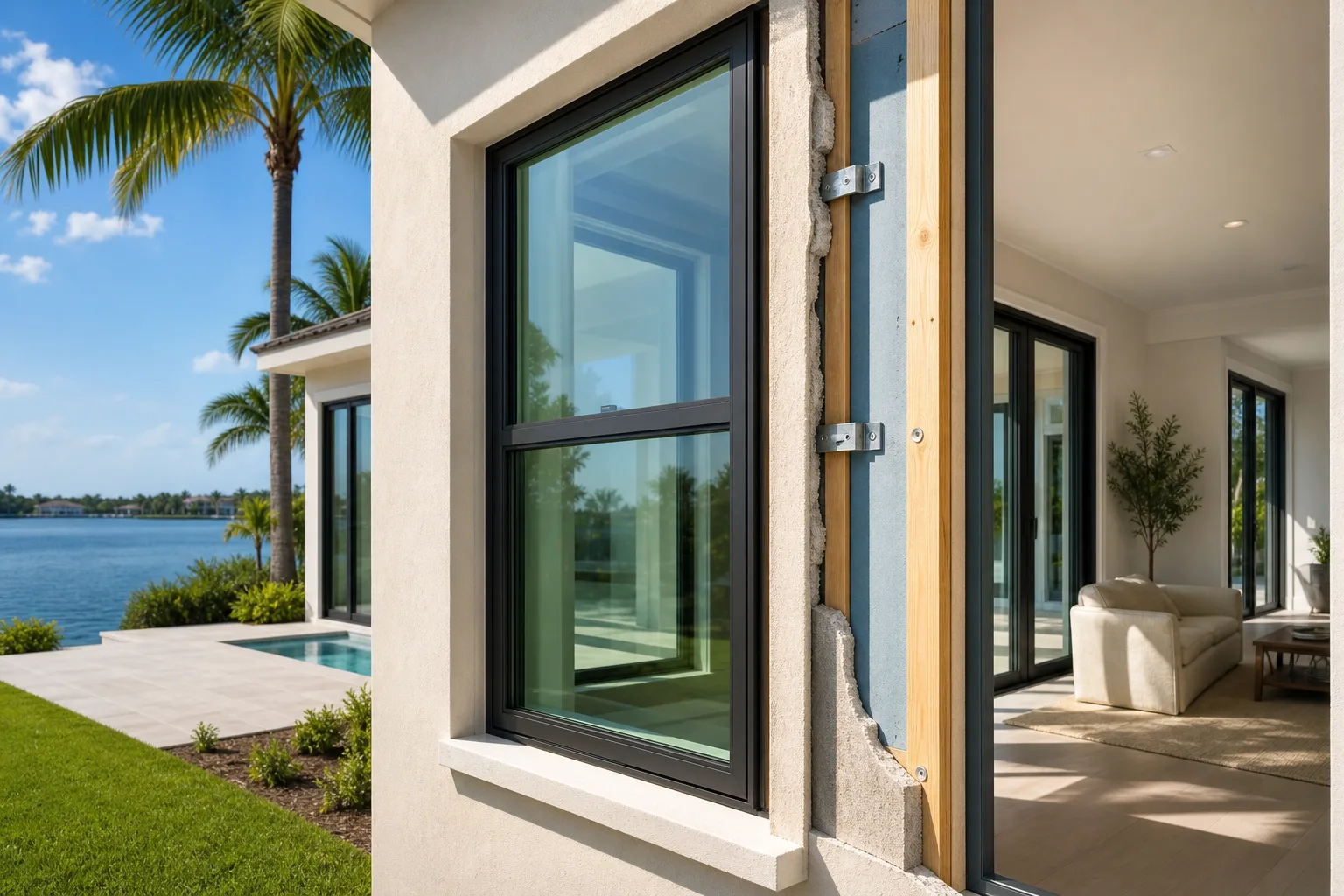
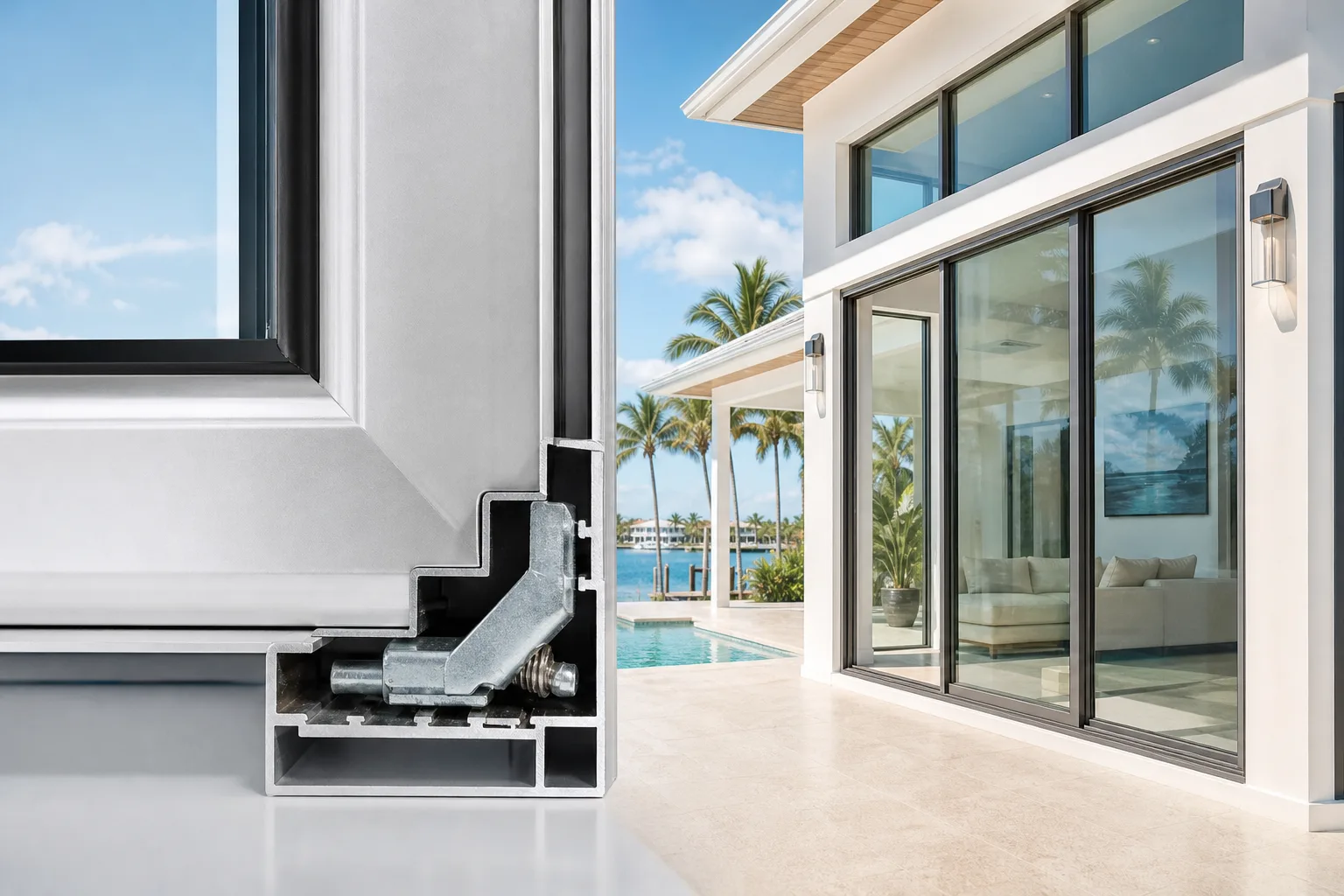
Window frames are built from individual extrusions or profiles joined at the corners. That junction is where structural load concentrates during a wind event, and where differential thermal movement accumulates over years of South Florida heat. Florida's energy code and Miami-Dade product approval testing both subject windows to repeated pressure cycling, which exercises that corner joint repeatedly.
Manufacturers address this in different ways. Common approaches include:
- Mechanically fastened corners, where screws or crimped fasteners draw the mitered frame legs together
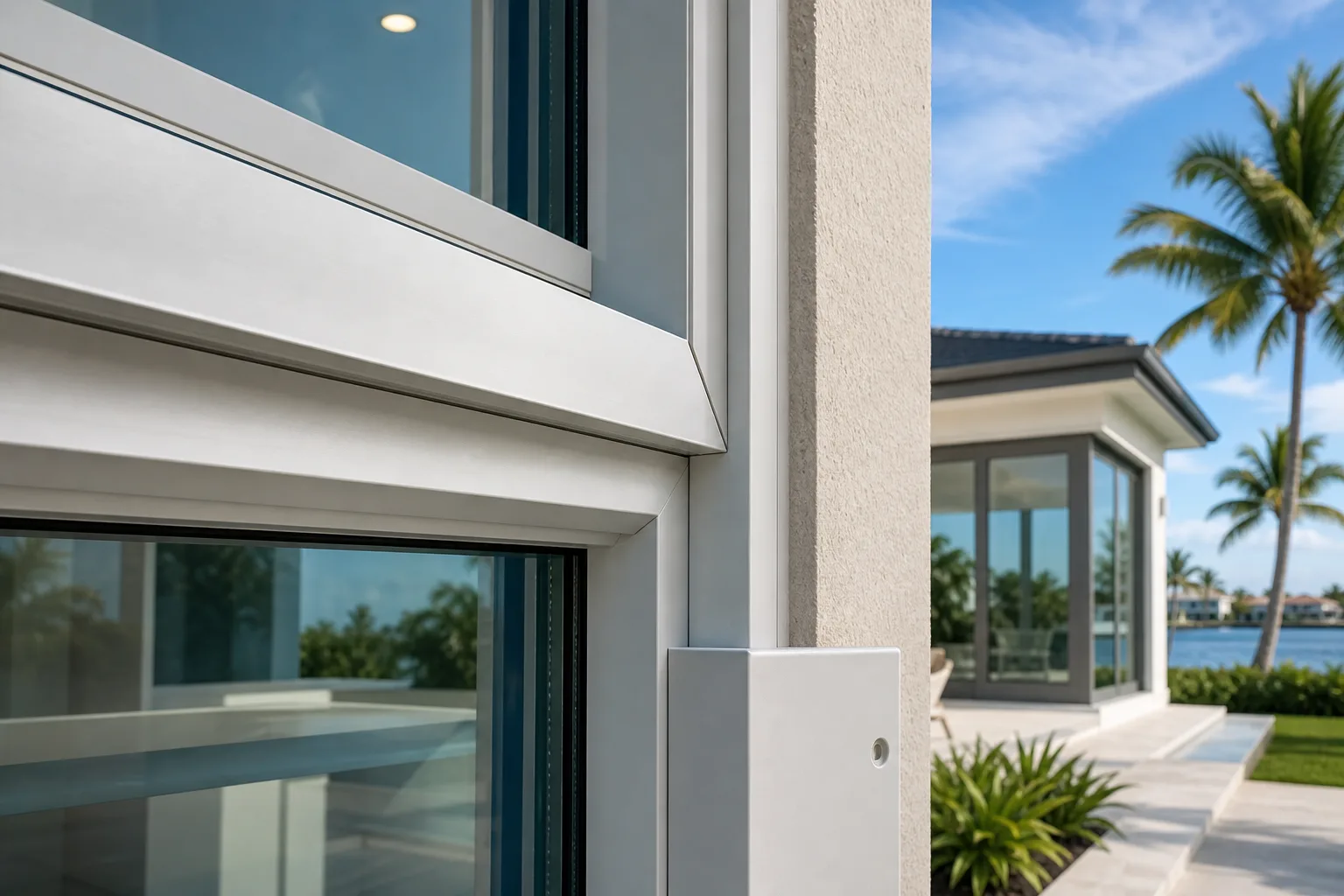
- Corner keys or gussets, which are internal plastic or aluminum inserts that fit inside the hollow frame cavity at the corner and are secured with adhesive, fasteners, or both
- Welded corners, more common in vinyl frames, where heat-fusion bonds the two legs into a single continuous mass at the joint
- Combination methods, where a key plus fastener plus sealant are all used together
The joint also typically receives a bead of structural sealant or bedding compound to block air and water pathways. That sealant is a secondary defense, not the primary structural connection.
Why It Matters
A corner joint that separates even slightly creates a cascade of problems.
Air infiltration increases. Florida Energy Code sets limits on air leakage rates for fenestration products. A joint gap undermines those ratings in service, even if the product passed laboratory testing on a new, properly assembled unit.
Water intrusion follows. Rain-driven water finds any gap at or near the corner, especially on the sill corners where water already pools before draining through weep holes. Prolonged moisture at a loosened corner accelerates corrosion on aluminum fasteners and degrades adhesive bonds.
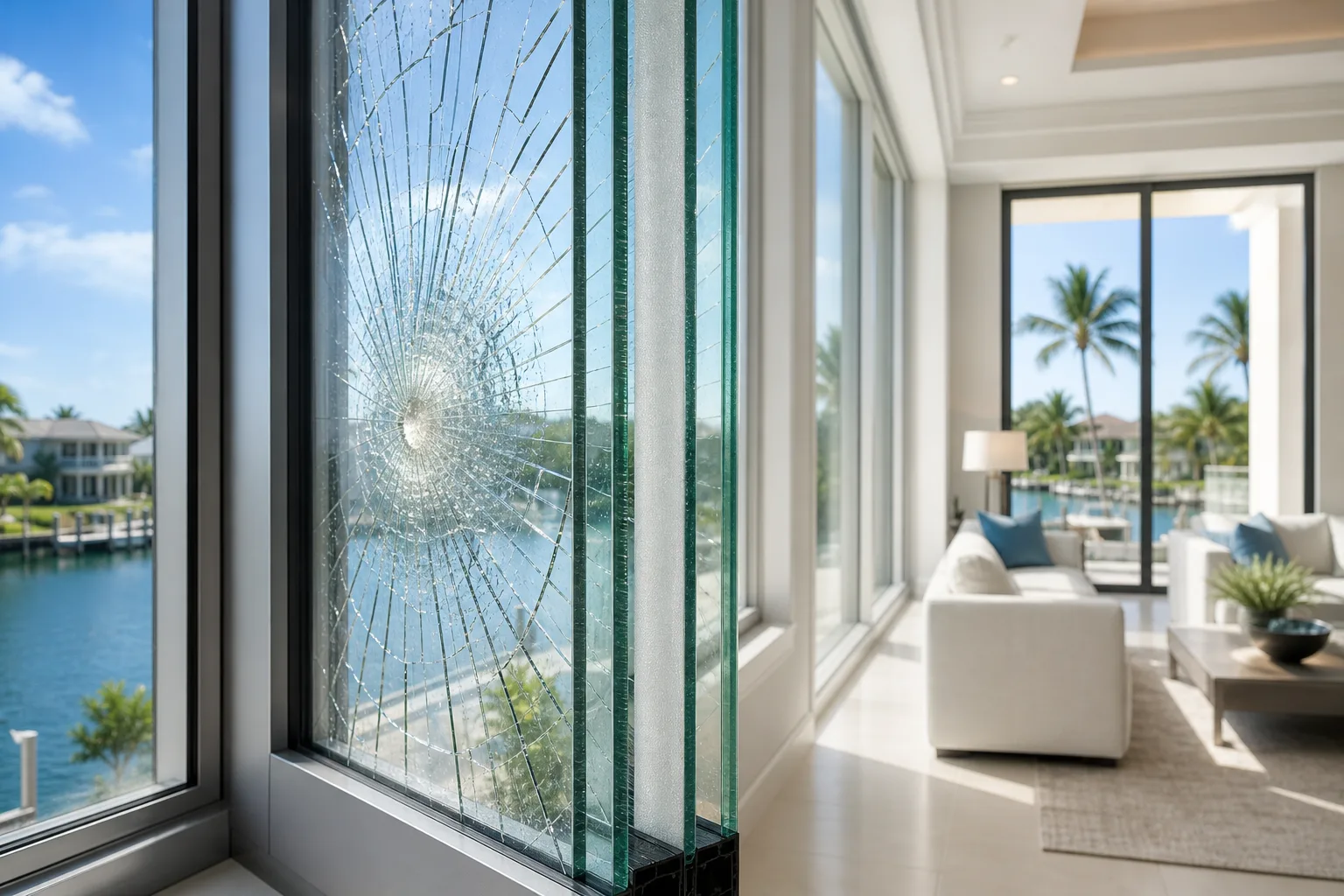
Frame racking reduces glazing integrity. The laminated glass unit in an impact window is set into the frame with a specific edge clearance. If the frame racks out of square, that clearance becomes uneven, concentrating stress on the glass edge. Over years, that stress can contribute to delamination at the glass perimeter or failure of the glazing tape.
Product approval assumes the joint holds. Miami-Dade Notice of Acceptance (NOA) and Florida Building Code approval documents specify the assembly method, fastener schedule, and corner construction that were tested. If the installed product deviates from those specifications, the approval is technically void. This is one reason why reviewing shop drawings before installation matters: the drawings document the specified corner construction.
Aluminum frames expand and contract with temperature. South Florida sees significant daily and seasonal temperature swings, particularly on west-facing exposures. That thermal movement is absorbed partly at the corner joint. A rigid, well-fitted key with sealant accommodates minor movement without opening a gap. A loosely fitted or adhesive-only connection may creep over time. For more on how thermal movement affects aluminum frames generally, see our related article on how thermal expansion in aluminum frames causes gaps over time.
Vinyl welded corners behave differently. A properly heat-fused corner is effectively monolithic and does not rely on fasteners or adhesive. The trade-off is that the weld quality depends on the equipment calibration and operator process at the factory. A poor weld can be weaker than a well-executed mechanical connection. Neither material is universally superior; the execution matters as much as the method.
Compare impact-window options for your project. Request a free estimate
What We Don't Know Yet
There is no standardized consumer-facing disclosure that breaks down corner joint construction by product line. Manufacturers publish NOA documents, which are publicly available through Miami-Dade's product approval portal, but those documents describe the tested assembly in technical language and do not always make corner reinforcement details easy to find.
Long-term in-service performance data comparing joint types under Florida conditions is not widely published in peer-reviewed form. Industry guidance exists, but it reflects manufacturer and trade association positions rather than independent longitudinal studies.
Building officials inspect rough opening preparation and overall installation compliance, but they do not typically inspect individual corner joint construction inside the frame. Quality control at that level depends on the manufacturer's factory process and the installer's handling practices.
What to Do About It
If you are evaluating impact windows for a replacement project, here is a practical sequence for assessing corner joint quality:
- Ask the contractor or supplier to identify the corner reinforcement method for each product under consideration. Acceptable answers name a specific method: corner key, mechanical fastener, weld, or combination.
- Request or look up the NOA or Florida product approval for the product. The assembly section will reference corner construction. Products approved under Florida Building Code are searchable at the Florida Department of Business and Professional Regulation's product approval database.
- Compare manufacturers on this point directly. If you are comparing PGT, CGI, SIW, or ES products, ask the same question for each. The answer will differ.
- Ask about the sealant specification at the corner. A structural sealant rated for the application adds meaningful redundancy. Generic caulk does not.
- Inspect installed units before final sign-off. At the pre-inspection walk-through, look at the interior corner of each frame. Any visible gap, misalignment, or daylight at the corner is a defect to document before you accept the installation.
If your existing windows show corner separation, that is a sign worth taking seriously before the next hurricane season. Corner gaps that have progressed to visible movement or water staining inside the frame are beyond a caulk repair and may warrant evaluation by a licensed contractor.
For a project-specific assessment or to discuss product options available through Window Guys of Florida, you can request an estimate or contact us directly. If you are still in the early research phase, 5 things to look for in new impact windows covers additional construction quality indicators worth reviewing.
Compare impact-window options for your project.
Request a written estimate that identifies the quoted assembly, opening, design pressure, product approval, exposure, installation scope, and applicable project requirements.
Frequently asked questions
Can a corner joint failure void a product's Florida approval?
The Florida product approval and Miami-Dade NOA cover the assembly as tested. If an installed unit deviates from the approved corner construction, such as missing fasteners or the wrong insert, the product is no longer technically conforming to the approval. That is a contractor and manufacturer quality control issue, not something the homeowner controls after the fact.
Is a welded vinyl corner always stronger than a mechanically fastened aluminum corner?
Not necessarily. A properly heat-fused vinyl corner is effectively one continuous piece, which is a structural advantage. However, weld quality varies by factory process. A well-executed aluminum corner with a keyed insert, structural sealant, and mechanical fasteners can match or exceed a marginal vinyl weld. The execution at the factory matters as much as the method chosen.
How often should corner joints on existing impact windows be inspected?
There is no universal code-required inspection interval for homeowners. A practical approach is to visually check corners annually, particularly after any significant storm, looking for gaps, daylight, water staining near the corner, or hardware that feels loose. Any visible gap or water intrusion at a corner warrants evaluation by a licensed contractor rather than a DIY sealant application over the problem.
Does corner joint construction affect energy performance ratings?
Yes, indirectly. Air leakage through a loosened corner joint increases infiltration, which affects both energy performance in service and comfort. The product's rated air leakage was established on a properly assembled unit. A joint that has separated in service will perform worse than the rated specification, though quantifying that difference on an installed unit is not straightforward without testing.