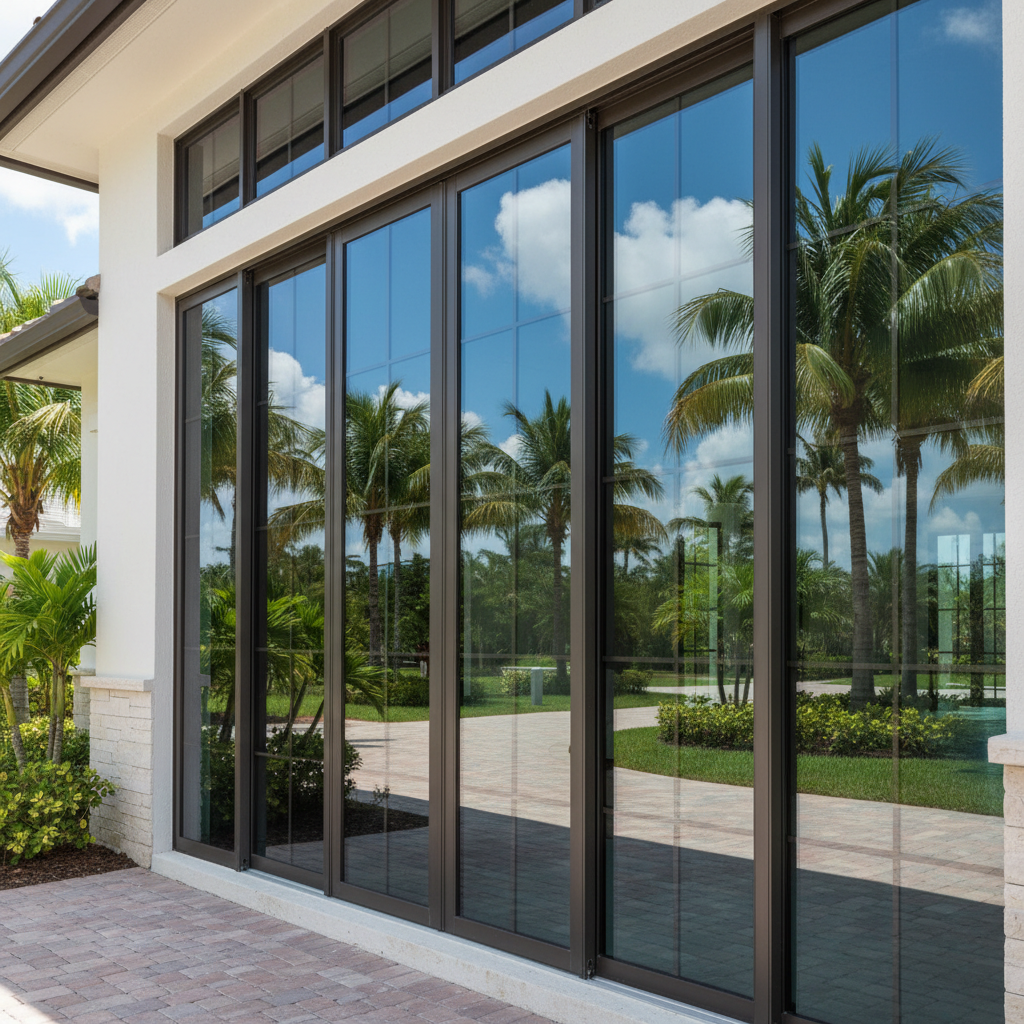
Coastal living in South Florida is a tradeoff: ocean breezes and beach access come with salt mist that quietly attacks metal, coatings, fasteners, and moving parts. If you are shopping for beachfront impact windows South Florida homeowners can rely on, you need more than the right design pressure rating. You need a corrosion strategy.
In this guide, we will break down the salt air corrosion impact windows reality for homes from Jupiter and Palm Beach Gardens down through Boca Raton, Deerfield Beach, Fort Lauderdale, and Hollywood. You will learn what materials and finishes perform best, what to ask about hardware, and how impact window warranty corrosion exclusions can leave homeowners surprised after installation.
Window Guys of Florida is licensed and insured with 25+ years of experience serving Palm Beach County and Broward County. We are authorized dealers for PGT, CGI, ES Windows, Andersen, and other top brands, and we help homeowners choose products that match both wind requirements and coastal exposure.
Why salt air is different than “regular Florida weather”
Salt exposure is not just “humidity.” It is a chemical and mechanical problem:
- Chloride ions accelerate corrosion on many metals, especially when moisture is present.
- Salt deposits hold moisture on surfaces longer, keeping frames and hardware wet even after the rain stops.
- Wind-driven spray can push salt into tracks, weep holes, rollers, hinges, and lock mechanisms.
- UV + heat can degrade some paints and sealants, which then lets salt and moisture reach the metal underneath.
If you live east of US-1 in Delray Beach, Lauderdale-by-the-Sea, Pompano Beach, or near the Intracoastal in Boynton Beach or Lake Worth Beach, your windows and doors are operating in a high-corrosion environment year-round.
Quick data points homeowners should know
- Coastal corrosion risk increases sharply within the first few miles from the ocean, especially where wind and salt spray are common.
- Stainless steel is not one single “grade.” Some stainless resists coastal chlorides far better than others.
- Many product warranties cover manufacturing defects, but exclude or limit damage that looks like “environmental” corrosion.
(These are the exact reasons you want to evaluate hardware, finishes, and warranty language together, not separately.)
Coastal impact windows in Palm Beach County vs Broward County: why exposure and wind both matter
In Palm Beach County and Broward County, impact windows are usually selected for hurricane protection first. But for coastal properties, corrosion resistance becomes an equal priority.
You still must match the correct impact and wind performance for your location. If you are unsure which ratings your home needs, see: Palm Beach vs Broward Wind Zones: Impact Ratings and Comparing Hurricane Impact Window Industry Standards (Miami-Dade vs Florida Building Code).
Key takeaway: A window can be “approved” and still be a poor fit for a beachfront condo if the coating system and hardware package are not designed for salt exposure.
What salt air attacks first (and what you will notice at home)
Most homeowners notice coastal corrosion in predictable places:
1) Hardware and moving parts
- Rollers that start to drag
- Hinges that squeak, pit, or bind
- Multi-point locks that feel gritty or become hard to operate
- Handle sets that discolor
This is where stainless steel hardware coastal windows decisions matter most.
2) Frame finishes and edges
- White powder coat that starts to “chalk”
- Tiny bubbles under paint (often early signs of coating failure)
- Corrosion at cut edges, fastener points, and around weep holes
If you are specifically researching powder coated aluminum corrosion Florida homeowners see near the beach, it usually starts at edges and fastener locations, not the middle of a perfectly coated flat surface.
3) Fasteners, anchors, and installation details
Even the best window can be undermined by the wrong fasteners near the coast. Coastal installs often call for corrosion-resistant anchors and careful isolation between dissimilar metals to reduce galvanic corrosion.
For what to expect on install day, see: How to Prepare Your Home for an Impact Window Installation Day.
Frame materials and finishes: what actually holds up near the ocean
Choosing coastal windows is about combining the right frame material with the right finish, then maintaining it correctly.
If you want a broader comparison first, read: The Best Window Frame Materials for South Florida Homes (Aluminum vs Vinyl vs Fiberglass).
Aluminum frames (common in coastal South Florida)
Aluminum is popular for modern sightlines and strength, and it is widely used in coastal impact windows Palm Beach County and Broward coastal installs. But raw aluminum and coastal salt are not friends.
What matters most is the finish system:
Powder coat (good, but not all powder coats are equal)
Powder coating can perform well, but coastal longevity depends on:
- Proper surface prep and pretreatment
- Coating thickness and curing
- Edge coverage at corners and cut ends
If you have seen powder coated aluminum corrosion Florida homeowners complain about, it is often tied to either coastal neglect (salt not rinsed away) or a coating system not intended for aggressive exposure.
Anodized aluminum (often strong for coastal wear)
Anodizing is not paint, it is an electrochemical process that thickens the oxide layer on aluminum. In many coastal settings, anodized finishes can be more resistant to chipping and scratching than paint, which helps prevent salt intrusion points.
Hybrid systems and upgraded coatings
Some manufacturers offer upgraded coastal coating packages. Ask specifically:
- Is there a “coastal” or “marine” finish option?
- Is it included, or an upgrade?
- What maintenance schedule is required to keep coverage valid?
Vinyl frames (good corrosion resistance, but evaluate structure and heat)
Vinyl does not corrode like metal, which can be attractive near the beach. But vinyl performance depends on product engineering and reinforcement, and South Florida heat can stress low-quality vinyl frames.
Vinyl can be a strong option for certain homes west of the immediate beachfront, or where salt spray is lower but humidity is still high.
Fiberglass and composite frames (stable and corrosion-resistant)
Fiberglass can offer excellent stability and corrosion resistance, but product availability and style options vary by manufacturer and project needs.
Coastal hardware: what “stainless” really means
Homeowners often request stainless hardware and assume the problem is solved. The details matter.
Stainless steel grades you should ask about
In coastal environments, not all stainless is equal:
- 304 stainless is common and resists rust in many environments, but can pit in chloride-heavy salt air.
- 316 stainless is generally more resistant to chlorides and is often preferred for true coastal exposure.
When discussing stainless steel hardware coastal windows, ask which components are stainless and which are not. Some systems use stainless for visible parts but standard steel for springs, pins, or internal pieces.
Other metals that may corrode first
- Zinc-plated steel screws
- Standard carbon steel rollers or bearings
- Mixed-metal assemblies that create galvanic corrosion
Practical tip: If you are doing a beachfront installation in places like Singer Island, Palm Beach, Hillsboro Beach, or Fort Lauderdale beach areas, treat hardware upgrades as a must-have conversation, not a nice-to-have.
Glass, seals, and coastal moisture: corrosion is not the only risk
Salt air is not only a metal issue. Coastal humidity and heat can stress seals and contribute to fogging in insulated glass units if seals fail.
To understand how glass choices perform in South Florida, see: How Different Types of Glass Hurt or Help Your Home in South Florida's Climate and for a full overview: Hurricane Impact Windows: Complete Guide for Florida Homeowners 2026.
The warranty reality check: what “corrosion coverage” often does (and does not) include
This is where many coastal homeowners get burned.
An impact window warranty typically has multiple layers:
- Glass warranty (laminated glass, seal failure, or insulated unit coverage)
- Frame warranty (manufacturing defects, finish coverage)
- Hardware warranty (locks, rollers, hinges)
- Labor warranty (often from the installer, and often separate)
Common impact window warranty corrosion exclusions
When you read the fine print, you may see exclusions or limitations like:
- “Environmental conditions” (salt spray, industrial pollution, coastal exposure)
- Failure to maintain (no proof of cleaning schedule)
- “Normal wear and tear” (especially for hardware)
- Finish corrosion limitations (coverage may be prorated or limited to certain years)
- Improper cleaning agents (harsh chemicals can void finish coverage)
This is the heart of the impact window warranty corrosion exclusions issue: the window can be structurally sound, but the finish and hardware suffer cosmetic and functional damage that may not qualify as a “defect.”
What you should ask for in writing before you buy
Use these questions during your estimate:
- Is my address considered “coastal” for warranty purposes?
- Does the finish warranty explicitly include salt-air environments?
- What maintenance does the manufacturer require, and how often?
- Which hardware components are stainless, and what grade?
- Is hardware covered for corrosion or only for functional failure?
- What is covered by the manufacturer vs the installer labor warranty?
For a broader list of buyer questions, see: Before You Buy: Questions to Ask Your Impact Window Installer.
How to choose the right window system for coastal Broward and Palm Beach homes
If you are comparing impact windows Broward County coast options or looking for coastal impact windows Palm Beach County, use this decision framework.
Step 1: Map your salt exposure honestly
Ask yourself:
- Are you oceanfront or on the barrier island?
- Are you within a few blocks of the beach?
- Do you see salt residue on cars, railings, and patio furniture?
- Is your home high-rise, where wind-driven salt hits harder?
If the answer is yes to several of these, prioritize coastal finishes and upgraded hardware.
Step 2: Match wind and impact requirements
Use local rating guidance so you do not overpay or under-spec:
- Palm Beach vs Broward Wind Zones: Impact Ratings
- Comparing Hurricane Impact Window Industry Standards (Miami-Dade vs Florida Building Code)
Step 3: Choose frame material and finish based on your exposure
- Barrier island or beachfront: prioritize upgraded finish systems, anodized options, and better hardware packages.
- Intracoastal or near-coast neighborhoods: powder coat can perform well with correct maintenance, but confirm coastal warranty terms.
- More inland areas (West Boca, Parkland, Wellington): corrosion risk is still present, but may not require the highest coastal package.
Step 4: Specify hardware like you would on a boat, not a suburban home
For true coastal installs, ask for:
- Stainless hardware, ideally 316 where available
- Corrosion-resistant fasteners
- Robust rollers for sliding glass doors
If you are also upgrading doors, see: Hurricane Impact Doors: Complete Guide for Florida Homeowners 2026 and the service page for options: Impact Doors.
Step 5: Plan for maintenance as part of ownership
The best coastal window will still need routine rinsing and cleaning.
Use these resources:
- Seasonal Window Maintenance Guide for Florida Homes
- Impact Window Maintenance Checklist for Every Season in Florida
Coastal maintenance that actually reduces corrosion (without voiding warranties)
Salt management is simple but must be consistent.
Monthly (or more often oceanfront)
- Rinse exterior frames and glass with fresh water.
- Wipe down sills and remove salt residue before it builds up.
Quarterly
- Clean tracks and weep holes, especially on sliders.
- Check hardware for early signs of pitting or stiffness.
Twice per year
- Lubricate moving parts with manufacturer-approved products.
- Inspect finish edges, corners, and fastener areas.
After a storm, do a quick assessment. Salt-laden wind and debris can create new corrosion points:
Budgeting for coastal-grade windows: what affects price the most
Coastal upgrades can change the total project cost. The drivers usually include:
- Coastal or upgraded coating packages
- Hardware upgrades (better rollers, locks, stainless components)
- Larger openings (common in waterfront homes)
- Door complexity (multi-panel sliders, French doors)
For a detailed breakdown, see: Impact Window Cost Factors in South Florida (2026).
If financing is part of your plan, see: How to Finance Your Impact Window Upgrade: Options for Florida Homeowners.
Permits, condos, and coastal buildings: don’t skip the paperwork side
In Palm Beach County, permitting and inspections are part of a compliant install. Start here: Palm Beach County Impact Window Permit Guide (2026).
If you are in a condo in Boca Raton, Highland Beach, or Fort Lauderdale, your HOA may control approved product lines, colors, and visible frame finishes. Read: What Florida Condo Owners Should Know About HOA Window Requirements.
Insurance and discounts: coastal corrosion is separate from storm compliance
Impact windows can help qualify for insurance credits when installed and documented correctly, but corrosion resistance is not what insurers are rating. If you are planning for 2026 policy changes, see: Florida Insurance Requirements 2026: Homeowners Guide.
When you are ready to file, this walkthrough helps: How to Submit Your Impact Window Insurance Discount Claim Successfully.
Recommended product planning for coastal South Florida (brands, options, and selection)
As authorized dealers for PGT, CGI, ES Windows, Andersen, and other top manufacturers, we help homeowners compare coastal-ready options based on exposure level, building type, and design goals.
If you want a brand overview first, read: Complete Guide to Top Impact Window & Door Manufacturers in Florida 2026.
To explore service options:
Coastal design considerations that still matter (color, finishes, and curb appeal)
Coastal durability does not mean you have to settle for one look. Frame color and finish choices can also influence visible wear over time.
See: Top Colors and Finishes for Impact Window Frames in Modern Florida Homes and if you are coordinating doors: Impact Door Color and Style Options: Design Guide for Florida Homes.
If you want to coordinate exterior upgrades, landscaping can help frame new windows visually: The Best Landscaping Designs to Complement New Impact Windows.
When to replace coastal windows vs refurbish hardware
If your windows are already impact-rated but feel rough or corroded:
- Minor corrosion on handles and replaceable parts may be serviceable.
- If corrosion is causing water intrusion, operational failure, or frame deterioration, replacement may be smarter.
Also consider the “hidden costs” of delaying replacement if performance is compromised: The Hidden Costs of Not Installing Impact Windows in Florida.
Get a coastal corrosion consultation in Palm Beach and Broward
If you are choosing beachfront impact windows South Florida homeowners can trust, the goal is not just passing inspection. It is keeping frames and hardware operating smoothly for years in salt air.
Window Guys of Florida can evaluate your exposure level, recommend coastal-ready finishes and hardware, confirm ratings for your city, and walk you through what warranties actually say.
Schedule a free consultation and quote here: Contact/Free Quote.
FAQ: Coastal corrosion and impact windows in PBC and Broward
What are the best impact windows for salt air corrosion near the beach?
The best salt-resistant setups typically combine a corrosion-resistant frame finish (often upgraded powder coat or anodized options) with higher-grade stainless hardware where available, plus a consistent rinsing and cleaning routine. For product planning, start with the Hurricane Impact Windows service page and request a coastal hardware and finish review during your estimate.
Does powder-coated aluminum hold up on the Florida coast?
It can, but performance depends on the coating system, prep work, and maintenance. Coastal homes in places like Singer Island, Hillsboro Beach, and Fort Lauderdale beach areas should ask about “coastal” finish options and confirm whether the finish warranty treats salt exposure as excluded or covered.
Is stainless steel hardware required for coastal impact windows?
It is strongly recommended for high-exposure properties. Also ask what grade is used and which parts are stainless. “Stainless hardware” can mean different things across product lines. If you want help selecting a hardware package that fits your location, contact us for a free consultation.
Why do warranties exclude corrosion near the ocean?
Many manufacturers treat salt exposure as an environmental condition outside normal use because chloride-driven pitting and finish degradation can be accelerated without routine cleaning. Always ask for the warranty document and confirm the coastal maintenance requirements. For planning and budgeting, see Impact Window Cost Factors in South Florida (2026).
I live in a condo near the beach, can I choose any impact window I want?
Not always. Condos in Boca Raton, Highland Beach, or Fort Lauderdale often have HOA requirements for approved products, frame colors, and visible exterior finishes. Start with What Florida Condo Owners Should Know About HOA Window Requirements, then coordinate selection and approvals before ordering.
How often should I clean impact windows to reduce salt corrosion?
Oceanfront and barrier island homes often benefit from monthly rinsing, with deeper cleaning and track maintenance quarterly. Always follow manufacturer guidance to avoid voiding finish coverage. Use Impact Window Maintenance Checklist for Every Season in Florida as a starting point.
Frequently Asked Questions
What are the best impact windows for salt air corrosion near the beach?
Look for a system designed for coastal exposure: corrosion-resistant frame finishes (upgraded powder coat or anodized options where offered), upgraded stainless hardware, and an owner maintenance plan that matches the warranty requirements. Start with the Impact Windows service page and schedule a coastal evaluation via Contact/Free Quote.
Does powder-coated aluminum corrode on the Florida coast?
Powder-coated aluminum can perform well, but coastal salt can find weak points at edges, corners, and fastener penetrations. Ask whether the manufacturer offers a coastal finish package and read the warranty language for salt-air limitations. For cost planning, see Impact Window Cost Factors in South Florida (2026).
What does “stainless steel hardware” mean on coastal windows?
It can mean only certain visible components are stainless. Ask which parts are stainless (rollers, hinge pins, screws, lock components) and what grade is used. Coastal environments often benefit from higher chloride resistance. If you want help specifying hardware for your city, contact us.
Are impact window warranties void near the ocean?
Not automatically, but many warranties limit or exclude corrosion tied to environmental exposure or lack of maintenance. Confirm whether your address is considered “coastal” under warranty definitions and what cleaning schedule is required. Maintenance guidance: Seasonal Window Maintenance Guide for Florida Homes.
Do condos in Palm Beach and Broward have special window rules?
Yes, many HOAs require approved product lines, colors, and uniform exterior appearance, especially for beachfront buildings. Review What Florida Condo Owners Should Know About HOA Window Requirements and then coordinate approvals before ordering.
How often should I clean impact windows to prevent coastal corrosion?
For high-exposure beachfront homes, monthly rinsing is a common baseline, with quarterly track and weep-hole cleaning. Always follow manufacturer instructions to protect finish coverage. Use Impact Window Maintenance Checklist for Every Season in Florida to set a routine.