
TL;DR: Florida impact window warranties come in two separate documents: a manufacturer product warranty and an installer workmanship warranty. Neither covers everything. Storm damage, improper use, and building movement are common exclusions. Read both before the project closes.
What Happened
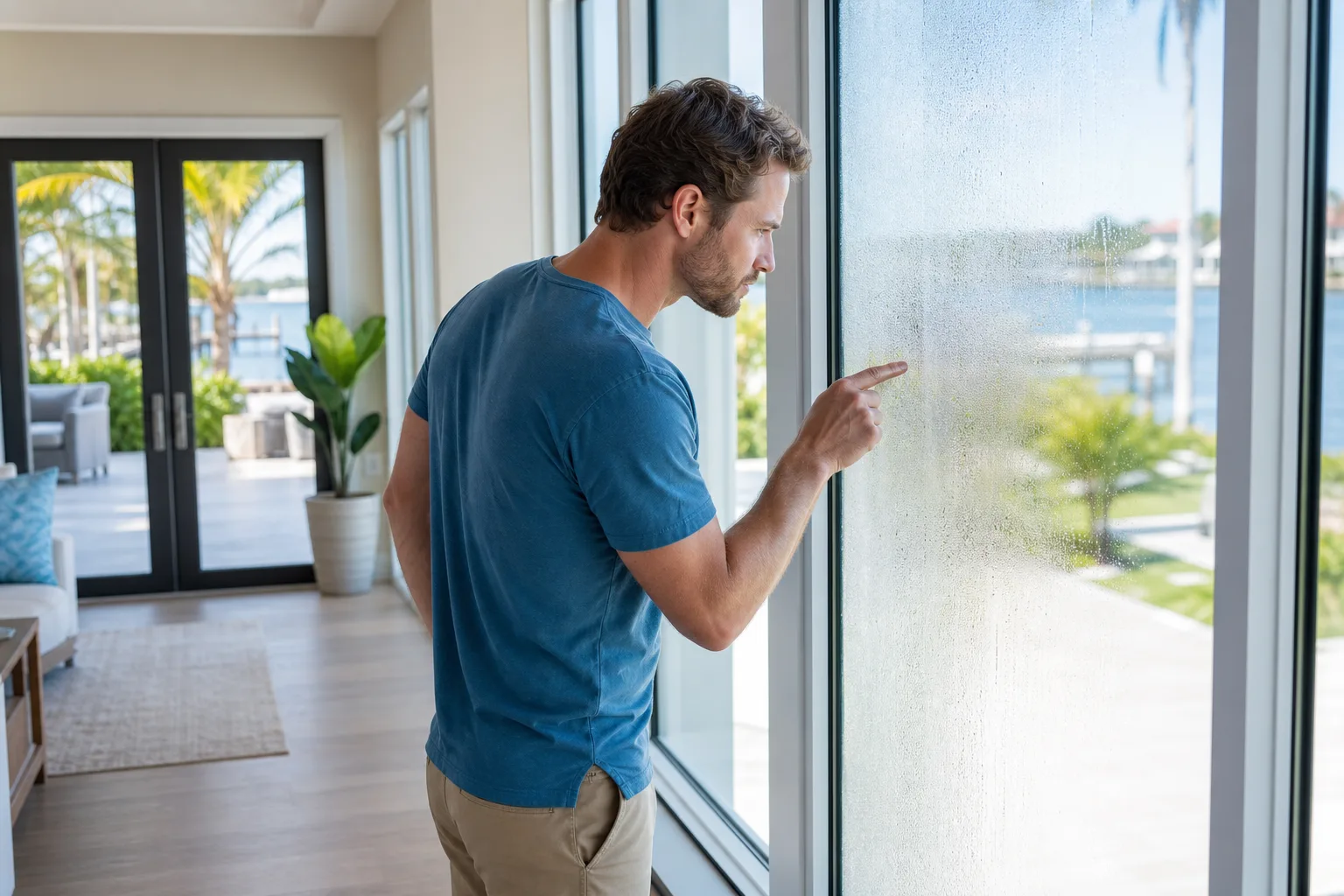
A homeowner replaces windows, a seal fails two years later, and the glass fogs. They call the installer. The installer says it is a manufacturer issue. They call the manufacturer. The manufacturer says improper installation voids the product warranty. The homeowner is caught in between.
This scenario is common in Florida because window warranty documentation is split across two separate parties with different obligations, different time limits, and different exclusions. Understanding the structure before installation is more useful than reading the fine print after a problem appears.
Why It Matters
The Two-Part Warranty Structure
Every impact window or door project involves at least two warranty layers.
Manufacturer product warranty covers the window unit itself: the frame, glazing system, hardware, and seals. Coverage periods vary by component. Glass seal (insulated glass unit) warranties are often 10 years. Frame and finish warranties may run 5 to 10 years. Hardware warranties are frequently shorter. These are transferable in some cases and non-transferable in others; the specific document controls.
Installer workmanship warranty covers how the unit was installed: the rough opening prep, flashing, sealant, anchoring, and final weatherproofing. In Florida, installer workmanship warranties are typically 1 to 2 years, though some contractors offer longer terms. This is a separate document from the manufacturer warranty.
Neither document covers the other party's scope. A frame crack caused by installation stress may fall into a gray zone where both parties point at each other.
What Manufacturer Warranties Commonly Exclude
Product warranties in Florida typically exclude:
- Storm damage and impact events. This is the one that surprises most homeowners. Impact-rated windows are tested to resist hurricane-force wind and debris, but the warranty does not cover storm damage. Those are separate risk categories. Damage from a named storm is generally a homeowner's insurance claim, not a warranty claim.
- Damage from improper use or modification. Removing hardware, applying unapproved window film, or drilling into the frame after installation can void coverage.
- Sealant and caulk degradation on the exterior. Interior seals between glass panes (the IGU seal) are often warrantied, but exterior perimeter sealant applied during installation is installer scope, not manufacturer scope.
- Damage from building settlement or movement. Florida's soil conditions, particularly in coastal areas, can cause structure movement over time. Frame distortion from building movement is generally excluded.
- Condensation on exterior glass surfaces. This is normal physics in Florida's humid climate and is not a product defect.
- Color fading from UV exposure. Some warranties include finish coverage with limitations, but prolonged UV fading in South Florida sun is often partially or fully excluded after a short period.
What Installer Workmanship Warranties Commonly Exclude
Workmanship coverage typically does not extend to:
- Product failures within the manufactured unit itself.
- Problems that develop after the workmanship warranty period ends, even if caused by original installation.
- Projects where the homeowner made changes after completion.
- Damage from events outside the installer's control (floods, tree strikes, vandalism).
A short workmanship warranty period is a real risk in Florida's environment, where sealants face UV, salt air, and thermal cycling year-round. It is worth asking a contractor directly what their workmanship term covers and for how long.
The Permit Closeout Connection
A final inspection and permit closeout document that the installation was completed to code. That record matters in a warranty dispute. If a permit was never closed, a manufacturer could argue installation compliance is unverified. Keeping your permit documentation is part of protecting your warranty position. See 5 signs it may be time to evaluate your windows if you are still on older non-impact units.
Compare impact-window options for your project. Request a free estimate
What We Don't Know Yet
Warranty terms are not standardized across Florida window manufacturers or contractors. The documents from PGT, CGI, SIW, and ES Windows each have their own language, exclusion lists, and transferability rules. No single summary applies to every project.
Insurance interactions with warranty claims are also fact-specific. Whether your homeowner's insurance covers a failure that a manufacturer's warranty excludes depends on your policy language, not on the warranty document itself.
Florida does not currently mandate a minimum workmanship warranty period for window contractors the way some states regulate new construction warranties. That gap puts the burden on the homeowner to negotiate and document terms before signing a contract.
What to Do About It
Before Signing a Contract
- Request both warranty documents in writing. The manufacturer product warranty and the installer workmanship warranty should be separate, readable documents, not verbal commitments.
- Check the IGU seal warranty period and transferability. If you sell the home, a non-transferable warranty has no value to the buyer.
- Ask what voids each warranty. Window film, paint, pressure washing practices, and hardware changes are common triggers.
- Confirm who files a manufacturer claim. Some manufacturers only accept warranty claims filed by licensed contractors, not directly by homeowners.
- Document the closeout. Keep your permit, final inspection sign-off, and product approval (NOA) numbers together. These are evidence of compliant installation if a dispute arises.
After Installation
- Inspect perimeter sealant annually. Sealant is not typically covered by the product warranty and has a finite service life in South Florida conditions.
- Do not apply aftermarket window film without checking your product warranty first. Some film products affect the IGU seal warranty.
- If you notice fogging between panes, report it to the installer in writing during the manufacturer's IGU warranty period, not years later.
If you are planning a new window replacement project or evaluating windows and doors together, ask each contractor to walk through both warranty documents before you commit. The quality of that conversation tells you something about the quality of their process.
Request an estimate and bring your warranty questions to that conversation. It is a reasonable thing to ask before any project starts.
Compare impact-window options for your project.
Request a written estimate that identifies the quoted assembly, opening, design pressure, product approval, exposure, installation scope, and applicable project requirements.
Frequently asked questions
Is storm damage to my impact windows covered under the manufacturer warranty?
Generally no. Impact-rated windows are engineered to resist hurricane-force conditions, but the product warranty does not cover damage from a storm event. Storm damage is typically a homeowner's insurance claim. Review your specific manufacturer warranty document to confirm, since exclusion language varies.
Does a window warranty transfer to a new owner if I sell my home?
It depends on the manufacturer and the specific warranty document. Some IGU seal warranties are transferable with written notice to the manufacturer; others are not. Ask your contractor to confirm transferability in writing before the project closes, especially if you may sell the home within the warranty period.
How long does a typical installer workmanship warranty last in Florida?
Most Florida window installers offer workmanship warranties of 1 to 2 years, though some contractors provide longer terms. Florida does not mandate a minimum period for window replacement workmanship, so the term is negotiated through the contract. Get the workmanship warranty in a separate written document before signing.
What should I do if the installer and manufacturer both deny my warranty claim?
Document everything in writing: the failure, the date noticed, and each party's response. If the failure is installation-related and within the workmanship period, your contract and permit closeout records are your evidence. For disputes that cannot be resolved directly, Florida's Department of Business and Professional Regulation handles contractor complaint processes for licensed contractors.