The Best Window Frame Materials for South Florida Homes (Aluminum vs Vinyl vs Fiberglass)
When selecting impact windows for your South Florida home, the glass gets most of the attention—but the frame material is equally important. The frame holds everything together, affects energy efficiency, determines maintenance requirements, and must withstand our harsh coastal climate for decades.

Window Guys of Florida offers all three major frame materials from leading manufacturers like PGT, CGI, and Andersen. This comprehensive comparison helps you choose the right material for your specific situation.
Understanding South Florida's Frame Challenges
Our environment puts unique demands on window frames:
- Salt air exposure: Corrosive conditions within 5+ miles of the coast
- Intense UV radiation: Year-round sun exposure breaks down materials
- High humidity: 60-90% relative humidity accelerates degradation
- Hurricane forces: Frames must withstand 150+ mph winds
- Temperature extremes: Expansion/contraction with heat changes
Aluminum Frames: The Traditional Florida Choice
Overview
Aluminum has been the dominant frame material in Florida for decades, and for good reason.
Advantages
- Exceptional strength: Strongest frame material, ideal for large windows
- Slim profiles: Narrow frames maximize glass area and views
- Corrosion resistance: Anodized or powder-coated finishes resist salt air
- Dimensional stability: Minimal expansion/contraction with temperature
- Long lifespan: 30-50+ years with proper maintenance
- Hurricane performance: Superior rigidity under extreme wind loads
Disadvantages
- Thermal conductivity: Conducts heat (addressed by thermal breaks)
- Condensation potential: Without thermal breaks, can condensate
- Higher cost: More expensive than basic vinyl
- Finish maintenance: May need repainting after 15-20 years
Best For
- Coastal properties with salt air exposure
- Large window openings requiring maximum strength
- Modern architectural designs with slim profiles
- Commercial applications
Cost Range
$800-$1,500+ per window (including impact glass, installed)
Vinyl (PVC) Frames: The Value Leader
Overview
Vinyl frames have gained significant market share due to excellent value and low maintenance.
Advantages
- Energy efficiency: Natural insulator, no thermal bridging
- Low maintenance: Never needs painting, won't rot or corrode
- Affordable: Lower cost than aluminum or fiberglass
- Color throughout: Scratches don't show on colored vinyl
- Good insulation: Multi-chamber designs enhance efficiency
Disadvantages
- Expansion issues: More movement with temperature changes
- Limited colors: Darker colors absorb heat and can warp
- UV degradation: Can become brittle over time in Florida sun
- Thicker profiles: Larger frames reduce glass area
- Structural limits: Not ideal for very large window spans
Best For
- Budget-conscious homeowners
- Inland properties with less salt exposure
- Standard window sizes
- Energy efficiency priority
Cost Range
$500-$1,000 per window (including impact glass, installed)
Fiberglass Frames: The Premium Option
Overview
Fiberglass (pultruded fiberglass composite) offers the best characteristics of both aluminum and vinyl.
Advantages
- Superior strength: Stronger than vinyl, comparable to aluminum
- Dimensional stability: Expands/contracts at same rate as glass
- Excellent insulation: 700x less conductive than aluminum
- Long lifespan: 50+ years with minimal degradation
- Low maintenance: Painted finish lasts decades
- Slim profiles: Comparable to aluminum visibility
- UV resistance: Designed for exterior exposure
Disadvantages
- Highest cost: Premium pricing
- Limited availability: Fewer manufacturers and styles
- Color options: Less variety than aluminum
- Repair challenges: More difficult to repair if damaged
Best For
- Premium homes seeking best overall performance
- Maximum energy efficiency goals
- Long-term investment perspective
- Coastal properties wanting non-metal frames
Cost Range
$1,000-$2,000+ per window (including impact glass, installed)
Material Comparison Chart
| Factor | Aluminum | Vinyl | Fiberglass |
|---|---|---|---|
| Strength | ★★★★★ | ★★★☆☆ | ★★★★★ |
| Energy Efficiency | ★★★☆☆ | ★★★★☆ | ★★★★★ |
| Maintenance | ★★★☆☆ | ★★★★★ | ★★★★☆ |
| Salt Resistance | ★★★★☆ | ★★★★★ | ★★★★★ |
| Cost | $$-$$$ | $-$$ | $$$-$$$$ |
| Lifespan | 30-50 years | 20-40 years | 50+ years |
| Profile Thickness | Slim | Thick | Slim-Medium |
| Color Options | Extensive | Limited | Moderate |
Special Considerations for Coastal Properties
If you live within 5 miles of the ocean:
Salt Air Impact
- Aluminum: Requires marine-grade anodizing or high-quality powder coating
- Vinyl: Naturally resistant but may degrade faster in direct sun
- Fiberglass: Excellent performance, best choice for direct oceanfront
Our Recommendation for Coastal Homes
- Fiberglass: If budget allows, best long-term performance
- Marine-grade aluminum: Traditional choice with proper finish
- Premium vinyl: Budget option with more frequent replacement expectation
Thermal Break Technology in Aluminum
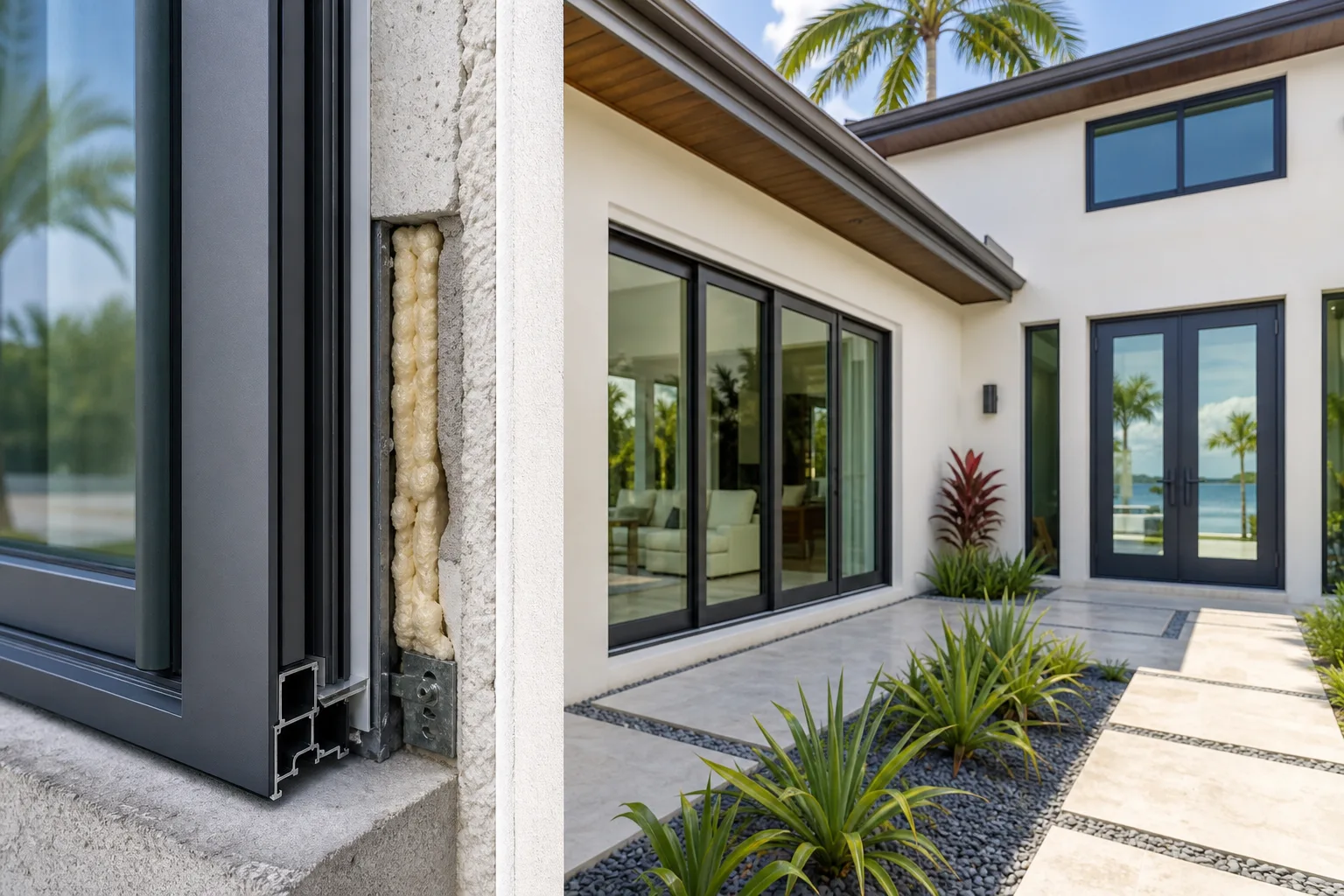
Modern aluminum frames address the thermal conductivity issue with thermal breaks:
- Polyamide strips separate interior and exterior aluminum
- Reduces heat transfer by up to 50%
- Prevents condensation in air-conditioned homes
- Slightly increases cost but worth it for energy efficiency
Always specify thermally broken aluminum for Florida installations.
Color and Finish Options
Aluminum Finishes
- Anodized: Electrochemical process, excellent durability, limited colors
- Powder-coated: Wide color range, good durability, can be refinished
- Kynar/PVDF: Premium coating, superior UV and salt resistance
Learn about top colors and finishes for impact window frames in modern Florida homes.
Vinyl Colors
- White: Most common, reflects heat best
- Tan/Almond: Popular alternatives
- Darker colors: Available but require heat-resistant formulations
Fiberglass Finishes
- Factory-painted: Long-lasting finish
- Repaintable: Can be refinished in any color
Making Your Decision
Choose Aluminum If:
- You want slim profiles and maximum views
- You have large window openings
- You prefer traditional Florida aesthetics
- You're investing in marine-grade finishes for coastal use
Choose Vinyl If:
- Budget is a primary concern
- You want zero-maintenance frames
- You're in an inland location
- Energy efficiency is paramount
Choose Fiberglass If:
- You want premium performance
- You're on direct oceanfront property
- Long-term value is more important than upfront cost
- You want the best energy efficiency with slim profiles
Get Expert Advice
Window Guys of Florida can evaluate your specific property and recommend the ideal frame material. Factors we consider include:
- Distance from ocean and salt exposure
- Architectural style of your home
- Window sizes and configurations
- Budget and long-term plans
- HOA requirements (if applicable)
Contact us today for a free consultation. Call (561) 598-6295.
Frequently Asked Questions
Which frame material is best for oceanfront homes in Florida?
For direct oceanfront properties, fiberglass frames offer the best long-term performance due to excellent salt resistance and dimensional stability. If fiberglass exceeds your budget, marine-grade aluminum with Kynar or PVDF coating is the traditional choice. Vinyl can work for oceanfront but may have a shorter lifespan in intense salt environments.
Do vinyl windows warp in Florida heat?
Quality vinyl windows from reputable manufacturers are engineered to withstand Florida heat without warping. The key is choosing light-colored vinyl (white or tan) and ensuring the product is designed for southern climates. Darker colored vinyl can absorb too much heat and is not recommended for Florida. Properly rated vinyl windows perform well for 20-40 years in our climate.
What is a thermal break in aluminum windows?
A thermal break is an insulating barrier (usually polyamide plastic) placed between the interior and exterior portions of an aluminum frame. This prevents heat from conducting through the metal, reducing energy loss by up to 50% and preventing condensation on the interior frame. Always specify thermally broken aluminum for Florida installations to maximize energy efficiency.
How long do different frame materials last in Florida?
Expected lifespans vary: aluminum frames typically last 30-50+ years with proper maintenance and quality finishes; vinyl frames last 20-40 years depending on quality and sun exposure; fiberglass frames can exceed 50 years with minimal maintenance. Coastal locations may reduce these lifespans by 10-20% due to salt exposure. Quality of installation and maintenance also significantly impact longevity.
Are fiberglass windows worth the extra cost?
Fiberglass windows cost 30-50% more than comparable vinyl windows, but offer superior strength, energy efficiency, and longevity. For homeowners planning to stay in their home long-term (15+ years) or those with oceanfront properties, the premium is often worthwhile. The exceptional dimensional stability of fiberglass—expanding and contracting at the same rate as glass—also maintains better seals over time.