
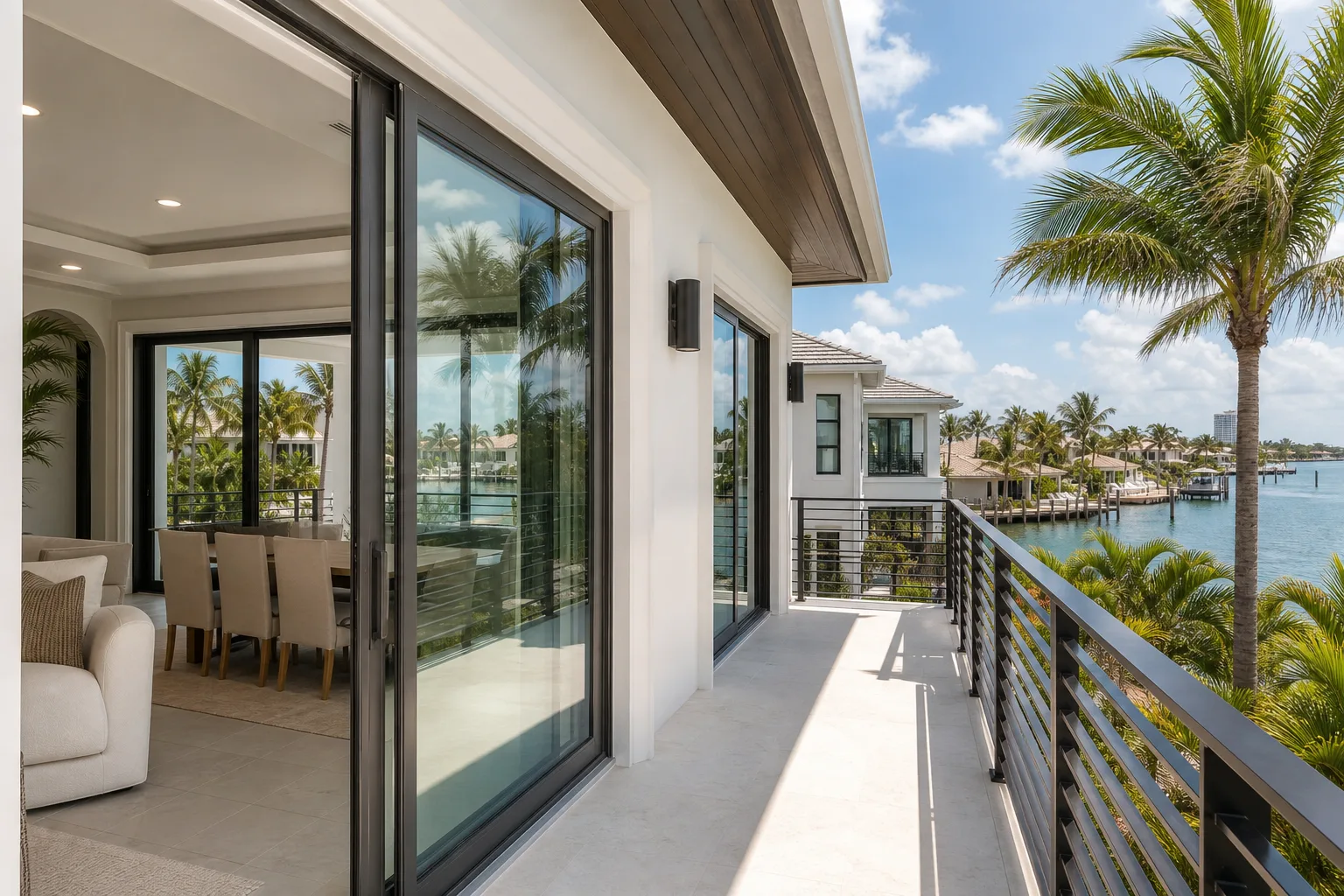
TL;DR: When searching for balcony railing near me in South Florida, focus on four non-negotiables: Florida contractor licensing, Florida Building Code wind-load compliance, corrosion-resistant materials, and documented installation experience in a coastal climate. Skipping any one of them can cost you far more than the railing itself.
Balcony railings in Palm Beach and Broward County are not a simple fence job. They sit in one of the most corrosive, wind-exposed environments in North America, and Florida Building Code holds them to the same structural accountability as any other load-bearing exterior element. Every season, homeowners who hired an unlicensed crew or bought a bargain railing find themselves looking at rust stains, wobbly posts, or, worse, a failed county inspection that puts a stop-work order on a renovation.
If you are already thinking about your home's exterior, keep in mind that a balcony railing upgrade pairs naturally with a full exterior protection review. Hurricane impact windows and impact doors address the same structural vulnerabilities, and combining projects often saves time and permitting costs.
Here is what to check before you sign anything.
1. Verify the Contractor's Florida License Before You Search "Balcony Railing Near Me" Any Further
Florida requires anyone contracting structural work to hold a license issued by the Florida Department of Business and Professional Regulation (DBPR). For railing installation, the relevant classifications are typically a Certified General Contractor, Certified Building Contractor, or Certified Aluminum Contractor, depending on the materials involved.
Why this matters specifically in South Florida:
Palm Beach and Broward counties have their own building departments with local amendments layered on top of the Florida Building Code. An unlicensed crew may not know those amendments exist, let alone follow them. If they pull no permit or pull one under a borrowed license, the liability falls on you as the property owner when the work fails inspection.
How to verify:
- Visit myfloridalicense.com and search the contractor's name or license number.
- Confirm the license is active, not expired or suspended.
- Ask for the license number in writing before any contract is signed.
- Confirm they carry general liability and workers' compensation insurance. Ask for certificates, not just verbal assurances.
A legitimate company will hand you this information without hesitation. If you get pushback or vague answers, move on.
2. Confirm Wind-Load and Code Compliance for Your Specific County
This is where most homeowners and even some contractors get tripped up. Applicable Florida Building Code requirements , spanning structural load provisions and building-specific guardrail and handrail requirements , govern balcony railings, and they must be engineered to resist both the vertical live load on the top rail and, critically, the horizontal wind load that acts on the infill panels and posts. Confirm the precise requirements that apply to your project with your local building department or a licensed engineer.
In Palm Beach and Broward counties, the basic wind speed design requirements are significant. Coastal and near-coastal zones often require designs engineered for higher exposure categories. A railing that passes code in the Florida Panhandle may not meet the requirements for a condo balcony in Fort Lauderdale or a townhome in Boca Raton.
What to ask any railing company:
- Do you pull a permit for every railing installation in this county?
- Do your railing systems carry a Florida Product Approval (NOA or statewide approval) for the wind speed applicable to my address?
- Will a licensed engineer or the manufacturer's product approval documentation back the wind-load calculations?
If a company says they "usually" skip the permit on railing jobs, that is a red flag. Unpermitted work can block a future home sale, void your homeowner's insurance claim, and require costly demolition and reinstallation.
For homeowners who are already reviewing their storm protection more broadly, our hurricane impact windows complete guide explains how product approvals work in Florida and what to look for on any exterior installation, not just windows.
Get storm-ready before the next season. Request a free estimate
3. Evaluate the Materials for a Coastal South Florida Environment
Not all railing materials behave the same way in a salt-air, high-humidity environment. The wrong choice can look fine at installation and start failing within two or three years.
Aluminum
Powder-coated aluminum is the most common choice for South Florida balconies, and for good reason. It does not rust, holds paint well, and is available in a range of profiles that meet Florida Building Code structural requirements. The key is the quality of the powder coat and the alloy used. Ask for the coating thickness specification and whether the aluminum meets the structural requirements for your wind zone.
Stainless Steel Cable and Rod Systems
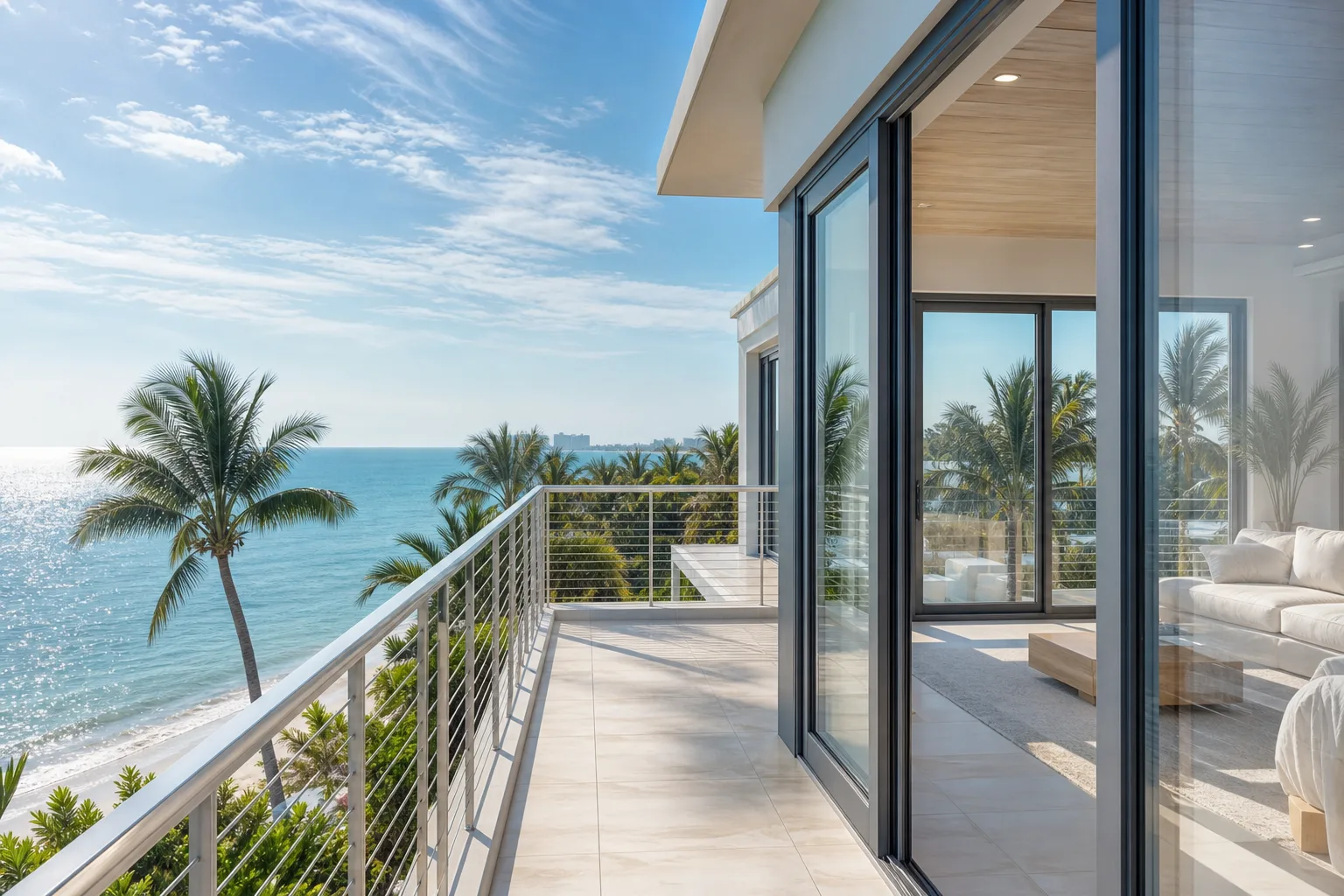
Cable and rod systems offer unobstructed ocean views and work well architecturally on contemporary homes. For coastal use, you need marine-grade stainless steel, typically 316 grade, not 304. The difference matters significantly in a salt-air environment. Cable systems also require periodic tensioning, so ask what the maintenance schedule looks like and whether the company provides that service after installation.
Glass Infill Panels
Tempered or laminated glass infill is popular on waterfront properties. If you are near the coast in Palm Beach or Broward, the glass panels may need to meet the same impact resistance standards as your windows. Ask whether the glass carries a Florida Product Approval for the wind exposure category at your address. This is separate from the structural rating of the posts and rails.
What to Avoid
Wrought iron without a quality coating or galvanization rusts quickly in South Florida. Standard carbon steel in any form is a poor choice in a coastal climate. Wood railings require significant maintenance and are rarely the right call for an exposed balcony in this region.
4. Ask About Installation Experience Specific to Balcony Conditions in Palm Beach and Broward
Installation quality determines whether a code-compliant product actually performs as rated. A railing system with a valid product approval can still fail if the posts are not anchored correctly into the substrate, if sealant is skipped at penetrations, or if the installer does not follow the manufacturer's installation instructions to the letter.
For balconies specifically, the substrate matters a great deal. Concrete decks, wood-framed decks with composite decking, and cantilevered concrete slabs all require different anchoring approaches. An installer experienced only with ground-level aluminum fencing may not be equipped to handle a fourth-floor balcony with a post-tensioned concrete slab.
Questions to ask:
- How many balcony railing installations have you completed in Palm Beach or Broward County in the past two years?
- Can you provide two or three local references for balcony work specifically, not general fencing?
- What substrate are you anchoring into at my property, and what anchor system do you use?
- How do you handle waterproofing at post penetrations to prevent water intrusion into the deck below?
The last question separates experienced installers from generalists. Post penetrations on a balcony are a common source of water damage and structural decay if not sealed and flashed correctly.
If you are doing a broader exterior renovation that includes the balcony, it is worth looking at sliding glass doors or French doors that access the balcony at the same time. Coordinating those installations prevents redundant labor and ensures the framing and waterproofing details are handled consistently.
For a full estimate on your project, the quickest path is to request an estimate and describe both the railing work and any window or door components you are considering.
Bottom Line
Searching for balcony railing near me in South Florida returns a long list of companies, and not all of them are equipped for the specific demands of Palm Beach and Broward County. The four checks above, licensing, wind-load compliance, material suitability, and installation experience, filter that list down quickly.
A railing job done right the first time will pass inspection, hold up through multiple hurricane seasons, and require minimal maintenance. A job done wrong will cost you two or three times the original price to correct, and that is before accounting for any water damage or liability exposure.
If you have questions about how a balcony railing project fits into a broader exterior protection plan for your home, contact us and we can walk through the scope with you. We serve homeowners across Palm Beach and Broward County and understand how the pieces of an exterior renovation fit together in this climate.
Get storm-ready before the next season.
Impact glass protects your home 24/7 with no panels to put up. Window Guys of Florida handles permits, code, and install end to end.
Frequently asked questions
Do balcony railings in South Florida require a permit?
Yes, in Palm Beach and Broward counties, balcony railing installations are structural work and require a building permit. Unpermitted railing work can fail a home sale inspection, void insurance claims, and require costly removal and reinstallation to bring the property into compliance.
What is the best railing material for a coastal Florida balcony?
Powder-coated aluminum is the most practical choice for most South Florida balconies because it resists corrosion and meets structural code requirements. If you prefer a cable or rod system, specify marine-grade 316 stainless steel rather than 304 grade, which degrades faster in salt-air environments.
How do I verify a balcony railing contractor's license in Florida?
Visit the Florida Department of Business and Professional Regulation website at myfloridalicense.com and search the contractor's name or license number. Confirm the license is active and matches the scope of work, and ask for a certificate of insurance for both general liability and workers' compensation before signing a contract.
What wind-load requirements apply to balcony railings in Palm Beach and Broward County?
Balcony railings must comply with applicable Florida Building Code requirements, including wind loads specific to the exposure category and design wind speed at your address. Coastal and near-coastal zones in Palm Beach and Broward often require engineered designs backed by a Florida Product Approval. Contact your local building department or a licensed engineer to confirm the precise requirements for your property, and ask any contractor for documentation before installation begins.
Can I combine a balcony railing project with window or door replacement?
Yes, and it often makes sense to do so. Combining exterior projects reduces permitting overlap and ensures waterproofing and framing details are handled consistently by one crew. Window Guys of Florida can help you scope a project that includes impact windows or doors alongside your railing work.
How long do aluminum balcony railings last in South Florida?
A quality powder-coated aluminum railing installed correctly can potentially last many years in South Florida's climate, though actual longevity varies depending on coating quality, maintenance frequency, proximity to saltwater, and site-specific conditions. Proper anchoring and sealed post penetrations are also key factors in long-term performance.