

TL;DR: Oldcastle tempered glass is a processed safety glass product used in windows, doors, shower enclosures, and commercial storefronts. For Florida hurricane applications, tempered glass alone is not enough. It must be part of a tested, approved laminated or impact-rated assembly. Sourcing and permitting details depend on the specific product line and project scope.
What Oldcastle Tempered Glass Actually Is
The search query "oldcastle tempered glass" pulls together two distinct things: the Oldcastle brand and the glass processing type called tempering. Understanding both helps you ask the right questions when specifying glass for a South Florida project.
The Oldcastle brand. Oldcastle BuildingEnvelope is one of the largest architectural glass fabricators and distributors in North America. The company operates fabrication plants and distribution centers across the U.S. and supplies processed glass to glazing contractors, window manufacturers, and commercial construction projects. Their product catalog spans float glass, tempered glass, laminated glass, insulated glass units, and specialty coatings.
What tempering means. Tempered glass is float glass that has been heated to approximately 620–680°C (roughly 1,150–1,250°F) and then rapidly cooled. This process puts the outer surfaces in compression and the interior in tension. The result is a glass that is widely cited in industry literature as approximately four times stronger than annealed (standard) glass of the same thickness , though this figure is a common industry approximation rather than a universally standardized specification , and that, when it does break, fractures into small blunt cubes rather than large dangerous shards. That fracture behavior is why building codes classify it as a safety glazing material.
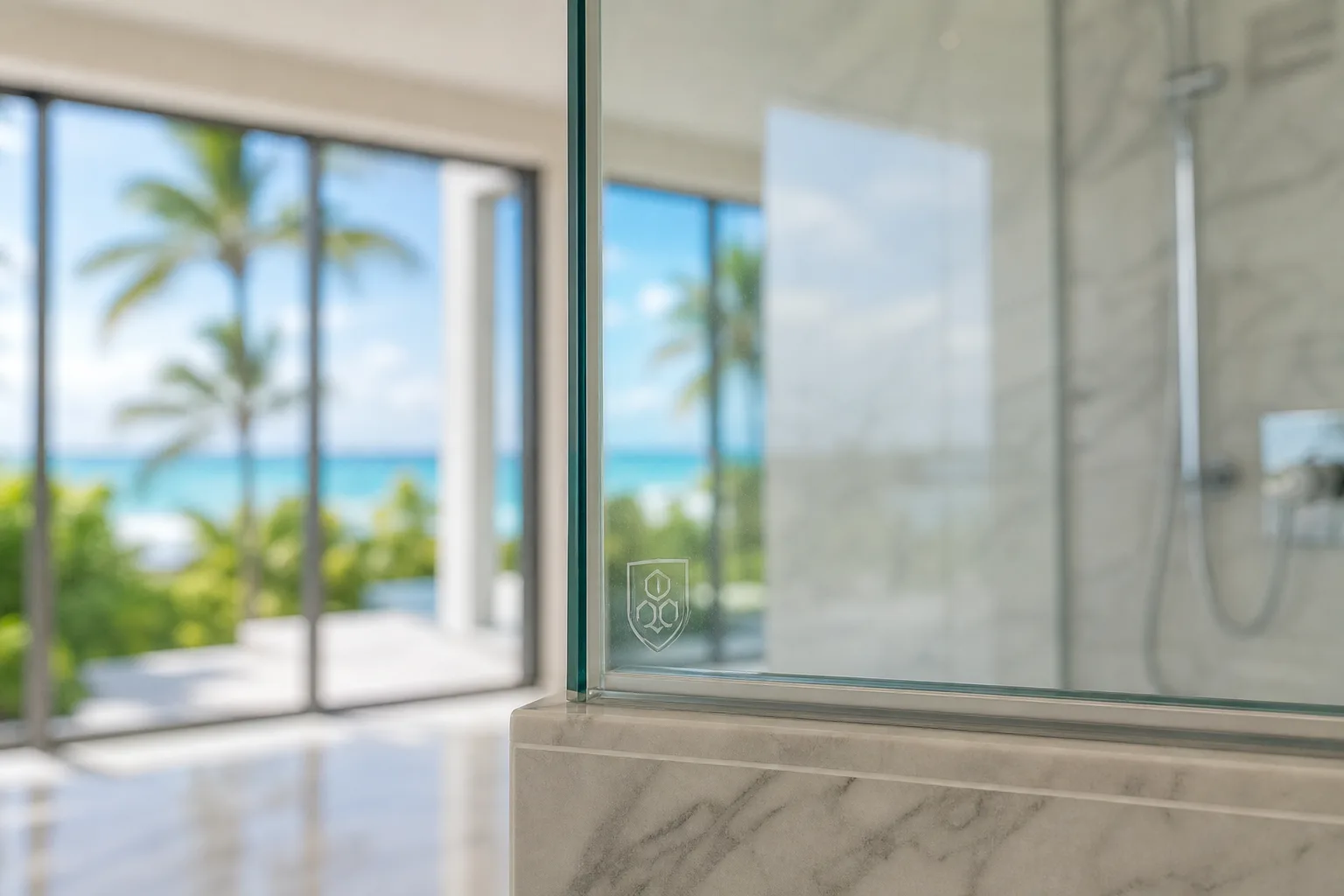
Tempered glass carries an ANSI Z97.1 or CPSC 16 CFR 1201 safety glazing rating, depending on the application. You will typically find a small etched or sandblasted label in a corner of the glass identifying the manufacturer, the safety glazing standard, and the class.
Common Thicknesses and Applications
Oldcastle and most major fabricators offer tempered glass in standard thicknesses ranging from 3/16 inch (approximately 5 mm) to 3/4 inch (19 mm) and beyond for specialty applications. Common uses include:
- Shower doors and enclosures (3/8 inch and 1/2 inch are typical)
- Interior partitions and railings
- Commercial storefront infill panels
- Table tops and furniture
- Secondary glazing layers within insulated glass units
For residential window and door replacement in South Florida, tempered glass by itself is generally not the end product. It is a component inside a larger assembly.
Why Tempered Glass Alone Does Not Meet Florida Hurricane Standards
This is the most important distinction for any homeowner or contractor searching for Oldcastle tempered glass with hurricane protection in mind.
Florida's High-Velocity Hurricane Zone (HVHZ), which covers Miami-Dade and Broward counties as defined under the Florida Building Code, and the wind-borne debris regions that extend through Palm Beach, Martin, and St. Lucie counties all require fenestration products to resist both wind pressure and large-missile or small-missile debris impact as defined by the Florida Building Code. (Florida Building Code, Building Volume, Section 1609 and FBC HVHZ provisions)
Tempered glass can survive wind pressure up to a point, but it does not hold together after impact. When a piece of tempered glass breaks, it disintegrates. The resulting opening allows wind pressure to enter the building envelope, which is a primary cause of roof uplift and structural failure in hurricanes.
Impact-rated glazing uses laminated glass, which bonds two or more layers of glass around a polyvinyl butyral (PVB) or ionoplast interlayer. When laminated glass breaks, the fragments stay adhered to the interlayer, maintaining the barrier. Many impact window assemblies use a laminated lite combined with a tempered lite in an insulated glass unit, giving you both impact resistance and thermal performance.
For a product to be sold and installed as hurricane protection in Florida, the entire window or door unit, including frame, glazing compound, hardware, and anchoring, must carry a valid Florida Product Approval (FPA) number issued through the Florida Building Commission or a Miami-Dade Notice of Acceptance (NOA). Oldcastle supplies glass components to manufacturers who then engineer and test complete assemblies. The approval lives with the finished unit, not with the glass component alone.
If you are planning a hurricane impact window or hurricane impact door project, the relevant document is the product approval for the complete window or door unit, not the glass spec sheet by itself.
Review opening-protection options before storm season. Request a free estimate
What We Don't Know Yet Without a Specific Project Scope
Several variables remain open until a project is defined and documented. This matters whether you are a homeowner, a general contractor, or a glazing subcontractor.
Which Oldcastle product line applies. Oldcastle BuildingEnvelope produces glass under multiple facility and product identifiers. A tempered glass unit fabricated in one plant may carry different certifications than one from another facility. The applicable spec sheet, SGCC certification, and any Florida-specific approvals need to be verified against the actual product order, not general brand-level marketing.
The assembly context. Tempered glass used in a shower enclosure has a completely different code path than tempered glass used as one lite in an impact-rated insulated glass unit. The building inspector and the applicable code section are different. The required documentation is different.
Local availability and lead times. Oldcastle operates distribution and fabrication locations across Florida, but stock availability for specific thicknesses, coatings, sizes, and certifications varies. Custom tempered glass typically requires a fabrication lead time. For window replacement projects on a schedule, lead time confirmation from the actual supplier is essential before committing to a project timeline.
Permit requirements for your specific county. Miami-Dade operates under the HVHZ provisions and requires NOA documentation. Palm Beach, Broward, Martin, and St. Lucie operate under the standard Florida Building Code wind-borne debris requirements with some local amendments. What must be submitted for a permit varies by county and municipality. A windows and doors replacement project in Wellington has a different permit path than the same work in Miami Beach.
Insurance implications. Some South Florida insurers offer premium adjustments for verified hurricane-rated glazing installations. The qualifying criteria, documentation requirements, and actual savings vary by carrier and policy. No general article can predict what your insurer will require or credit.
What to Do About It: Practical Steps for South Florida Projects
If You Are Sourcing Tempered Glass for a Non-Impact Application
For shower enclosures, interior railings, furniture, or commercial partition panels where hurricane impact ratings are not required, you have more flexibility. Oldcastle and other major fabricators (including Guardian, Cardinal, and Vitro) distribute through glazing suppliers across South Florida. A licensed glazing contractor or glass shop can pull the product and cut or fabricate to your dimensions.
Verify that the product carries the appropriate ANSI Z97.1 or CPSC 16 CFR 1201 safety glazing rating for your application. Building inspectors in Florida will check for the etched label on safety glazing in required locations such as shower doors and sidelites near entry doors.
If You Are Planning a Hurricane-Rated Window or Door Project
Do not source glass components and try to build your own compliant assembly. Florida's approval process requires that the complete unit, tested as a system, hold a valid FPA or NOA number. The approved installer must follow the approved installation instructions exactly, including anchor type, anchor spacing, sealant specification, and buck requirements.
For residential window replacement or a full windows and doors replacement project in Palm Beach, Broward, Miami-Dade, Martin, or St. Lucie county, the process runs roughly as follows:
- A licensed contractor reviews the opening conditions, structural substrate, and applicable wind speed for your location.
- The contractor selects a product with an FPA or NOA that covers your design pressure requirements.
- A permit is pulled with the product approval documentation, and inspections are scheduled.
- Installation follows the manufacturer's approved installation instructions, which dictate every fastener and sealant detail.
- The inspector signs off on the permit, creating the documentation trail your insurer and future buyers may require.
For commercial projects, including storefronts, curtain walls, and multi-family buildings, the scope adds engineered shop drawings and may require a separate specialty contractor license. Our commercial glazing services cover those requirements.
Getting a Project-Specific Answer
If you are in South Florida and have a specific project, the most useful next step is a site review. A licensed contractor can tell you which products carry approvals that match your opening conditions, what permit documentation your county requires, and what a realistic timeline looks like given current supplier lead times.
You can request an estimate or contact us directly to start that conversation. General questions about Oldcastle tempered glass specs or Florida product approvals are also fair game.
For reference, the Florida Building Commission maintains a searchable Florida Product Approval database where you can look up any FPA number and download the corresponding approval documents, including the installation instructions that a licensed contractor must follow. The Miami-Dade County product approval portal maintains the NOA search tool for HVHZ-specific approvals.
Review opening-protection options before storm season.
The performance and responsibilities for permits, engineering, documentation, installation, and inspections depend on the exact assembly and written project scope.
Frequently asked questions
Is Oldcastle tempered glass the same as impact glass?
No. Tempered glass is a safety glazing product that breaks into small blunt pieces rather than sharp shards, but it does not maintain its barrier when broken. Impact-rated glass uses laminated construction with an interlayer that holds fragments in place after a strike. Florida hurricane protection requirements call for laminated or impact-rated assemblies, not tempered glass alone.
Does Oldcastle tempered glass have a Florida Product Approval?
Florida Product Approvals cover complete window and door units as tested assemblies, not individual glass components. Oldcastle supplies glass to manufacturers who test and approve finished products. You would need to identify the specific window or door unit, then look up its FPA number in the Florida Building Commission's product approval database to confirm compliance.
Where can I buy Oldcastle tempered glass in South Florida?
Oldcastle BuildingEnvelope distributes through glazing suppliers and may supply directly to licensed contractors depending on project size and product type. For residential window replacement projects requiring hurricane-rated products, the relevant purchase is a complete approved window unit from a licensed contractor, not a glass component sourced separately.
What thickness of tempered glass do I need for a shower enclosure in Florida?
Florida's building code generally references minimum thickness requirements for shower doors and enclosures, and the glass must carry a recognized safety glazing certification such as ANSI Z97.1. Many jurisdictions commonly apply a minimum of 3/8-inch tempered glass for shower doors, though some enclosure configurations may call for 1/2-inch glass. Always confirm the applicable code section and edition with a licensed contractor or your local building department, as requirements can vary by jurisdiction and project conditions.
Can I use tempered glass in a permitted window replacement in Miami-Dade County?
Miami-Dade is in the High-Velocity Hurricane Zone, which requires fenestration products to carry a Miami-Dade Notice of Acceptance covering impact resistance. A window unit using only tempered glass would not meet that requirement. Approved impact window assemblies in Miami-Dade typically use laminated glass, often combined with tempered glass in an insulated unit, as part of a tested and NOA-certified system.
How do I verify that a glass product meets Florida requirements for my project?
The Florida Building Commission maintains a searchable product approval database at floridabuilding.org where you can look up FPA numbers and download installation instructions. For Miami-Dade County projects, the NOA search tool is available through the Miami-Dade Building Department website. A licensed contractor can also pull the applicable approval documents as part of the permitting process.