
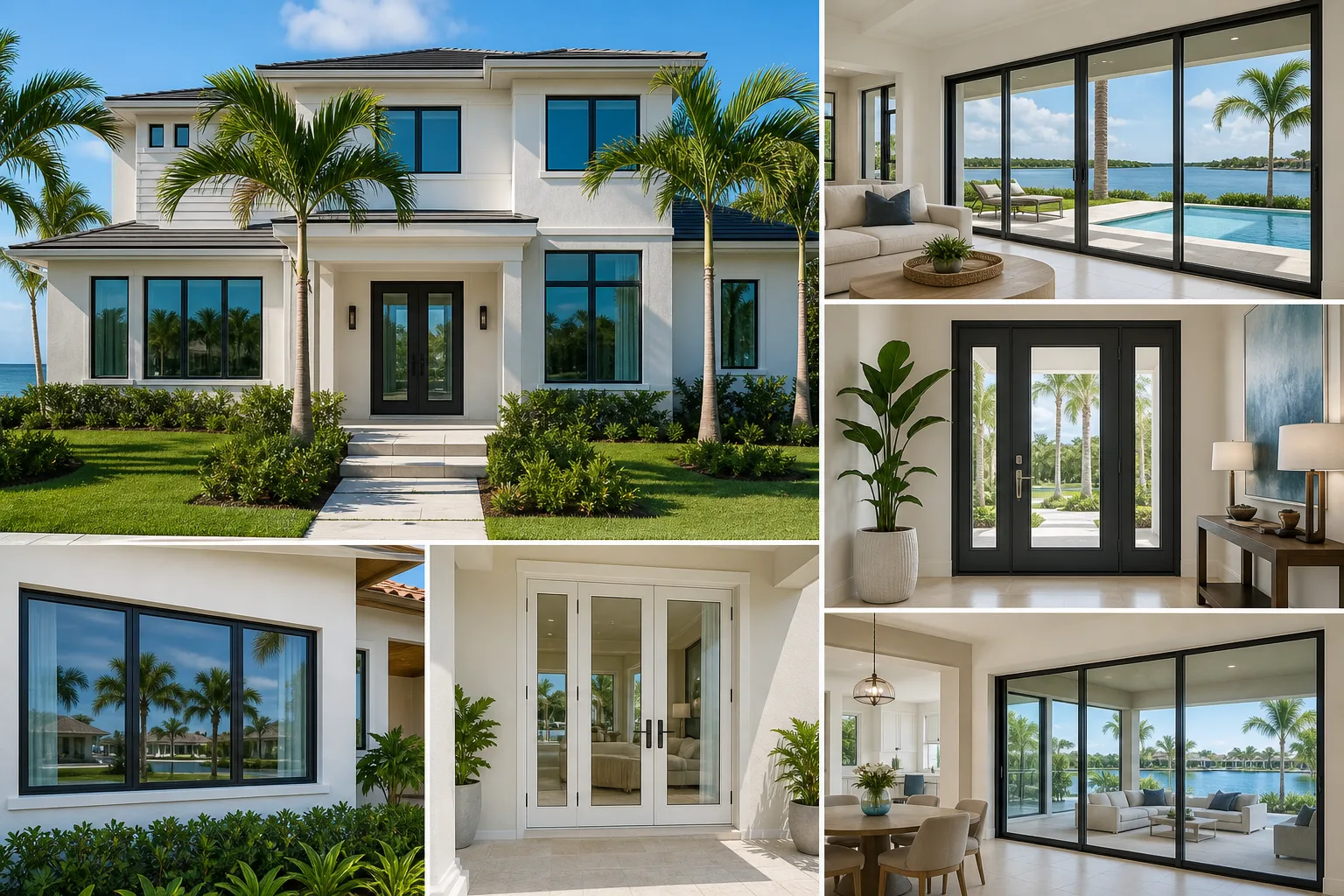
TL;DR: Impact door style choices involve more than aesthetics. Opening direction, rough opening size, Miami-Dade or Florida Building Code approval, hardware, and HOA rules all constrain your options before you ever pick a finish. Work through these six questions first.
Your entryway is the largest single opening in most homes, and in South Florida it carries real wind-load and code obligations. Choosing an impact door style that looks great but conflicts with your rough opening dimensions, required pressure rating, or HOA deed restrictions creates expensive backtracking. These six questions give you a structured way to narrow the field before you sit down with a contractor or request pricing.
1. What is the rough opening size, and does it match standard door units?
Measure the rough opening before you fall in love with a specific door configuration. Impact door units are manufactured to set nominal sizes, and custom fabrication adds cost and lead time. Common single-door units run roughly 3-0 x 6-8 or 3-0 x 8-0. Double-door (French-style) units typically start at 5-0 or 6-0 wide.
If your existing opening was built for a non-impact wood door with sidelites, the combined width may accommodate a door-and-sidelite impact unit. But sidelite panels carry their own glazing and frame specifications, and they must be approved as part of the same system, not mixed from different product lines.
Note the height too. Standard 6-8 versus 8-foot doors are not interchangeable in rough opening terms. An 8-foot door in a 6-8 opening requires structural header work, which brings a different permit scope and cost.
For a broader look at what goes into a replacement project, the windows and doors replacement overview explains the typical scope contractors evaluate on-site.
2. What wind pressure and impact rating does your location require?
Florida's wind map divides the state into zones, and South Florida sits in the highest-risk corridors. Miami-Dade County has its own Notice of Acceptance (NOA) system, which is separate from the Florida Product Approval (FPA) database used by Broward, Palm Beach, Martin, and St. Lucie counties. A door approved under one system may not satisfy the other.
Within those systems, each product listing specifies a design pressure rating, typically expressed as a positive and negative number (for example, plus and minus 65 psf). Your local jurisdiction will require a design pressure that meets or exceeds what the engineer of record calculates for your specific opening based on exposure category, building height, and location relative to the coast.
Door style affects available pressure ratings. A single solid panel generally achieves higher ratings than a wide double-door unit with a removable astragal. Multi-panel folding or bi-fold configurations, while visually appealing, tend to have lower available pressure ratings and more limited product approvals. Ask the contractor to show you the approval document for any style you are seriously considering before you commit.
The hurricane impact doors page gives a starting point for understanding what South Florida installations involve.
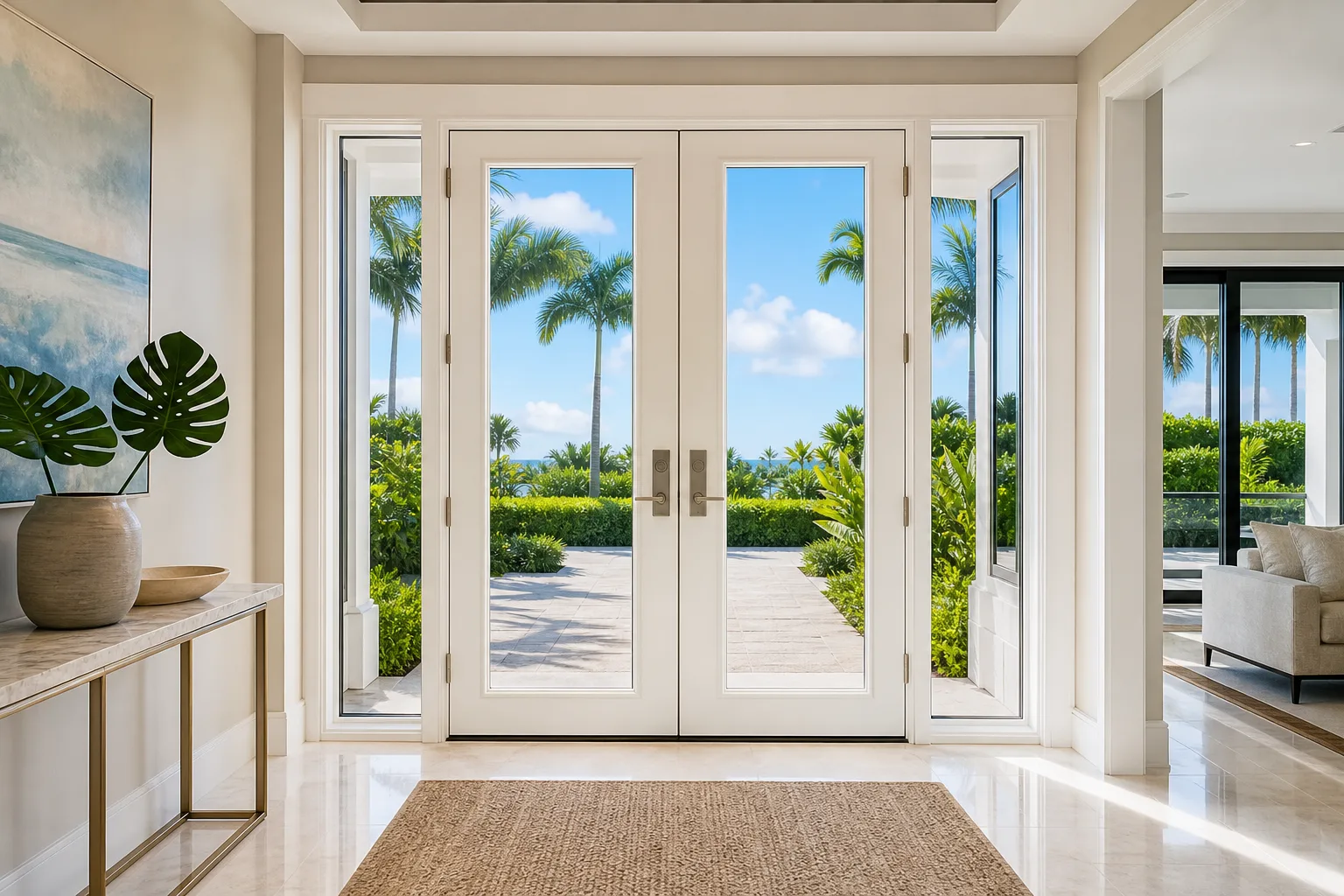
3. Which door configuration actually fits your floor plan and traffic flow?
Door style is partly a function of how the entry is used day-to-day. A single active panel with fixed sidelites keeps hardware simple and costs lower. A true double-door (both panels active) requires a flush bolt on the inactive panel, adds hardware complexity, and demands more clearance for both panels to swing freely at the same time.
Inswing versus outswing matters structurally and practically. Florida code often favors outswing exterior doors because outswing units resist positive wind pressure more effectively, but an outswing door on a small covered entry can conflict with screen doors, steps, or furniture. An inswing door requires the hardware to resist wind suction on the exterior face.
If the entryway connects directly to a foyer with limited depth, a double outswing unit may work well. If there are steps right at the threshold, an inswing door avoids the panel swinging over the drop. These are real constraints, not preferences. A contractor doing a proper site visit will check all of them.
Compare impact-door options for your project. Request a free estimate
4. What glazing options are available for your chosen style, and what do they affect?
Impact doors can be glazed (with glass panels or sidelites) or built with solid or partially solid panels. Each choice carries trade-offs.
Full-lite glass doors maximize natural light in the foyer but reduce privacy and change the thermal performance of the entry. Low-E coatings on impact-rated glass can reduce solar heat gain, which matters in South Florida where east- and west-facing entries receive direct afternoon or morning sun. Check whether the specific product approval for your chosen door includes Low-E options, because not every glazing configuration is listed under every NOA or FPA approval.
Partial-lite and three-quarter-lite doors balance light and privacy. Decorative glass options, including obscure, reed, or rain patterns, are available in some product lines but must be listed within the product's approval document to be code-compliant. Decorative glass not listed in the approval is not an option on a permitted project, regardless of how it looks in a showroom.
For context on how glazing choices affect more than just style, benefits of impact windows besides defense covers energy, noise, and UV considerations that apply to doors as well.
5. Does your HOA or municipality have restrictions on door style, color, or material?
Homeowners associations in Palm Beach, Broward, and Miami-Dade counties frequently regulate exterior door appearance. Restrictions may cover paint color, glass type (clear versus obscure), hardware finish, whether sidelites are permitted, or whether double doors require architectural review.
Municipal historic districts add another layer. If your home is in a locally designated historic area, the historic preservation board may require specific materials or prohibit certain modern door profiles, even if those profiles are fully code-compliant and impact-rated.
Get HOA approval in writing before you order. Most impact door lead times run several weeks. If the HOA rejects the style after fabrication, you may be responsible for the cost of the unit whether or not it gets installed. Some contractors will coordinate directly with the HOA on your behalf; ask whether that is part of the project scope.
Separate from HOA, the local building department issues the permit and performs inspections. The permit is tied to the approved product's NOA or FPA listing, the structural calculations, and the installation drawings. A door style with limited approval documentation creates more permit work, which affects timeline and cost.
If you are weighing whether the investment makes practical sense, are impact doors a worthy investment lays out the variables honestly.
6. How does door style affect hardware, threshold, and long-term maintenance?
Impact door hardware is not interchangeable with standard residential hardware. Multi-point locking systems, heavy-duty hinges rated for the door weight, and flush bolts on inactive double-door panels are all part of the approved assembly. Substituting hardware not listed in the product approval voids the certification and can create a permit issue at final inspection.
Thresholds deserve specific attention in South Florida. An impact door threshold must seal tightly against wind-driven rain, but it also has to comply with accessibility codes if your entry serves certain uses. Outswing doors typically use a different threshold profile than inswing units. In areas with frequent standing water from heavy rain, threshold height and the presence of a saddle or hook-strip design matters for water intrusion.
Maintenance expectations vary by material. Aluminum frames are standard for impact doors in Florida and hold up well in high-humidity, salt-air environments with minimal maintenance beyond periodic cleaning and hardware lubrication. Fiberglass-skinned doors with wood-look finishes can work well but may require more attention to finish integrity over time. Steel-core units are less common in residential coastal applications due to corrosion risk.
Ask the manufacturer's product sheet for maintenance intervals and warranty terms. The warranty on an impact door typically covers the unit separately from the installation labor, and both have conditions. A contractor should be able to walk you through both documents before you sign a contract.
For a look at what a complete installation involves, things to know before you install hurricane impact windows covers the permit and inspection process that applies equally to doors.
Bottom Line
Impact door style selection is a practical exercise before it is an aesthetic one. Rough opening dimensions, code-required pressure ratings, inswing versus outswing logistics, glazing approvals, HOA restrictions, and hardware requirements all narrow your real options. Working through these six questions before you look at price or finish choices keeps the project from stalling after ordering.
If you are ready to have a licensed contractor evaluate your specific entryway, request an estimate or visit the contact page to schedule a site visit. Every variable discussed here, from rough opening to product approval, should be part of that on-site conversation.
Compare impact-door options for your project.
Review entry, French, and sliding-door assemblies against the exact opening, approval, design pressure, exposure, glass, hardware, and installation scope.
Frequently asked questions
Can I choose any impact door style I want as long as it is impact-rated?
Not necessarily. An impact rating confirms the door meets hurricane protection standards, but your specific opening size, required design pressure, local jurisdiction approval system, and HOA rules all constrain which styles are actually installable at your address. A product can be impact-rated but not listed under Miami-Dade NOA, for example, which disqualifies it for that county.
What is the difference between Miami-Dade NOA and Florida Product Approval for impact doors?
Miami-Dade County operates its own Notice of Acceptance program, which products must meet to be installed within that county. The rest of Florida uses the statewide Florida Product Approval database administered by the Department of Business and Professional Regulation. Some products carry both approvals; others carry only one. Always confirm which approval your jurisdiction requires before selecting a product.
Does an outswing impact door offer better protection than an inswing?
Outswing exterior doors resist positive wind pressure more directly because the door is pressed against the frame when the wind pushes inward. Inswing doors must rely more heavily on hardware to resist that same load. Florida code permits both configurations, but outswing is more commonly specified in high-wind zones. The design pressure rating of the specific product matters more than swing direction alone.
Will decorative glass in an impact door still meet code?
Only if that specific decorative glass pattern is listed within the product's approved NOA or Florida Product Approval document. If the decorative option is not in the approval listing, it cannot be used on a permitted project regardless of its appearance. Ask the contractor to confirm the exact glass configuration is within the listed approval before ordering.
How long does it typically take to get an impact door installed after ordering?
Lead times vary by product line, configuration, and current demand, but custom or non-stock sizes often take several weeks from order to delivery. Permit processing time adds to the overall schedule. Plan for the possibility that HOA review, permit issuance, and fabrication overlap in ways that extend the project timeline beyond what any single estimate can guarantee.
What maintenance does an aluminum-framed impact door require in South Florida?
Aluminum frames in coastal Florida generally require periodic cleaning to remove salt deposits and occasional lubrication of hinges, locks, and multi-point locking hardware. The frequency depends on how close the home is to the ocean and how often the door is exposed to salt spray. Check the manufacturer's maintenance schedule in the product documentation, as neglecting hardware upkeep can affect warranty coverage.