TL;DR: A multi-point locking system replaces a single-point deadbolt with several bolt or hook points that engage the frame when you lift the handle and turn the key. This distributes wind-load stress across the full door height, which matters most when a hurricane is driving pressure against the slab. The specific hardware and its performance rating depend on the door product and its approval documentation, so always verify with your contractor.
What Happened
Traditional residential entry doors use a single deadbolt and a latch bolt at roughly mid-door height. When wind pressure loads the door, nearly all of that force concentrates at one point on the frame. Florida's post-Andrew building code revisions pushed door manufacturers toward systems that spread that load, and multi-point locking became standard on most impact-rated entry doors.
The shift is documented in the product approval process. Florida Building Code requires that impact doors carry either a Florida Product Approval (FL number) or a Miami-Dade Notice of Acceptance (NOA), and those approvals cover the door as a tested assembly, including the locking hardware. Changing the lock after installation without engineering review can void the approval.
Why It Matters
How the Mechanism Works
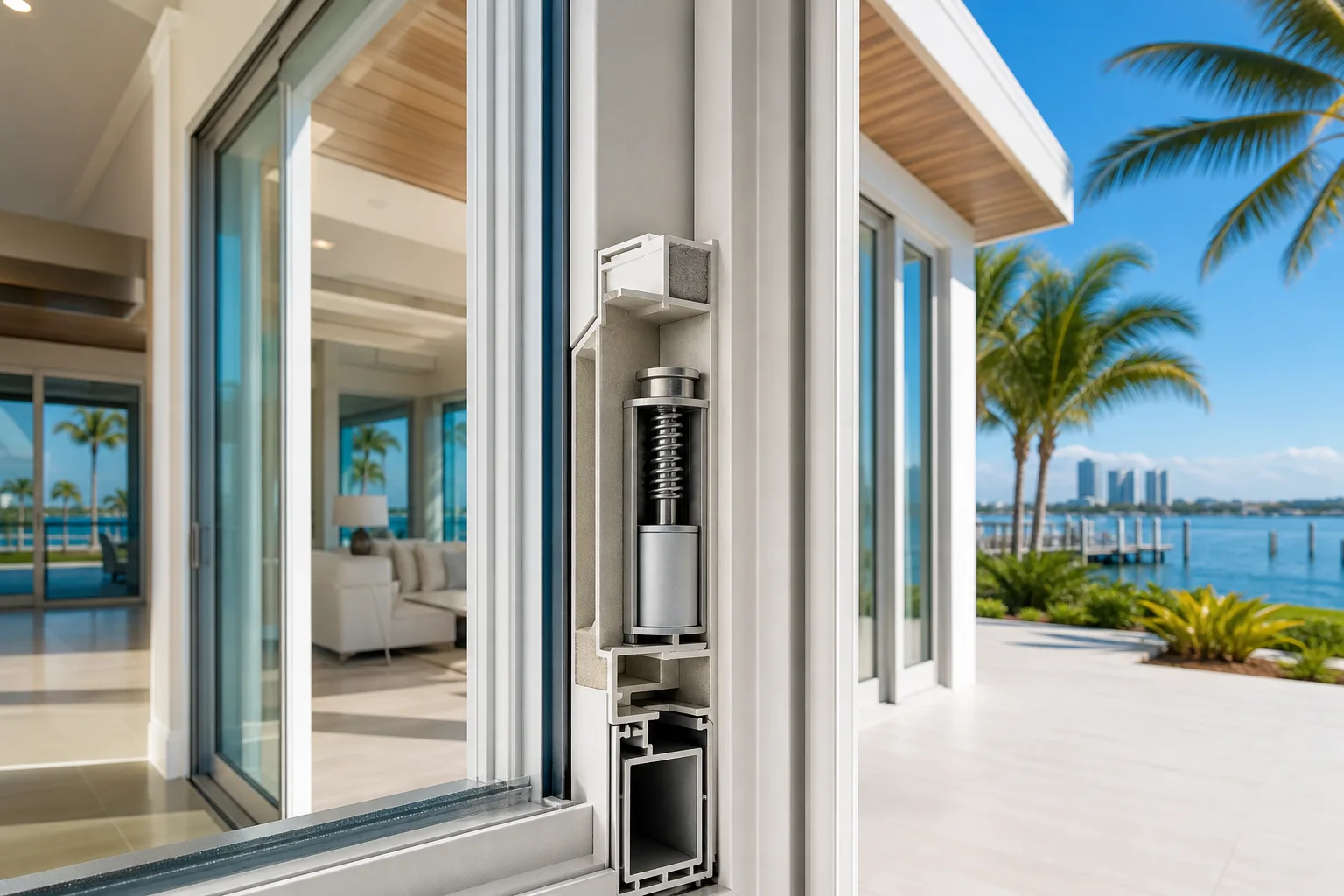
Most multi-point systems use a vertical rod or gear-driven strip inside the door stile. When a homeowner lifts the interior handle, the rod moves and simultaneously drives two or more secondary bolt points, typically at the top and bottom of the door, in addition to the main deadbolt at the lock body. Some systems add hook bolts that curve around a strike keeper, which resist both inward push and outward pull forces.
The sequence looks like this:
- Lift the interior lever or pad handle upward.
- The rod or gear strip moves, engaging top and bottom bolts into their strikes in the frame.
- Turn the thumb-turn or key to throw the primary deadbolt.
- The door is now locked at three or more points across its height.
When you exit, the same motion in reverse retracts all points before the door will open.
Load Distribution Versus Single-Point Locking
A door under positive wind pressure acts like a sail. The pressure tries to bow the slab inward and lever the frame away from the rough opening. A single deadbolt at 40 inches off the floor creates a long lever arm, top and bottom. Adding engagement points at the head and sill reduces that lever arm dramatically, which is why multi-point systems are paired with impact glass in approved assemblies.
Negative pressure, the suction phase of a storm, works in the opposite direction. Hook-style bolts address this by wrapping around the strike plate rather than simply pressing against it. Not all multi-point systems use hooks. Some use flat bolts. The distinction matters for tested performance, and it should be visible in the product's approval documentation.
What the Approval Documents Show
A Florida Product Approval for an impact door lists the tested configuration: door size, glass type, frame material, and hardware. The locking mechanism is part of that configuration. If a door is tested with a three-point hook system, installing it with a two-point flat-bolt system is a different assembly and may not carry the same approval. This is a detail to confirm in writing with your contractor before purchase.
For Miami-Dade county and municipalities that require NOA compliance, the same logic applies. The NOA lists the tested scope.
See 6 questions to consider before choosing an impact door style for related pre-purchase decisions.
Hardware Durability in a Coastal Climate
The rod and gear components inside the door stile are protected by the door itself, so they are less exposed to salt air than exterior hardware. The strike plates and bolt receivers in the frame are exposed, and on aluminum or steel frames in coastal South Florida, material choice matters. Stainless steel hardware is common on products designed for coastal environments. The specific finishes and materials are listed in product specs, not assumed.
Operation and Maintenance
Multi-point systems require that all bolt points retract cleanly before the door opens. If the frame shifts due to settling, or if the door is not properly aligned during installation, the top or bottom bolt may bind against its strike. This produces resistance when operating the handle and is a sign the system needs adjustment, not force.
Lubrication with a silicone-based product on the rod and strike faces is standard preventive maintenance. Petroleum-based lubricants can degrade seals and gaskets on impact door assemblies.
Proper installation alignment is a prerequisite. See 8 tips to ensure a flawless impact window installation for related installation accuracy points.
Review opening-protection options before storm season. Request a free estimate
What We Don't Know Yet
The specific locking configuration appropriate for your project depends on variables this article cannot determine: door dimensions, wall construction type, wind-speed design pressure for your location, and the product line selected. PGT, CGI, SIW, and ES each offer impact door lines with documented hardware specifications, but which configuration performs within your budget and meets local code requires review of the actual product approval and a site evaluation.
If you are replacing an existing impact door that already has a multi-point system, whether the replacement door uses the same hardware pattern matters for frame compatibility. That is a question for the installation contractor, not a general article.
What to Do About It
If you are evaluating impact doors for a South Florida home, ask the contractor to show you the Florida Product Approval or NOA for the specific door being quoted, and confirm that the locking system in the approval matches what will be installed. This is a documented fact on a government-accessible approval, not a sales claim.
For existing impact doors where the handle operation has become stiff or the door does not latch cleanly, start with frame alignment before assuming hardware failure. A licensed contractor can assess whether the issue is the lock mechanism or the installation.
To discuss a specific door replacement project in Palm Beach, Broward, Miami-Dade, Martin, or St. Lucie county, request an estimate with the door location, current door type, and any known permit history for the opening.
Review opening-protection options before storm season.
The performance and responsibilities for permits, engineering, documentation, installation, and inspections depend on the exact assembly and written project scope.
Frequently asked questions
Does lifting the handle engage all lock points, or do I also need to turn the key?
On most multi-point systems, lifting the handle engages the secondary bolt points at the top and bottom of the door. Turning the key or thumb-turn throws the main deadbolt at the lock body. Both actions together fully secure the door. The exact sequence depends on the specific hardware; confirm the operation steps with your installer.
Can I upgrade an existing impact door to a multi-point lock?
Replacing hardware on an approved impact door assembly requires verification that the new hardware matches the tested configuration in the product's Florida Product Approval or NOA. Installing different hardware without engineering review can affect the approval status of the assembly. This is not a standard DIY upgrade on a code-compliant impact door.
Are multi-point locks standard on all impact doors, or only certain product lines?
Multi-point locking is common on impact-rated entry doors but the number of points, bolt type, and gear mechanism vary by manufacturer and product line. The tested configuration is documented in the product approval, so the approval document is the reliable source, not general marketing descriptions.
What is the difference between a hook bolt and a flat bolt in a multi-point system?
A hook bolt curves around the strike keeper and resists both inward pressure and outward suction, which matters during the negative-pressure phase of a storm. A flat bolt presses against a flat strike and primarily resists inward force. Which type is present in a given door assembly is documented in its product approval testing configuration.