TL;DR: If an impact door sticks only after heavy rain, do not force it or immediately adjust the hinges. First identify where it rubs, check whether water is pooling at the threshold or track, and see whether the condition disappears after drying. A recurring problem can point to drainage, frame alignment, structural movement, hardware, or installation details that should be evaluated as a system.
What happened
After a hard South Florida rain, a door that normally opens and locks smoothly may suddenly drag, bind, scrape, or require extra force to latch. Homeowners often describe it as a swollen door, but that is only one possible explanation. With an impact-rated door assembly, the slab, frame, hinges or rollers, sill, weatherstripping, lock hardware, drainage paths, adjacent wall opening, and finished floor all influence how the door operates.
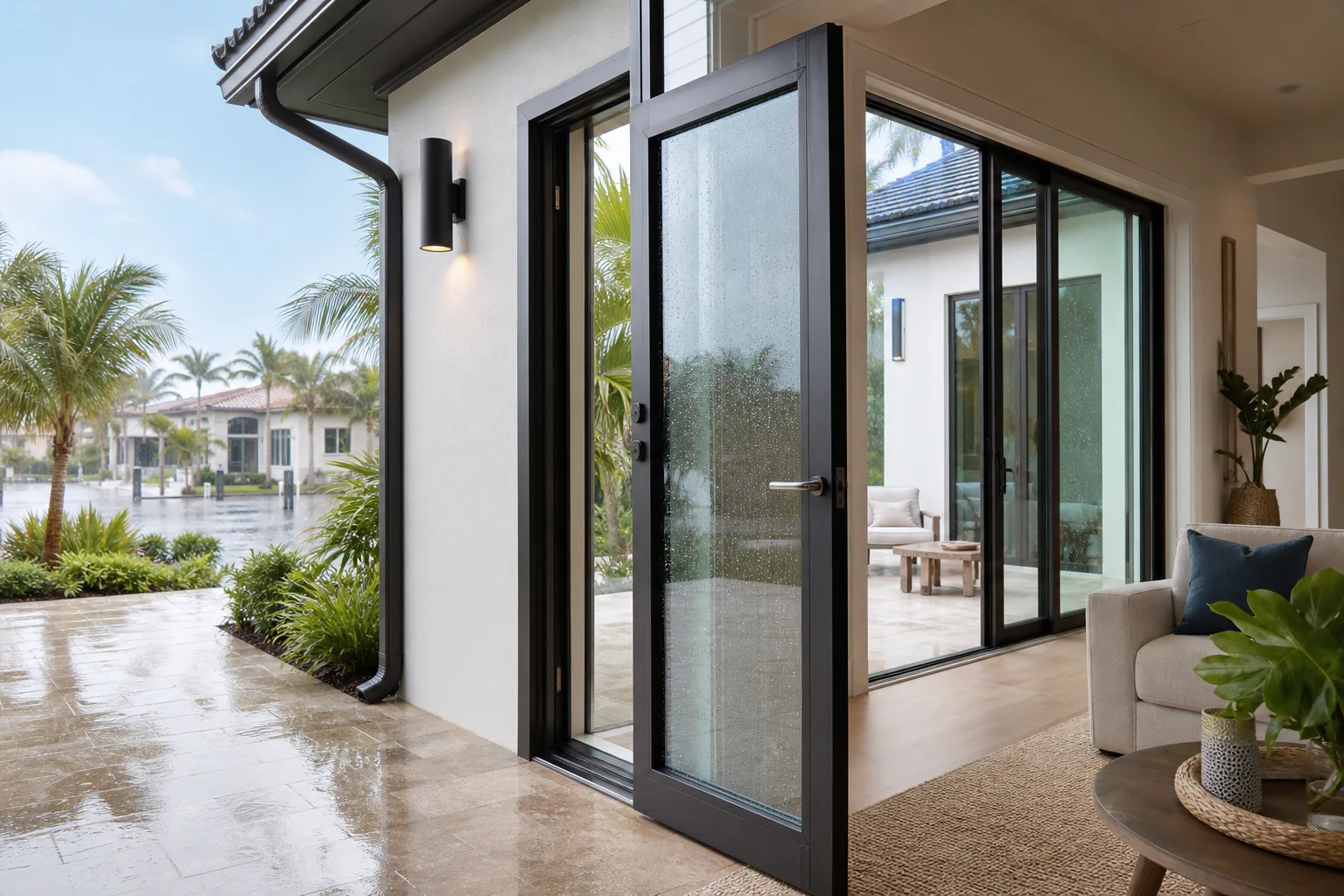
The first useful detail is the exact symptom. A hinged entry door can rub at the top corner, bottom corner, latch side, or threshold. A sliding glass door can become difficult to move along the track, resist closing near one end, or feel as if it is riding through grit. A French door or double door can close individually but refuse to latch together, especially if the active and inactive panels no longer meet correctly.
Heavy rain can expose a condition that was already close to the edge of acceptable operation. A door may have had limited clearance before the storm. Water, wind pressure, a loaded gutter, saturated landscaping, or normal movement in surrounding materials can make that narrow clearance problem noticeable.
Water where it should not remain
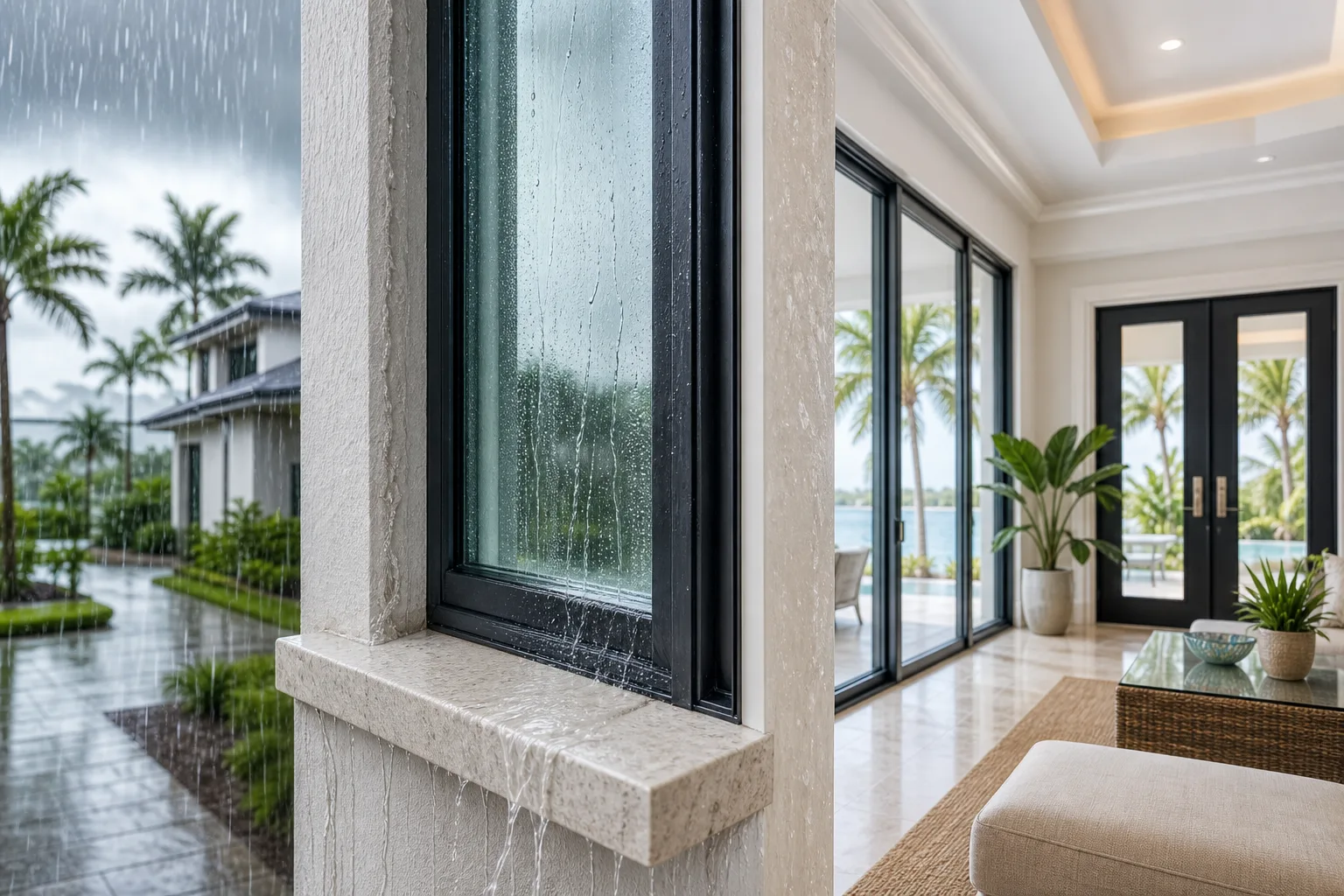
The most direct rain-related cause is water collecting in or around the sill or track. Sliding and swinging exterior door systems are designed with specific drainage routes, including weep openings, sill channels, and exterior drainage planes. Dirt, mulch, leaves, insects, paint, caulk applied in the wrong location, or a poorly maintained patio surface can interfere with those routes.
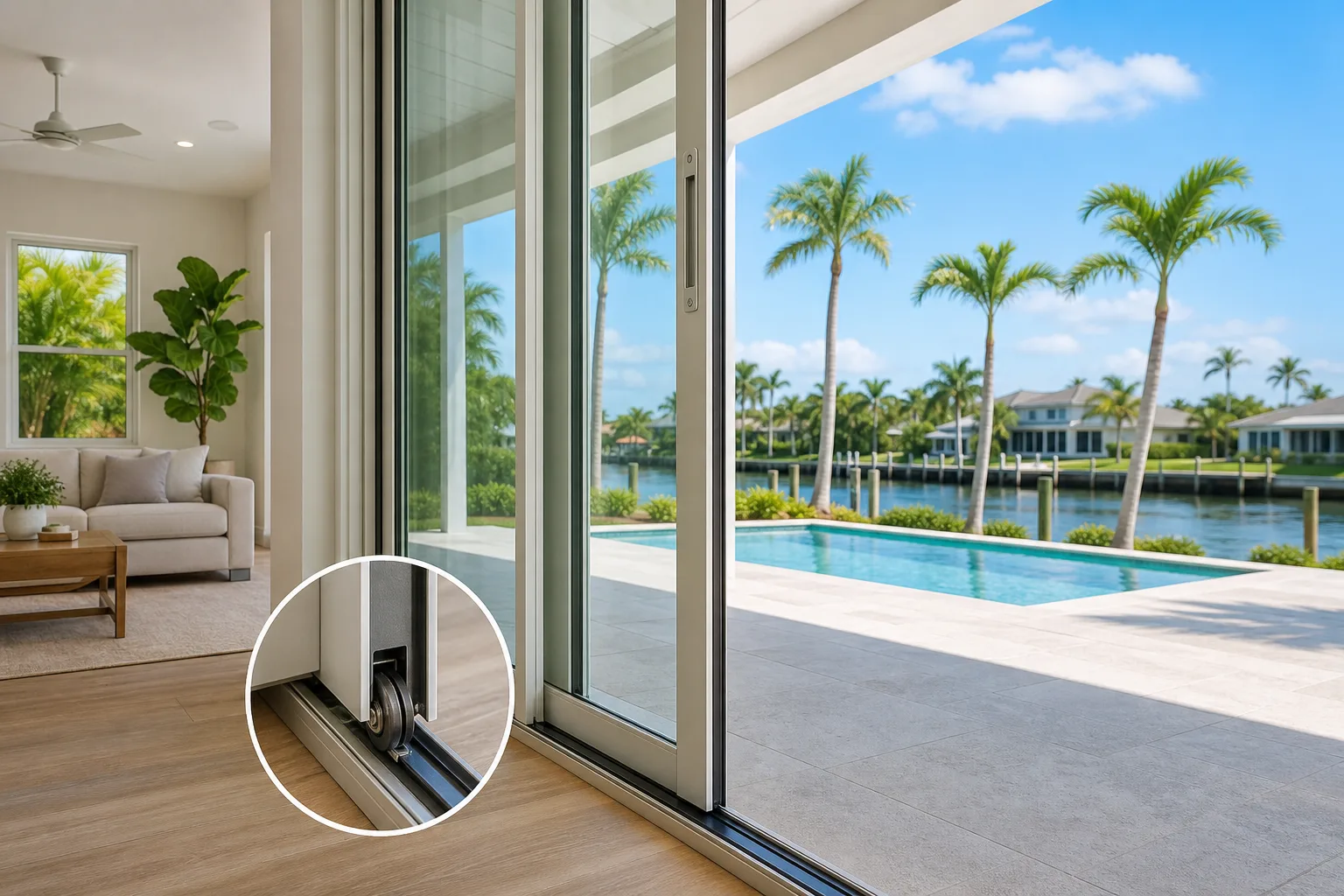
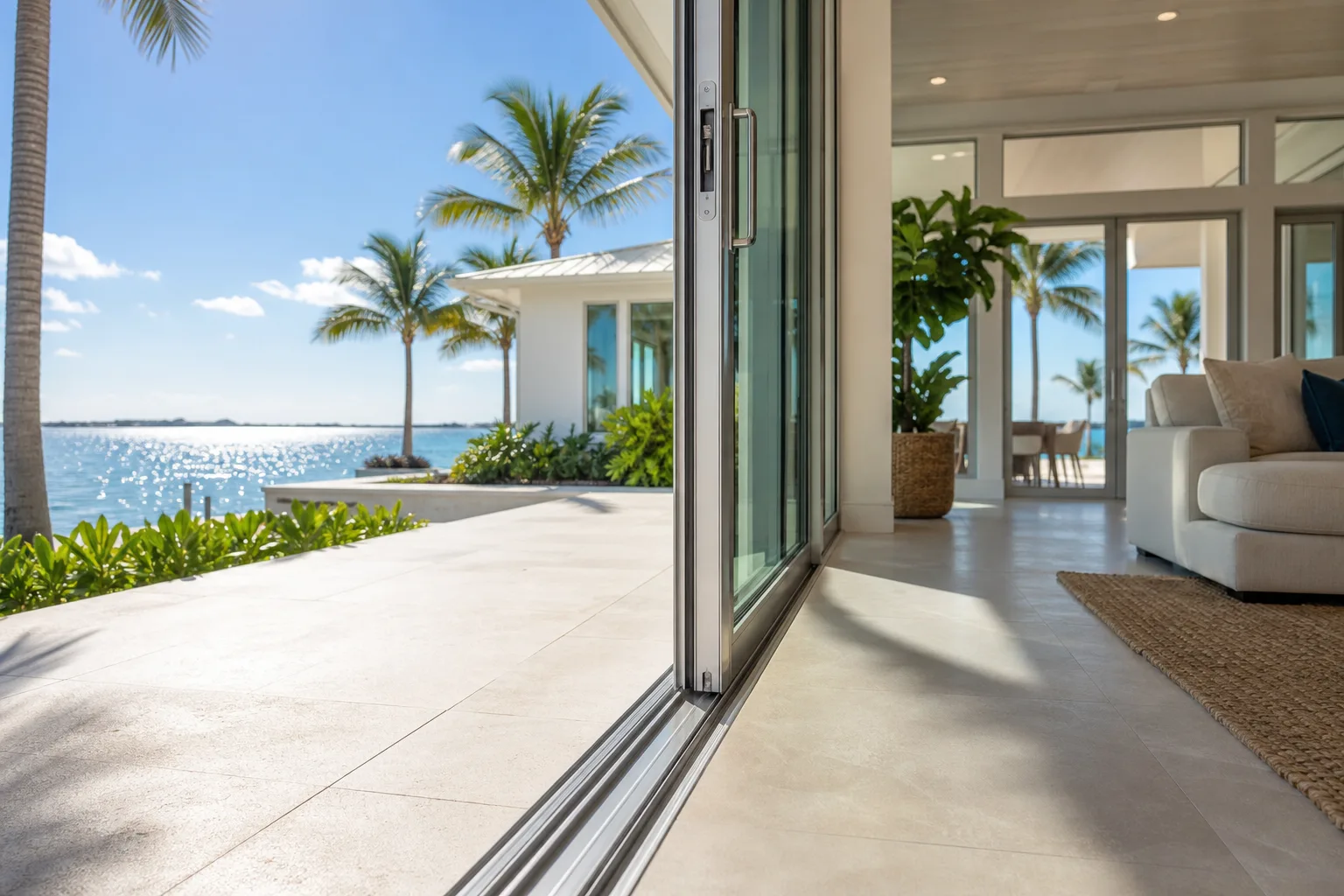
When water sits in a sliding-door track, rollers may push through debris or waterborne grit. The panel can feel heavy and may not move squarely. On a hinged door, water pooling against the exterior threshold does not necessarily cause immediate binding, but it can reveal a low exterior grade, blocked drainage opening, or transition detail that keeps the sill wet longer than intended.
A homeowner should not assume that every visible opening in a sill is meant to be sealed. Some openings are part of the system's drainage design. Sealing them without the manufacturer's instructions can trap water rather than solve the problem.
Wet materials and changing clearances
Many impact doors use aluminum, fiberglass, glass, steel-reinforced, composite, or other engineered components. These materials do not react to moisture in the same way as an unfinished wood door. Still, a complete opening can change slightly after rain.
Wood framing, wood trim, wood blocking, and some interior finish materials can take on moisture if water reaches them. In older homes, a wood door slab may expand with humidity or moisture exposure. Even where the slab itself is not wood, surrounding components can move enough to affect a tight reveal or latch alignment.
South Florida's high humidity also matters, though it is rarely possible to diagnose the cause from humidity alone. If the door sticks during rainy periods but does not show water staining, drainage problems, or visible frame movement, the service technician will need to assess clearances, hardware condition, and the opening itself.
Rain can reveal movement at the opening
A downpour does not usually cause a sound house to suddenly settle. However, wet conditions can make small movements easier to notice. Doors are sensitive to changes at the corners of an opening. A slight shift can alter the gap between the slab and frame, move a strike plate out of alignment, or make a multipoint lock harder to engage.
This is especially relevant where a door opening has been modified, where there are signs of cracking in nearby finishes, where pavers or a patio slope toward the home, or where water is regularly concentrated around an exterior wall. It can also be relevant at large openings, including sliding or multi-panel systems, because their tracks and frames require level, supported conditions to operate as intended.
For newer installations, it is important to separate a product issue from an opening or water-management issue. The product approval, engineering, permit documents, installation method, existing substrate condition, and exact scope all matter. A Florida-licensed contractor should review the written project scope and field conditions before attributing the problem to one cause.
Hardware may be the visible symptom
Rain may coincide with a door problem without being the root cause. Hinges can loosen over time. Screws can lose holding power in damaged material. Rollers can wear, become contaminated, or fall out of adjustment. Strike plates and multipoint locking hardware can become misaligned.
If a hinged door closes freely until the last inch and then needs to be lifted, pushed, or pulled to latch, the issue may be at the hinges, strike, lock, or frame alignment. If a slider is hard to move throughout its travel, rollers and track condition deserve attention. If the problem appears only when the door is wet, inspect weatherstripping and sweep contact, but avoid trimming gaskets or modifying the door until the system has been assessed.
Why it matters
A door that sticks after rain is more than an inconvenience when it is an exterior impact door. Excessive force can damage hardware, bend a strike, wear rollers, tear weatherstripping, crack finish materials, or turn a minor alignment issue into a larger repair. For a sliding door, forcing the panel can also damage the track or make it harder to remove and service later.
It can also be an early clue that water is not being handled correctly. A one-time storm with wind-driven rain is different from water that repeatedly pools at the threshold, enters the track, wets interior finishes, or leaves staining around the frame. Repeated water exposure warrants a closer look because the source may involve exterior grade, patio drainage, wall transitions, roof runoff, stucco, sealant joints, or the door assembly itself.
Impact performance and everyday operation are related but not interchangeable. A door can have an impact-rated glass package and still require attention for drainage, hardware, frame support, or installation details. Conversely, a sticky door is not proof that impact protection has failed. Product labels, Florida Product Approval information where applicable, manufacturer instructions, and project-specific documentation are more useful than assumptions.
This distinction matters for warranty conversations as well. Manufacturer warranties, installation warranties, and coverage for water intrusion or site drainage can have different terms. The answer depends on the product, installer, date of work, written warranty, maintenance history, and whether the condition originates in the door system or another part of the building.
For homeowners considering replacement, it is worth remembering that an impact door is an assembly, not just a glass panel and slab. The selection process should account for opening size, exposure, threshold transition, adjacent flooring, drainage, structural conditions, required permits, and the approved installation approach. Our overview of hurricane impact doors explains the broader role these systems can play in a South Florida opening.
A persistent binding issue may also affect emergency egress and daily accessibility. If an exterior door requires unusual force to open, cannot be secured reliably, or traps water at the interior side of the threshold, it should be treated as a service issue rather than something to work around.
Compare impact-door options for your project. Request an estimate
What we don't know yet
A rain-related sticking complaint cannot be diagnosed accurately from a photo of the door face alone. The following variables change the likely cause and the appropriate fix.
First, the door type matters. A hinged single entry door, French door, slider, pocketing system, and multi-panel patio door have different hardware, drainage paths, adjustment methods, and service limits. The same complaint, "it sticks after rain," can mean very different things across these systems.
Second, the location of contact matters. Look for fresh scuff marks on the slab edge, frame, threshold, strike plate, track, rollers, and weatherstripping. A top latch-side rub suggests a different set of possibilities than a bottom hinge-side rub. A slider that drags only near the center of the opening may require a different assessment than one that is difficult along the full track.
Third, it matters whether water is outside the door, within the sill or track, or inside the home. Water visible in an exterior drainage channel may be normal during rain if it drains afterward. Standing water that remains long after the weather clears, water crossing to the interior, bubbling finishes, corrosion, or a musty odor calls for more urgent investigation.
Fourth, project history matters. Was the door recently installed? Has the home had reroofing, stucco work, paver work, painting, flooring changes, or work near the threshold? A new floor installed too high at the transition, fresh caulk covering drainage openings, or pavers that change the slope outside a door can affect operation without any change to the door product.
Fifth, weather conditions matter. A brief shower and a long period of wind-driven rain do not load an opening the same way. Wind can drive water into locations that remain dry during ordinary rainfall. It can also temporarily flex large door panels and surrounding construction. A technician may ask whether the condition occurs only during a particular wind direction, only after prolonged rain, or every time the outdoor area is wet.
Finally, we do not know the applicable documents until they are reviewed. Product model, approval status, engineering, permit records, installation instructions, insurance requirements, warranty terms, and repair responsibility must be verified for the exact written project scope. Florida Building Code requirements and local permitting practices can vary by project and jurisdiction across Palm Beach, Broward, Miami-Dade, Martin, and St. Lucie counties.
What to do about it
Start with safe observations, not adjustments. Do not force the door, remove panels, drill drainage holes, shave the slab, bend locking hardware, or add caulk to every visible gap. Those steps can damage the system or make the original cause harder to identify.
Document the pattern
When the problem occurs, take clear photos and short videos before the area dries. Capture the door operating, the point where it binds, the threshold or track, exterior paving or grade, and any standing water. Note the date, approximate rainfall conditions, wind direction if known, and how long the issue lasts after rain stops.
Then check whether the door improves once the area is dry. A problem that disappears within hours may point toward water, debris, or temporary movement. A problem that remains after dry weather may be more consistent with hardware, alignment, roller, frame, or opening conditions. That observation is helpful, but it is not a final diagnosis.
Keep drainage paths clear, carefully
Remove loose leaves, sand, mulch, and other surface debris from accessible tracks and exterior sill areas using a soft brush or vacuum. Avoid sharp tools that can damage finishes, gaskets, or track surfaces. Do not use a high-pressure washer directly at door seams, weep openings, glazing, or weatherstripping. Pressure can drive water where normal rain would not.
If you can identify manufacturer-labeled maintenance instructions for the exact door, follow them. Otherwise, use caution. Some door systems allow limited cleaning and lubrication of specific hardware points, while others require a particular lubricant or service procedure. Oil or the wrong spray product can attract grit and make a sliding track worse.
Check the exterior water path
After rain, look for water collecting directly against the threshold, overflowing gutters above the opening, downspouts discharging near the wall, or patio and paver surfaces directing water toward the door. Also look for landscaping or mulch piled against the sill area. These observations help distinguish door service from broader site drainage work.
Do not assume that adding sealant at the threshold is the right repair. Exterior door systems often depend on layered flashing and designed drainage. A repair that blocks the escape route can retain water within the assembly. If water is entering the home, document it promptly and arrange professional evaluation.
Arrange service when the condition repeats
Schedule a qualified inspection if the door repeatedly binds after rain, does not recover after drying, shows visible water intrusion, has loose hardware, makes grinding noises, will not latch or lock reliably, or has frame movement or nearby cracking. For a recently installed door, begin with the contractor that performed the work and provide the contract, permit information if available, product details, photos, and timing of the issue.
For an older or unknown installation, a site visit can determine whether the priority is door hardware, track and roller service, threshold and drainage review, wall or substrate investigation, or replacement planning. Window Guys of Florida can review an existing opening or discuss a new windows and doors replacement scope, but the correct recommendation depends on the field condition and the documented project requirements.
If you are weighing replacement because a door has recurring operating or water-related concerns, compare complete scopes rather than focusing only on the door panel. Ask how the contractor will address the existing opening, sill transition, exterior water management, fastening, flashing approach where applicable, permit responsibility, product documentation, and warranty terms. Our request an estimate page is a practical starting point for arranging a project-specific discussion.
For urgent conditions, such as water entering the interior during rain, a door that cannot be secured, broken glass, or an opening that cannot be closed, take reasonable temporary steps to protect the area and contact a qualified professional promptly. Avoid makeshift alterations that could prevent the door from closing or compromise its intended operation.
A sticking impact door after rain deserves attention, but it does not automatically mean the entire system needs replacement. The useful path is to document the symptom, preserve the drainage design, avoid force, and have the door and surrounding opening evaluated against the actual product and project conditions. That approach helps identify the repair scope before money is spent on the wrong fix.
Compare impact-door options for your project.
Review entry, French, and sliding-door assemblies against the exact opening, approval, design pressure, exposure, glass, hardware, and installation scope.
Frequently asked questions
Why does my impact door stick only after it rains?
Rain can expose water pooling in a sill or track, debris in a drainage path, temporary changes in surrounding materials, or an alignment issue that was already close to causing a problem. The contact point and whether the condition disappears after drying help narrow the cause, but an inspection may still be needed.
Can I adjust the hinges or rollers myself?
Some systems have manufacturer-specific adjustment procedures, but incorrect adjustment can worsen the fit, affect locking, or mask a drainage or opening problem. Avoid forcing the door or making permanent modifications before identifying whether the issue is hardware, water management, or frame alignment.
Should I caulk the holes in my door threshold?
Not without confirming their purpose in the manufacturer instructions. Many exterior door thresholds and tracks include weep openings or drainage channels, and sealing them can trap water inside the assembly. A professional should evaluate recurring water at the sill.
Is standing water in a sliding door track always a defect?
Not necessarily during an active storm. Some track systems collect water briefly and drain through designed paths. Water that remains after rain, crosses to the interior, or occurs with difficult operation should be evaluated.
Does a sticking impact door mean it is no longer hurricane-rated?
No. A sticking door does not by itself establish whether impact performance has changed. Product approval, installation details, condition of the assembly, and project-specific documentation must be reviewed to assess the situation.