TL;DR
A hurricane door failing inspection is almost always tied to documentation gaps, mismatched approvals, or installation shortcuts, not a defective product. Knowing what your local building department checks before the inspector shows up can save you a re-inspection fee and weeks of delay.
Getting a new hurricane-rated door installed feels like the hard part is over once it's hung and locked. In many South Florida jurisdictions, the real test comes when the building inspector shows up to sign off on the permit. A failed inspection doesn't necessarily mean the door is unsafe or poorly made. More often it means something in the paperwork trail, the labeling, or the installation details doesn't match what the local code office expects to see. Since requirements vary somewhat by county and even by municipality within Palm Beach, Broward, Miami-Dade, Martin, and St. Lucie counties, it pays to understand the common failure points before scheduling that inspection.
1. The Product Approval Doesn't Match What Was Permitted
Every hurricane-rated door installed in Florida needs a valid product approval, either a Florida Product Approval (NOA-style statewide approval) or, in Miami-Dade and Broward, a Notice of Acceptance (NOA) from the Miami-Dade County Product Control Section. Inspectors typically check that the label on the door, or the accompanying installation instructions, matches the approval number listed on the permit application.
Problems show up when the permit was pulled referencing one approval number but the door installed carries a different one, sometimes because of a mid-project product substitution or a supplier swap. A real-world example: a contractor orders a fiberglass entry door with a specific NOA, but the distributor runs out of stock and ships a visually identical door from a different product line that carries a separate approval number. To the homeowner it looks the same. To the inspector reviewing the stamped permit drawings, it's a discrepancy that requires resolution before a Certificate of Completion can be issued.
Even a minor mismatch can trigger a failed inspection until the paperwork is corrected or resubmitted. In some cases the fix is as simple as filing an as-built revision with the building department and attaching the correct approval documentation. In others, especially if the substituted product doesn't meet the original design pressure requirements for that opening, the door may need to come out entirely. This is one reason it matters who is managing your permit and product selection from the start. If you're comparing options, our page on hurricane impact doors walks through how approvals tie into product selection for different opening sizes and exposure categories.
2. Anchoring and Fastener Schedule Don't Match the Engineering
Hurricane doors are only rated for wind pressure when installed with a specific anchoring pattern, fastener type, spacing, and embedment depth spelled out in the manufacturer's approved installation instructions or a site-specific engineering letter. This isn't a general guideline, it's a tested, approved sequence that forms the legal basis for the door's wind resistance rating. Deviate from it, even slightly, and the door's rated performance can no longer be assumed.
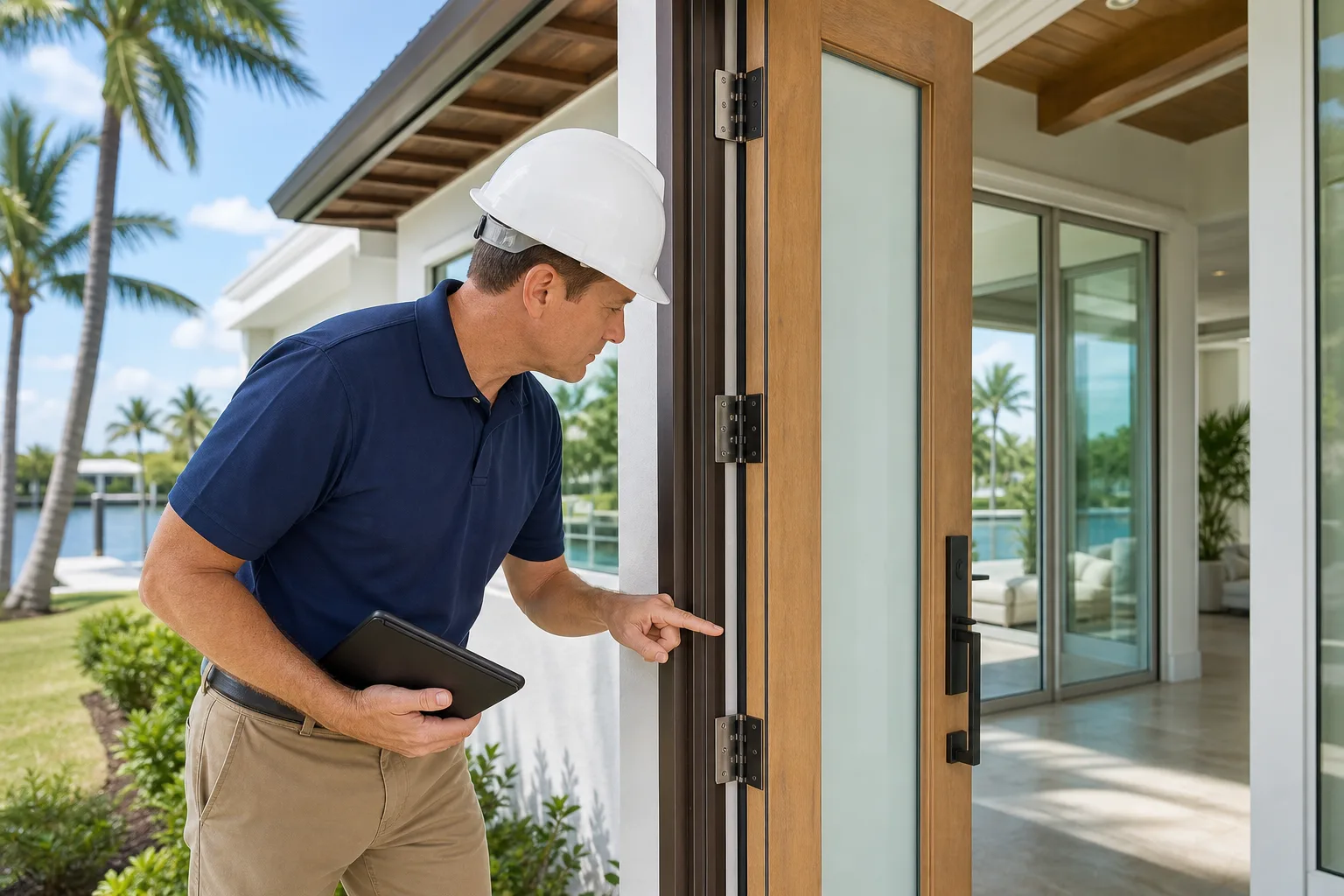
Inspectors often ask to see fasteners before drywall or trim covers the frame, and in many jurisdictions a mid-construction rough inspection is required specifically so the inspector can verify the anchor schedule before anything gets covered up. Common failures here include using a smaller fastener diameter than specified, reducing the number of anchors to speed up installation, or failing to achieve the minimum embedment depth into masonry, a frequent issue in older CBS (concrete block and stucco) construction where the block cores aren't always where installers expect them to be.
Site-specific conditions can also create problems. If the rough opening substrate is wood framing rather than masonry, the approved installation instructions may specify a completely different fastener schedule, and using the masonry instructions in a wood-frame wall, or vice versa, is a code violation even if the fasteners themselves are correctly installed. Always confirm which substrate detail applies before the installation crew starts drilling.
Compare impact-door options for your project. Request a free estimate
3. The Label Is Missing, Damaged, or Illegible
Florida code requires that approved hurricane-rated products carry a permanent label identifying the product, the manufacturer, and the approval number. This label is the inspector's fastest way to verify that what's hanging in the opening matches what was permitted. When the label is missing, scratched off during installation, painted over, or simply never affixed at the factory, the inspection stalls.
This failure mode is more common than it sounds. Labels on door frames are sometimes located in spots that get scraped during shipping or handling, the top of the frame, the hinge jamb, or inside the threshold area. Installers focused on getting the door plumb and secure don't always notice that a label has been damaged until the inspector points it out.
The resolution varies by jurisdiction. Some building departments will accept a manufacturer's affidavit or a copy of the original product approval documentation as a substitute for a missing label, provided it can be cross-referenced to the specific unit. Others require the manufacturer to supply a replacement label that can be permanently affixed before re-inspection. Either way, it's a delay that's entirely avoidable with a quick label check before the installation crew leaves the job site.
4. The Permit Scope Doesn't Cover the Work That Was Done
Permits for hurricane door replacements are issued for a specific scope: a particular opening, a particular door type, and sometimes a particular configuration such as single door, double door with sidelites, or sliding door. When the work performed in the field doesn't align precisely with the permitted scope, the inspector has no choice but to flag the discrepancy.
A straightforward example: a homeowner gets a permit for a standard 3-0 x 6-8 single entry door replacement. During installation, the crew realizes the existing rough opening was framed for a 3-6 wide door, and they install the wider unit that actually fits the opening. The wider door may even have its own valid NOA. But if the permit only authorizes the narrower unit, the inspector is looking at work that wasn't approved. The fix typically requires a permit revision, new product approval documentation, and in some cases revised engineering, all of which push the inspection date back.
Scope mismatches also arise when ancillary work gets done without being added to the permit. Replacing the door and the sidelites together is a common scenario. If the sidelites weren't listed on the permit application, the inspector may refuse to sign off on the entire opening until the permit is amended to include them.
5. The Opening Itself Doesn't Meet Current Code Requirements
Sometimes the door passes every product-level check but the inspection still fails because of conditions at the rough opening or the surrounding structure. Florida's building code, particularly in High-Velocity Hurricane Zones (HVHZ) covering Miami-Dade and Broward, requires that the substrate receiving the door be in sound structural condition and that the opening dimensions fall within the tolerances specified in the product approval.
An out-of-square or out-of-plumb rough opening can prevent the door from seating correctly against its stops and weatherstripping, compromising the air and water infiltration performance that's part of the tested assembly. Inspectors may check that the gap between the door panel and the frame is consistent and within the tolerance listed in the approved installation instructions, typically no more than a few millimeters at any point.
Older homes present another layer of risk: deteriorated lintels, corroded anchor bolts, or crumbling block at the jamb can make it impossible to achieve the required fastener embedment depth, even if the installer uses the correct fastener type and spacing. In these situations, a structural repair to the opening substrate may need to be permitted and inspected separately before the door installation permit can be closed out.
Understanding these five failure points before the work begins is the most effective way to get to a passed inspection on the first visit. Clear communication between the homeowner, the contractor, the supplier, and the permit runner, with all product approval documentation assembled and verified before installation starts, eliminates most of the scenarios described above. Re-inspection fees, project delays, and the administrative burden of permit revisions are real costs that compound quickly in South Florida's active building environment.
Compare impact-door options for your project.
Review entry, French, and sliding-door assemblies against the exact opening, approval, design pressure, exposure, glass, hardware, and installation scope.
Frequently asked questions
Does a failed inspection mean my hurricane door is defective?
Not usually. Most failed inspections trace back to paperwork mismatches, missing documentation, or installation details rather than a defective door itself. The door itself is often fine and just needs the correct records or a fastener correction before re-inspection.
How long does it take to fix a failed hurricane door inspection?
It depends on the issue. A documentation fix might be resolved in a few days once the correct paperwork is submitted, while an anchoring or structural correction that requires opening up finished walls can take longer. Ask your contractor for a specific timeline once the inspector's notes are in hand.
Who is responsible for pulling the permit for a hurricane door installation?
In most South Florida jurisdictions, a licensed contractor pulls the permit and is responsible for ensuring the installed product matches what was permitted. If you're acting as an owner-builder, that responsibility shifts to you, which is one reason many homeowners prefer working with a licensed installer.
What is the difference between a Florida Product Approval and a Miami-Dade NOA?
A Florida Product Approval is a statewide approval system, while a Miami-Dade Notice of Acceptance (NOA) is specific to Miami-Dade County's stricter High Velocity Hurricane Zone testing standards. Broward County also generally requires Miami-Dade NOA or equivalent approval for products in HVHZ areas.
Can I request a re-inspection if my hurricane door fails?
Yes, virtually every jurisdiction allows a re-inspection once the noted deficiency is corrected, though some charge a re-inspection fee. Your contractor typically schedules this once the fix, whether it's a paperwork correction or a physical repair, has been completed and documented.
Should I be present for the hurricane door inspection?
It's not required in most cases, but being present or having your contractor present can help resolve minor questions on the spot and speed up the process. If documentation questions arise, having the contractor available to produce the correct paperwork immediately can prevent a second scheduled visit.