

TL;DR: When comparing window companies near me results in Palm Beach, Broward, or Miami-Dade, the three non-negotiables are a Florida contractor license you can verify yourself, a permit pulled in your name, and product approvals that match your county's code. Everything else, including price, matters only after those three are confirmed.
What You Need Before You Start Comparing
Before you call a single company, gather the following. Having this information ready makes every conversation faster and prevents you from being upsold on things you do not need.
- Your home's construction type and year built. Older CBS or wood-frame homes may require structural upgrades before new impact frames can be anchored correctly.
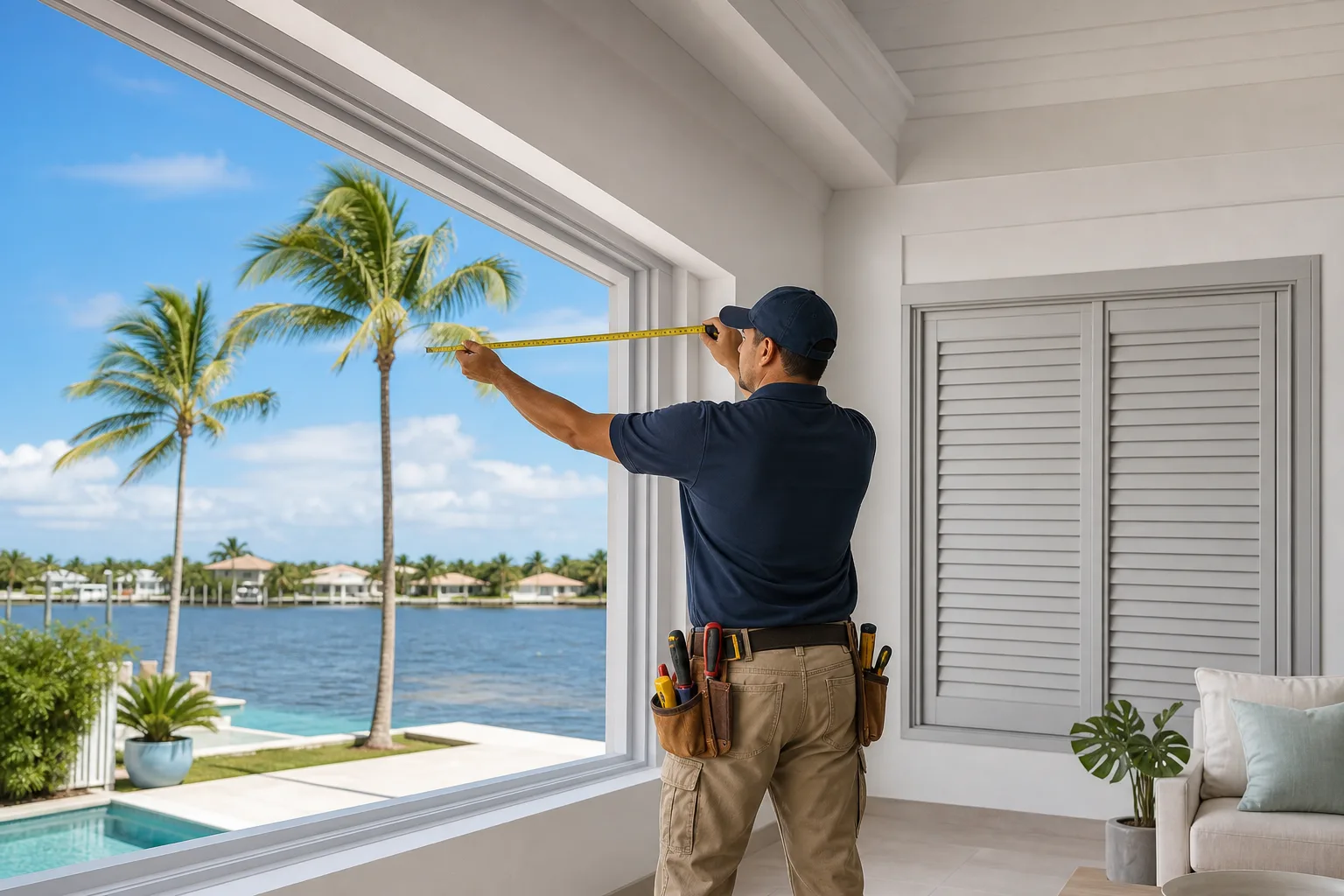
- Current opening sizes. Rough measurements let contractors give you ballpark ranges quickly. A licensed installer will re-measure before ordering, but approximate dimensions save time.
- Your county's minimum design pressure (DP) requirement. This varies by location, floor level, and whether you are in a High-Velocity Hurricane Zone. Miami-Dade has some of the strictest requirements in the country.
- Your HOA documents, if applicable. Many South Florida associations have approved product lists or color restrictions that limit which windows qualify.
- Your current insurance carrier and policy number. Some companies can help you identify whether new windows may trigger a wind mitigation re-inspection, though any insurance outcome depends on your specific insurer and policy.
If you are replacing windows and doors at the same time, review the windows and doors replacement process before you start collecting quotes so you understand how combined projects are scoped and permitted.
Step 1: Verify the License Before the First Call
This is the first filter, not the last. Florida requires contractors performing structural glazing or window replacement to hold either a General Contractor license (CGC) or a Specialty Contractor license (SCC or C-14 glass and glazing). Both are verifiable at no cost through the Florida Department of Business and Professional Regulation (DBPR) license search.
Search by company name and by the qualifier's individual name. Note the license type, status, and any discipline history. A suspended or expired license means the contractor cannot legally pull permits in Florida. If a company cannot give you a license number immediately, that is your answer.
Also confirm the company carries general liability insurance and workers' compensation. Ask for a certificate of insurance naming you as an additional insured for the duration of the project. A legitimate contractor will provide this without friction.
Step 2: Confirm Product Approvals for Your County
Not every impact window or door on the market is approved for every Florida county. Miami-Dade County requires Miami-Dade Notice of Acceptance (NOA) for all products used within its borders. Broward, Palm Beach, Martin, and St. Lucie counties fall under the Florida Building Code (FBC) and use Florida Product Approvals, which are searchable through the Florida Building Commission product approval database.
Ask each company to provide the specific product approval number for the window or door they are proposing for your project. Then look it up yourself. Check that the approved DP rating meets or exceeds what your location requires, and that the approval covers your opening size and configuration.
Some contractors propose products that are approved generally but not in the specific size or configuration needed for your home. That mismatch is caught during plan review, not after installation. Catching it before you sign saves time and money.
For more context on what these specifications mean for your home, the hurricane impact windows overview explains product categories, DP ratings, and laminate glass configurations in plain language.
Step 3: Ask About the Permit Process Specifically
In Florida, the permit must be pulled in the homeowner's name or the licensed contractor's name. It must never be pulled by an unlicensed subcontractor. Ask each company: who pulls the permit, and in whose name?
A contractor who suggests you pull your own permit as an owner-builder while they do the work is shifting legal liability onto you. An owner-builder permit means you, not the contractor, are responsible for code compliance.
Also ask:
- Which municipality or county jurisdiction covers your address?
- Does the company handle plan submission, product approval documentation, and inspection scheduling, or do they expect you to coordinate?
- What is the realistic permit timeline for your area right now? In some South Florida counties, plan review for impact window projects can take four to eight weeks depending on backlog.
If you want to understand what a compliant installation process looks like from the inside, 8 tips to ensure a flawless impact window installation covers what the permit and inspection sequence should look like.
Review opening-protection options before storm season. Request a free estimate
Step 4: Compare the Quotes on an Equal Basis
Once you have narrowed your list to licensed, insured companies offering approved products with a clear permit process, you can compare quotes meaningfully. Comparing prices before those filters are applied is not a useful exercise.
When reviewing quotes, check for these items specifically:
- Product brand and model number. A quote that says only "impact window" cannot be compared to any other quote.
- Frame material and color. Aluminum and vinyl perform differently in Florida's heat and salt air. Both are used widely, but the right choice depends on your location and exposure.
- Installation method. Nail-fin, retrofit, and full-frame replacement are different processes with different structural implications.
- Scope of ancillary work. Does the quote include stucco repair, interior trim, and haul-away of old windows? Missing line items are a common source of final invoice surprises.
- Warranty terms. What does the manufacturer warrant, and for how long? What does the installer warrant on labor? Are those warranties transferable if you sell the home?
For a detailed breakdown of what each line in a quote means, review the 5 things to look for in new impact windows checklist, which covers specifications homeowners frequently overlook.
Step 5: Check References and Completed Permit Records
Ask each finalist for three references from projects completed in your county within the last 18 months. Call them. Ask specifically whether the permit was finaled, whether the work matched the quote, and whether the company was responsive after installation.
You can also search your county's building department permit records by contractor name or license number. A contractor with a long local history should have a visible record of pulled and finaled permits. Finaled permits indicate inspections passed. Open permits that were never closed can become your problem if you buy a home where they exist, and some contractors leave them open unintentionally or otherwise.
For projects involving hurricane impact doors in addition to windows, confirm the company has completed similar combined projects. Door installations involve threshold anchoring and weatherstripping details that differ from window work.
Step 6: Evaluate Communication and Local Knowledge
A company's responsiveness before you hire is a reasonable proxy for their responsiveness after installation. During the estimate process, note:
- Did they return your call or form submission within one business day?
- Did the estimator arrive on time and measure all openings, or give a ballpark without measuring?
- Did they explain the permit process and product approvals without being asked, or only when pressed?
- Are they familiar with your specific municipality's building department, HOA restrictions common in your area, and any local code amendments?
South Florida has a fragmented regulatory landscape. A company that works exclusively in Palm Beach County may not know Miami-Dade's NOA requirements or the specific inspection protocols used in Broward municipalities. Local experience matters more than a large service area.
If you are ready to get a structured estimate from a Florida-licensed contractor, the request an estimate page explains what information to have ready and what the process involves.
Common Mistakes When Searching "Window Companies Near Me"
Choosing based on the lowest price before verifying the license. An unlicensed contractor's low price reflects, in part, the cost and oversight they are skipping. That risk transfers to you.
Accepting verbal promises about insurance savings or energy reductions. Any financial outcome depends on your insurer, your usage, and variables no contractor controls. A company that guarantees insurance discounts or specific utility reductions is overstating what they can know.
Not confirming the permit is finaled before making final payment. A passed inspection is documented proof that the installation met code. Without it, you have no independent verification.
Skipping the product approval lookup. This takes five minutes and is one of the most useful things a homeowner can do before signing a contract.
Comparing three quotes that are not for the same product. If one quote is for a vinyl retrofit window and another is for an aluminum full-frame replacement, the price difference reflects product and scope differences, not contractor efficiency.
For context on why some homeowners attempt to bypass this process and why that creates problems, 3 reasons you shouldn't DIY your impact windows explains the permit, engineering, and liability issues involved.
Bottom Line
Searching for window companies near me in South Florida is easy. Filtering that list down to contractors who are licensed, insured, permitted, and experienced with your county's specific requirements takes more effort, but it is the work that protects your home, your investment, and your ability to close on the property if you ever sell.
Verify the license at DBPR. Look up the product approval. Confirm the permit process. Compare quotes only after those steps are complete. That sequence is not complicated, but most homeowners skip at least one step, and that is where problems originate.
If you want to talk through a project with a Florida-licensed contractor who has been doing this work in South Florida since 2005, contact us or use the estimate request form to start a documented conversation about your specific openings and location.
Review opening-protection options before storm season.
The performance and responsibilities for permits, engineering, documentation, installation, and inspections depend on the exact assembly and written project scope.
Frequently asked questions
How do I verify a window company's license in Florida?
Go to the Florida Department of Business and Professional Regulation (DBPR) license search at myfloridalicense.com and search by the company name or the qualifier's individual name. Check that the license type covers glass and glazing or general contracting, that the status is active, and that there is no discipline history. This search is free and takes about two minutes.
What is the difference between a Florida Product Approval and a Miami-Dade NOA?
A Florida Product Approval is issued under the Florida Building Code and is accepted in most counties statewide. A Miami-Dade Notice of Acceptance (NOA) is issued specifically by Miami-Dade County and is required for any product installed within Miami-Dade borders. Some products hold both approvals, but you need to confirm which one applies to your project location before signing a contract.
Who is responsible for pulling the permit on a window replacement project?
The licensed contractor is responsible for pulling the permit and ensuring inspections are scheduled and passed. The permit must be in the homeowner's or contractor's name. If a contractor asks you to pull your own owner-builder permit while they perform the work, that arrangement transfers legal compliance responsibility to you, which creates risk if the installation does not pass inspection.
How many quotes should I get before hiring a window company?
Three quotes from licensed contractors offering the same product and scope is a useful minimum. Fewer than three gives you limited context for evaluating price and process. More than five becomes difficult to manage and rarely reveals new information if you have already verified licenses and product approvals. Make sure each quote specifies the exact product model, installation method, and what ancillary work is included.
Can a window company guarantee my insurance premium will go down after installation?
No contractor can guarantee an insurance outcome. Whether your premium changes depends on your specific insurer, your current policy, the results of a wind mitigation inspection, and your carrier's underwriting guidelines. A contractor who promises specific savings is stating something they cannot know. Any potential insurance benefit should be explored directly with your insurance agent after installation is complete and permitted.