TL;DR
Impact glass is designed to crack under debris impact, not to remain unbroken. The glass fractures while a plastic interlayer bonded between the panes keeps the shards in place, so the window stays in the opening and the building envelope holds. What varies is the interlayer type, thickness, and how the whole assembly is engineered, tested, and permitted for a specific wind zone.
What happened
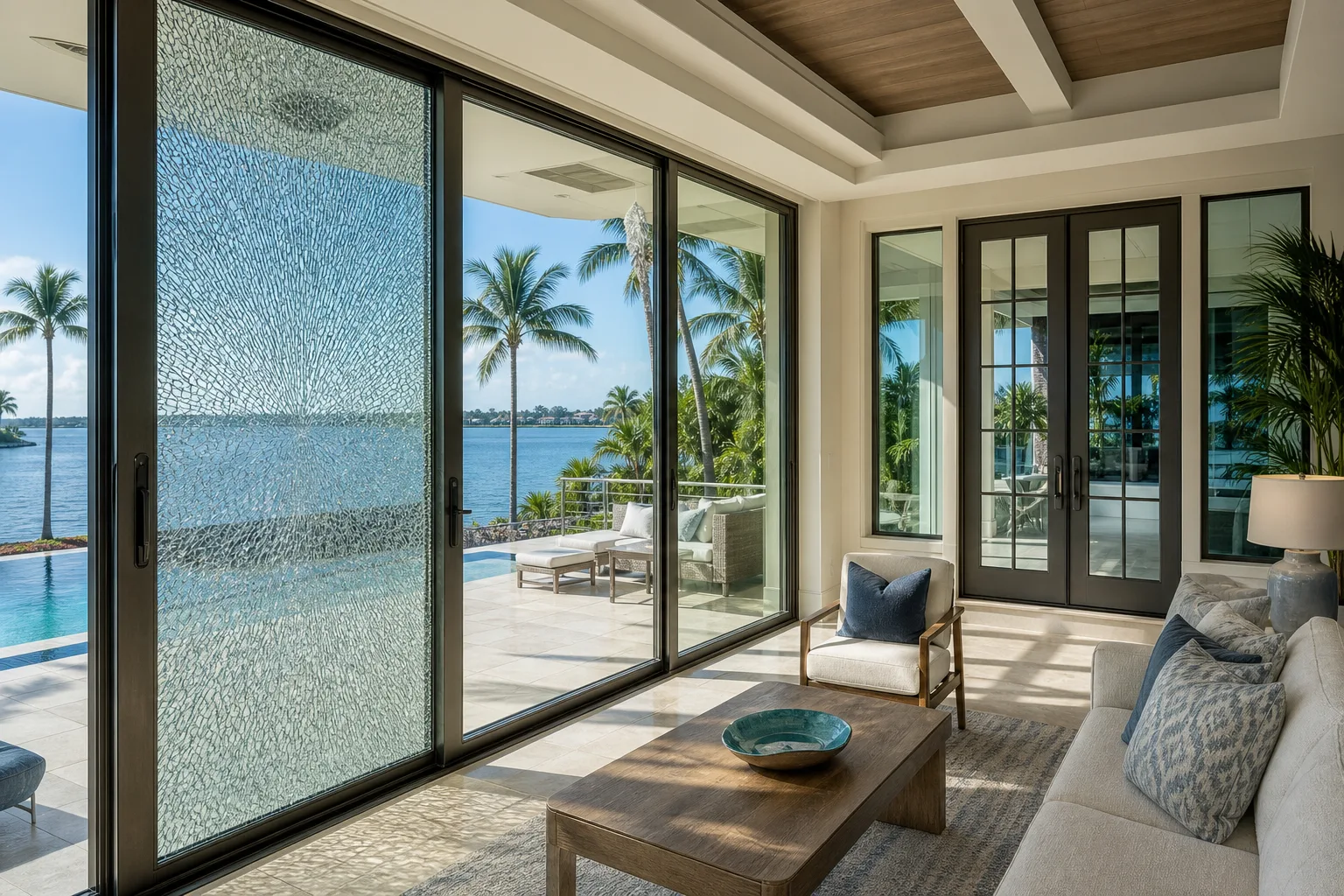
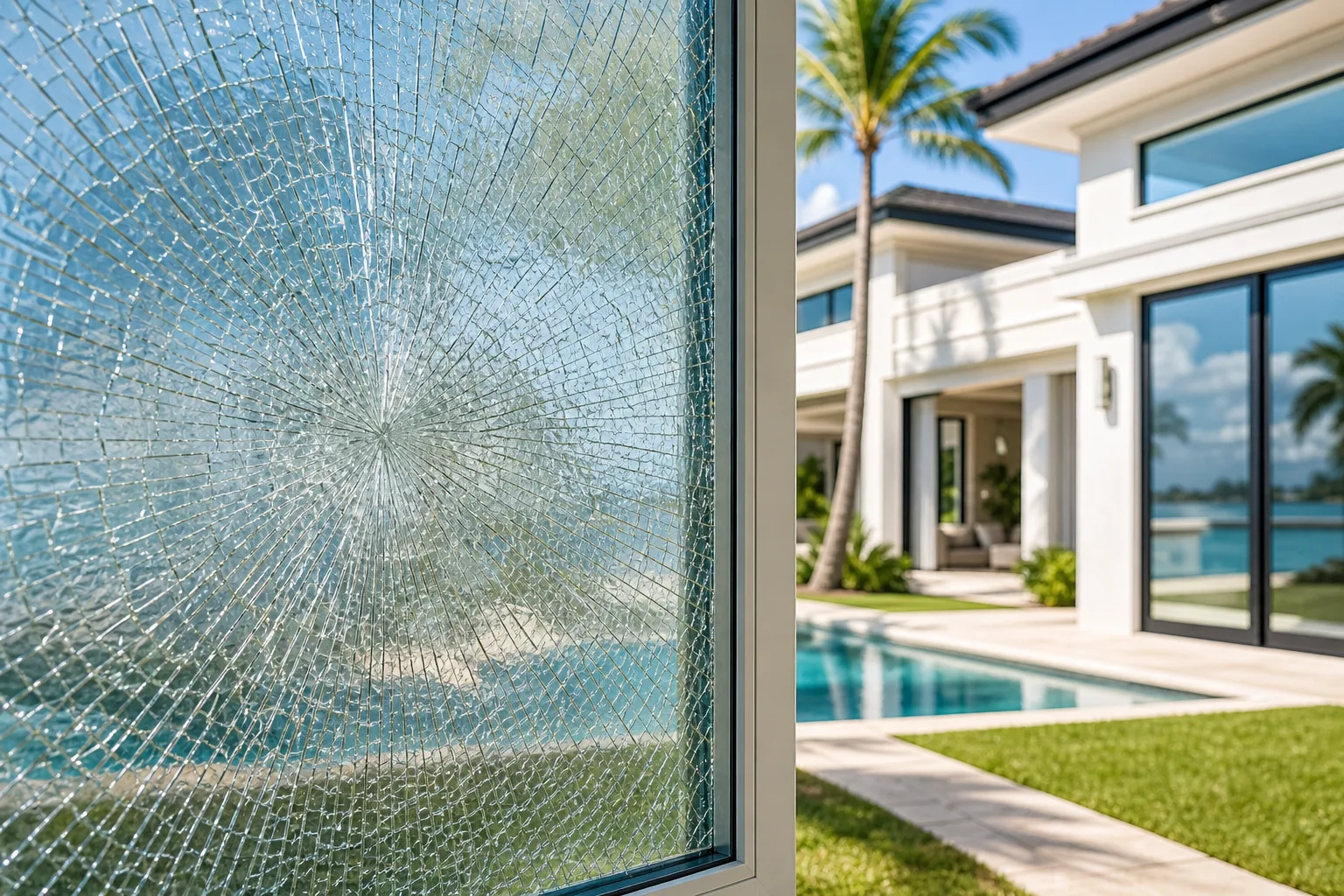
Every hurricane season, South Florida homeowners hear the phrase "impact glass" as if it means unbreakable glass. It doesn't. Impact-rated windows and doors are built from laminated glass, which is two or more layers of glass fused around an interlayer, usually polyvinyl butyral (PVB) or a similar ionoplast material. When a piece of wind-borne debris strikes the outer pane, the glass cracks. That's expected and normal. What's supposed to happen next is that the interlayer holds the broken pieces together, keeping the opening sealed against wind and water instead of blowing open.
This is different from tempered glass, which shatters into small pebble-like pieces and separates completely, or standard annealed glass, which breaks into large, sharp shards and falls out of the frame. Neither of those behaviors is acceptable for a hurricane-exposed opening because once a window fails and the opening is breached, wind pressure inside the structure spikes and can lift a roof or blow out walls.
The testing standards behind this aren't marketing language. Florida's product approval system, along with ASTM E1996 and E1886 test methods, requires impact-rated assemblies to survive large missile impact (a piece of lumber, typically), followed by thousands of cycles of positive and negative pressure that simulate sustained hurricane winds. The glass is expected to crack during the missile strike. The pass/fail criteria is whether the assembly stays intact and keeps functioning as a barrier through the pressure cycling that follows.
Review opening-protection options before storm season. Request a free estimate
Why it matters
Understanding this distinction matters for a few practical reasons.
First, it explains why a cracked window after a storm isn't necessarily a failed window. If your hurricane impact windows show a spiderweb crack after a storm but the glass stayed in the frame and no water intruded, the product likely did its job. Replacement of that pane may still be needed, but the building envelope was protected during the event, which is the actual purpose of the product.
Second, it explains why not all laminated glass performs the same. The interlayer's composition, thickness, and how well it's bonded to the glass all affect how the assembly behaves under repeated pressure cycling, not just a single impact. A product that passes missile impact but has a thin or poorly bonded interlayer can still fail during the cyclic pressure testing that follows, which is why the full test sequence matters more than the impact moment alone.
Third, it's the reason impact glass, shutters, and film are not interchangeable protection strategies, even though they get lumped together in casual conversation. Impact glass is a permanent, code-engineered assembly tested and labeled for a specific opening and wind zone. Shutters are a separate barrier system that must be deployed before a storm and rely on correct anchoring. Window film is applied to existing glass and is not the same tested assembly as laminated impact glass. Homeowners comparing options for a window replacement project should know which category a given product actually falls into before assuming it carries the same protection.
Fourth, it matters for insurance and resale documentation. Insurance discounts and wind mitigation credits in Florida are generally tied to verified product approval numbers and the presence of an actual opening protection system, not to a general claim of "impact glass." If the documentation doesn't match what's installed, the discount can be denied or clawed back later. This is one more reason to keep the Notice of Acceptance or Florida product approval paperwork for anything installed on the house, including doors under hurricane impact doors.
What we don't know yet
A few things depend entirely on the specific product, installation, and paperwork for a given home, so they can't be answered in general terms.
We don't know, without seeing the label, which interlayer type and thickness a specific window or door uses, or whether that matches the wind zone and design pressure required for a specific address. Design pressure requirements vary by county, distance from the coast, building height, and exposure category, and Palm Beach, Broward, Miami-Dade, Martin, and St. Lucie counties don't all apply identical thresholds parcel by parcel.Miami-Dade County maintains its own Notice of Acceptance system that is stricter in some respects than the statewide Florida product approval system, so a product approved for use in Martin County isn't automatically approved for use in Miami-Dade.
We also don't know how a given assembly will perform after years of Florida heat cycling and UV exposure unless it's been tested and documented for that service life, since interlayer materials can degrade differently depending on formulation and exposure. And we don't know, for any specific home, whether the current windows and doors were ever actually pulled under permit with an inspected impact rating, versus installed without documentation. That's a common gap in older South Florida homes bought with windows already in place.
Finally, exact performance numbers (design pressure ratings, missile level, specific interlayer composition) always belong on the product's Florida approval documentation or Miami-Dade NOA, not in a general article like this one. Anyone relying on a specific rating for a permit, an insurance filing, or a real estate transaction should pull that document directly rather than estimate from general industry information.
What to do about it
Start by checking what you actually have. If you're not sure whether your current windows are impact-rated, tempered, or standard annealed glass, look for an etched certification mark in the corner of the pane, which usually indicates the manufacturer and standard. If there's no mark or the etching is unreadable, treat the window as unverified until someone can confirm it, which matters both for storm prep and for insurance savings conversations with your carrier.The National Weather Service publishes storm surge and wind timing guidance every season, and it's worth reviewing your household's hurricane calendar milestones (June 1 through November 30) alongside a review of your home's opening protection, not just once when a storm is already in the forecast.FEMA's building science guidance is also a useful, non-commercial reference if you want to understand impact-resistant construction standards independent of any single manufacturer or contractor.
If you're planning a windows and doors replacement project, ask for the specific Florida product approval or Miami-Dade NOA number for each product being quoted, and confirm in writing which wind zone and design pressure it's rated for at your address. Don't accept a general claim of "hurricane impact" without the number attached. For commercial properties, the documentation requirements can be more involved depending on occupancy and building height, so it's worth a direct conversation early, which you can start through our commercial page.
If you already have impact glass and it cracked during a storm, don't assume it's fine to leave indefinitely just because it held together. A cracked pane that stayed intact did its job during the event, but the seal and structural integrity of that specific pane may be compromised going forward, especially with repeated heat cycling. Get it assessed and replaced through a licensed contractor rather than waiting for the next storm to test it again.
If you want a straight answer on what's currently installed at your home and whether it matches current code requirements for your zip code, request an estimate and bring any product paperwork you have on hand. If you don't have paperwork, that's fine too, an inspection can usually identify what's there. You can also reach out directly through our contact page with questions before committing to anything.
Review opening-protection options before storm season.
The performance and responsibilities for permits, engineering, documentation, installation, and inspections depend on the exact assembly and written project scope.
Frequently asked questions
Does impact glass actually break during a hurricane?
Yes, it can crack when struck by debris. The glass is designed to fracture while a plastic interlayer holds the broken pieces together so the window stays in the opening and keeps out wind and water. Cracking is not the same as failure.
What's the difference between impact glass and tempered glass?
Tempered glass shatters into small pieces and separates from the frame, which is fine for shower doors but not for hurricane openings. Impact glass is laminated with an interlayer bonding the layers together so it stays intact after cracking.
If my impact window cracks in a storm, do I need to replace it right away?
Not necessarily right away, but it should be inspected. A cracked pane that held together likely protected the opening during the event, but its long-term seal and structural integrity may be compromised, so plan for professional evaluation and replacement.
Are shutters as good as impact glass?
They're different protection categories, not interchangeable. Impact glass is a permanent tested assembly, while shutters are a separate deployable barrier that depends on correct installation and being closed before the storm arrives.
How do I know if my current windows are impact-rated?
Look for an etched certification mark in the corner of the glass pane indicating the manufacturer and testing standard. If there's no visible mark, ask a licensed contractor to verify the product approval documentation for your specific address and wind zone.
Do Miami-Dade and other South Florida counties require the same impact glass rating?
No. Miami-Dade County maintains its own Notice of Acceptance system that can be stricter than the statewide Florida product approval process, so a product approved elsewhere isn't automatically approved for Miami-Dade installations.