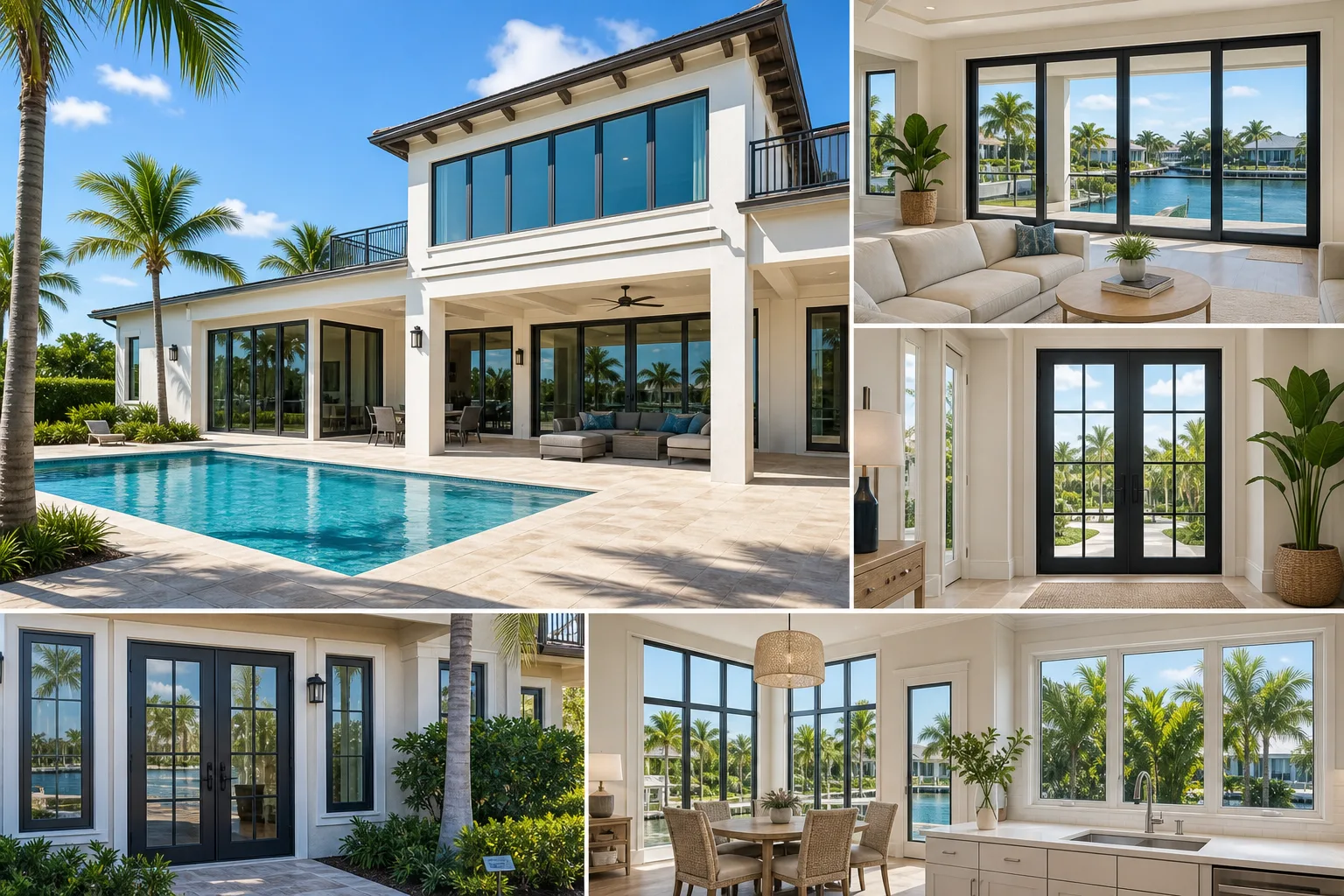
TL;DR: Florida is rolling out updates tied to the 8th Edition of the Florida Building Code in 2026. These changes tighten energy performance requirements, clarify installation standards, and affect which products pass local plan review in Palm Beach and Broward County. If you are planning a window replacement project this year, you want to know this before you buy.
What Happened
Florida updates its building code on a roughly three-year cycle. The 8th Edition Florida Building Code, which includes the Energy Conservation and Residential volumes, may be phased in through 2025 and into 2026, though the exact adoption and enforcement timeline has not been confirmed by a dated primary source and is subject to change. You should verify the current adoption status directly at floridabuilding.org. Local jurisdictions, including those in Palm Beach County and Broward County, adopt these updates and begin enforcing them through their building departments.
For impact windows specifically, the updates that matter most fall into two buckets.
First, energy performance standards may change in the current code cycle. Florida follows the International Energy Conservation Code (IECC) as a base and then amends it. It is possible that U-factor and Solar Heat Gain Coefficient (SHGC) requirements could shift for Climate Zone 2, which covers most of South Florida, but any such directional changes have not been confirmed by a published Florida Building Commission rule or dated primary source and should be treated as unconfirmed speculation until verified. Verify current thresholds at floridabuilding.org or with your local building department before making purchasing decisions. That means windows that passed energy compliance on a permit pulled in 2023 may not pass on a permit pulled in late 2025 or 2026 if your local jurisdiction has adopted updated minimums by that time, an outcome that depends on local adoption timing and any local amendments.
Second, the installation standard referenced in the code, Florida Product Approval, continues to evolve. Products must carry a current Notice of Acceptance (NOA) from Miami-Dade County or a statewide Florida Product Approval number. It is possible that testing protocols backing those approvals could be updated to align with newer ASTM and AAMA standards, and there is ongoing discussion about how the product approval system handles products tested under older standards, but as of this writing, no confirmed rule change regarding grandfathering of older test protocols has been published by Miami-Dade BCCO or the Florida Building Commission. Treat any such implications as unconfirmed and verify current requirements with Miami-Dade BCCO or at floridabuilding.org.
The Florida Building Commission, which sits under the Department of Business and Professional Regulation, manages this process. You can track active code changes at floridabuilding.org.
Why It Matters
Here is the part that affects you directly as a homeowner in West Palm Beach, Boca Raton, Delray Beach, Fort Lauderdale, or anywhere in between.
Your permit can get held up. If a contractor submits plans with windows that do not meet the updated SHGC or U-factor thresholds, the building department flags the submittal. That delays your project. I have seen jobs stall for weeks because the product spec sheet did not match what the plan reviewer was looking for under the new cycle.
Your windows need current product approval. When we pull a permit for a hurricane impact window installation, we submit the NOA or Florida Product Approval number alongside the permit application. If the product approval has lapsed or the product was tested under a superseded standard, some jurisdictions are now flagging this. The cheaper outfits sometimes try to slide in older inventory with approvals that are still technically valid but on the edge. That is a risk you take on.
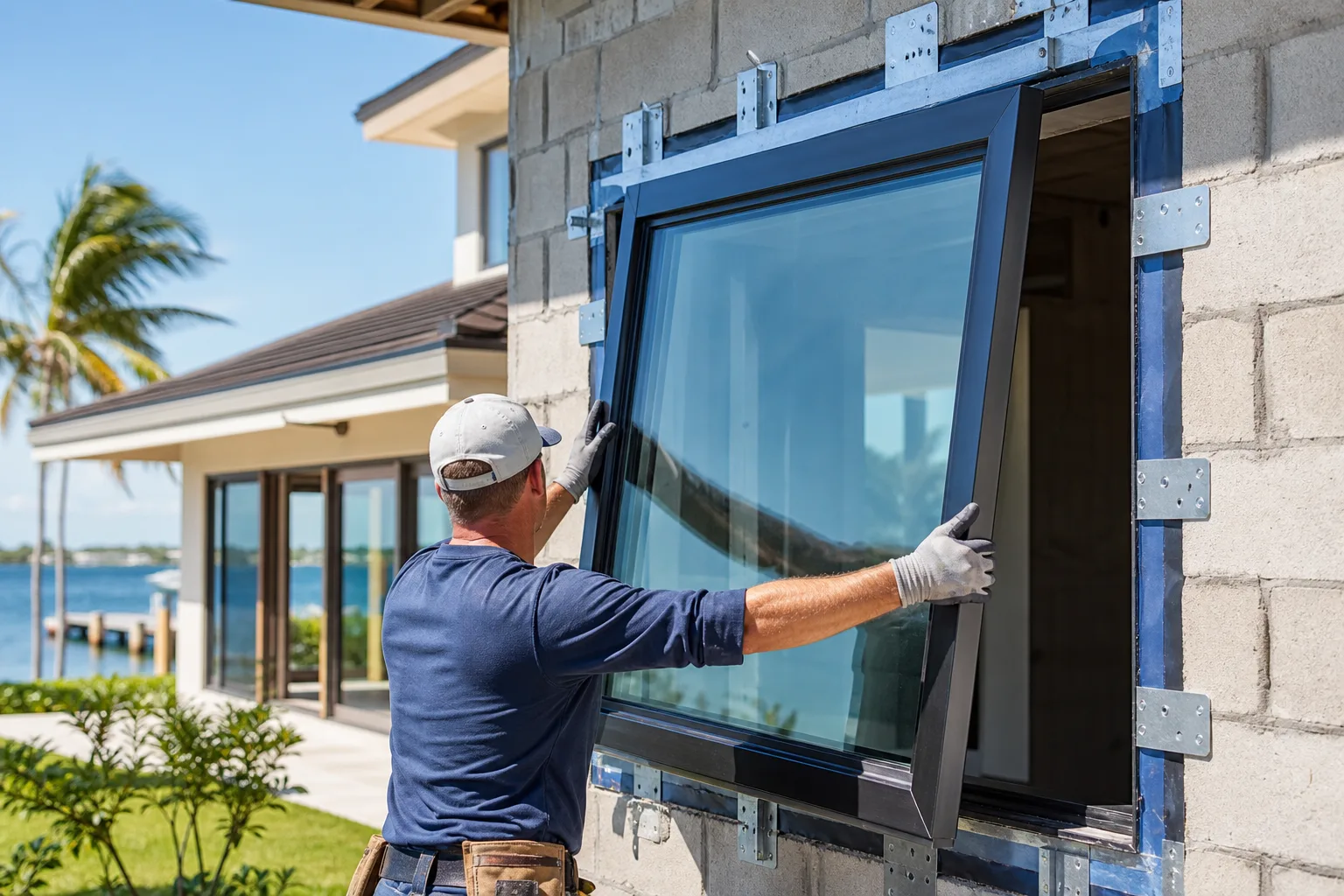
Older homes face more scrutiny on rough opening prep. As a matter of general best practice, and consistent with longstanding Florida Product Approval documentation requirements, proper flashing and anchoring into the rough opening is critical, particularly for concrete block construction, which is most of the older housing stock in Palm Beach and Broward County. Buck depth, anchor spacing, and sill pan flashing are elements that good installation practice and NOA approval documents address specifically, and plan reviewers and inspectors look at these closely. This is where the installation quality gap between contractors really shows up. A window with a perfect NOA fails in the field if the anchoring pattern does not match the approval document.
Energy compliance is now a bigger conversation. With energy performance requirements potentially evolving in the current code cycle, homeowners doing a full window replacement project need to look at the whole-home energy calculation, not just a per-window spec. If you are replacing all your windows, the contractor or their energy consultant may need to run energy compliance documentation showing the new windows meet compliance for your home as a whole. The specific calculation method required, and whether it is part of the permit package, varies by jurisdiction and project scope, so confirm with your local building department or a contractor actively pulling permits in your area.
If you are also replacing sliding glass doors or entry doors in the same project, those products need to meet the same updated standards. It is one permit package, and everything in it gets reviewed together.
For homeowners who have been comparing energy efficient windows for both hurricane protection and utility savings, the good news is that the products meeting current energy code requirements tend to have better low-e coatings and tighter frames. You get real performance, not just a code checkbox.
Get storm-ready before the next season. Request a free estimate
What We Don't Know Yet
I want to be straight with you here. Some of this is still in motion.
Jurisdictions in Palm Beach and Broward County do not all flip to new code enforcement on the same date. There is often a lag between when the state adopts an edition and when every local building department is actively enforcing every provision. Some cities were still processing permits under older energy code thresholds well into 2024 even though the next edition had been adopted at the state level.
The specific SHGC and U-factor minimums that your local jurisdiction will enforce in 2026 depend on when they formally adopt the 8th Edition and whether they file local amendments. Palm Beach County and Broward County each have their own amendment histories. The numbers you see published at the state level may differ slightly from what your local plan reviewer applies.
There is also ongoing discussion at the Florida Building Commission level about how the product approval system handles products that were tested under older ASTM standards. As of this writing, the transition timeline for manufacturers to retest and update approvals is not fully resolved. That creates some gray area for products currently in distribution.
For a project you are planning to pull permits on in the next six to twelve months, the safest approach is to confirm current enforcement thresholds directly with your local building department, or work with a contractor who is actively pulling permits in your jurisdiction and knows what is being accepted right now.
What to Do About It
Here is the practical side.
Ask your contractor to confirm current product approval status before you sign. The Florida Product Approval database is public. The Miami-Dade NOA database is public. Any contractor doing windows and doors replacement in Palm Beach or Broward should be able to hand you the approval number and show you it is current. If they cannot, that is a red flag.
Confirm energy code compliance is included in the permit package. Ask specifically whether the contractor is handling the energy compliance documentation or whether you need to hire a third party. On full-replacement residential projects, this should be part of what a legitimate contractor manages for you. It is not something you should be figuring out after the windows arrive on site.
Time your project with permit pulls in mind. If you are planning to start construction in mid-2025, your permit is likely being reviewed under current enforcement. If you are planning to start in late 2025 or 2026, verify with your contractor what edition is being enforced locally. This timing can affect which product specifications you need to hit.
Do not let a contractor talk you into skipping the permit. I know unpermitted installs happen. Homeowners sometimes think they are saving money. What you are actually doing is carrying an installation that has never been inspected for anchor pattern, flashing, or product compliance. When a storm hits or you go to sell the house, that comes back hard. Hurricane impact windows protect your home only if they are installed correctly and legally.
If you are a commercial property owner, the stakes are higher. Commercial plan review is more stringent, the energy code paths are different, and the inspector scrutiny is more detailed. Our commercial work follows a separate track, but the same principle applies: current approvals, current energy compliance, current installation standards.
If you want to sit down and talk through where your home stands and what products make sense for your project under 2025 and 2026 code requirements, request an estimate and we will come out and give you a straight answer. No pressure, no guesswork. Just what is actually required for your address, your home type, and your timeline.
We hold Florida glass and glazing specialty licensure dating to 2005 and actively pull permits in Palm Beach and Broward County. We know which local building departments are actively enforcing the new thresholds and which ones are still catching up. That local knowledge is worth something when you are spending real money on a project that needs to last through the next major storm season.
Get storm-ready before the next season.
Impact glass protects your home 24/7 with no panels to put up. Window Guys of Florida handles permits, code, and install end to end.
Frequently asked questions
When does the 8th Edition Florida Building Code take effect for impact window permits?
The 8th Edition may be phased in through 2025 and 2026, but local enforcement dates vary by jurisdiction and the adoption timeline has not been confirmed by a dated primary source. Palm Beach County and Broward County municipalities each set their own active enforcement timelines, so the safest move is to confirm with your local building department or ask your contractor what edition is currently being enforced for permit submittals in your city.
Do my existing impact windows need to be replaced to meet 2026 code?
No. Code updates apply at the time of permit, not retroactively to windows already installed. If you are not pulling a new permit, your existing windows are not affected. The new standards only apply when you replace windows and pull a permit for that work.
What is an NOA and why does it matter for my window install?
An NOA, or Notice of Acceptance, is issued by Miami-Dade County and certifies that a window or door product has been tested to meet hurricane impact and structural performance standards. Contractors must submit the NOA number when pulling a permit, and the product approval must be current. An expired or superseded NOA can cause your permit to be rejected at plan review.
What SHGC rating do impact windows need to pass Florida energy code?
In Climate Zone 2, which covers Palm Beach and Broward County, SHGC requirements for residential windows have been subject to ongoing discussion under the current code cycle, but any specific directional changes have not been confirmed by a published primary source. The exact threshold depends on the edition your local jurisdiction has adopted and any local amendments that apply. Your contractor should run or provide energy compliance documentation as part of the permit package, and you should confirm current thresholds directly with your local building department or a contractor actively pulling permits in your area.
Can I install impact windows without a permit to avoid the new code requirements?
Skipping the permit is not a legal option for full window replacement, and it creates serious risk. An unpermitted install has never been inspected for proper anchoring, flashing, or product compliance. If a storm causes damage or you sell the home, an unpermitted installation can result in denied insurance claims or required removal at your expense.
Does the 2026 code update affect impact doors and sliding glass doors too?
Yes. Impact doors, entry doors, and sliding glass doors installed as part of the same permit package are subject to the same energy compliance and product approval requirements as windows. If you are replacing both windows and doors in one project, every product needs to meet current standards and carry valid approvals.