TL;DR: Florida's wind and humidity make balcony railing installation a job that demands a licensed contractor familiar with local building codes. Verify licenses, pull permits, compare at least three bids, and choose corrosion-resistant materials. Skipping any of these steps usually costs more to fix than the original job.
What You Need Before You Start
Before you contact a single balcony railing installer, gather a few things. Having this ready shortens every conversation and helps you compare bids on equal footing.
- Your condo or HOA documents. Many associations in Palm Beach and Broward County restrict railing styles, colors, and materials. Get written approval before signing any contract.
- Your current railing dimensions. Linear footage, height (Florida requires a minimum of 42 inches for balconies more than 30 inches above grade), and post spacing all affect material cost.
- Photos of existing damage. Rust streaks, loose posts, or spalling concrete at the base change the scope of work and the price.
- Your permit history. Pull your address on your county's online permit portal to see what work has already been done and closed. A good installer will pull a new permit anyway, but knowing the history prevents surprises.
If your balcony project is part of a larger renovation that includes replacing aging sliding glass doors or windows, note that now. Bundling work with one licensed contractor often lowers your total cost and reduces the number of permit applications you have to track.
Step 1: Verify the Contractor's Florida License
Florida requires anyone who installs structural elements, including railings, to hold an active state license. The two most relevant license types are:
- Certified General Contractor (CGC) or Certified Building Contractor (CBC): Covers structural work statewide.
- Registered Contractor: Valid only in the county or municipality that issued the registration.
Verify any balcony railing installer at the Florida Department of Business and Professional Regulation (DBPR) license lookup. Enter the contractor's name or license number. Look for an active status and no disciplinary history.
Also confirm they carry:
- General liability insurance (at least $300,000 is common, but ask for the certificate).
- Workers' compensation insurance if they have employees. If a worker is injured on your property and the contractor has no workers' comp, your homeowner's policy may be on the hook.
Never accept a verbal assurance on either. Ask for certificates directly from the insurer, not a copy the contractor printed themselves.
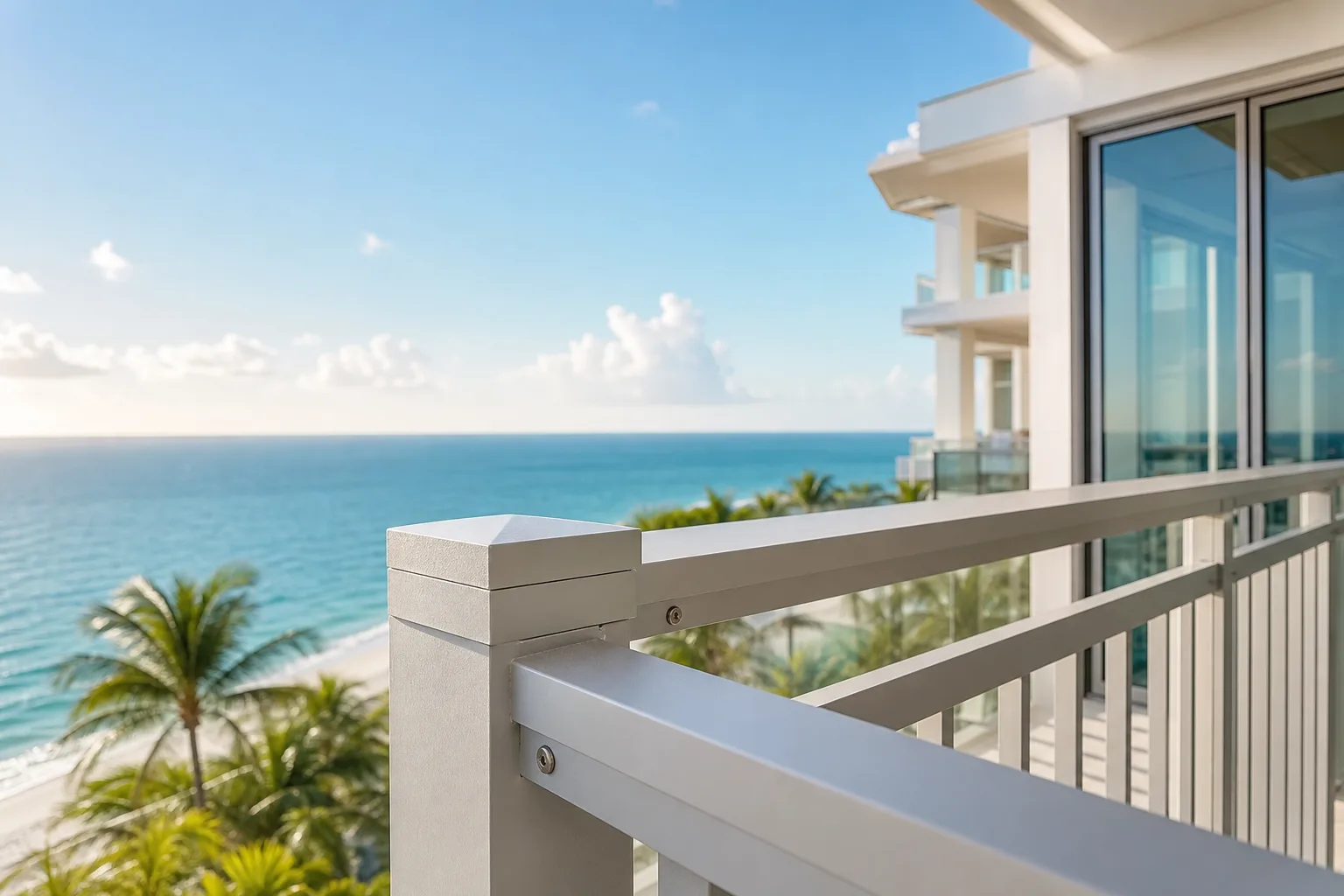
Step 2: Confirm They Know Florida Building Code Requirements
Florida follows the Florida Building Code (FBC), which is updated every three years and adopts large portions of the International Building Code with Florida-specific amendments. For balcony railings in South Florida, the key requirements include:
- Height: At least 42 inches for residential balconies more than 30 inches above the floor or grade below.
- Load capacity: Top rails must resist a 200-pound concentrated load applied in any direction, and infill panels must resist 50 pounds per linear foot.
- Openings: Balusters or infill must prevent a 4-inch sphere from passing through (child safety standard).
- Wind loads: In Palm Beach and Broward counties, railings must be engineered to meet the High-Velocity Hurricane Zone (HVHZ) wind speed requirements. This is not optional and it is why a low bid from an out-of-area installer can be a liability.
Ask every installer directly: "Will you pull a permit, and do you have experience with HVHZ submissions?" If they hesitate or suggest you can skip the permit to save money, that is a disqualifying answer.
The permit process also gives you a county or city inspector who independently confirms the work meets code. That inspection record protects you at resale and matters to your insurance carrier. Speaking of insurance, impact-rated windows and doors installed under permit can reduce your homeowner's premium. If your balcony project is happening alongside a window upgrade, hurricane impact windows from a licensed installer can compound those savings.
Step 3: Choose the Right Material for South Florida
The coastal environment in Palm Beach and Broward counties is hard on metals. Salt air accelerates corrosion faster than most homeowners expect. Here is a plain comparison of the most common balcony railing materials:
Aluminum
The most popular choice in South Florida condos and homes. Powder-coated aluminum resists corrosion well, is lightweight, and is code-compliant when properly engineered. It costs less than stainless steel and requires minimal maintenance beyond occasional rinsing. Most HOAs accept it.
Stainless Steel (316 Grade)
Grade 316 stainless is the marine-grade alloy. It holds up better than 304 grade near saltwater and looks sleeker. It costs more than aluminum, typically 20 to 40 percent more per linear foot depending on the system. If your building is within a few miles of the coast, this upgrade often pays for itself in reduced maintenance and replacement cycles.
Cable Railing with Aluminum or Stainless Posts
Popular for ocean-view properties because the cables preserve sightlines. The cables themselves must be tensioned properly and inspected periodically. They are code-compliant when installed correctly. Budget for more frequent tension checks in a salt-air environment.
Wrought Iron
Attractively priced upfront but demands regular painting and rust treatment in Florida's climate. Unless you commit to annual maintenance, wrought iron in a coastal county tends to look neglected within five to seven years.
Glass Panel Infill
Glass infill paired with aluminum or stainless posts is common in luxury condos and newer construction. It maximizes views and is low maintenance. The glass must be tempered or laminated per code. It is the highest-cost option and requires careful installation to prevent water intrusion at the base.
If you are also replacing glass elements elsewhere in your home, sliding glass doors rated for HVHZ conditions pair naturally with a glass-panel railing aesthetic and share the same wind-load engineering requirements.
Get storm-ready before the next season. Request a free estimate
Step 4: Get and Compare Three Written Bids
A legitimate balcony railing installer will provide a written scope of work, not just a number on a napkin. Each bid should include:
- Material specification (alloy grade, coating type, manufacturer).
- Linear footage and post count.
- Whether demo and disposal of the existing railing is included.
- Permit and inspection fees (often $150 to $500 depending on the municipality, but ask).
- Payment schedule (a deposit of 10 to 30 percent is normal; anyone asking for 50 percent or more upfront is a red flag).
- Timeline and start date.
- Warranty on materials and labor, in writing.
When bids differ significantly, the difference is usually in material grade or whether the permit is included. Ask each bidder to clarify. A bid that omits the permit is not actually cheaper, it just hides a cost you will pay later, either in fees or in a code violation at resale.
For context on how a licensed contractor's written proposal should look, the same discipline applies whether you are buying railings or hurricane impact doors. A detailed, itemized proposal is a sign of a professional operation.
Step 5: Check References and Past Work
Ask each finalist for three references from jobs completed in the past 18 months, specifically balcony or exterior railing projects. When you call:
- Ask if the permit was pulled and the final inspection passed without requiring re-work.
- Ask if the job finished within the quoted timeframe.
- Ask if there were any surprises in the final invoice compared to the written bid.
- Ask if they would hire the contractor again.
Also search the contractor's name and license number in your county court records for lien filings. A contractor who routinely files mechanic's liens against homeowners is a contractor who has payment disputes. That pattern matters.
If the installer also does windows and doors, reviewing their work across those categories gives you more data points on quality and reliability. Companies that do windows and doors replacement in South Florida operate under the same HVHZ standards and permit requirements, so their track record there reflects directly on how they handle any exterior structural project.
Common Mistakes
Skipping the permit to save time or money. The permit fee is small compared to the cost of a stop-work order, a failed resale inspection, or an insurance claim denial after storm damage.
Choosing the lowest bid without comparing materials. Grade 304 stainless looks the same as grade 316 until year three near the ocean. Ask for the material spec sheet.
Not getting HOA approval in writing first. Verbal approvals from a friendly board member are not binding. Get the written approval before signing the installation contract.
Letting the contractor skip the final inspection. Some contractors close out a job without scheduling the final inspection. The permit stays open, and it shows up as an open permit when you sell.
Paying in full before the inspection passes. Hold a meaningful portion of the payment, typically 10 to 15 percent, until the final inspection certificate is in your hand.
Ignoring concrete condition at post bases. Spalling or carbonated concrete around existing post anchors needs to be repaired before new posts go in. If an installer does not mention it on an older building, ask directly.
Bottom Line
Finding a reliable balcony railing installer in South Florida comes down to three things: a verified Florida license, a permit pulled before work starts, and materials chosen for a coastal, high-wind environment. In Palm Beach and Broward counties, the HVHZ wind-load requirement is not a technicality; it is what keeps a railing attached during a storm.
Get three written bids, check each license on the DBPR site, call references, and hold final payment until the inspection passes. That process filters out most of the risk.
If your balcony project is part of a broader home upgrade, Window Guys of Florida has 25-plus years of licensed installation experience in Palm Beach and Broward counties. We can discuss your full exterior scope, from railings to impact-rated openings, in a single site visit. Request an estimate or contact us to schedule a walkthrough.
Get storm-ready before the next season.
Impact glass protects your home 24/7 with no panels to put up. Window Guys of Florida handles permits, code, and install end to end.
Frequently asked questions
Does a balcony railing replacement in Florida require a building permit?
Yes, in virtually every municipality in Palm Beach and Broward counties, replacing or installing a balcony railing requires a building permit. The permit triggers an inspection that confirms the railing meets Florida Building Code load and height requirements. Skipping the permit can create an open-permit issue at resale and may void your homeowner's insurance coverage for storm-related damage.
What is the minimum height for a balcony railing in Florida?
The Florida Building Code requires a minimum railing height of 42 inches for balconies, decks, and open-sided walking surfaces that are more than 30 inches above the floor or grade below. Some older buildings were built to a 36-inch standard, but any replacement work must meet the current 42-inch requirement.
What railing material holds up best in South Florida's salt air?
Powder-coated aluminum and 316-grade stainless steel are the two best options for coastal South Florida. Aluminum is lower cost and widely available. Grade 316 stainless is more corrosion-resistant than grade 304 and is worth the premium on properties within a few miles of the ocean. Wrought iron and untreated steel require frequent maintenance and are generally not recommended for beachside or coastal environments.
How do I verify a balcony railing installer's Florida license?
Visit the Florida Department of Business and Professional Regulation (DBPR) license verification page at myfloridalicense.com and search by the contractor's name or license number. Look for an active status and check for any disciplinary actions or complaints on file. Also ask for current certificates of general liability and workers' compensation insurance directly from the insurer.
What wind-load requirements apply to balcony railings in Palm Beach and Broward counties?
Both counties fall within Florida's High-Velocity Hurricane Zone (HVHZ), which imposes stricter wind-load engineering requirements than the rest of the state. Railings must be designed and installed to resist the wind speeds specified in the Florida Building Code for this zone, and the installation typically requires signed and sealed engineering drawings as part of the permit application. Any contractor working in these counties should be familiar with HVHZ submissions.
Can I negotiate the price on a balcony railing installation?
Yes, getting three written bids naturally creates competitive pressure. You can also reduce cost by bundling the railing project with other exterior work, such as window or door replacements, since a contractor doing multiple jobs on the same property can spread mobilization and permit costs. Avoid negotiating by asking a contractor to skip the permit, as that savings creates a larger financial risk down the road.