TL;DR: Window permit rejections in South Florida most often come down to missing product approvals, incomplete drawings, mismatched scope, unlicensed contractor filings, or structural backup that the building department never received. Each issue is correctable, but catching it before submittal saves weeks of delay.
Pulling a permit for impact window replacement sounds straightforward, but building departments in Palm Beach, Broward, Miami-Dade, Martin, and St. Lucie counties each have their own submittal checklists. A packet that satisfies one jurisdiction may come back rejected by another. The five problems below account for the majority of pre-installation rejections. None of them require a full project restart, but all of them require specific documentation to resolve.
1. The Product Approval Number Is Missing or Does Not Match the Product Being Installed
Florida requires that impact windows and doors carry a Florida Product Approval (FPA) number issued through the Florida Building Commission's product approval system, administered via the FloridaBuilding.org portal, or a Miami-Dade Notice of Acceptance (NOA) for projects in Miami-Dade County. The permit application must list the exact approval number for the exact product being installed, including frame material, glass thickness, and size range.
A common rejection point: the contractor submits an approval number for one product series, but the shop drawings or order confirmation reference a different series or size range that falls outside the approved limits. The building department cross-references these, and a mismatch generates a deficiency notice.
What to verify before submittal:
- The FPA or NOA number on the permit application matches the product line being ordered.
- The rough opening dimensions of every unit fall within the size limits stated in the approval document.
- For Miami-Dade projects, the NOA is current and not expired.
Manufacturers like PGT, CGI, SIW, and ES publish their approval documents publicly. Pulling the actual approval document and comparing it to the order is a step worth doing before the packet goes to the building department.
2. The Shop Drawings Are Incomplete or Missing Required Engineer Stamps
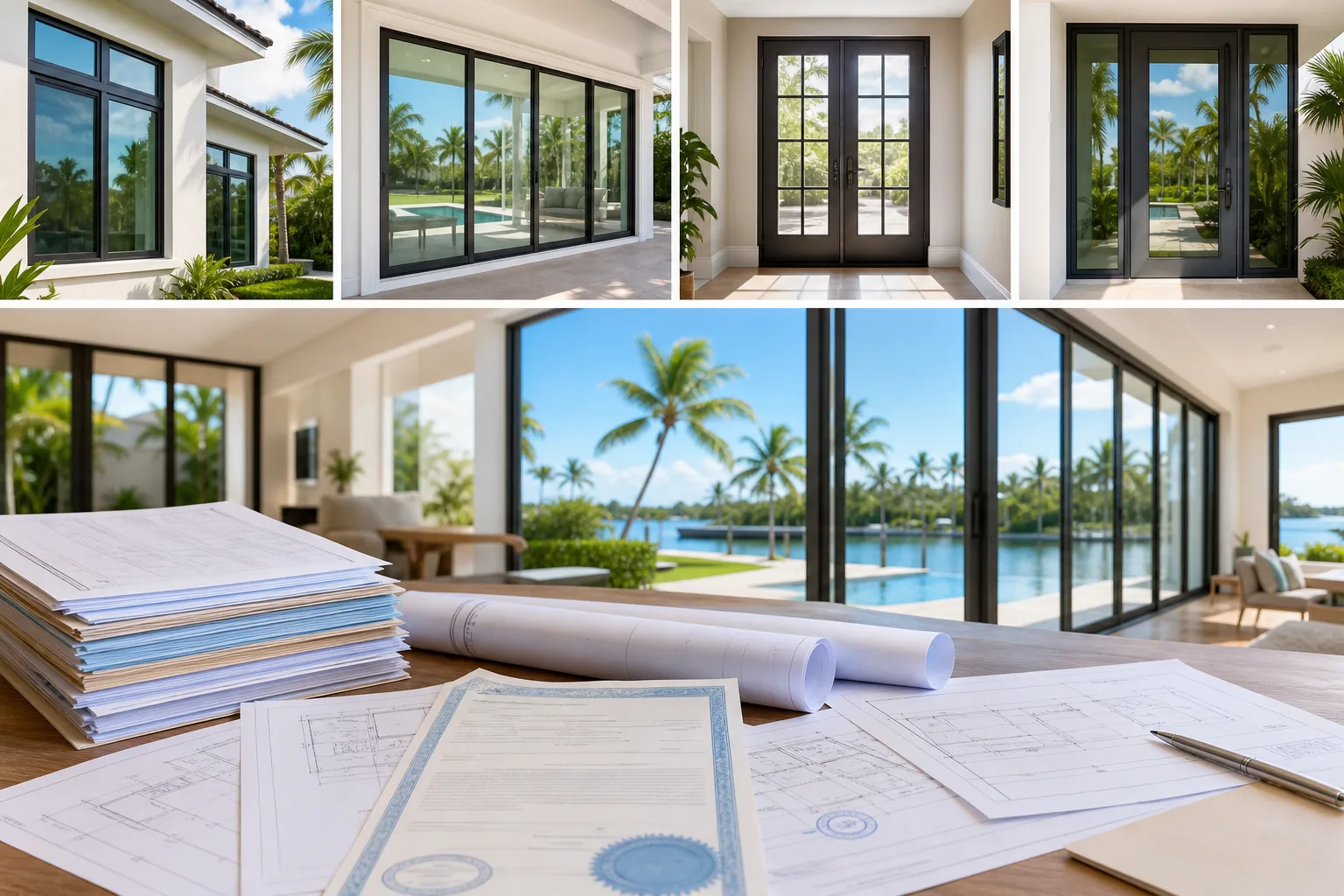
Most jurisdictions require signed and sealed shop drawings prepared by or reviewed by a Florida-licensed engineer or architect. "Signed and sealed" means a physical or digital professional engineer (PE) stamp with the engineer's Florida license number, not just a manufacturer's printed spec sheet.
Common drawing deficiencies that trigger rejection:
- No PE stamp or an out-of-state stamp
- Drawings that show generic window sizes rather than the specific rough openings at the project address
- Missing fastener schedules or anchor detail callouts
- Section cuts that do not show the existing wall assembly (masonry, wood frame, concrete block)
Some jurisdictions also require that drawings reference the applicable building code edition. Florida has adopted the Florida Building Code (FBC), and drawings should reference the current edition unless the project was permitted under an earlier cycle. Reviewing what a complete shop drawing package should contain is covered in detail at 9 Details to Review Before Approving Window Shop Drawings.
3. The Contractor of Record Is Not Licensed for the Scope of Work
In Florida, window and door replacement that involves structural penetrations must be performed by a licensed contractor. The specific license type required depends on the scope. Glass and glazing work, structural modifications, and general contracting each have separate license categories under Florida Statutes Chapter 489.
A permit application that lists an unlicensed individual, an expired license, or a license type that does not cover the work being performed will be rejected. Building departments verify license status against the DBPR database at the time of submittal. An active license on the day a homeowner signs a contract may be suspended or expired by the time the permit is submitted weeks later.
Practical check: Ask your contractor to provide the license number before submittal and verify it yourself at the DBPR public search. Confirm the license type covers the specific scope, and confirm it is not on probationary status.
Window Guys of Florida holds Florida contractor license numbers CGC1518491 and SCC131151139. License status can change; verify current status for both licenses at the DBPR public search before relying on this information.
Compare impact-window options for your project. Request a free estimate
4. The Permit Application Scope Does Not Match What Was Actually Ordered
A permit application describes the work being done: number of openings, unit types (fixed, casement, single-hung, sliding), and locations within the structure. If the application lists twelve windows and the order confirmation shows fourteen, or if the application says "single-hung" and the order says "casement," the building department may flag it as a scope discrepancy.
This happens more often when orders are revised after the permit package is drafted. A homeowner upgrades a window style, adds a unit, or changes a door configuration, but the permit application does not get updated before submittal.
Decision table: Scope change timing and permit impact
| When the change happens | Permit impact |
|---|---|
| Before permit submittal | Update the application before submitting; no delay |
| After submittal, before review | May require a revised submittal; adds time |
| After permit issued, before installation | Requires a permit revision or new permit depending on change magnitude |
| After installation begins | Can result in a stop-work order and correction notice |
The safest practice is to freeze the scope before the permit package is assembled, not after.
5. Structural Backup Documentation Is Missing for the Existing Opening
Impact window installation involves anchoring the new frame to the existing rough opening. For masonry construction, common throughout South Florida, the building department may require documentation that the substrate can accept the specified fastener pattern at the specified spacing. This becomes especially relevant when the existing rough opening shows signs of deterioration, prior repair, or non-standard framing.
Rejection points in this category include:
- No substrate material called out on the drawings (the department cannot confirm the fastener schedule is appropriate)
- Drawings that reference a masonry anchor for a wood-frame opening or vice versa
- No detail for how the new frame bridges an oversized rough opening or a rough opening with a step in the substrate
Some jurisdictions also ask for a signed statement or field verification that the existing lintel is adequate to carry the new unit's load, particularly for larger openings. This is a project-specific engineering question, not something a general article can resolve. A licensed engineer reviewing the actual opening is the appropriate step.
For broader context on what the installation process involves once the permit is in hand, see 8 Tips to Ensure a Flawless Impact Window Installation and 6 Things You Need to Know Before You Install Hurricane Impact Windows.
Bottom Line
Permit rejections are not project-ending events, but each one adds time and sometimes cost to a timeline that most homeowners are already eager to close. The five problems above, product approval mismatches, incomplete engineered drawings, contractor license issues, scope discrepancies, and missing structural backup, are all identifiable before the packet leaves your contractor's desk.
If you are planning an impact window or door replacement and want to understand what a complete submittal looks like for your specific jurisdiction, request an estimate or contact us to discuss scope and documentation before the project begins. For general information on hurricane impact windows or hurricane impact doors, those pages cover product options available in South Florida.
Compare impact-window options for your project.
Request a written estimate that identifies the quoted assembly, opening, design pressure, product approval, exposure, installation scope, and applicable project requirements.
Frequently asked questions
Can a homeowner pull their own window permit in Florida?
In Florida, a homeowner can act as their own contractor and pull a permit for work on their own primary residence under the owner-builder exemption, but structural and glazing work has specific requirements. Many building departments still require that shop drawings carry a PE stamp even for owner-pulled permits. If you later sell the home, an owner-pulled permit can complicate the disclosure process, so project-specific legal and building department guidance is worth getting before proceeding.
How long does it typically take for a building department to review a window permit in South Florida?
Review timelines vary by jurisdiction and workload. Some municipalities offer expedited review for an additional fee. First-time submittals with complete documentation generally move faster than resubmittals after a deficiency notice. Your contractor should be able to give you a realistic estimate based on the specific jurisdiction handling your project.
What is the difference between a Florida Product Approval and a Miami-Dade NOA?
A Florida Product Approval (FPA) is issued through the Florida Building Commission's product approval system via the FloridaBuilding.org portal and is accepted statewide. A Miami-Dade Notice of Acceptance (NOA) is issued by Miami-Dade County's Product Control Section and is required for projects within Miami-Dade County. Some products carry both. If your project is in Miami-Dade, verify the NOA is current, since NOAs have expiration dates and must be renewed.
Does a permit rejection affect my installation start date?
Yes. A rejected permit means no installation can legally begin until the deficiency is resolved and the permit is issued. The time added depends on how quickly the correction is made and how the building department's resubmittal queue works. Fixing the issue within a few days and resubmitting promptly minimizes delay, but some departments log resubmittals at the back of the review queue.