
TL;DR: Florida law requires a Notice of Commencement (NOC) before most permitted window or door replacement projects begin. It is recorded at the county courthouse, names the property owner and contractor, and establishes the legal framework that protects you if payment disputes arise. Your contractor typically handles filing, but as the property owner you carry real legal exposure if something goes wrong.
What Happened
Florida Statute 713.13 requires that a Notice of Commencement be recorded in the public records of the county where the work is performed before a contractor can pull a permit for most improvement projects exceeding $2,500. Window and door replacements that require a building permit, which is the majority of impact window and impact door projects across Palm Beach, Broward, Miami-Dade, Martin, and St. Lucie counties, fall under this requirement.
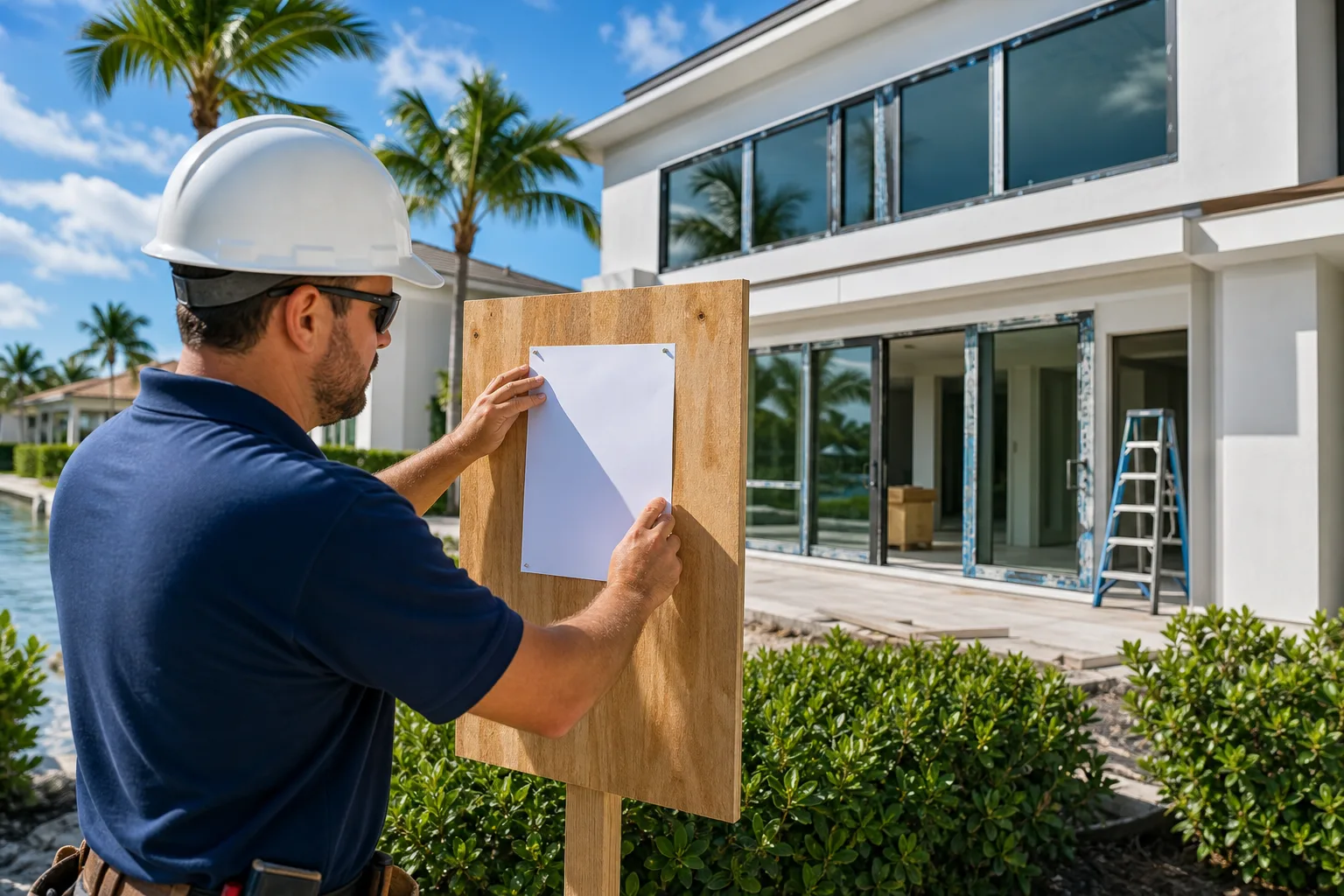
The NOC is not a permit itself. It is a separate recorded document that tells the world: work is starting on this property, here is who owns it, and here is who is doing the work. A certified copy of the NOC, or the recording information from it, must be posted at the job site before construction begins.
Why It Matters
The NOC activates Florida's construction lien law protections, and that cuts both ways for homeowners.
Your exposure without a proper NOC. If your contractor does not pay a supplier or subcontractor, that party can file a lien against your property even if you already paid your contractor in full. A properly recorded and posted NOC starts the clock on the time window those parties have to serve you a Notice to Owner, which is a prerequisite to filing a lien. Without the NOC, that clock never starts cleanly, and your exposure can extend well beyond project completion.
What the document contains. A valid Florida NOC must include the legal description of the property, the owner's name and address, the contractor's name, address, and license number, and the surety or bond information if applicable. It also names the lending institution if the project is financed. Missing fields can make the document defective.
Who files it. In most residential window and door replacement projects, the licensed contractor files the NOC on the homeowner's behalf as part of the permit application process. However, the property owner is the signatory in most cases, which means you should review what you are signing before it is recorded. If you are acting as your own general contractor, which Florida law allows under limited circumstances, you would file it yourself. That scenario is generally not advisable for impact window installations. See why DIY impact window installation creates problems for more context.
The permit inspection connection. Building departments in South Florida counties typically require the NOC recording information before they will schedule inspections. If the NOC is missing or defective, inspections stall and the project timeline slips. This is one reason permit-ready contractors treat the NOC as an early checklist item, not an afterthought.
Review opening-protection options before storm season. Request a free estimate
What We Don't Know Yet
The specifics of NOC requirements vary by county and can be updated through local ordinance. Miami-Dade, Broward, and Palm Beach counties each have their own building department portals and may have slightly different posting or recording procedures. The $2,500 threshold mentioned in state statute can interact with local thresholds, so confirming the current local requirement for your county at the time of your project is worth doing.
Florida's lien law has been amended several times in recent legislative sessions. The notice periods, required language, and exemption rules for single-family homesteads have shifted. Verify the current version of F.S. 713 with your contractor or a Florida construction attorney if you have specific questions about lien exposure on your project.
What to Do About It
Here is a straightforward checklist to use before and during a permitted window or door replacement project:
Before signing a contract:
- Confirm the contractor holds a valid Florida license. Window Guys of Florida holds CGC1518491 and SCC131151139.
- Ask whether the contractor will file the NOC and pull the permit directly. If the answer is no, clarify who will and why.
- Ask for the contractor's surety bond information if the project value is significant.
After contract execution, before work starts:
- Verify the NOC has been recorded in your county's public records. Most South Florida counties have online search portals for recorded documents.
- Confirm the permit number has been issued and that the NOC recording information is attached to the permit application.
- Check that a copy of the NOC is posted at the job site on the first day of work.
During the project:
- If you receive a Notice to Owner from a supplier or subcontractor, do not ignore it. It is a legal document that precedes a potential lien claim. Contact your contractor immediately and, if needed, a construction attorney.
- Keep copies of all lien waivers from your contractor as payments are made.
After project completion:
- Florida law allows a property owner to record a Notice of Termination once the project is complete and final payment is made. This closes the lien period. Ask your contractor about this step.
For impact window and door projects specifically, working with a licensed contractor who handles permitting in-house reduces the risk of NOC errors. If you are planning a window replacement or windows and doors replacement project in South Florida, confirm permitting and NOC procedures are part of your contractor's standard process before work begins.
Request an estimate to discuss your project scope, or contact us with questions about the permitting process for impact windows and doors in Palm Beach, Broward, Miami-Dade, Martin, or St. Lucie counties.
Review opening-protection options before storm season.
The performance and responsibilities for permits, engineering, documentation, installation, and inspections depend on the exact assembly and written project scope.
Frequently asked questions
Does a Notice of Commencement expire?
Yes. Under Florida Statute 713.13, an NOC is effective for one year from the date of recording unless a different expiration date is stated in the document, or unless the work is completed and a Notice of Termination is recorded earlier. If your project runs longer than expected, the NOC may need to be re-recorded.
Can a homeowner file their own Notice of Commencement?
Yes, Florida law permits homeowners to file the NOC themselves, particularly when acting as their own general contractor. However, for licensed impact window and door work, your contractor typically files and records it as part of the permitting process. Self-filing without understanding lien law exposure can create complications.
What happens if work starts before the NOC is recorded?
Starting permitted construction before the NOC is recorded is a violation of Florida Statute 713.13 and can create problems with permit inspections, lien law protections, and potentially the validity of the permit itself. Most South Florida building departments require evidence of recording before the first inspection is scheduled.
Is a Notice of Commencement the same as a building permit?
No. They are separate documents. The building permit authorizes the scope of work and triggers inspections. The NOC is a recorded legal document that establishes the parties involved in the project and activates Florida's construction lien law framework. Both are typically required for permitted window replacement projects.