The “Permit-to-Pass” Checklist: What Really Causes Impact Window Inspection Failures in Palm Beach & Broward
Impact windows are one of the smartest upgrades for South Florida homes, but even a high-quality product can get held up at final inspection if the installation or paperwork does not match the approved permit package.
In our 25+ years installing hurricane protection across Palm Beach County and Broward County, we have seen the same issues cause repeat failures in cities like West Palm Beach, Boynton Beach, Delray Beach, Boca Raton, Jupiter, Palm Beach Gardens, Fort Lauderdale, Pompano Beach, Hollywood, Davie, Plantation, Coral Springs, and Pembroke Pines.
This guide explains the real reasons inspections fail, and it gives you an impact window final inspection checklist you can use before the inspector arrives.
If you are planning your project timeline, it also helps to understand lead times and scheduling realities. See Palm Beach vs Broward Impact Window Lead Times 2026.
Why impact window inspections fail more than homeowners expect
Most failures are not about the glass “being impact rated” in a generic sense. They are about code compliance to the approved product approval, fastening schedule, anchorage, egress, and documentation.
A few data points to keep expectations realistic:
- Florida is one of the strictest markets in the U.S. for windborne debris protection. The Florida Building Code (FBC) relies on product approvals and installation methods that are specific to each window or door model.
- South Florida has some of the highest design wind pressures in the state, especially along coastal exposure areas and open terrain zones. That drives stricter anchorage requirements and smaller margin for installation error. For a helpful overview, read Palm Beach vs Broward Wind Zones: Impact Ratings.
- Inspection failures are often “paperwork failures,” not “product failures.” If the inspector cannot verify the product approval, glazing type, anchorage method, and permit scope, they may fail the final.
For homeowners, this matters because a failed final inspection can mean:
- Reinspection fees and schedule delays
- Extended open permits, which can complicate insurance paperwork or a home sale
- Extra drywall or stucco removals if anchorage verification is required
For a detailed overview of the permitting process, reference the county-specific guide: Palm Beach County Impact Window Permit Guide (2026).
Palm Beach County window inspection vs Broward County window inspection: what typically differs
Every city has its own building department practices, and inspectors may emphasize different checkpoints. Still, most final inspections in Palm Beach County and Broward County revolve around the same core items.
Common threads in both counties
- Permit scope matches what was installed (window sizes, types, locations)
- Product approvals on file and correct for the model installed
- Correct anchorage, embedment, edge distances, and fastener spacing
- Egress requirements met where applicable
- Safety glazing requirements met (tempered vs laminated in specific locations)
- Proper waterproofing and sealant details (especially for retrofit installs)
Where you may notice practical differences
- Documentation expectations: Some jurisdictions are strict about having printed approvals, NOA, or installation instructions on site.
- Egress focus: Inspectors often look closely at bedroom egress window sizing and operation.
- Multi-family and condo scrutiny: In Broward, condo projects in Fort Lauderdale, Hollywood, and coastal corridors often face more coordination requirements (HOA approvals, uniformity rules, and phased permitting).
If you are in a condo or HOA, review: What Florida Condo Owners Should Know About HOA Window Requirements.
The Permit-to-Pass impact window final inspection checklist (South Florida)
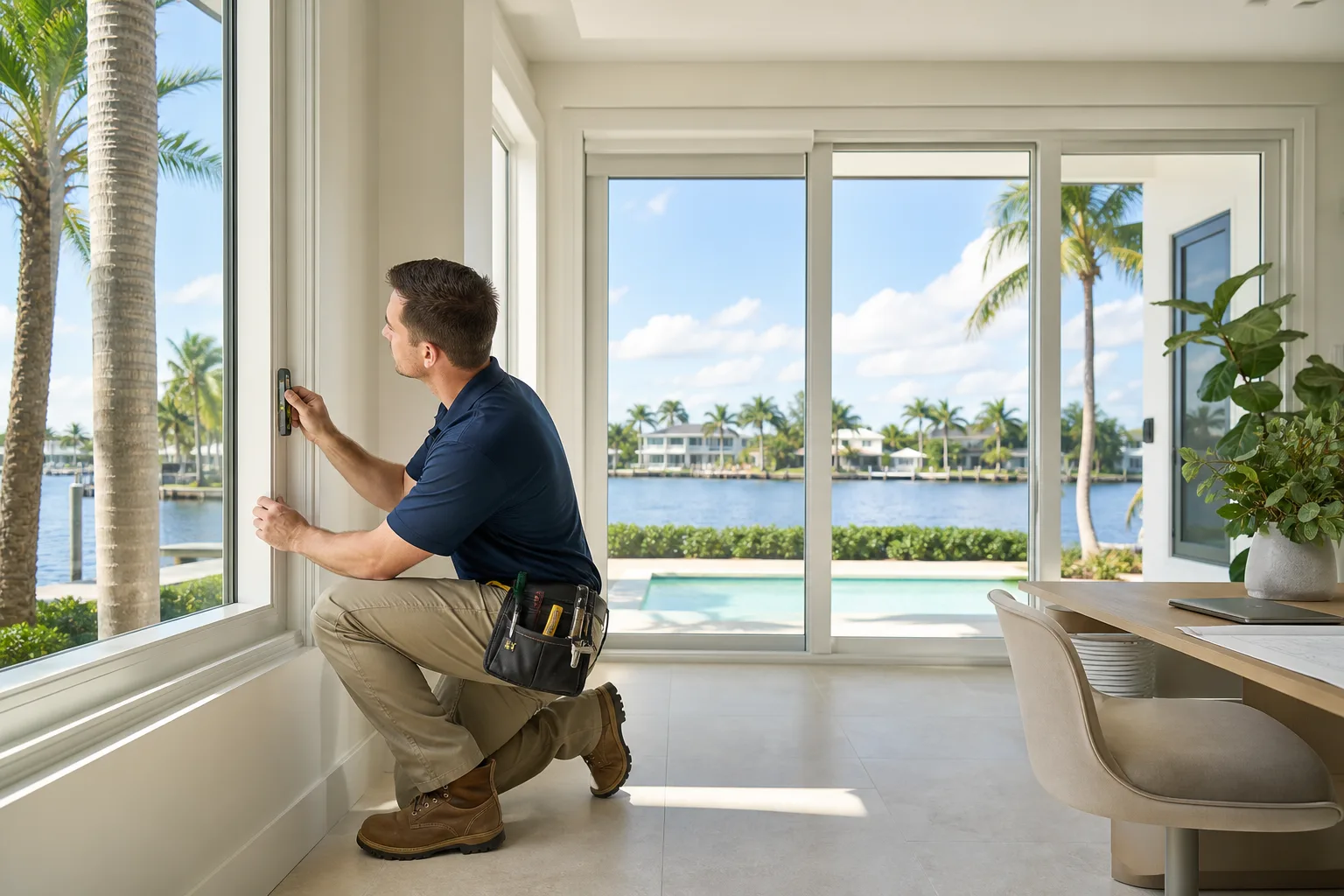
Use this list as your pre-inspection walk-through. It addresses the most common impact window inspection failures we see in Palm Beach and Broward.
1) Permit, plans, and scope match the real installation
Top failure trigger: The permit shows one configuration, but the installed windows differ.
Check:
- Window type matches plans (single-hung vs horizontal roller vs casement vs fixed)
- Sizes and locations match the permit drawings
- Any changes were formally revised before installation (not “field adjusted” without approval)
Window permit inspection tips South Florida: If you changed a window style due to backorder, discontinued product line, or HOA design constraint, ask your contractor to submit a revision before final.
Related planning resource: Hurricane Window Installation Guide for Florida Homes.
2) Product approval and installation documentation is complete and accessible
Top failure trigger: The inspector cannot confirm that the exact installed model is approved for the intended application.
Have ready (paper or digital, depending on your city):
- Florida Product Approval or Miami-Dade NOA documentation for each installed window and door line
- Manufacturer installation instructions for the specific model
- Any engineered site-specific approvals if required (unusual openings, custom conditions)
This is the heart of installation documentation for impact windows. The installed window must match the approval, including:
- Frame type and material
- Mullions and coupling conditions
- Glass package (laminated make-up)
- Approved fasteners and anchorage spacing
If you want a deeper understanding of standards, see: Comparing Hurricane Impact Window Industry Standards (Miami-Dade vs Florida Building Code).
3) Fastener type, spacing, and embedment match the approval (this fails often)
Top failure trigger: Correct window, wrong screws or wrong pattern.
Inspectors commonly look for:
- Correct fastener type (Tapcon, concrete screw, expansion anchor, wood screw, etc.)
- Correct diameter and length
- Correct spacing (on-center distances)
- Adequate embedment depth into substrate
- Proper edge distances to prevent concrete breakout
Where this becomes tricky in Palm Beach and Broward:
- CBS homes (concrete block) in Boca Raton, Boynton Beach, and Coral Springs may have varying grout conditions and weak cells that complicate embedment.
- Older homes in Lake Worth Beach, Deerfield Beach, and Oakland Park may have inconsistent substrates or prior repairs behind stucco.
- Mid-century homes frequently have unique wall assemblies or openings that require careful retrofit planning. Related: Impact Window Retrofits for Mid-Century Homes.
If fasteners are concealed and the inspector requests verification, a contractor may need photos from install day or selective exposure.
4) Shims, setting blocks, and frame support are correct (not just “it’s caulked”)
Top failure trigger: Window appears installed, but structural support is questionable.
Look for:
- Frame is plumb, level, and square
- Proper shimming locations (often near corners and meeting rails)
- No bowed frames or forced alignment
- Sashes operate smoothly and lock properly
Operational issues can raise red flags because they may signal frame distortion from improper anchorage.
5) Waterproofing, flashing, and sealant are consistent with the method used
Top failure trigger: Excessive or improper sealant used as a substitute for correct integration.
In South Florida’s wind-driven rain, inspectors may scrutinize:
- Perimeter sealant continuity
- Backer rod depth and tooled sealant joints when required
- Weep paths not blocked
- Retrofit buck details and transitions (stucco returns, sills)
Coastal exposure adds urgency. Salt air and UV degrade sealants and hardware faster, especially in places like Palm Beach, Singer Island, Lauderdale-by-the-Sea, and Hallandale Beach. For maintenance and wear context, read:
- Salt Air and Summer Storms: Impact Window Wear
- Salt-Air Reality Check for PBC and Broward Impact Windows
- Intracoastal vs Inland: Impact Windows and Seals
6) Tempered glass vs laminated inspection: know what the inspector is verifying
This is a common source of confusion.
- Impact-rated glazing is typically laminated glass (two layers of glass bonded with an interlayer) designed to resist impact and remain in the frame even if cracked.
- Tempered glass is a safety glazing requirement in certain hazardous locations (near doors, low glazing near floors, tubs/showers). Tempered glass breaks into small pieces, but it is not the same as impact laminated glass.
Top failure trigger: A homeowner assumes “impact” automatically satisfies every safety glazing rule, or a non-impact tempered unit ends up where impact-rated laminated glazing is required.
What inspectors may check:
- Glass etch marks (safety glazing stamp)
- Product labels and documentation showing the glazing makeup
- Location-based safety glazing rules per code
If your project includes impact doors, sidelites, or large glass panels, this matters even more. See our service page: Impact Doors.
7) Impact window egress requirements Florida: bedroom egress mistakes that fail finals
Egress failures are among the most avoidable, and the most painful to fix.
Top failure triggers include:
- Bedroom window does not meet minimum net clear opening
- Opening height is too high off the finished floor
- Window type chosen cannot physically provide the needed clear opening (common with certain sliders or single-hungs)
- Security bars, screens, or other items impede emergency exit
Egress is especially relevant for:
- Older homes in Wilton Manors, Lantana, and North Palm Beach with smaller original openings
- Renovations where interior floor height changes reduced clear height
- Conversions where a room is newly classified as a bedroom
If you are not sure whether a window style meets egress in a specific opening, planning and accurate measurements matter. Helpful reference: DIY vs Professional Window Measurements: What You Need to Know.
8) Correct labeling, etched marks, and visible identifiers
Inspectors may look for:
- Manufacturer labels or etchings on glass identifying safety glazing
- Stickers or markings that correspond to product approval documentation
- Identification of mullions, reinforcements, or structural couplers where used
Top failure trigger: Labels removed too early, or glass swapped after delivery.
9) Mullions, mulling kits, and combination units match the approval
Large openings in living rooms, waterfront homes, and modern renovations (common in Delray Beach, Boca Raton, Fort Lauderdale, and Palm Beach Gardens) often require multiple units mulled together.
Top failure trigger: The window line is approved, but the specific mulling condition or mullion reinforcement used is not.
Verify:
- Approved mullion type and fastener schedule
- Structural reinforcement where required
- Approved maximum spans and design pressures for the combined assembly
10) Structural condition of the opening is sound (hidden damage can derail the final)
Sometimes the window is installed correctly, but the opening has underlying issues:
- Rot in wood framing (common in older coastal properties)
- Cracked concrete or spalled block around the anchorage zone
- Prior water intrusion damage
If the substrate cannot reliably hold anchors, the inspector may require remediation.
If you have concerns about storm performance after a weather event, read: How to Tell if Your Impact Windows Are Still Effective After a Storm.
11) Site readiness for inspection day (access, visibility, and safety)
Top failure trigger: Inspector cannot access openings or cannot see key details.
Before the inspector arrives:
- Ensure clear access to all windows (move furniture, unlock gates)
- Remove temporary coverings blocking labels or weeps
- Provide attic access if needed for certain conditions
- Have someone on site who can answer basic questions
For a homeowner prep list, see: How to Prepare Your Home for an Impact Window Installation Day.
The “real world” top 7 causes of impact window inspection failures (what we see most)
If you only remember one section, make it this one.
1) Missing or mismatched product approvals
A PGT, CGI, ES, or Andersen window line may be approved, but inspectors need the exact approval for the installed configuration.
2) Wrong fasteners, wrong spacing, or insufficient embedment
Small deviations can matter in high-wind zones, especially in coastal Palm Beach and much of Broward.
3) Permit scope does not match field conditions
A swapped window type, resized opening, or added window can require a permit revision.
4) Egress non-compliance in bedrooms
Choosing the wrong operating style for a bedroom opening is a classic fail.
5) Safety glazing confusion (tempered vs laminated)
Impact laminated does not automatically cover every safety glazing scenario, and tempered is not impact.
6) Mulling and large opening reinforcement issues
Combination units require approved mullions and reinforcement.
7) Water management details that do not align with the installation method
Sealant-only approaches, blocked weeps, or poor transitions can trigger concerns.
Palm Beach County window inspection prep: a quick walkthrough homeowners can do
You do not need to be a contractor to spot red flags before the inspector arrives.
Exterior check (5-10 minutes)
- Look for consistent sealant lines and no visible gaps
- Confirm weep holes are not sealed shut
- Check that windows sit flush and are not twisted
Interior check (5-10 minutes)
- Open and close each operable window, lock it, verify smooth operation
- Check for visible glass etch marks in safety glazing areas
- Confirm bedrooms have compliant egress and no obstructions
Paperwork check (10 minutes)
- Permit card number and job address correct
- Product approvals for each window and door line available
- Any signed-off rough inspections completed before final (if applicable)
If you are unsure how your jurisdiction schedules inspections or what they expect, start with: Palm Beach County Impact Window Permit Guide (2026).
Broward County window inspection prep: common pitfalls in Fort Lauderdale, Hollywood, and beyond
Broward inspections tend to move fast, and the most common issues we see are documentation and access.
Checklist additions that often help:
- Have the installer’s contact info ready if the inspector has technical questions
- Ensure any high windows are accessible if inspection requires confirmation
- For condos, confirm HOA approvals and building management access rules are satisfied
If your home is near the coast, ongoing maintenance can protect your investment after final inspection. Use:
- Seasonal Window Maintenance Guide for Florida Homes
- Salt Air and Sun: Coastal Impact Window Maintenance
How to reduce reinspection risk before you order windows
Inspection success starts before install day.
Choose approved products appropriate for your wind zone and opening conditions
This is where working with an experienced, licensed, insured installer matters. Window Guys of Florida is an authorized dealer for leading brands like PGT, CGI, ES Windows, Andersen, and more, and we match product approvals to your specific openings and exposure.
Learn more about our solutions:
Do not let “shutters vs impact windows” decisions derail your permit plan
If you are switching approaches, make sure the permit, insurance documentation, and final inspection expectations stay aligned. Helpful comparison: Replace Shutters With Impact Windows? PBC & Broward.
Plan around hurricane season reality
If you are trying to pass inspections before peak season, make sure your schedule includes time for revisions, inspections, and any needed corrections. For storm prep context:
- 2026 Hurricane Season Forecast for South Florida Homes
- Storm Damage Prevention Tips for Florida Homes
After you pass: documentation you should keep for insurance and resale
Once you have a passed final inspection, keep a digital folder with:
- Final inspection approval or closed permit record
- Product approvals and invoices showing model series
- Warranty documents
- Photos of installation (especially anchorage photos if available)
This can help with insurance credits and future home sales. Start here: Florida Insurance Requirements 2026: Homeowners Guide and How to Submit Your Impact Window Insurance Discount Claim Successfully.
Cost and value note: failed inspections can add real dollars
Even when reinspection fees are modest, the bigger cost is often schedule disruption, extra labor for corrections, and potential finish repairs if selective exposure is required.
If you are budgeting a project, see: Impact Window Cost Factors in South Florida (2026).
Service area reminder: local experience matters
Palm Beach County and Broward County are not one-size-fits-all. A coastal condo in Deerfield Beach faces different exposure and building requirements than an inland single-family home in Wellington or Parkland.
Window Guys of Florida serves communities across both counties. See: Service Areas and learn about our team here: About Us.
Ready to pass the first time? Get a free consultation
If you are planning new impact windows or impact doors in Palm Beach County or Broward County, we can help you avoid the most common inspection and documentation pitfalls from day one.
Request a free, no-pressure consultation and quote here: Contact/Free Quote.
FAQ: Impact window inspections in Palm Beach and Broward
What are the most common impact window inspection failures?
The most common failures involve missing or mismatched product approvals, incorrect fasteners or spacing, permit scope changes not documented, egress non-compliance in bedrooms, and safety glazing mix-ups (tempered vs laminated). If you want help reviewing your project before inspection, schedule a free consult at Contact/Free Quote.
What should I have on-site for the final inspection?
Have the permit information, manufacturer installation instructions, and the correct Florida Product Approval or Miami-Dade NOA documentation for each installed window and door. This installation documentation for impact windows helps the inspector verify the exact configuration and anchorage method.
Do impact windows automatically meet tempered glass requirements?
Not always. Impact windows are typically laminated for storm performance, but tempered glass is required in certain hazardous locations. Inspectors may verify safety glazing etch marks and location-based compliance. When in doubt, ask your installer to confirm glazing requirements before ordering.
What are impact window egress requirements in Florida for bedrooms?
Bedroom windows used for emergency escape must meet minimum net clear opening and maximum sill height requirements, and they must be operable without obstructions. Choosing the wrong operating style can cause a final inspection failure, especially in older homes with smaller openings.
Can I fail inspection if I changed window styles due to lead times?
Yes. If your permit and approved plans show one style or size and you install another, the inspector may require a permit revision. If you are dealing with scheduling constraints, review Palm Beach vs Broward Impact Window Lead Times 2026 and coordinate revisions before final.
Do I need impact doors inspected differently than impact windows?
Impact doors are inspected for many of the same items (product approval, anchorage, operation, safety glazing) but doors often add checks for threshold details, locking hardware, and sidelites. Learn more about options here: Impact Doors.
Frequently Asked Questions
What are the most common impact window inspection failures?
The most common failures involve missing or mismatched product approvals, incorrect fasteners or spacing, permit scope changes not documented, egress non-compliance in bedrooms, and safety glazing mix-ups (tempered vs laminated). If you want help reviewing your project before inspection, schedule a free consult at Contact/Free Quote.
What should I have on-site for the final inspection?
Have the permit information, manufacturer installation instructions, and the correct Florida Product Approval or Miami-Dade NOA documentation for each installed window and door. This Hurricane Window Installation Guide for Florida Homes also explains what typically gets verified at inspection.
Do impact windows automatically meet tempered glass requirements?
Not always. Impact windows are typically laminated for storm performance, but tempered glass is required in certain hazardous locations. Inspectors may verify safety glazing etch marks and location-based compliance. If you are unsure which glazing applies to your openings, request help at Contact/Free Quote.
What are impact window egress requirements in Florida for bedrooms?
Bedroom egress windows must meet minimum net clear opening and maximum sill height requirements, and they must be operable without obstructions. Choosing the wrong operating style can cause a final inspection failure, especially in older homes. Accurate opening measurements help prevent mistakes. See DIY vs Professional Window Measurements: What You Need to Know.
Can I fail inspection if I changed window styles due to lead times?
Yes. If the permit and approved plans show one style or size and you install another, the inspector may require a revision before approving the final. If timing is tight, review Palm Beach vs Broward Impact Window Lead Times 2026 and work with your installer to update documentation before inspection.
Do impact doors have different inspection issues than impact windows?
Impact doors are inspected for many of the same items (product approval, anchorage, operation, safety glazing) but often add checks for threshold details, locking hardware, and sidelites. Learn more here: Impact Doors or request a consultation at Contact/Free Quote.