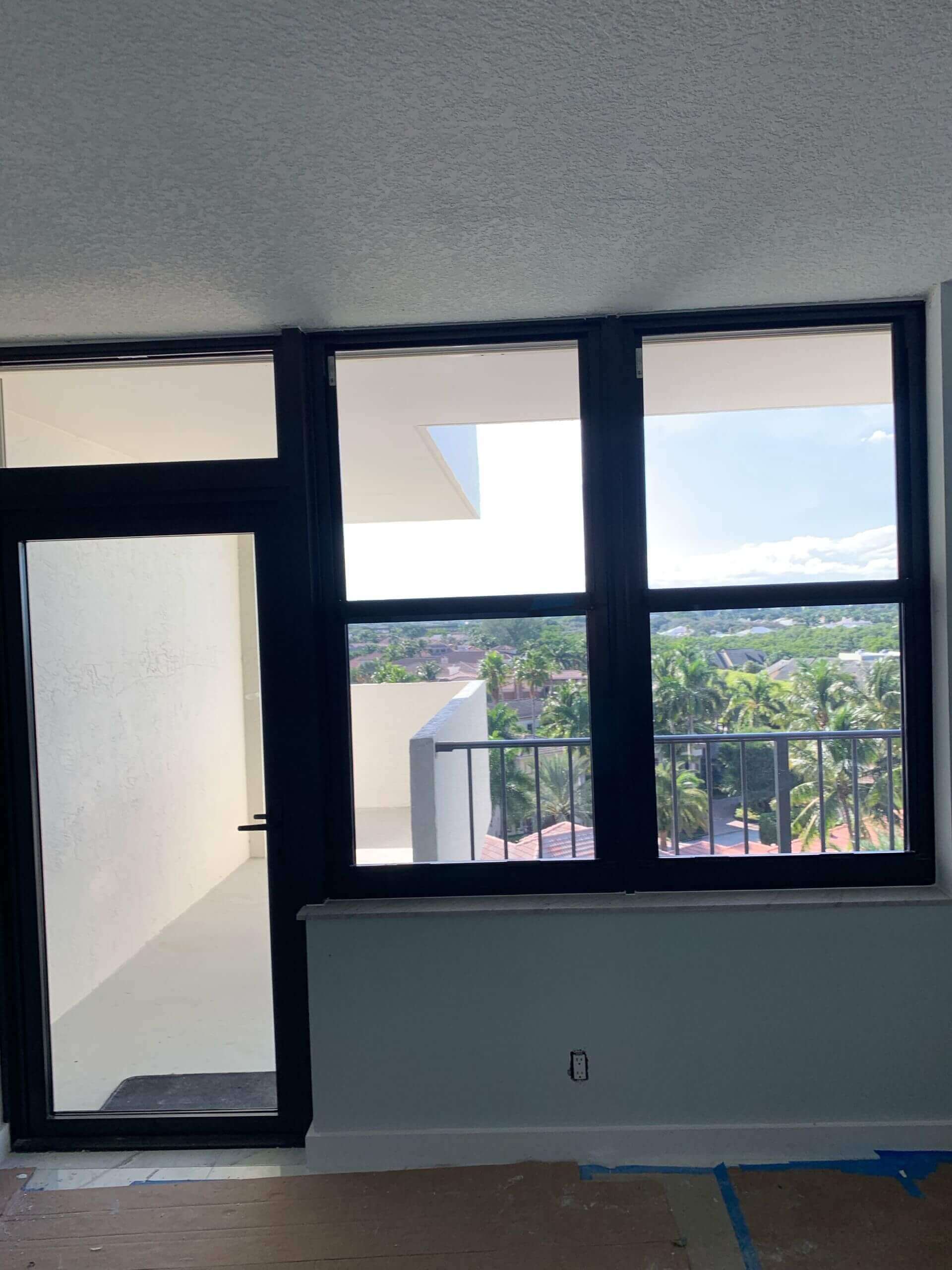
Impact Windows and South Florida Salt Air Corrosion: What Palm Beach and Broward Homeowners Must Know
You invested thousands of dollars in hurricane impact windows to protect your South Florida home. But there's a threat that doesn't announce itself with 150-mph winds or a National Hurricane Center advisory. It works quietly, around the clock, every single day - and it can compromise your windows' performance long before you ever notice.
Salt air corrosion is the silent enemy of coastal homeowners in Palm Beach and Broward County. Whether you live in a waterfront estate in Manalapan, a canal-side townhome in Deerfield Beach, or a mid-block neighborhood in Delray Beach, airborne salt particles are attacking your window frames, hardware, and seals right now.
This guide explains exactly what's happening, which materials hold up best, what maintenance actually works, and how to protect your investment for the long haul.
Why South Florida's Salt Air Is Uniquely Destructive
Florida has over 1,350 miles of coastline, and Palm Beach and Broward counties sit squarely in one of the most salt-intensive marine environments in North America. The combination of factors here is particularly harsh:
- Prevailing onshore winds from the Atlantic push salt particles miles inland, even into neighborhoods that feel far from the beach
- Year-round humidity that typically ranges from 70% to 90% keeps salt particles suspended and reactive
- High temperatures accelerate chemical reactions between salt and metal surfaces
- Frequent rainfall followed by rapid drying cycles salt deposits, concentrating them on surfaces
The National Association of Corrosion Engineers (NACE) estimates that corrosion costs U.S. homeowners and infrastructure managers billions of dollars annually. In marine environments like South Florida, unprotected aluminum can begin showing oxidation within months, not years.
For impact window owners, this matters enormously. Your frames, hardware, tracks, and seals are all potential targets.
How Salt Air Actually Damages Impact Windows
Frame Corrosion: The Most Visible Threat
Aluminum frames are the most common choice for impact windows in South Florida, and for good reason - they're strong, lightweight, and affordable. But aluminum is susceptible to a specific type of degradation called galvanic corrosion when it contacts salt water and dissimilar metals.
What you'll see: white powdery deposits (aluminum oxide), pitting on the frame surface, surface staining, and eventually structural weakening of the frame itself. In severe cases, frames can warp or lose their structural integrity, compromising the very protection you paid for.
The good news is that modern impact window manufacturers have developed aluminum alloys with corrosion-resistant anodized or thermally broken coatings specifically engineered for marine environments. The bad news is that not all products are equal, and installation quality dramatically affects how well these coatings perform over time.
For a deep dive into which frame materials hold up best in coastal conditions, read our detailed comparison: Impact Window Frame Materials: Aluminum vs Vinyl vs Fiberglass.
Hardware Failure: The Hidden Vulnerability
Locks, hinges, rollers, and fasteners are often the first components to fail in coastal environments - and they're the ones most homeowners ignore. Standard steel hardware can begin rusting within months of salt exposure. Even "stainless" steel varies widely in quality, and cheaper grades (304 stainless) perform poorly compared to marine-grade 316 stainless steel.
When hardware fails, you face more than an annoying window that won't latch properly. A window that doesn't seal correctly is a window that may not meet its rated performance during a hurricane. It's also a window that leaks air and water, increasing your cooling costs and creating conditions for mold growth inside your walls.
Seal and Gasket Degradation
The seals and gaskets that hold your impact glass in place and prevent water and air infiltration are made from materials like EPDM rubber or silicone. While these materials resist salt air better than metals do, UV exposure combined with ozone and salt can cause them to crack, shrink, or lose flexibility over time.
When seals fail, you lose more than weather protection. Seal failure is also the leading cause of fogged or cloudy insulated glass units (IGUs). If you've noticed moisture between your glass panes, there's a good chance salt-accelerated seal degradation is part of the story. Learn more about this issue in our article on Salt Air Impact Window Seal Failure.
Glass Surface Etching
Salt doesn't just attack frames - it attacks glass too. Over time, salt deposits that are repeatedly wetted and dried can etch into glass surfaces, creating a hazy appearance that doesn't come off with normal cleaning. This is particularly common on windows facing the ocean or prevailing winds, and on homes where irrigation systems spray near windows.
Distance from the Ocean: The Salt Zone Reality
Many homeowners assume that if they don't live directly on the water, salt air isn't a serious concern. That assumption can be expensive.
In Palm Beach and Broward counties, salt spray can travel significant distances inland depending on wind speed and direction. During onshore winds - which are common throughout the year - airborne salt particles have been detected miles from the shoreline.
Here's a rough breakdown of how proximity affects corrosion risk:
- 0-500 feet from the ocean or bay: Extreme marine environment. Maximum corrosion protection is not optional - it's mandatory. Products specifically rated for C5-M (marine) corrosion categories should be used.
- 500 feet to 1 mile: High marine exposure. Marine-grade hardware and high-quality anodized or powder-coated frames are essential.
- 1-3 miles inland: Moderate marine exposure. Standard coastal specifications apply, but premium coatings still provide significant long-term value.
- 3+ miles inland: Reduced but not eliminated risk. Salt air is less concentrated but still present, especially during wind events.
If you own a waterfront property, this topic deserves even more attention. Our complete guide to Impact Windows for Waterfront Homes covers the specific requirements and best practices for direct coastal exposure.
Choosing the Right Impact Windows for Coastal Conditions
Frame Material Comparison for Marine Environments
Aluminum (Marine-Grade Anodized or Powder-Coated)
Marine-grade anodized aluminum is the gold standard for coastal impact windows in South Florida. The anodizing process creates a hard oxide layer that bonds chemically to the aluminum surface, providing corrosion resistance that paint or powder coat alone cannot match. Premium powder-coated frames add another layer of protection and allow for a wider range of colors.
Key specifications to ask about:
- Minimum 0.7 mil anodize thickness for coastal applications
- AAMA 2604 or 2605 powder coat specification (not the cheaper 2603)
- Thermal break construction to reduce condensation on interior frames
Vinyl (PVC)
Vinyl frames don't corrode in the traditional sense - there's no metal to oxidize. This makes them inherently resistant to salt air in terms of the frame material itself. However, vinyl has its own coastal limitations: UV exposure can cause discoloration and brittleness over time, and the reinforcing steel or aluminum inserts inside vinyl frames can corrode if the vinyl is breached.
Vinyl also has lower structural strength than aluminum, which can be a factor for larger openings or high-wind-zone applications in Palm Beach and Broward.
Fiberglass
Fiberglass frames offer excellent corrosion resistance, dimensional stability, and strength. They're particularly well-suited for extreme coastal environments. The trade-off is cost - fiberglass frames typically run 20-40% more than comparable aluminum products. For waterfront properties where performance matters most, that premium often pays for itself.
Hardware Specifications That Matter
When evaluating impact windows for coastal use, ask specifically about:
- 316 stainless steel hardware for all exposed components (locks, handles, hinges)
- Neoprene or stainless steel fasteners rather than zinc-plated steel screws
- Stainless steel or PVC tracks rather than standard aluminum for sliding systems
- Salt spray testing certifications - quality manufacturers test hardware to ASTM B117 salt spray standards
Brand Considerations for Coastal Performance
Not all impact window manufacturers engineer their products with South Florida's coastal environment in mind. As authorized dealers for PGT, CGI, ES Windows, Andersen, and other leading brands, Window Guys of Florida can help you identify which specific product lines are engineered for maximum coastal durability.
PGT's WinGuard line and CGI's Guardian series, for example, both have specific configurations designed for high-exposure marine environments. Understanding the differences between brands and product tiers is essential for making the right investment. For a comprehensive brand comparison, see our article on Impact Window Brands in Palm Beach and Broward Compared.
The Role of Installation in Corrosion Prevention
The best marine-grade impact window installed incorrectly will fail faster than a standard window installed perfectly. Installation quality is often the overlooked variable in coastal performance.
Critical Installation Factors
Fastener selection and placement: Using the wrong fasteners creates galvanic corrosion at the connection points between the frame and the wall. Marine-grade stainless steel fasteners must be used consistently throughout the installation.
Sealant application: The sealant used to bed and seal impact window frames against the rough opening must be marine-grade and applied correctly. Gaps or voids in sealant create pathways for water infiltration - and once water gets behind a frame, salt-accelerated corrosion of embedded fasteners and framing members can begin.
Flashing integration: Proper flashing at window heads and sills is essential to direct water away from the frame-to-wall interface. This is particularly important during the heavy rainfall that South Florida experiences regularly.
Frame protection during installation: Frames should be protected from concrete and mortar splatter during installation. These alkaline materials can damage anodized coatings and accelerate corrosion at contact points.
For homeowners considering timing their installation strategically, our guide on Impact Window Installation Timing: Rainy Season Risks provides important considerations.
Maintenance: What Actually Works (and What Doesn't)
The Right Cleaning Approach
The single most effective thing you can do to combat salt air corrosion is regular rinsing. Salt particles are hygroscopic - they attract and hold moisture. When they accumulate on window frames and hardware, they create a constantly wet micro-environment that accelerates corrosion even on days when there's no rain.
Effective maintenance schedule for coastal South Florida:
- Weekly or after wind events: Rinse frames, tracks, and hardware with fresh water. A garden hose works well. The goal is to flush salt deposits before they can accumulate and concentrate.
- Monthly: Clean glass surfaces with a mild soap solution and rinse thoroughly. Pay attention to the bottom corners where water pools.
- Quarterly: Inspect and lubricate hardware. Use a silicone-based lubricant on tracks, rollers, and hinges. Avoid petroleum-based lubricants that can attract dust and degrade rubber seals.
- Annually: Full inspection of frames, seals, caulking, and hardware. Look for signs of oxidation, cracking seals, or hardware stiffness.
What Not to Do
- Don't use abrasive cleaners on aluminum frames - they scratch the anodized coating and expose bare metal
- Don't use bleach-based cleaners near window frames - bleach accelerates aluminum oxidation
- Don't ignore irrigation systems that spray near windows - recalibrate sprinklers so they don't hit window surfaces
- Don't let landscaping or mulch contact window frames - organic material retains moisture against frames
Frame Treatments and Touch-Up Products
For anodized aluminum frames that show early signs of oxidation (white powder or light pitting), specialized aluminum restoration products can remove deposits and help restore protection. Car wax applied to aluminum frames provides a temporary barrier against salt and moisture - not a permanent solution, but a useful addition to your maintenance routine.
For frames showing significant corrosion, consult a professional. Attempting to paint or coat heavily corroded aluminum without proper preparation often makes the problem worse by trapping corrosion under new coatings.
Impact Window Ratings and Marine Environment Standards
When you're shopping for coastal impact windows, the ratings and certifications on the product matter significantly. Understanding these designations helps you ask the right questions and verify that what you're buying is appropriate for your specific location.
The DP (Design Pressure) rating tells you how much wind pressure a window can withstand, but it doesn't directly address corrosion resistance. For coastal applications, look for:
- AAMA 2605 exterior coating specification (the highest performance tier for painted finishes)
- Anodize Class I (0.7 mil minimum) for anodized aluminum
- ASTM B117 salt spray test compliance for hardware components
- NOA (Notice of Acceptance) approval from Miami-Dade County, which includes material and installation specifications
For a complete explanation of impact window ratings and what they mean for South Florida homeowners, see our guide: Impact Window Ratings Decoded: DP, PG and NOA Explained.
Insurance and Warranty Considerations
What Warranties Cover (and Don't Cover)
Most impact window warranties cover manufacturing defects in materials and workmanship. What they typically don't cover is damage caused by improper maintenance or exposure to conditions more severe than the product was rated for. This creates an important responsibility for homeowners.
If you live directly on the oceanfront in Highland Beach or directly on the Intracoastal in Fort Lauderdale and you install standard-grade aluminum windows rated for moderate coastal exposure, don't expect your warranty to cover corrosion damage. The product wasn't designed for your environment.
Always read warranty documentation carefully before purchasing. Red flags include overly short coverage periods, exclusions for "salt air" or "coastal exposure," and vague language about what constitutes a covered defect. For a detailed breakdown, see our article on Impact Window Warranty Red Flags.
Insurance Implications
Corrosion-related damage to impact windows is generally not covered by standard homeowner's insurance policies, which cover sudden and accidental damage rather than gradual deterioration. Maintaining proper maintenance records is important - if you ever need to file a claim related to window failure, you'll want to demonstrate that corrosion damage was not a contributing factor.
For information on maximizing your insurance benefits from impact windows, see our article on Impact Window Tax Credits and Insurance Discounts 2025.
Special Considerations for Different Property Types
High-Rise and Condominium Buildings
High-rise properties in Broward's coastal cities - from Deerfield Beach to Hallandale Beach - face unique salt air challenges. Exposure increases with elevation because salt-laden air has less opportunity to deposit on vegetation and structures before reaching upper floors. Wind speeds are also higher at elevation, driving salt particles into frames and seals with more force.
For condominium owners, replacement windows must typically be approved by your HOA or condo association. This adds complexity to the specification process but also means there's an opportunity to ensure the building-wide standard is appropriate for coastal exposure. Learn more about navigating the approval process in our guide: HOA and Condo Impact Window Approval Playbook.
For properties above the 5th floor specifically, additional engineering considerations apply. Our article on High-Rise Impact Windows in Broward covers those requirements in detail.
Rental Properties
For landlords managing rental properties in coastal Palm Beach or Broward communities, deferred window maintenance creates both property damage risk and potential liability concerns. Establishing a maintenance schedule and keeping records is particularly important. See our related article on Impact Window Breakage in Rentals: Who Pays in Florida? for liability considerations.
Signs Your Current Windows Are Losing the Corrosion Battle
Knowing what to look for helps you address problems early, before they become expensive. Warning signs include:
- White, chalky deposits on aluminum frames that don't wash off easily
- Pitting or roughness on frame surfaces
- Hardware that's stiff, sticky, or shows rust staining
- Windows or doors that are increasingly difficult to open or latch
- Visible gaps between the frame and wall where caulking has cracked or shrunk
- Foggy or cloudy glass (seal failure often accelerated by coastal conditions) - read more about this in our article on Impact Window Condensation in South Florida
- Water stains inside the home near window edges after rain
If you're seeing multiple signs on windows that are less than 10 years old, it's worth having a professional assessment. What you may discover is that the original installation used products that weren't appropriate for your specific coastal exposure level.
Making the Right Investment Decision
The price difference between standard impact windows and properly specified marine-grade impact windows for coastal South Florida applications might be 15-30% at the time of purchase. Over a 20-year ownership horizon, however, the math typically favors the premium product significantly when you factor in reduced maintenance costs, avoided hardware replacements, and the protection of your frame warranty.
The comparison between impact windows and storm shutters in coastal environments also has a corrosion dimension worth considering - both solutions are exposed to salt air, but they present different maintenance challenges. For a full cost analysis, see our article: Impact Windows vs Storm Shutters: Real Cost Comparison.
For homeowners across our service areas in Palm Beach and Broward County, Window Guys of Florida's 25+ years of experience in South Florida's coastal environment means we can help you identify the right specification for your specific location and exposure level - not just sell you whatever's in stock.
Contact us for a free consultation and we'll evaluate your home's specific marine exposure, review your existing windows, and recommend the right products and maintenance approach for your situation.
Frequently Asked Questions
How far from the ocean do I need to be before salt air corrosion stops being a major concern for my impact windows?
In South Florida's wind patterns, salt air corrosion is a meaningful concern for homes within approximately 3 miles of the ocean or bay. Within 1 mile, marine-grade specifications for frames and hardware are strongly recommended. Between 1-3 miles, premium coatings still provide significant long-term value. Beyond 3 miles, standard coastal specifications are typically adequate, though saltwater intrusion from canals and the Intracoastal can extend exposure further inland in certain areas. Our team can assess your property's specific exposure level when you contact us for a consultation.
My aluminum impact window frames have white powder on them. Is that corrosion, and what should I do?
White powder on aluminum frames is aluminum oxide - a form of corrosion. In early stages, it can be cleaned with a mild acid-based aluminum cleaner, followed by thorough rinsing and application of an aluminum protectant or wax. If the powder returns quickly or the underlying surface shows pitting, the anodized coating has been compromised. In that case, you'll want a professional assessment to determine whether the frames can be treated or whether replacement is warranted. Severe corrosion can compromise the structural integrity of the frame and may void your manufacturer warranty. See our article on Salt Air Impact Window Seal Failure for more details on coastal damage patterns.
Are vinyl impact window frames truly better than aluminum for coastal applications?
Vinyl frames don't corrode the way aluminum does, which is an advantage in salt air environments. However, vinyl has lower structural strength than aluminum, which matters for larger window openings and high-wind-zone applications common in Palm Beach and Broward counties. Vinyl also uses metal reinforcing inserts internally that can corrode if the vinyl is ever breached. High-quality marine-grade anodized aluminum or fiberglass frames are often a better overall choice for coastal South Florida, combining corrosion resistance with the structural performance needed for hurricane-rated applications. Read our full comparison at Impact Window Frame Materials: Aluminum vs Vinyl vs Fiberglass.
How often should I clean my impact windows to prevent salt air damage?
For homes within 1 mile of the ocean or Intracoastal, rinsing frames and hardware with fresh water weekly - or after any significant wind event - is the most effective preventive measure. Monthly cleaning with mild soap and quarterly hardware lubrication round out an effective maintenance routine. For homes 1-3 miles inland, bi-weekly rinsing and monthly cleaning is typically adequate. The key is consistency - allowing salt deposits to accumulate and concentrate between cleaning cycles significantly accelerates corrosion, even on coated frames. Irrigation systems that spray near windows should also be recalibrated to avoid adding unnecessary salt and mineral deposits to frame surfaces.
Does hurricane impact window corrosion affect the window's storm protection rating?
Yes, potentially - and this is an important point many homeowners overlook. Impact windows are rated to specific performance levels based on their construction as a complete system, including frame structural integrity, hardware function, and seal condition. Corrosion that weakens frame members, seizes locking hardware, or compromises seals can reduce the effective performance of the window below its rated level. This is why post-hurricane inspectors sometimes find that window failures trace back to pre-existing corrosion or maintenance issues rather than inadequate product specifications. Learn more in our article on Impact Window Failures After Hurricanes: What Inspectors Found.
My HOA has specific impact window requirements. Do those specifications account for our coastal location?
HOA specifications vary widely in their attention to coastal exposure requirements. Some associations - particularly in established oceanfront communities - have detailed specifications that require marine-grade materials. Others simply specify that windows must be "impact rated" without addressing corrosion resistance at all. If your HOA's specifications don't address coastal exposure, it's worth raising the issue with your board, as inadequate specifications affect all homeowners' property values and the building's long-term maintenance costs. For guidance on navigating HOA impact window requirements in Palm Beach and Broward, see our article: HOA Impact Windows Palm Beach and Broward: Rules and Costs.
Frequently Asked Questions
How far from the ocean do I need to be before salt air corrosion stops being a major concern for my impact windows?
In South Florida's wind patterns, salt air corrosion is a meaningful concern for homes within approximately 3 miles of the ocean or bay. Within 1 mile, marine-grade specifications for frames and hardware are strongly recommended. Between 1-3 miles, premium coatings still provide significant long-term value. Beyond 3 miles, standard coastal specifications are typically adequate, though proximity to canals and the Intracoastal can extend exposure further inland. Our team can assess your property's specific exposure level when you contact us for a consultation.
My aluminum impact window frames have white powder on them. Is that corrosion, and what should I do?
White powder on aluminum frames is aluminum oxide - a form of corrosion. In early stages, it can be cleaned with a mild acid-based aluminum cleaner, followed by thorough rinsing and application of an aluminum protectant or wax. If the powder returns quickly or the surface shows pitting, the anodized coating has been compromised. In that case, a professional assessment is needed to determine whether treatment or replacement is warranted. Severe corrosion can compromise frame structural integrity and may void your manufacturer warranty. See our article on Salt Air Impact Window Seal Failure for more details.
Are vinyl impact window frames truly better than aluminum for coastal applications?
Vinyl frames don't corrode the way aluminum does, which is an advantage in salt air environments. However, vinyl has lower structural strength than aluminum, which matters for larger openings and high-wind-zone applications in Palm Beach and Broward. Vinyl also uses metal reinforcing inserts internally that can corrode if the vinyl is ever breached. High-quality marine-grade anodized aluminum or fiberglass frames are often the better overall choice for coastal South Florida. Read our full comparison at Impact Window Frame Materials: Aluminum vs Vinyl vs Fiberglass.
How often should I clean my impact windows to prevent salt air damage?
For homes within 1 mile of the ocean or Intracoastal, rinsing frames and hardware with fresh water weekly - or after any significant wind event - is the most effective preventive measure. Monthly cleaning with mild soap and quarterly hardware lubrication round out an effective routine. For homes 1-3 miles inland, bi-weekly rinsing and monthly cleaning is typically adequate. Consistency is the key - allowing salt deposits to accumulate and concentrate between cleaning cycles significantly accelerates corrosion even on coated frames.
Does hurricane impact window corrosion affect the window's storm protection rating?
Yes, potentially - and this is a point many homeowners overlook. Impact windows are rated to specific performance levels based on their complete system, including frame structural integrity, hardware function, and seal condition. Corrosion that weakens frame members, seizes locking hardware, or compromises seals can reduce effective performance below the rated level. Post-hurricane inspectors have found that some window failures trace back to pre-existing corrosion rather than inadequate product specifications. Learn more in our article on Impact Window Failures After Hurricanes: What Inspectors Found.
My HOA has specific impact window requirements. Do those specifications account for our coastal location?
HOA specifications vary widely in their attention to coastal exposure requirements. Some associations in established oceanfront communities have detailed specifications requiring marine-grade materials. Others simply require that windows be 'impact rated' without addressing corrosion resistance at all. If your HOA's specifications don't address coastal exposure, it's worth raising the issue with your board, as inadequate specifications affect all homeowners' property values and long-term maintenance costs. For guidance on navigating HOA requirements in Palm Beach and Broward, see our article: HOA Impact Windows Palm Beach and Broward: Rules and Costs.