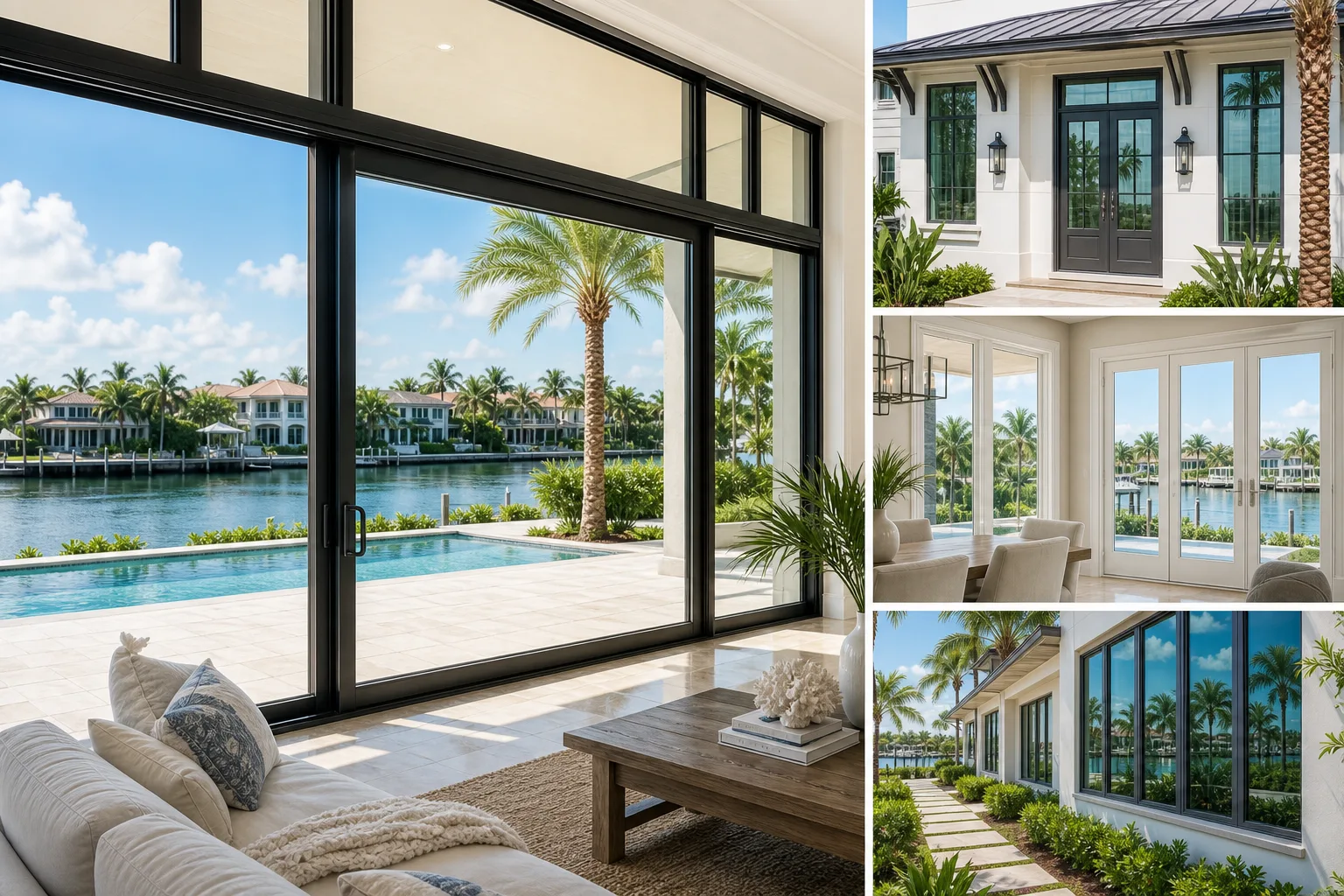
Impact Windows and South Florida's Salt Air Corrosion: What Homeowners in Coastal Palm Beach and Broward Don't Know
If you live within a mile or two of the Atlantic Ocean - or even further inland along the Intracoastal Waterway - salt air is quietly working against your home every single day. For homeowners investing in impact windows along the South Florida coast, understanding how salt air corrosion works is not optional. It is the difference between windows that last 30 years and windows that start failing in 10.
Yet this is one of the topics most contractors gloss over during a sales pitch. They show you the glass, talk about Miami-Dade certification, quote a price, and move on. The conversation about what will happen to your window frames in a high-salinity coastal environment often never happens at all.
This guide is designed to change that.
Why Salt Air Is So Destructive to Window Systems
South Florida's coastal air contains microscopic salt particles suspended in moisture-laden breezes coming off the Atlantic. These particles land on every exposed surface of your home, including window frames, tracks, hardware, and glazing seals. Unlike rain, which can wash surfaces clean, salt air deposits build up over time - penetrating surface coatings, accelerating oxidation, and attacking metal components at a molecular level.
The chemistry is straightforward: sodium chloride reacts with moisture and oxygen to create an electrochemical process that eats through metals, degrades adhesives, and deteriorates rubber seals. In a lab environment, this process is slow. In the real-world environment of Delray Beach, Pompano Beach, or Boca Raton - where high humidity, intense UV radiation, and daily salt exposure all combine - the degradation timeline compresses dramatically.
According to research from Florida Sea Grant and the National Association of Corrosion Engineers (NACE), structures within 1,000 feet of the ocean can experience corrosion rates 10 times higher than structures just a few miles inland. For properties directly on the ocean in places like Highland Beach, Lauderdale-by-the-Sea, or Gulf Stream, that exposure is essentially constant.
The Zones of Coastal Exposure in Palm Beach and Broward
Not all coastal locations carry the same corrosion risk. Contractors and manufacturers typically categorize coastal exposure in zones:
- Zone 1 (Severe): Directly oceanfront or within 300 feet of the Atlantic shoreline. Properties in Ocean Ridge, Hillsboro Beach, and along A1A in Palm Beach face the most intense salt exposure.
- Zone 2 (High): Properties from 300 feet to roughly one mile from the ocean. Much of coastal Deerfield Beach, Boynton Beach oceanside, and Fort Lauderdale's barrier island neighborhoods fall here.
- Zone 3 (Moderate): One to three miles from the coast, including areas along the Intracoastal Waterway. Intracoastal properties in Boca Raton, Delray Beach, and Lighthouse Point still face elevated salt exposure from salt-laden air carried inland by prevailing winds.
Knowing which zone your property falls in should directly influence which frame material and hardware finishes you select.
Impact Window Frame Materials and Corrosion Resistance
One of the most important decisions coastal homeowners make - often without realizing it - is frame material selection. Different frame materials respond to salt air very differently, and the wrong choice can create costly problems down the road.
For a detailed breakdown of frame material options, see our comprehensive guide on impact window frame materials: aluminum vs vinyl vs fiberglass.
Aluminum Frames: The Most Common and the Most Misunderstood
Aluminum is by far the most popular frame material in South Florida's impact window market, and for good reason - it is strong, dimensionally stable in Florida's heat, and compatible with large-format windows. But aluminum is also directly vulnerable to salt air corrosion when improperly finished or maintained.
Untreated or poorly coated aluminum undergoes a process called "white rust" or oxidation in coastal environments. You have probably seen this on older aluminum railings or window frames - a chalky white, pitting surface that indicates the metal is being eaten away from the outside in.
The good news is that modern aluminum frames used by reputable manufacturers like PGT, CGI, and ES Windows - all brands carried by Window Guys of Florida - incorporate multi-stage corrosion protection including:
- Anodizing: An electrochemical process that converts the outer layer of aluminum into a dense, protective oxide layer. Class 1 anodizing (minimum 0.7 mil thickness) is considered the standard for coastal applications.
- Powder coating: A baked-on polymer finish applied over cleaned and pretreated aluminum. Quality powder coating adds a second barrier against salt penetration and significantly extends frame life.
- AAMA 2605 compliance: The American Architectural Manufacturers Association's highest standard for exterior coating performance, requiring demonstrated resistance to salt spray, humidity, and UV degradation.
For Zone 1 and Zone 2 properties, specifying AAMA 2605-compliant powder coating over properly anodized aluminum is a baseline requirement, not an upgrade.
Vinyl Frames: Naturally Corrosion-Resistant but With Limitations
Vinyl (PVC) frames do not corrode in the traditional sense - salt air does not oxidize plastic. This makes vinyl an appealing choice for coastal homeowners. However, vinyl is not without limitations in South Florida's environment:
- UV degradation can cause vinyl to become brittle and discolored over time, especially on south and west-facing exposures.
- Vinyl's thermal expansion and contraction in Florida's heat extremes can stress seals and hardware connections over years.
- Larger openings may require internal reinforcement, and those steel reinforcement inserts can corrode if the vinyl casing is compromised.
For moderate-exposure coastal properties and homes in Zone 3, quality vinyl frames can perform very well. For severe-exposure oceanfront properties, the frame material choice becomes more nuanced and should be discussed with an experienced installer who knows your specific microclimate.
Fiberglass Frames: The Premium Coastal Option
Fiberglass composite frames represent the premium option for coastal corrosion resistance. They combine the strength advantages of aluminum with the corrosion immunity of vinyl, and they carry minimal thermal expansion concerns. The tradeoff is cost - fiberglass frames typically run 20-40% more than comparable aluminum products.
For truly severe-exposure properties in Manalapan, Ocean Ridge, or directly on the ocean in Boca Raton and Pompano Beach, the long-term value proposition of fiberglass often makes sense when you factor in reduced maintenance and longer service life.
The Hardware Problem Most Homeowners Never See Coming
Frame material gets most of the attention in salt air corrosion discussions, but hardware failure is often what actually causes impact windows and impact doors to malfunction first.
Hinges, locks, espagnolette rods, sill pans, weep hole covers, and balance systems - all of these metal components are exposed to the same salt air environment as your frames. If they are not specified with proper marine-grade finishes, they will corrode and fail long before the frame itself shows visible deterioration.
Look for:
- Stainless steel hardware (316 grade): 316 stainless contains molybdenum, which provides substantially better chloride corrosion resistance than the more common 304 grade. In severe coastal exposure, the difference matters.
- Brass hardware with marine finish: Traditional choice for oceanfront applications; naturally resistant to salt corrosion.
- Avoid chrome-plated steel: The chrome can look beautiful initially, but once the plating develops microscopic scratches (which happens quickly in a coastal environment), the underlying steel corrodes rapidly.
When getting proposals for coastal impact window installations, specifically ask what grade of hardware is included and request documentation. This question alone will tell you a great deal about how much experience your contractor has with true coastal installations.
Glazing Seal Degradation: The Silent Failure Mode
Even if your frames and hardware hold up perfectly, salt air can attack the glazing seals that bond the impact-resistant laminated glass to the frame. These seals perform two critical functions: they maintain the structural integrity of the impact window system during wind events, and they prevent water infiltration.
Silicone and polyurethane glazing compounds used in quality impact windows are formulated to resist UV and moisture exposure. But in severe coastal environments, the combination of UV radiation, ozone, salt particles, and thermal cycling can degrade glazing seals prematurely - especially if the original installation did not use products rated for coastal exposure.
Signs of glazing seal failure include:
- Visible gaps or separation between glass edge and frame
- Fogging or condensation forming inside double-pane units
- Water intrusion at window corners after rain events
- A sticky or tacky texture developing along the glass perimeter
Annual inspection of your glazing seals by a qualified window technician is particularly important for oceanfront properties. Catching seal degradation early allows for resealing at a fraction of the cost of full window replacement.
What Proper Installation Looks Like for Coastal Impact Windows
Salt air corrosion does not just affect the windows themselves - it affects the entire installation assembly. Proper coastal installation requires attention to details that are easy to skip but critical for long-term performance.
Corrosion-Resistant Fasteners Throughout
Every screw, anchor, and fastener used in a coastal impact window installation should be stainless steel or hot-dip galvanized. Standard zinc-plated fasteners, which are commonly used in interior or low-exposure installations, will begin corroding within months in a salt air environment. As fasteners corrode, they swell - causing frame cracking, stress fractures in surrounding masonry, and ultimately compromising the structural attachment of the window to the building.
Florida Building Code requires fasteners appropriate to the exposure environment, but "appropriate" is not always clearly defined in practice. Ask your contractor to specify the fastener material they plan to use before signing a contract.
Proper Flashing and Sill Pan Installation
Water management around the window rough opening is critical in any South Florida installation, but the stakes are even higher in coastal environments where salt-laden water that infiltrates behind a window frame will aggressively corrode anything it contacts.
Proper installation should include:
- A sloped sill pan (either pre-formed or field-fabricated from non-corrosive materials) that directs any water that gets past the outer seal toward weep holes and out of the wall assembly
- Flashing tape applied to all rough opening surfaces before frame installation
- Backer rod and sealant applied at all frame-to-substrate interfaces using a marine-grade, UV-stable sealant product
For more on what professional installation should include, and what to watch out for during the permit process, see our article on impact window permits in Palm Beach and Broward: what contractors won't tell you.
Maintenance Practices That Extend Impact Window Life in Coastal Areas
Even the best-specified, best-installed impact windows require proactive maintenance in coastal Palm Beach and Broward County. Here is what a proper coastal window maintenance routine looks like:
Regular Freshwater Rinsing
This single practice does more to extend coastal window life than almost any other. Freshwater rinsing removes accumulated salt deposits from frames, hardware, weep holes, and glazing seals before they can begin the corrosion process. For Zone 1 and Zone 2 properties, monthly rinsing is a reasonable standard. Use a garden hose at moderate pressure, paying particular attention to the undersides of sill areas, weep hole covers, and any hardware components.
Avoid high-pressure washing directly at window frames and seals, as this can force water behind sealant lines and damage seals.
Hardware Lubrication
All operating hardware - hinges, locks, and opening mechanisms - should be lubricated annually with a product appropriate for marine environments. Avoid petroleum-based lubricants that attract salt and dirt. Look for dry PTFE lubricants or silicone-based spray lubricants rated for marine use.
Annual Professional Inspection
Beyond what homeowners can do themselves, an annual inspection by a qualified impact window technician allows for early identification of:
- Developing corrosion on frame corners or hardware
- Sealant cracking or separation
- Weep hole blockage (a common cause of water damage that is easy to miss)
- Glass edge seal deterioration
- Frame warping or racking that could compromise storm performance
Early intervention is almost always dramatically less expensive than waiting for visible failure.
The Warranty Question Coastal Homeowners Must Ask
Most impact window manufacturers offer warranties ranging from 10 to lifetime on glass and frames. But virtually every warranty includes exclusions for "coastal environments" or "salt air exposure" - and the definitions of those exclusions vary widely.
Before purchasing, read the warranty documents carefully and ask specifically:
- Does this warranty apply to properties within X distance of the ocean?
- What does the warranty require in terms of maintenance to remain valid?
- Are hardware components covered under the same warranty as frames and glass?
- What documentation of maintenance will be required if I make a warranty claim?
Working with an authorized dealer - like Window Guys of Florida, which carries PGT, CGI, ES Windows, Andersen, and other major brands - gives you access to manufacturer support and warranty administration that independent or unauthorized dealers cannot provide. This matters enormously if you ever need to make a warranty claim on a coastal installation.
How Salt Air Corrosion Affects Resale Value and Insurance
Corroded or deteriorating impact windows are not just a maintenance headache - they can directly affect your home's market value and insurance standing. Buyers in Palm Beach and Broward County are increasingly sophisticated about impact window quality, and a home inspection that reveals corroded frames, failing seals, or compromised hardware will trigger price negotiations or deal-killing repair demands.
For more on how impact windows affect the buyer-seller relationship, see our articles on impact windows and home resale value in South Florida and impact windows and home staging: how buyers react.
On the insurance side, deteriorated impact windows can create complications during policy renewals or after storm events. Insurers may question whether windows that show evidence of deferred maintenance still meet the wind resistance standards they were originally certified to. For a closer look at how impact window audits work, see our article on impact windows and FL home insurance audits explained.
Choosing the Right Contractor for Coastal Impact Window Installations
Not every impact window contractor operating in South Florida has meaningful experience with true coastal-exposure installations. The difference between a contractor who has done hundreds of oceanfront installations in Palm Beach and Broward and one who primarily works inland is significant - both in product specification knowledge and installation technique.
When interviewing contractors, ask:
- How many oceanfront or high-salinity exposure installations have you completed in this county?
- Can you provide references from oceanfront customers?
- What frame material and hardware do you recommend for my specific location, and why?
- What fasteners will you use, and can you document the material specification?
- What sealant products do you use, and are they rated for coastal/marine exposure?
At Window Guys of Florida, we have been serving coastal Palm Beach and Broward County homeowners for 25+ years. We understand the microclimate differences between a home on A1A in Lauderdale-by-the-Sea and a home three miles inland in Coral Springs - and we spec installations accordingly. Learn more about all the areas we serve on our service areas page.
Related Considerations for Coastal Homeowners
Salt air corrosion is one of several unique challenges facing South Florida coastal homeowners. If you are doing a comprehensive review of your home's resilience, you may also want to explore:
- Impact windows and South Florida air quality benefits - how properly sealed impact windows keep outdoor pollutants and salt particles from entering your living space
- Impact windows and FEMA flood zones in South Florida - understanding how your coastal location affects both your window needs and your insurance requirements
- Impact window ratings decoded: DP, PG, and NOA explained - understanding the performance certifications that matter most for your coastal installation
- Impact windows and aging plumbing: what installers find - what to expect when upgrading older coastal homes
Get a Coastal-Specific Impact Window Assessment
Salt air corrosion is manageable - but only when you start with the right products, installed correctly, by contractors who genuinely understand coastal exposure. If you own a home within a few miles of the Atlantic in Palm Beach or Broward County, a standard impact window quote from a contractor without coastal expertise may be setting you up for expensive problems down the road.
Contact Window Guys of Florida for a free consultation. We will assess your property's specific exposure zone, recommend the right frame materials and hardware specifications for your location, and provide a detailed proposal that accounts for the realities of coastal South Florida installation. Our team has been doing this for over 25 years - we know what lasts, and what doesn't, a block from the ocean in Delray Beach or Pompano Beach.
Frequently Asked Questions
How close to the ocean does my home need to be before salt air corrosion becomes a serious concern for impact windows?
For impact windows, meaningful corrosion risk begins within about three miles of the Atlantic coastline, with significantly elevated risk within one mile. Prevailing easterly winds in Palm Beach and Broward County carry salt-laden air well inland, and properties along the Intracoastal Waterway also face higher-than-average exposure. If your home is within Zone 1 or Zone 2 as described in this article, you should specify corrosion-resistant frame materials, AAMA 2605-rated coatings, 316 stainless steel or marine-grade brass hardware, and corrosion-resistant fasteners. Contact us for a property-specific assessment.
Is aluminum or vinyl better for coastal impact windows in South Florida?
Both can perform well in coastal environments when properly specified. Properly anodized aluminum with AAMA 2605 powder coating is the most common choice for oceanfront and near-ocean properties because of its strength and dimensional stability. Vinyl frames naturally resist salt corrosion but have UV and thermal expansion limitations in Florida's climate. Fiberglass is the premium choice that combines strength with inherent corrosion resistance, though at higher cost. The right choice depends on your specific exposure zone, window sizes, and budget. See our detailed guide on impact window frame materials for more.
How often should coastal homeowners clean and inspect their impact windows?
For Zone 1 properties (directly oceanfront or within 300 feet of the ocean), monthly freshwater rinsing and annual professional inspection is a reasonable maintenance standard. For Zone 2 properties (within one mile), quarterly rinsing and annual inspection. For Zone 3 properties along the Intracoastal, semi-annual rinsing and inspection every 18-24 months. Hardware should be lubricated with marine-grade products annually regardless of zone. Consistent maintenance is also often required to keep manufacturer warranties valid.
Can corroded impact window frames be repaired, or do they need full replacement?
It depends on the severity and what has been affected. Surface oxidation on aluminum frames can sometimes be addressed with professional cleaning, re-anodizing, or recoating if caught early. Hardware components - hinges, locks, balance systems - can typically be replaced individually without replacing the entire window unit. However, if corrosion has progressed to the point of pitting or structural degradation in the frame extrusion itself, or if glazing seals have failed, full replacement is generally the more cost-effective solution. The longer corrosion is allowed to progress, the more likely full replacement becomes necessary. Contact Window Guys of Florida for an evaluation.
Do impact window warranties cover salt air corrosion damage?
This varies significantly by manufacturer and product line. Many warranties include exclusions for coastal environments or require specific maintenance to remain valid in high-exposure zones. Some manufacturers offer enhanced coastal warranties for products specified with appropriate marine-grade coatings and hardware. When purchasing impact windows for a coastal property, always read the warranty documents carefully, ask specifically about coastal exclusions, and work with an authorized dealer who can help you understand and document compliance with warranty requirements.
Do impact windows help keep salt air particles out of my home?
Yes - properly installed impact windows with quality seals create a significantly tighter building envelope than standard windows, which reduces the infiltration of salt-laden outdoor air into your living space. This is not just a comfort issue - for coastal homes, salt air infiltration can damage interior finishes, electronics, and even structural components over time. This is one of several air quality benefits covered in our article on impact windows and South Florida air quality benefits.
Frequently Asked Questions
How close to the ocean does my home need to be before salt air corrosion becomes a serious concern for impact windows?
Meaningful corrosion risk begins within about three miles of the Atlantic coastline, with significantly elevated risk within one mile. Prevailing easterly winds in Palm Beach and Broward County carry salt-laden air well inland, and Intracoastal properties also face above-average exposure. If your home is in a high-exposure zone, you should specify corrosion-resistant frame materials, AAMA 2605-rated coatings, and marine-grade hardware. Contact Window Guys of Florida for a property-specific assessment.
Is aluminum or vinyl better for coastal impact windows in South Florida?
Both can perform well when properly specified. Properly anodized aluminum with AAMA 2605 powder coating is the most common choice for oceanfront properties because of its strength and dimensional stability. Vinyl frames naturally resist salt corrosion but have UV and thermal limitations in Florida's climate. Fiberglass offers premium corrosion resistance combined with structural strength. The right choice depends on your exposure zone, window sizes, and budget. See our guide on impact window frame materials for more detail.
How often should coastal homeowners clean and inspect their impact windows?
For directly oceanfront properties, monthly freshwater rinsing and annual professional inspection is a reasonable standard. For properties within one mile of the ocean, quarterly rinsing and annual inspection. For Intracoastal-area homes, semi-annual rinsing and inspection every 18-24 months. Hardware should be lubricated with marine-grade products annually regardless of zone. Consistent maintenance is often required to keep manufacturer warranties valid.
Can corroded impact window frames be repaired, or do they need full replacement?
It depends on severity. Surface oxidation caught early can sometimes be addressed with professional cleaning, re-anodizing, or recoating. Hardware components like hinges and locks can often be replaced individually. However, if corrosion has caused structural degradation in the frame itself, or if glazing seals have failed, full replacement is typically the more cost-effective solution. Contact Window Guys of Florida for an honest evaluation of your specific situation.
Do impact window warranties cover salt air corrosion damage?
This varies significantly by manufacturer. Many warranties include exclusions for coastal environments or require specific maintenance to remain valid in high-exposure zones. Some manufacturers offer enhanced coastal warranties for products specified with appropriate marine-grade coatings and hardware. Always read warranty documents carefully before purchase, ask specifically about coastal exclusions, and work with an authorized dealer who can help you document compliance with warranty requirements.
Do impact windows help keep salt air particles out of my home?
Yes. Properly installed impact windows with quality seals create a significantly tighter building envelope than standard windows, reducing infiltration of salt-laden outdoor air. For coastal homes, salt air infiltration can damage interior finishes, electronics, and structural components over time. This is one of several indoor air quality benefits covered in our article on impact windows and South Florida air quality benefits.