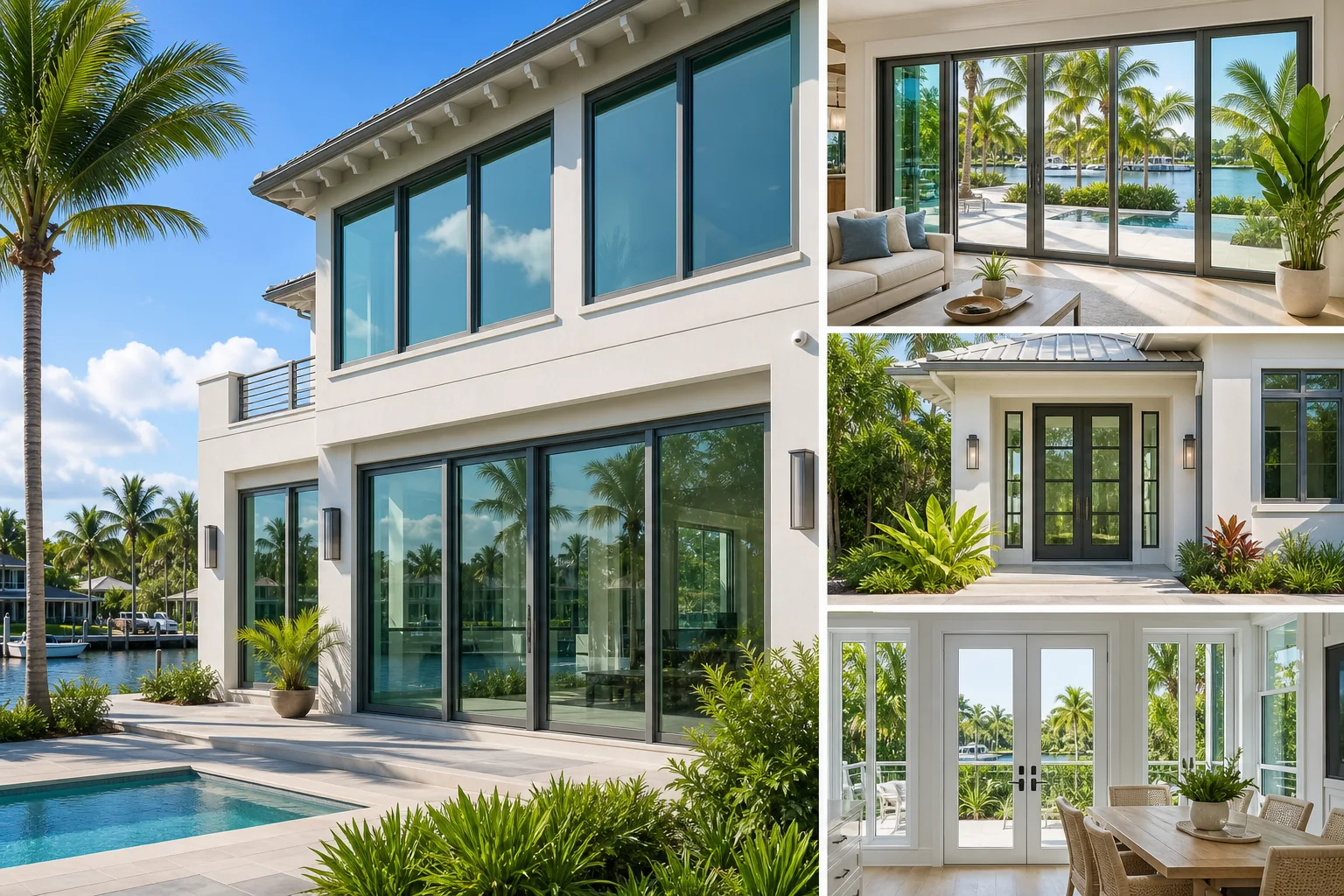
Impact Windows During Hurricane Season: What South Florida Homeowners Experience When a Real Storm Hits
Every June, the familiar ritual begins across South Florida. Homeowners in Boca Raton pull weather apps. Families in Fort Lauderdale watch the Atlantic. Retirees in Boynton Beach start tracking disturbances spinning off the African coast. Hurricane season is not an abstract threat here - it is a six-month reality that shapes how people live, invest, and protect their homes.
For homeowners who have made the upgrade to hurricane impact windows, that ritual carries a different emotional weight. There is still preparation. There is still respect for the storm. But there is something else too - a quiet confidence that comes from knowing your home's first line of defense has been engineered to take a direct hit.
But what actually happens when the storm arrives? What do homeowners in Palm Beach County and Broward County experience during and after a real hurricane when their homes are protected by properly installed impact windows? That is what this article explores - the reality, not the marketing.
The Difference Between Marketing Claims and Real Storm Performance
Impact window manufacturers publish impressive specifications. You will see references to Design Pressure ratings, large missile impact resistance, and cyclic pressure testing. Understanding what those ratings mean in plain language matters before we get into the lived experience.
A properly rated impact window for Palm Beach or Broward County must pass Florida's notoriously demanding product approval process. This means surviving a 9-pound 2x4 fired at 50 feet per second, then enduring 9,000 wind pressure cycles without failing. Windows that pass this testing are assigned a Notice of Approval (NOA) and can legally be installed in Florida's High-Velocity Hurricane Zone.
But certified performance in a lab and performance in a real Category 3 or Category 4 storm are different conversations. The lab controls every variable. A real hurricane does not.
To understand impact window ratings and what they actually mean, it helps to connect those technical numbers to what homeowners physically experience when wind speeds climb past 100 mph.
What Homeowners Actually Experience During a Major Storm
The Hours Before Landfall
Homeowners with impact windows describe the pre-storm preparation differently than those who still use shutters. The process is dramatically simplified.
There are no accordion shutters to crank across every opening. No plywood runs to a hardware store that ran out of stock three days ago. No ladders, no drills, no arguments about whether you got the panels in the right order.
A homeowner in Delray Beach who went through Hurricane Irma and later Hurricane Ian described it this way: the preparation shifted from physical labor to mental readiness. You charge your phones, fill your bathtubs, move patio furniture inside, and confirm your go-bag is packed. That is genuinely it.
This is not a trivial point. The physical and psychological toll of pre-storm shutter installation - especially for older homeowners, people with mobility limitations, or families without a second adult - is real. Removing that burden changes the entire experience of hurricane season.
When the Outer Bands Arrive
The first thing most homeowners notice is sound. Impact windows are significantly thicker than standard windows - typically two panes of glass with a PVB or SGP interlayer bonded together - and that mass changes the acoustic experience of a storm dramatically.
Where standard windows transmit the full freight-train roar of wind and rain, impact windows dampen it. Homeowners consistently describe standing inside their home during 70 mph outer bands and being surprised at how manageable the noise level feels. The storm is audible. It is not terrifying in the way standard windows make it.
This acoustic buffering is a byproduct of the same physics that makes impact glass resistant to penetration. The glass thickness and glazing composition that stops flying debris also happens to absorb a significant portion of sound energy before it enters your living space.
At Peak Wind Speeds
This is where the experience diverges most sharply from what homeowners with standard windows or even shutters report.
With shutters installed, you are effectively blind. Every window is covered. The interior of the home becomes a sealed, dark, anxious space where you can hear the storm but see nothing. Many homeowners describe the psychological stress of this as underrated - not knowing what is happening outside, not being able to monitor the storm's progression visually.
With impact windows, you can see the storm.
Homeowners in West Palm Beach who rode out storms with properly installed impact windows describe watching the eye wall approach, observing the water behavior in their yards, watching trees bend and recover. This visibility is not about voyeurism - it is about information. You can see if a fence panel starts moving toward the house. You can observe whether water is rising toward your entry. That situational awareness changes the experience fundamentally.
The windows themselves, during Category 2 and Category 3 conditions, typically exhibit several observable behaviors:
Flexing under pressure. Impact windows are designed to flex rather than shatter. Homeowners describe seeing their windows bow slightly inward during powerful gusts - sometimes visibly, sometimes only perceptibly as vibration. This is expected and engineered behavior, not a sign of failure.
Rain infiltration at weep holes. During sustained heavy rain with wind, some water intrusion at weep holes or frames is possible and normal. This is distinct from failure. Properly installed impact windows should not allow water to breach the glazing system, but some frame-level weeping during extreme sustained rain is within normal parameters.
Sound at the glass. The impact of rain and small debris at high velocity against impact glass is audible. Homeowners describe it as a sharp crackling sound, sometimes intense enough to be startling. The glass does not break - but it communicates the violence of what is hitting it.
After the Storm: What You Find
The post-storm inspection is where impact window performance becomes most tangible.
Homeowners across Palm Beach County - from Jupiter to Boca Raton - and throughout Broward County - from Pompano Beach to Miramar - consistently report the same post-storm experience: their windows are intact, their homes are dry inside, and the glass that faced the storm directly often has visible pitting, scratching, or surface marks from airborne debris.
That surface damage is worth discussing. Impact glass can and does sustain cosmetic damage from high-velocity debris. Small stones, broken roof tiles, fence fragments, palm fronds traveling at 90 mph will leave marks on the exterior glass surface. This is not failure. The glass held. The interlayer performed exactly as designed. The debris did not penetrate.
However, cosmetic damage does raise real questions about replacement and insurance claims. Understanding how impact window insurance claims work before a storm hits is far better than navigating that process in the aftermath.
Category 4 Reality: What the Data and Homeowners Tell Us
Hurricane Irma (2017) and Hurricane Ian (2022) provided the most comprehensive real-world testing of impact windows in South Florida in recent history.
Post-storm inspections by engineers and building officials documented failure patterns that are instructive. The overwhelming majority of impact window failures during these storms were not glass failures - they were installation failures. Windows that were improperly anchored, installed without proper permits, or set into deteriorated frames failed at the weakest point: the connection between the window system and the structure.
This is one of the most important things South Florida homeowners need to understand. The glass is not the failure point. The installation is.
Post-hurricane inspection reports have documented specific failure patterns that reveal exactly where shortcuts and non-permitted work create catastrophic vulnerability. Properly permitted, properly installed impact windows from reputable manufacturers performed remarkably well even in Category 4 conditions.
For homes in FEMA flood zones - a significant portion of Palm Beach and Broward County's housing stock - the storm performance picture is more complex. Impact windows in flood zones face compound threats: wind pressure, storm surge, and hydrostatic loading simultaneously. Knowing your flood zone designation and ensuring your window installation accounts for it is critical.
The Permit Reality and Why It Matters for Storm Performance
One conversation that South Florida homeowners consistently report wishing they had earlier is the permit conversation.
Impact window installation requires permits in Palm Beach County and Broward County. This is not bureaucratic overhead - it is the mechanism by which your installation gets inspected, verified, and documented. What contractors sometimes fail to tell homeowners about the permit process can have direct consequences for storm performance.
A window installed without a permit is a window that was never inspected. It may be correctly installed. It may not be. In a storm, you find out the hard way. And if it fails, your insurance claim may be complicated or denied based on the unpermitted work.
For older homes - particularly the 1960s through 1980s CBS construction that dominates much of inland Palm Beach and Broward County - impact window installation in older homes involves additional considerations around frame condition, buck integrity, and structural attachment that only a permitted installation with proper inspection will catch.
Coastal Homes: Salt, Wind, and Long-Term Storm Readiness
For homeowners in waterfront communities - Palm Beach Island, Hillsboro Beach, Lauderdale-by-the-Sea, Deerfield Beach - the storm performance conversation includes long-term material integrity.
Salt air does not just cause cosmetic problems. Ongoing salt air corrosion on impact window frames can degrade the structural connection between the frame and the wall over years, creating the exact vulnerability that turns a storm into a catastrophe.
Waterfront homes require specific impact window specifications that account for higher wind load requirements, salt spray resistance, and often more demanding NOA requirements. A window that is perfectly acceptable three miles inland may be undersized for a direct oceanfront installation.
Frame material choice matters significantly in this context. Comparing aluminum, vinyl, and fiberglass frame options for coastal installations involves trade-offs that go beyond price - the material that holds up best in a salt environment over a decade matters more than the material that looked best in the showroom.
The Insurance Dimension: What Storm Performance Means for Your Policy
Hurricane season performance connects directly to your insurance situation in ways that many homeowners do not fully appreciate until after a claim.
Florida's insurance market has become one of the most stressed in the country. The impact of impact windows on insurance costs in 2025 is significant - most carriers offer meaningful wind mitigation credits for fully protected homes. But those credits require documentation, and that documentation requires proper permits and inspections.
When a storm damages your property and you file a claim, the claims process may involve a detailed inspection of your impact window installation. Understanding how insurance audits work after storm damage can mean the difference between a smooth claim and a disputed one.
It is also worth understanding what can cause a claim to be denied. Common mistakes that lead to impact window insurance claims being denied often trace back to documentation gaps, unpermitted installation, or misunderstanding what the policy actually covers regarding storm-related window damage.
Brand and Product Selection: Does It Matter in a Real Storm?
For homeowners in Palm Beach and Broward Counties, the major impact window brands - PGT, CGI, ES Windows, Andersen - all produce products that meet Florida's demanding product approval standards. But there are meaningful differences in how they perform in specific conditions.
A detailed comparison of the major impact window brands reveals differences in glass thickness options, frame system design, and the specific NOA ratings available for different installation scenarios. Not all products are appropriate for all locations.
For homeowners considering storm shutters as an alternative or supplement, a real cost comparison between impact windows and storm shutters needs to include not just purchase price but the lived experience of deployment, maintenance, and what happens in a fast-moving storm that does not give you 48 hours of preparation time.
The Psychological Reality of Hurricane Season With Impact Windows
This dimension gets discussed less often but matters enormously to the people who live it.
South Florida homeowners who have gone through multiple hurricane seasons - before and after impact window installation - consistently describe a meaningful shift in their relationship to hurricane season. The anxiety does not disappear. Hurricanes are genuinely dangerous. But the quality of the anxiety changes.
Before impact windows: the anxiety is often about preparation logistics, about whether you will get shutters up in time, about whether your older windows will hold, about the darkness and blindness of riding out a storm inside a shuttered box.
After impact windows: the anxiety becomes more about the storm itself - appropriate, rational risk assessment - and less about whether your home is adequately protected. Homeowners describe sleeping better during storm watches. They describe feeling less compelled to evacuate for storms that would not qualify as mandatory evacuation events. They describe the post-storm walkthrough of their home as confirmation rather than discovery.
For rental property owners, HOA communities, and short-term rental operators, that peace of mind extends to the financial dimension. Short-term rental operators using impact-protected properties have documented faster post-storm recovery, fewer booking cancellations, and stronger guest confidence in the property's safety.
Timing Your Installation: Why Before Hurricane Season Is Not Always Realistic
Many South Florida homeowners decide to upgrade to impact windows only after a close call with a storm. The urgency is understandable, but the timing creates real challenges.
The logistics of impact window installation during rainy season - which overlaps significantly with hurricane season - involve permit timelines, inspector availability, and the practical reality of open window openings during installation. These are solvable challenges, but they require working with an experienced contractor who knows how to navigate them.
The ideal timing is late fall through early spring - outside of active hurricane season. But if you are making the decision now, mid-season, the conversation about how to manage installation timing safely is worth having. Contact our team to discuss what is realistic for your situation and timeline.
What to Look for in Post-Storm Window Inspection
After a hurricane passes, here is what homeowners should assess before assuming everything is fine:
Exterior surface condition. Check for pitting, scratching, or impact marks on the exterior glass. Surface damage does not mean failure, but it should be documented for insurance purposes.
Frame and seal integrity. Inspect the perimeter of each window frame for cracking, separation from the wall, or visible gaps. Any change in the frame-to-wall connection warrants professional assessment.
Weep hole function. Ensure weep holes have not been blocked by debris. Blocked weep holes cause water to accumulate in the frame system.
Hardware condition. Check locks, handles, and hinges for damage. Hardware is often more vulnerable to debris impact than the glass system itself.
Interior wall condition near windows. Water staining on drywall near window frames - especially at sill level - can indicate frame seal compromise that may not be visible on exterior inspection.
If you observe any concerning signs, professional inspection before the next storm is essential. Our service area covers all of Palm Beach and Broward County - reach out for a post-storm assessment.
Making the Decision Before the Season Gets Active
If you are reading this during an active hurricane season and your home does not yet have impact windows, the window to act - in every sense - is now. Permit processing, manufacturing lead times, and installation scheduling mean that decisions made today translate to protection that may be weeks away.
The Window Guys of Florida team has over 25 years of experience installing impact windows and impact doors across Palm Beach and Broward Counties. We are authorized dealers for PGT, CGI, ES Windows, Andersen, and other leading manufacturers. Every installation is permitted, inspected, and backed by comprehensive warranty coverage.
Request your free consultation today and let us walk you through what your specific home needs - based on your location, construction type, and the realities of what storms in your area actually deliver.
Frequently Asked Questions
Will my impact windows crack or break in a Category 4 hurricane?
Properly installed, properly rated impact windows are designed to remain intact even when struck by large debris at high wind speeds. The glass may crack in place - that is by design - but the interlayer holds the fragments together and maintains the barrier. The windows will not shatter inward or create an opening. The most common failure mode in Category 4 events is installation failure, not glass failure. Understanding the failure patterns documented by post-storm inspectors helps clarify what actually goes wrong and why proper installation matters far more than glass specifications alone.
How much noise reduction can I expect during a storm?
Impact windows provide significant acoustic dampening compared to standard windows. The laminated glass construction - the same feature that provides impact resistance - absorbs a substantial portion of sound energy. Homeowners consistently report that 70-80 mph wind conditions feel and sound dramatically more manageable inside an impact-protected home than the same storm experienced through standard windows. At Category 3 and above, the storm is still audible and intense, but the audio experience is notably less overwhelming than with standard glazing.
Should I do anything to prepare my impact windows before a hurricane?
The preparation requirements are minimal compared to shutter systems. Ensure weep holes are clear of debris or blockage. Verify that all locks and hardware are engaged - locked windows perform better under pressure than unlocked ones. Inspect the perimeter of each frame for any pre-existing seal damage and address it before the storm. Beyond that, standard hurricane preparation applies: secure loose outdoor items, confirm your supply kit, and monitor official evacuation advisories. The windows themselves require no deployment, no physical labor, and no special treatment.
What happens to my insurance claim if my impact windows are damaged in a hurricane?
This depends heavily on your policy, your documentation, and how the installation was permitted. Properly documented impact windows with current wind mitigation certification typically qualify for significant premium discounts - and when damage occurs, claims on properly permitted installations tend to process more smoothly. Understanding how insurance audits work after storm events is important context. Surface cosmetic damage to impact glass may or may not be covered depending on your specific policy language. Contact us for guidance on documentation best practices before filing any storm-related claim.
Do impact windows perform differently in coastal versus inland locations?
Yes, in meaningful ways. Oceanfront and Intracoastal properties face higher sustained wind loads, salt spray exposure that affects long-term frame integrity, and in some cases different NOA requirements than inland installations. Waterfront home impact window specifications account for these additional demands. If you are within a mile of the coast, your installation requirements are likely different from a home in western Boca Raton or western Pembroke Pines - and working with a contractor who understands that distinction matters.
Can I stay home during a hurricane if I have impact windows?
Impact windows significantly improve your home's structural envelope during a storm, but the decision to shelter in place during a hurricane must be based on official guidance, your home's overall construction, your flood zone designation, and the storm's projected intensity and track. Impact windows are one layer of protection - they do not address storm surge risk, which is the leading cause of hurricane fatalities. Always follow mandatory evacuation orders when issued. For storms below mandatory evacuation thresholds, an impact-protected home in a non-flood-prone location provides a meaningfully safer shelter-in-place option than an unprotected home. Consult FEMA flood zone resources and how they interact with your impact window decision for a complete picture.
Frequently Asked Questions
Will my impact windows crack or break in a Category 4 hurricane?
Properly installed, properly rated impact windows are designed to remain intact even when struck by large debris at high wind speeds. The glass may crack in place - that is by design - but the interlayer holds the fragments together and maintains the barrier. The most common failure mode in Category 4 events is installation failure, not glass failure. Understanding the failure patterns documented by post-storm inspectors helps clarify what actually goes wrong and why proper installation matters far more than glass specifications alone.
How much noise reduction can I expect during a hurricane?
Impact windows provide significant acoustic dampening compared to standard windows. The laminated glass construction absorbs a substantial portion of sound energy. Homeowners consistently report that 70-80 mph wind conditions feel dramatically more manageable inside an impact-protected home. At Category 3 and above, the storm is still audible and intense, but the experience is notably less overwhelming than with standard glazing.
Should I do anything to prepare my impact windows before a hurricane?
Preparation requirements are minimal. Ensure weep holes are clear of debris. Verify that all locks and hardware are engaged - locked windows perform better under pressure. Inspect the perimeter of each frame for any pre-existing seal damage and address it before the storm. Beyond that, standard hurricane preparation applies. The windows require no deployment, no physical labor, and no special treatment.
What happens to my insurance claim if my impact windows are damaged in a hurricane?
This depends on your policy, documentation, and how the installation was permitted. Understanding how insurance audits work after storm events is important context. Surface cosmetic damage to impact glass may or may not be covered depending on your specific policy language. Contact us for guidance on documentation best practices before filing any storm-related claim.
Do impact windows perform differently in coastal versus inland locations?
Yes, in meaningful ways. Oceanfront and Intracoastal properties face higher sustained wind loads, salt spray exposure that affects long-term frame integrity, and in some cases different NOA requirements than inland installations. Waterfront home impact window specifications account for these additional demands. Working with a contractor who understands these distinctions matters significantly for storm performance.
Can I stay home during a hurricane if I have impact windows?
Impact windows significantly improve your home's structural envelope during a storm, but the shelter-in-place decision must be based on official guidance, your home's overall construction, your flood zone designation, and the storm's projected intensity. Always follow mandatory evacuation orders when issued. FEMA flood zone resources and how they interact with your impact window decision provide important context for making this decision safely.