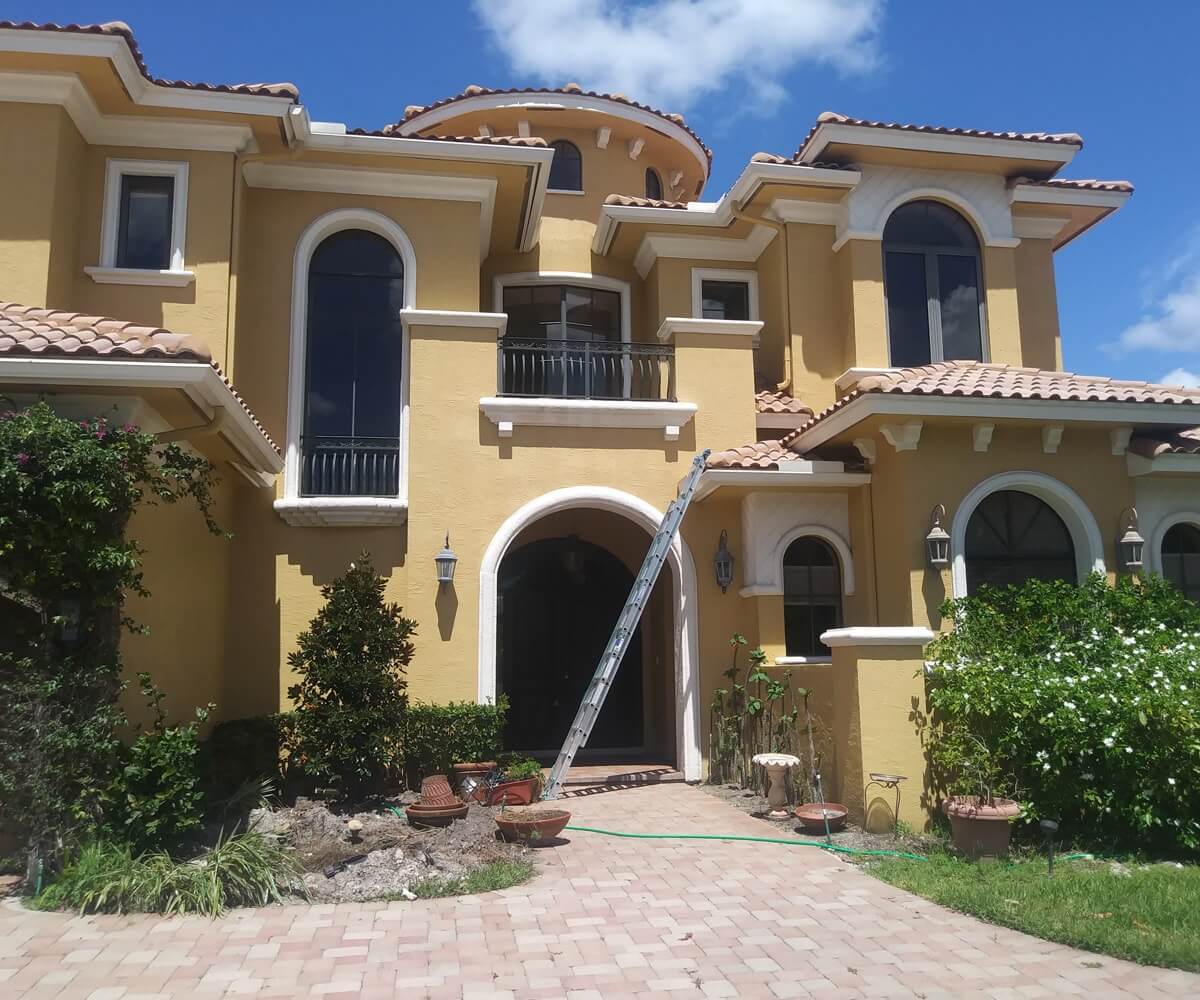
Impact Window Noise Reduction: How South Florida Homeowners Near I-95 and Airport Corridors Gain Quiet
If you live within a mile of I-95 in Pompano Beach, a few blocks from Fort Lauderdale-Hollywood International Airport, or under the flight path into Palm Beach International Airport, you already know that South Florida's noise problem is relentless. Semi-trucks, overnight freight flights, Tri-Rail commuter trains, and the never-ending hum of one of the nation's busiest highway corridors can push interior noise levels to 65-75 decibels, roughly the equivalent of a vacuum cleaner running continuously in your living room.
Here's the good news: the same laminated, hurricane-rated glass that protects your home during a Category 4 storm is also one of the most effective sound barriers available to residential homeowners. Impact windows are not marketed primarily as soundproofing products, but when you understand how they work and how to choose the right configuration, they can reduce exterior noise by 40-50% and transform a house that feels like it's sitting on a runway apron into a genuinely quiet retreat.
This guide is written specifically for homeowners in Palm Beach County and Broward County who are dealing with noise from the I-95 corridor, airport flight paths, Tri-Rail lines, and US-1. We'll cover the science of sound transmission, what STC ratings actually mean for your daily life, and how to work with your installer to specify the glass assembly that delivers real acoustic performance, not just hurricane protection.
Why South Florida Has a Unique Noise Problem
South Florida is dense, flat, and built along a narrow coastal strip that concentrates transportation infrastructure in ways that other states don't experience. I-95 runs essentially uninterrupted from Miami-Dade through Broward and into Palm Beach County, and the communities on both sides of the highway, places like Deerfield Beach, Pompano Beach, Oakland Park, Wilton Manors, Lake Worth Beach, and Riviera Beach, were largely built before modern noise ordinances required acoustic mitigation.
Fort Lauderdale-Hollywood International Airport (FLL) handles more than 35 million passengers annually, with flight paths that extend over Dania Beach, Hollywood, Hallandale Beach, and portions of Miramar. Palm Beach International Airport (PBI) routes traffic over Lake Worth, West Palm Beach, Greenacres, and portions of Lantana. Both airports have seen significant growth in overnight cargo operations, meaning noise that was once limited to daytime hours now occurs around the clock.
Tri-Rail, the commuter rail service connecting Miami to West Palm Beach, runs parallel to I-95 through much of Broward and Palm Beach County. Train whistles, crossing signals, and the rumble of diesel locomotives are a daily reality for neighborhoods in Delray Beach, Boynton Beach, Lake Worth, Deerfield Beach, and Pompano Beach.
For a deeper look at how these specific geographic and infrastructure patterns affect window specifications by neighborhood, see our guide on South Florida Microclimate Winds: Window Specs Guide.
How Sound Travels Through Windows: The Physics That Matter
Understanding noise reduction starts with understanding how sound moves through building materials. Sound travels as pressure waves, and when those waves hit a solid surface like a window pane, they cause the glass to vibrate. That vibration is then transmitted to the air on the other side of the glass, recreating the sound inside your home.
The three primary mechanisms that control how much sound gets through a window are:
Mass
Heavier materials vibrate less easily than lighter ones. A thicker, denser pane of glass transmits less sound energy than a thin, lightweight one. This is why single-pane aluminum windows that were standard in South Florida construction through the 1980s and 1990s are so acoustically poor. They are simply too light to resist the pressure waves generated by highway traffic and jet aircraft.
Decoupling
When two panes of glass are separated by an air gap or gas fill, sound has to cross two separate barriers rather than one. Each transition from glass to air (or gas) and back to glass absorbs some acoustic energy. This is the principle behind insulated glass units (IGUs), and it is why double-pane windows perform better acoustically than single-pane units even when the total glass thickness is similar.
Damping
Damping refers to a material's ability to absorb and dissipate vibrational energy rather than transmitting it. This is where the laminated interlayer in impact glass becomes critically important for sound performance. The polyvinyl butyral (PVB) or acoustic PVB interlayer sandwiched between the glass lites in an impact window acts as a viscoelastic damping layer. It converts sound vibration into a tiny amount of heat, effectively absorbing acoustic energy that would otherwise pass through as audible noise.
For more on how the specific construction of impact glass laminates works, including the difference between standard PVB and acoustic-grade interlayers, see our Impact Window Glass Thickness Guide for South Florida.
What Is an STC Rating and What Does It Mean for Homeowners?
STC stands for Sound Transmission Class. It is the standard laboratory rating system used in the United States to measure how well a building assembly reduces airborne sound. The higher the STC number, the better the assembly blocks sound transmission.
Here's a practical reference for what different STC values feel like in real life:
- STC 25-30: Normal speech is clearly audible. This is the typical performance of a single-pane aluminum window.
- STC 30-35: Loud speech is audible but not clearly intelligible. Standard insulated glass units fall in this range.
- STC 35-40: Loud speech sounds like a murmur. This is where basic impact glass units start to perform.
- STC 40-45: Most speech is inaudible. Highway noise and aircraft are noticeably reduced. High-quality impact windows with acoustic interlayers reach this range.
- STC 45-50+: Only very loud sounds are faintly audible. Specialized acoustic impact configurations with laminated IGUs can reach these levels.
For homeowners near I-95 or under an airport flight path, where exterior noise peaks routinely exceed 70 dB, moving from a single-pane window at STC 27 to a quality impact window at STC 40-44 can reduce perceived loudness by roughly 50%. That is not a trivial improvement. It is the difference between sleeping through the night and lying awake listening to a freight truck downshift on the exit ramp.
For specific guidance on how noise reduction windows intersect with the requirements near PBI, FLL, and the Tri-Rail corridor, our companion article Quiet Impact Windows Near PBI, FLL, and Tri-Rail covers the neighborhood-specific details you need.
Standard Impact Windows vs. Acoustic Impact Windows: Know the Difference
Not all impact windows are created equal from an acoustic standpoint, and this is one of the most important distinctions homeowners near noise corridors need to understand before they purchase.
Standard Hurricane Impact Windows
A typical hurricane impact window is built with laminated glass, either as a single laminated lite or as an insulated unit with one laminated lite. The interlayer is standard PVB, which provides excellent impact resistance and UV protection. STC ratings for standard impact units typically fall between 28 and 35, depending on glass thickness and framing.
This is a meaningful improvement over single-pane aluminum windows, and for homeowners in quieter inland neighborhoods in Delray Beach or Coral Springs whose primary concern is storm protection, it is often sufficient.
Acoustic Impact Windows
Acoustic impact windows incorporate one or more of the following upgrades to standard hurricane-rated construction:
Acoustic PVB interlayer: Specially formulated PVB compounds designed to maximize damping performance. Brands like Solutia's Saflex Acoustic and Kuraray's SentryGlas acoustic-grade products can improve STC by 3-5 points compared to standard PVB at the same glass thickness.
Asymmetric glass lites: Standard insulated glass uses two panes of equal thickness. Acoustic theory shows that using lites of different thicknesses (for example, 3mm on one side and 5mm on the other) prevents both panes from resonating at the same frequency, which dramatically reduces a phenomenon called coincidence dip, a narrow frequency range where sound passes through the assembly with almost no attenuation.
Wider air or gas gaps in IGUs: Increasing the gap between lites from the standard 1/2 inch to 3/4 inch or 7/8 inch improves low-frequency performance, which is particularly relevant for aircraft and highway traffic noise.
Laminated IGUs (both lites laminated): The highest-performing configuration for residential noise reduction. Both the interior and exterior lites are laminated with PVB, and the unit is assembled as an insulated glass unit. This construction can achieve STC ratings of 45-50+ while still meeting HVHZ (High Velocity Hurricane Zone) impact requirements.
For context on how HVHZ requirements affect your glass and frame specifications in Broward County and coastal Palm Beach County, see our article on HVHZ vs Non-HVHZ in Broward: Impact Windows.
I-95 Corridor: Which Neighborhoods Are Most Affected?
The noise burden from I-95 is not uniformly distributed. Homes on the east side of I-95 generally receive more reflected noise off the highway sound walls, while homes on the west side receive more direct noise transmission. Elevated sections of I-95 through downtown Fort Lauderdale and near the I-595 interchange are particularly loud because the elevated roadway effectively eliminates the ground-level barrier between traffic noise and nearby residences.
Palm Beach County I-95 Noise Zones
- Riviera Beach and West Palm Beach: Homes within 1,500 feet of I-95 between exits 70 and 76 experience significant truck traffic noise, particularly from I-95's connection to Port of Palm Beach freight routes.
- Lake Worth Beach and Lantana: The interchange near Lake Worth Road creates noise spikes from acceleration and deceleration, affecting neighborhoods extending several blocks in both directions.
- Delray Beach and Boynton Beach: Residential subdivisions built in the 1970s and 1980s directly adjacent to I-95 between exits 51 and 60 predate modern sound wall requirements.
Broward County I-95 Noise Zones
- Deerfield Beach and Pompano Beach: The northern Broward stretch of I-95 carries some of the highest truck volumes in the corridor, and neighborhoods like Cresthaven and Pompano Highlands are chronically affected.
- Oakland Park and Wilton Manors: The elevated I-95 structure through central Broward generates noise that extends well beyond the immediate roadside buffer.
- Dania Beach and Hollywood: Traffic noise from the I-95/I-595 interchange affects a broad area, compounded by proximity to FLL approach paths.
Airport Corridors: FLL and PBI Flight Path Communities
Aircraft noise is acoustically different from highway noise. Jet engines generate significant low-frequency energy in the 63-250 Hz range, which is harder to attenuate with standard glass assemblies. Approach and departure noise is also intermittent and impulsive, meaning it registers as highly disruptive even when the average noise level appears manageable on paper.
FLL Affected Communities
The primary approach path for Runway 28L/28R at FLL takes aircraft over Dania Beach, western Hollywood, and portions of Hallandale Beach at altitudes between 1,500 and 3,000 feet. Departure paths for Runway 10L/10R affect eastern portions of Dania Beach and the barrier island communities of John U. Lloyd State Park area. Cargo operations using Runway 9/27 generate late-night and early-morning noise affecting portions of Pembroke Park and West Park.
PBI Affected Communities
Approach paths for PBI's Runway 28L/28R cross over Lake Worth Beach, portions of Greenacres, and western Lake Worth at relatively low altitudes due to the short final approach over Lake Worth Lagoon. The Runway 10L/10R departure corridor affects portions of Palm Beach Shores, North Palm Beach, and the Intracoastal communities of Riviera Beach.
For homeowners in coastal Intracoastal communities near PBI dealing with both airport noise and salt-air corrosion concerns, our guide on Choosing Impact Windows for Intracoastal and Lake Homes addresses the combined specification challenges.
Frame Materials and Their Role in Acoustic Performance
The glass assembly does most of the acoustic work, but the frame system matters more than most homeowners realize. Sound can bypass even the best glass unit if the frame creates a flanking path, a route for acoustic energy to travel around rather than through the glass.
Vinyl Frames
Vinyl (uPVC) frames provide excellent acoustic performance because the multi-chamber hollow profile sections act as additional damping cavities. Vinyl has natural viscoelastic properties that help absorb vibrational energy. For noise-sensitive applications near I-95 or airport corridors, vinyl frames from manufacturers like PGT and ES Windows offer strong acoustic performance alongside the corrosion resistance needed in South Florida's salt-air environment.
Aluminum Frames
Aluminum frames are the standard in South Florida impact window construction due to their strength, slim profile, and resistance to the region's humidity. Thermally broken aluminum frames, which incorporate a polyamide thermal break between the interior and exterior frame sections, also provide some additional acoustic benefit by interrupting the direct metal-to-metal vibration path.
Installation Quality and Acoustic Sealing
No frame material will deliver its rated STC performance if the installation leaves gaps at the frame-to-rough-opening interface. Proper acoustic installation requires:
- High-density backer rod in any gaps between the window frame and rough opening
- Acoustically rated sealant (not standard exterior caulk) at all perimeter interfaces
- Continuous sill pan flashing that eliminates air paths at the bottom of the opening
- Proper setting blocks that isolate the glass from direct contact with the frame at support points
This is why installation quality is at least as important as product selection for noise reduction. A premium acoustic impact unit installed poorly will underperform a standard impact unit installed correctly. See our article on Common Impact Window Install Mistakes in South FL for a detailed breakdown of the most common errors that compromise acoustic performance.
How Impact Windows Compare to Other Soundproofing Options
Homeowners in noise-affected neighborhoods sometimes consider alternatives to full window replacement. Here is a frank comparison:
Interior acoustic window inserts: Acrylic or glass panels mounted inside the existing window frame can achieve significant STC improvement, but they require the existing window to remain in place, they can interfere with ventilation, and they do not address the energy efficiency or hurricane protection deficiencies of the original window.
Exterior storm windows: Adding a secondary exterior glazing layer can improve STC, but this approach does not meet Florida Building Code requirements for wind-borne debris protection in HVHZ zones, and the frame-within-frame configuration creates maintenance challenges.
Hurricane shutters: Accordion or panel shutters provide no meaningful acoustic benefit when deployed, and they are typically stored open, providing zero noise reduction during normal conditions. For a comprehensive comparison of impact windows versus shutters across multiple performance dimensions, see our article Impact Windows vs Shutters: 10-Year Cost in South FL.
Full impact window replacement with acoustic glass: This is the most comprehensive solution. It addresses hurricane protection, energy efficiency, security, and noise reduction simultaneously. The upfront cost is higher than partial solutions, but the long-term value, including potential insurance discounts and reduced cooling costs, makes it the most cost-effective choice for most homeowners.
For information on how new impact windows affect your homeowner's insurance premiums in both counties, see PBC vs Broward: Impact Window Insurance Discounts.
Combining Noise Reduction with Energy Efficiency
The laminated glass assemblies that provide the best acoustic performance are often the same configurations that deliver superior thermal performance. Acoustic PVB interlayers typically include low-e coatings that reduce solar heat gain and improve the U-factor of the overall unit. For South Florida homeowners dealing with both excessive noise and high cooling bills, specifying acoustic laminated IGUs addresses both problems simultaneously.
For a detailed explanation of SHGC and U-factor ratings and how they affect cooling costs in the South Florida climate, see our comprehensive guide Impact Window Energy Efficiency: SHGC and U-Factor South FL Guide.
Brands and Products Available Through Window Guys of Florida
As authorized dealers for PGT, CGI, ES Windows, Andersen, and other top manufacturers, Window Guys of Florida can specify acoustic-performance impact windows from multiple product lines. Each of our manufacturer partners offers configurations specifically engineered for enhanced STC performance:
- PGT WinGuard Acoustic: Available in multiple glass thickness combinations with acoustic PVB, rated up to STC 45 in certain configurations.
- CGI Guardian Series: CGI's laminated IGU options with asymmetric glass lites deliver strong mid and high-frequency noise attenuation suitable for highway corridor applications.
- ES Windows: Their aluminum impact series includes acoustic glass packages appropriate for the HVHZ requirements of coastal Broward and Palm Beach County.
Our team conducts site-specific noise assessments to match the right product configuration to the specific noise signature of your location. Highway noise, aircraft noise, and train noise have different frequency profiles, and the optimal glass assembly for each application is not identical. Contact us for a free consultation to discuss your specific situation.
What to Expect from the Installation Process
Acoustic impact window installation follows the same permitting and code compliance process as standard hurricane window replacement in South Florida. You will need building permits from your local municipality or county, which our team handles as part of the project.
For a detailed look at permit timelines and what to expect from the inspection process in each county, see our articles on Impact Window Permit Timeline: Palm Beach vs Broward and Broward vs Palm Beach Impact Window Inspections.
If you live in a community with HOA or condo association oversight, acoustic impact windows generally meet the same aesthetic approval criteria as standard impact units, but the approval process should be initiated before installation is scheduled. Our HOA and Condo Impact Window Approval Playbook walks through the typical documentation requirements.
The Real-World Results: What Homeowners Report
Across our service areas in Palm Beach and Broward counties, homeowners who have upgraded to acoustic impact windows near noise corridors consistently report:
- Significant reduction in sleep disruption from overnight freight traffic and early-morning aircraft operations
- Ability to have conversations at normal voice levels with the windows closed, even during peak highway traffic periods
- Noticeably lower HVAC runtime because the windows eliminate the motivation to open windows for ventilation during cooler months, keeping conditioned air inside
- Reduced dust and particulate infiltration from highway traffic, a meaningful quality-of-life improvement for households with allergy or asthma concerns
These results are consistent with the documented STC improvements of the installed products, but real-world performance can vary based on installation quality, wall and door constructions in the rest of the home, and the specific frequency profile of the local noise source. The weakest acoustic link in any room is the component with the lowest STC rating, so addressing windows while leaving a hollow-core interior door or an unsealed electrical outlet on an exterior wall will limit the overall improvement.
Getting Started: Your Next Steps
If you are a homeowner in Palm Beach County or Broward County dealing with noise from I-95, an airport flight path, Tri-Rail, or major arterial roadways, the first step is a site assessment that considers both your noise environment and your existing window and door construction.
Window Guys of Florida brings more than 25 years of experience installing hurricane impact windows throughout South Florida, with specific expertise in acoustic performance applications for noise-affected communities. We are licensed, insured, and authorized dealers for the leading impact window manufacturers, giving us access to the full range of acoustic glass configurations available in the market.
Visit our hurricane impact windows page to explore the product options available, or contact us today to schedule a free, no-obligation consultation at your home. Our team will assess your specific noise environment, review your existing window construction, and provide a transparent recommendation for the glass assembly and installation approach that will deliver real, measurable acoustic improvement, not just marketing claims.
Your home should be your quiet place. With the right impact windows properly installed, it can be.
Frequently Asked Questions
How much noise reduction can I realistically expect from acoustic impact windows near I-95 in Broward County?
For homes within 500-1,500 feet of I-95 with existing single-pane aluminum windows, upgrading to a quality acoustic impact window configuration with STC 40-44 ratings typically reduces perceived exterior noise loudness by 40-50%. Highway traffic that currently sounds like a constant roar will be reduced to a faint background hum at worst, and will be inaudible during normal interior activities at best. The exact improvement depends on installation quality, the acoustic performance of doors and other envelope components, and the specific frequency profile of the highway noise at your location. Contact us for a site-specific assessment.
Do I need to specify acoustic impact windows specifically, or will any hurricane impact window provide noise reduction?
Any hurricane impact window will provide some noise reduction compared to single-pane aluminum windows, simply because the laminated glass is heavier and the sealed frame construction eliminates air infiltration paths. However, standard impact windows typically achieve STC 28-35, while acoustic impact configurations with acoustic PVB interlayers, asymmetric glass lites, and laminated IGU assemblies can reach STC 44-50+. For homeowners near FLL, PBI, or within a quarter mile of I-95, specifying the acoustic configuration is worth the additional investment. See our article on Quiet Impact Windows Near PBI, FLL, and Tri-Rail for more detail.
Will acoustic impact windows still meet HVHZ requirements in coastal Broward County?
Yes. Acoustic impact window configurations are engineered to meet the same Miami-Dade Notice of Acceptance (NOA) and Florida Product Approval requirements as standard impact windows. The acoustic upgrades, primarily the interlayer formulation and glass lite thickness combinations, do not compromise the impact resistance or wind load performance required by the Florida Building Code. Our team is familiar with HVHZ specifications throughout Broward County's coastal communities and will specify products that meet all applicable code requirements. For more on HVHZ requirements, see our guide on HVHZ vs Non-HVHZ in Broward: Impact Windows.
Will impact windows also help with interior condensation issues I'm seeing with my current windows?
Yes. The sealed insulated glass unit construction of acoustic impact windows virtually eliminates the condensation between panes that commonly occurs with older, failed single-pane or IGU windows in South Florida. The improved thermal performance of the new units also reduces surface condensation on the interior glass face during air-conditioned periods. If you are currently dealing with foggy or condensation-prone windows, see our detailed guide on Impact Window Condensation in South Florida: Fixes and Warranty before deciding whether to repair or replace your current windows.
Does adding acoustic impact windows affect my homeowner's insurance premium?
Impact windows, including acoustic configurations, qualify for wind mitigation credits under Florida's insurance rating system. In both Palm Beach County and Broward County, a wind mitigation report documenting your new impact windows can reduce the wind premium component of your homeowner's insurance by a substantial amount. Citizens Insurance policyholders in particular often see meaningful premium reductions. The acoustic specification does not reduce the insurance credit because the credit is based on wind-borne debris resistance certification, which acoustic impact units meet in the same way as standard impact units. For a county-by-county breakdown of insurance discount opportunities, see PBC vs Broward: Impact Window Insurance Discounts.
How do I know if my home's other components will limit the acoustic benefit of new impact windows?
This is a critical question that our site assessment process addresses directly. Sound transmission through a building envelope is limited by its weakest component. If your windows achieve STC 44 but your front door is a standard hollow-core unit with daylight gaps around the frame, the door will dominate the acoustic performance of the entry side of your home. Our assessment evaluates windows, doors, and visible envelope penetrations to help you prioritize investments for maximum acoustic benefit. Upgrading to hurricane impact doors alongside impact windows provides comprehensive noise reduction for the full building envelope.
Frequently Asked Questions
How much noise reduction can I realistically expect from acoustic impact windows near I-95 in Broward County?
For homes within 500-1,500 feet of I-95 with existing single-pane aluminum windows, upgrading to a quality acoustic impact window configuration with STC 40-44 ratings typically reduces perceived exterior noise loudness by 40-50%. Highway traffic that currently sounds like a constant roar will be reduced to a faint background hum at worst, and will be inaudible during normal interior activities at best. The exact improvement depends on installation quality, the acoustic performance of doors and other envelope components, and the specific frequency profile of the highway noise at your location. Contact us for a site-specific assessment.
Do I need to specify acoustic impact windows specifically, or will any hurricane impact window provide noise reduction?
Any hurricane impact window will provide some noise reduction compared to single-pane aluminum windows, simply because the laminated glass is heavier and the sealed frame construction eliminates air infiltration paths. However, standard impact windows typically achieve STC 28-35, while acoustic impact configurations with acoustic PVB interlayers, asymmetric glass lites, and laminated IGU assemblies can reach STC 44-50+. For homeowners near FLL, PBI, or within a quarter mile of I-95, specifying the acoustic configuration is worth the additional investment. See our article on Quiet Impact Windows Near PBI, FLL, and Tri-Rail for more detail.
Will acoustic impact windows still meet HVHZ requirements in coastal Broward County?
Yes. Acoustic impact window configurations are engineered to meet the same Miami-Dade Notice of Acceptance (NOA) and Florida Product Approval requirements as standard impact windows. The acoustic upgrades - primarily the interlayer formulation and glass lite thickness combinations - do not compromise the impact resistance or wind load performance required by the Florida Building Code. Our team is familiar with HVHZ specifications throughout Broward County's coastal communities and will specify products that meet all applicable code requirements. For more on HVHZ requirements, see our guide on HVHZ vs Non-HVHZ in Broward: Impact Windows.
Will impact windows also help with the interior condensation issues I'm seeing with my current windows?
Yes. The sealed insulated glass unit construction of acoustic impact windows virtually eliminates the condensation between panes that commonly occurs with older, failed single-pane or IGU windows in South Florida. The improved thermal performance of the new units also reduces surface condensation on the interior glass face during air-conditioned periods. If you are currently dealing with foggy or condensation-prone windows, see our detailed guide on Impact Window Condensation in South Florida: Fixes and Warranty before deciding whether to repair or replace your current windows.
Does adding acoustic impact windows affect my homeowner's insurance premium?
Impact windows, including acoustic configurations, qualify for wind mitigation credits under Florida's insurance rating system. In both Palm Beach County and Broward County, a wind mitigation report documenting your new impact windows can reduce the wind premium component of your homeowner's insurance by a substantial amount. Citizens Insurance policyholders in particular often see meaningful premium reductions. The acoustic specification does not reduce the insurance credit because the credit is based on wind-borne debris resistance certification, which acoustic impact units meet in the same way as standard impact units. For a county-by-county breakdown of insurance discount opportunities, see PBC vs Broward: Impact Window Insurance Discounts.
How do I know if my home's other components will limit the acoustic benefit of new impact windows?
This is a critical question that our site assessment process addresses directly. Sound transmission through a building envelope is limited by its weakest component. If your windows achieve STC 44 but your front door is a standard hollow-core unit with daylight gaps around the frame, the door will dominate the acoustic performance of the entry side of your home. Our assessment evaluates windows, doors, and visible envelope penetrations to help you prioritize investments for maximum acoustic benefit. Upgrading to hurricane impact doors alongside impact windows provides comprehensive noise reduction for the full building envelope. Contact us to schedule your free consultation.