5 Signs You Need New Impact Windows: When to Replace Your Hurricane Protection
Impact windows and doors are one of the best investments you can make for your home, providing essential hurricane protection, energy efficiency, and security benefits. However, like all building components, impact windows have a finite lifespan and may require replacement when they show signs of deterioration or outdated performance. This comprehensive guide identifies the key indicators that it's time to replace your impact windows.
Understanding Impact Window Lifespans
Modern impact windows typically last 20-30 years with proper maintenance, but several factors affect their longevity:
Lifespan Factors
- Coastal Exposure: Salt air and UV exposure reduce lifespan by 20-30%
- Installation Quality: Professional installation extends window life significantly
- Maintenance Frequency: Regular maintenance can extend lifespan by 5-10 years
- Storm Exposure: Multiple hurricane impacts accelerate wear
Technology Evolution
- Energy Efficiency: Newer windows offer 40-60% better energy performance
- Hurricane Protection: Enhanced testing standards provide superior protection
- Materials Advancement: Improved frames and glazing systems
- Aesthetic Options: Modern styles and color options unavailable in older windows
Sign #1: Visible Seal Deterioration and Air Leaks
The most common sign that impact windows need replacement is deterioration of sealing systems:
Weatherstrip Degradation
- Cracked Seals: Visible cracks in rubber or vinyl weatherstripping
- Missing Sections: Gaps where weatherstripping has fallen out or deteriorated
- Hardened Material: Weatherstripping that has lost flexibility and elasticity
- Compressed Seals: Permanently compressed weatherstrip that no longer rebounds
Air Infiltration Symptoms
- Drafts: Noticeable air movement around window frames
- Whistling Sounds: Air movement creating audible noise during windy conditions
- Temperature Variations: Hot or cold spots near windows indicating air leaks
- Increased Energy Bills: Rising cooling costs due to conditioned air loss
Testing for Air Leaks
- Candle Test: Flame movement indicates air infiltration around frames
- Paper Test: Paper should be firmly held when window is closed
- Professional Testing: Blower door tests quantify air leakage rates
- Thermal Imaging: Professional thermal imaging reveals air leak locations
Sign #2: Glazing Problems and Glass Deterioration
Impact window glazing issues indicate potential failure of protective capabilities:
Laminated Glass Issues
- Delamination: Separation between glass layers creating cloudy or bubbled appearance
- Edge Seal Failure: Moisture infiltration around glass edges
- Interlayer Deterioration: Yellowing or haziness of polymer interlayer
- Impact Damage: Cracks or chips in glass from debris impacts
Insulated Glass Unit Failure
- Condensation Between Panes: Moisture inside double or triple-pane units
- Fogging: Persistent fogging that cannot be cleaned from inside
- Gas Fill Loss: Loss of argon or krypton gas fills reducing insulation
- Spacer Bar Corrosion: Deterioration of metal spacer bars between glass panes
Performance Impact
| Glazing Issue | Energy Impact | Protection Impact |
|---|---|---|
| Delamination | 20-30% efficiency loss | Reduced impact resistance |
| Seal Failure | 40-50% efficiency loss | Compromised water resistance |
| Gas Fill Loss | 15-25% efficiency loss | Minimal protection impact |
Sign #3: Frame Deterioration and Structural Issues
Window frame problems can compromise both protection and energy efficiency:
Aluminum Frame Issues
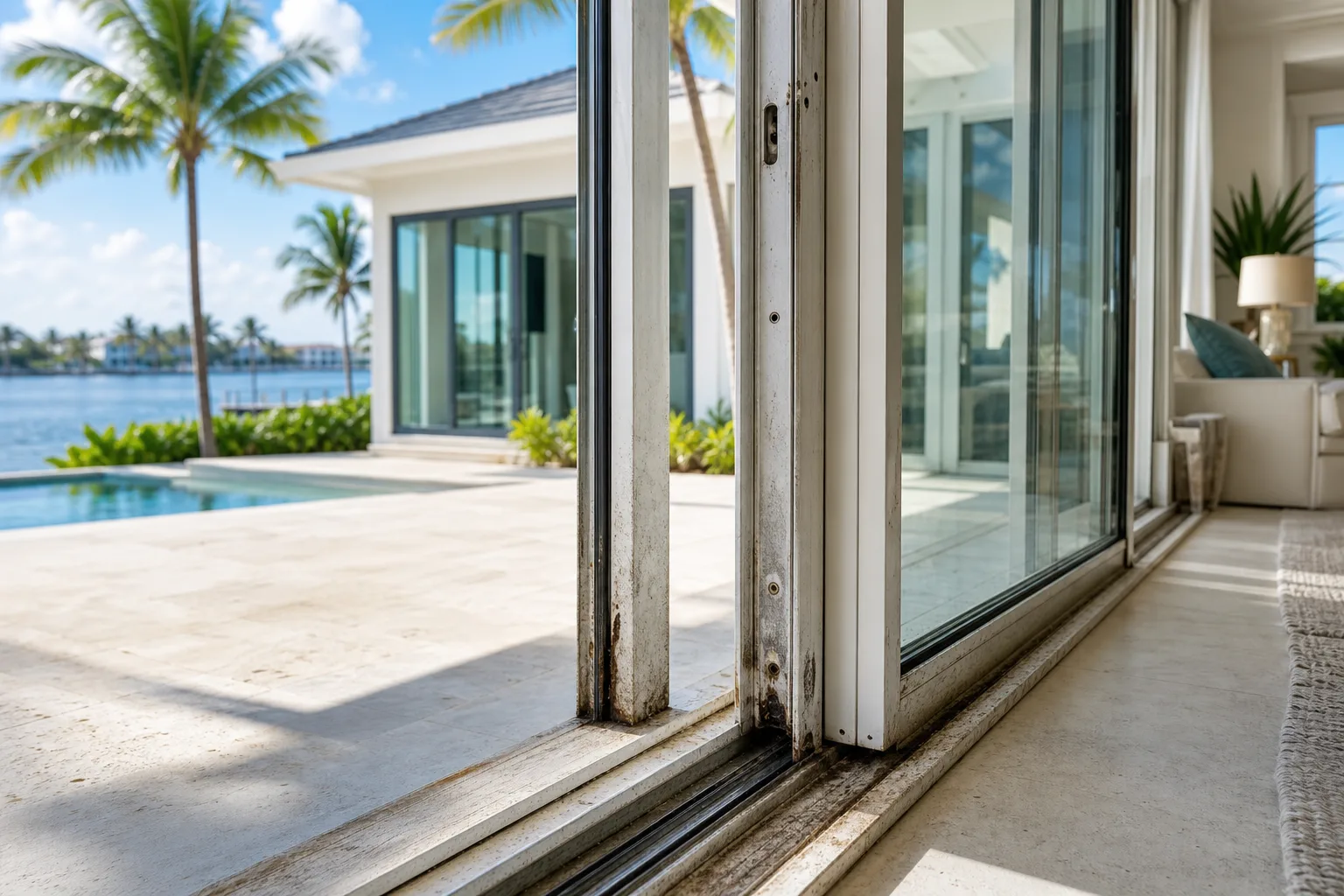
- Corrosion: Pitting, oxidation, or white powdery buildup on aluminum frames
- Thermal Bridging: Older frames without thermal breaks causing condensation
- Fastener Corrosion: Corroded screws or fasteners compromising structural integrity
- Warping: Frame distortion preventing proper closure and sealing
Vinyl Frame Problems
- UV Degradation: Chalking, fading, or brittleness from sun exposure
- Thermal Expansion: Excessive expansion and contraction causing gaps
- Cracking: Stress cracks in frame corners or high-stress areas
- Discoloration: Permanent staining or color changes affecting appearance
Structural Integrity Assessment
- Attachment Points: Loose or corroded attachment hardware
- Load Transfer: Frame separation from building structure
- Water Damage: Rot or deterioration in adjacent building materials
- Professional Inspection: Structural engineer assessment for safety concerns
Sign #4: Outdated Energy Performance and Rising Costs
Older impact windows may lack modern energy efficiency features, resulting in higher utility costs:
Energy Efficiency Indicators
- High Utility Bills: Cooling costs 30-50% higher than comparable homes
- HVAC Runtime: Air conditioning running continuously during moderate weather
- Temperature Inconsistency: Significant temperature variations throughout home
- Comfort Issues: Hot spots near windows during sunny periods
Technology Comparison
| Feature | Older Windows (Pre-2010) | Modern Windows (2020+) |
|---|---|---|
| U-Factor | 0.50-0.65 | 0.25-0.35 |
| SHGC | 0.40-0.60 | 0.20-0.30 |
| Air Infiltration | 0.30+ cfm/ft² | 0.10-0.20 cfm/ft² |
Financial Impact Analysis
- Monthly Savings Potential: $75-150 monthly cooling cost reduction
- Annual Savings: $900-1,800 annual energy savings with replacement
- Payback Period: 8-12 year payback through energy savings alone
- Property Value: 10-15% property value increase with modern windows
Sign #5: Inadequate Hurricane Protection Standards
Building codes and protection standards have evolved significantly, making older windows potentially inadequate:
Code Evolution
- Wind Load Requirements: Increased design wind speeds in many areas
- Impact Testing: Enhanced large and small missile impact standards
- Water Infiltration: Stricter water penetration resistance requirements
- Installation Standards: Improved structural attachment requirements
Insurance and Protection Gaps
- Insurance Requirements: Some policies now require enhanced protection levels
- Discount Eligibility: Older windows may not qualify for maximum insurance discounts
- Hurricane Deductibles: Higher deductibles for homes with outdated protection
- Claims History: Older windows may have documented performance issues
Protection Performance Assessment
- Impact Ratings: Verify current impact resistance certifications
- Pressure Testing: Confirm windows meet current pressure requirements
- Water Testing: Ensure adequate water infiltration resistance
- Professional Evaluation: Hurricane protection assessment by certified professionals
Additional Replacement Considerations
Beyond the five primary signs, other factors may indicate replacement timing:
Operational Issues
- Difficult Operation: Windows difficult to open, close, or lock
- Hardware Failure: Broken or corroded handles, locks, or hinges
- Alignment Problems: Windows no longer fit properly in frames
- Security Concerns: Compromised locking mechanisms or frame integrity
Aesthetic and Functional Updates
- Style Changes: Desire for updated appearance or architectural compatibility
- Size Modifications: Room additions or renovations requiring different window sizes
- Smart Home Integration: Desire for automated or smart window features
- Noise Reduction: Need for enhanced sound control capabilities
Replacement Planning and Timing
Strategic planning ensures optimal replacement outcomes:
Timing Considerations
- Hurricane Season: Complete replacements before June 1st start of hurricane season
- Weather Windows: Schedule during dry periods for protection during installation
- Home Projects: Coordinate with other renovation projects for efficiency
- Financial Planning: Budget for replacement and maximize available financing options
Professional Assessment
- Comprehensive Evaluation: Professional assessment of all replacement indicators
- Energy Audit: Detailed analysis of energy performance improvements
- Cost-Benefit Analysis: Financial analysis of replacement versus repair
- Product Selection: Professional guidance on optimal replacement products
Replacement Benefits and Return on Investment
New impact windows provide substantial improvements over older systems:
Immediate Benefits
- Enhanced Protection: Superior hurricane and security protection
- Energy Savings: Immediate reduction in cooling costs
- Comfort Improvement: Better temperature control and noise reduction
- Aesthetic Enhancement: Modern appearance and improved curb appeal
Long-Term Value
- Property Value: Immediate increase in home value and marketability
- Insurance Benefits: Reduced premiums and improved coverage options
- Maintenance Reduction: Lower maintenance requirements over window lifespan
- Technology Advantages: Access to latest window technology and features
Our replacement specialists provide comprehensive impact window solutions throughout South Florida, helping homeowners assess replacement needs and select optimal new windows.
Notice signs that your impact windows need replacement? Contact our replacement experts at (561) 598-6295 for a comprehensive assessment of your current windows and professional guidance on replacement options that provide superior protection, energy efficiency, and value for your home.