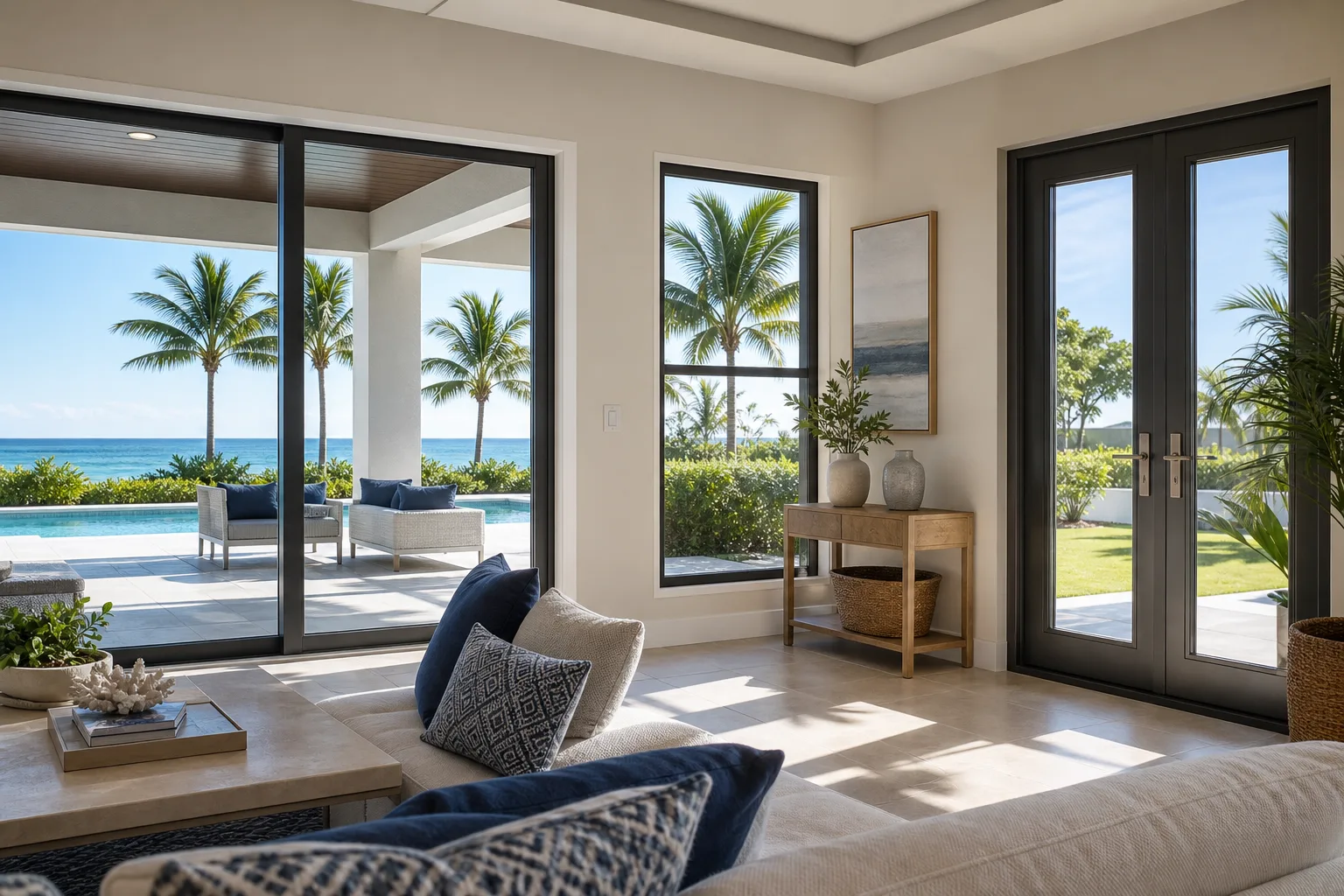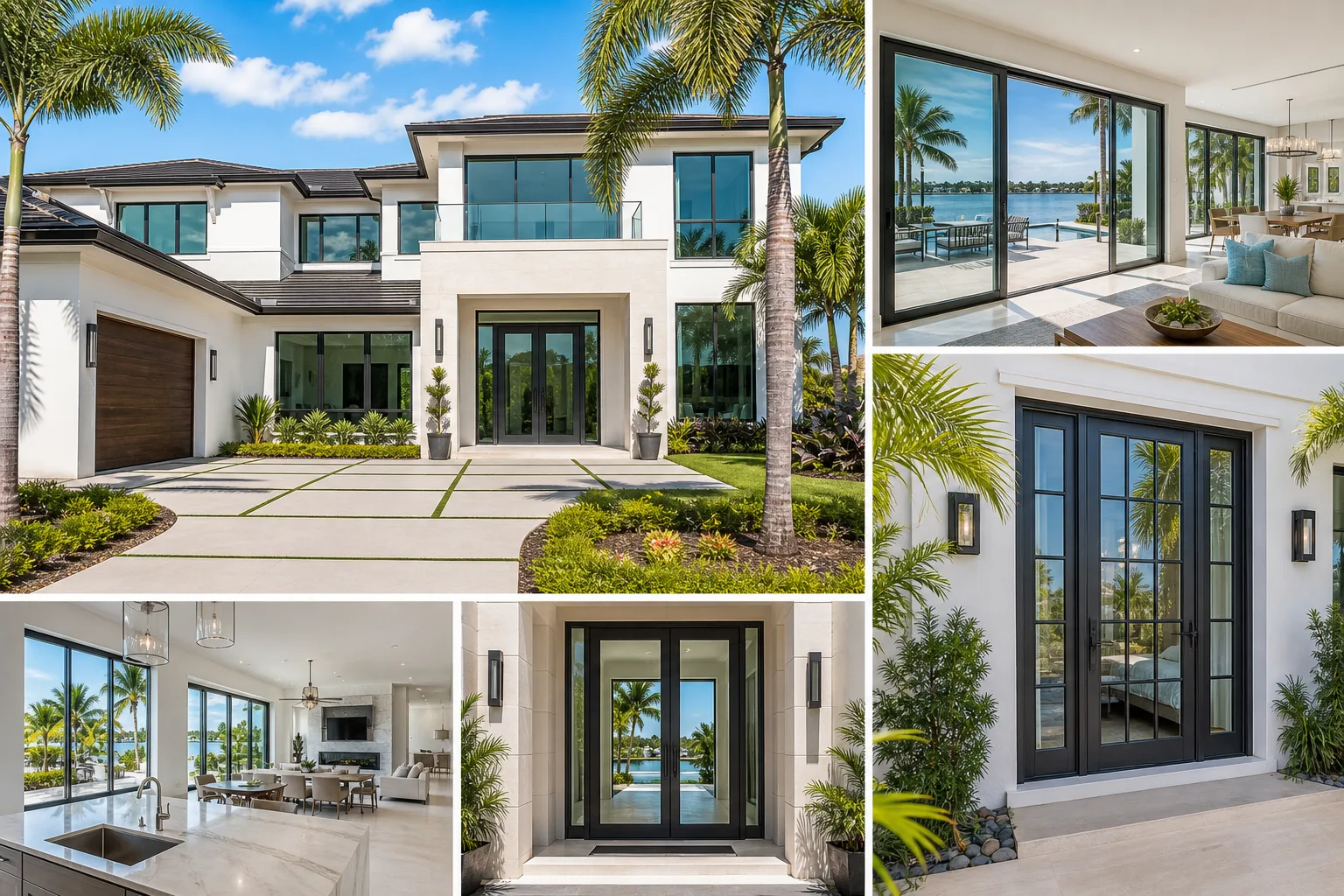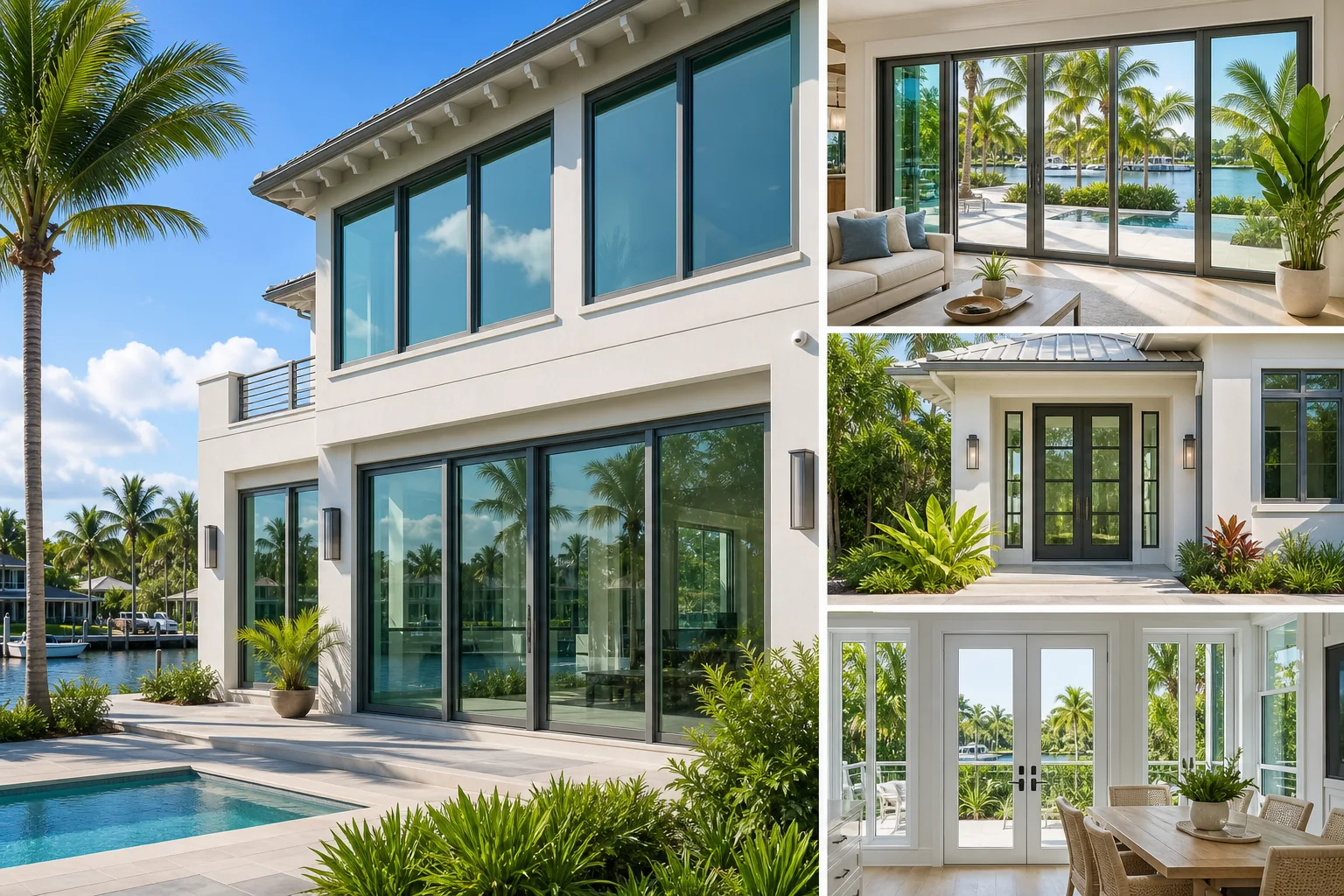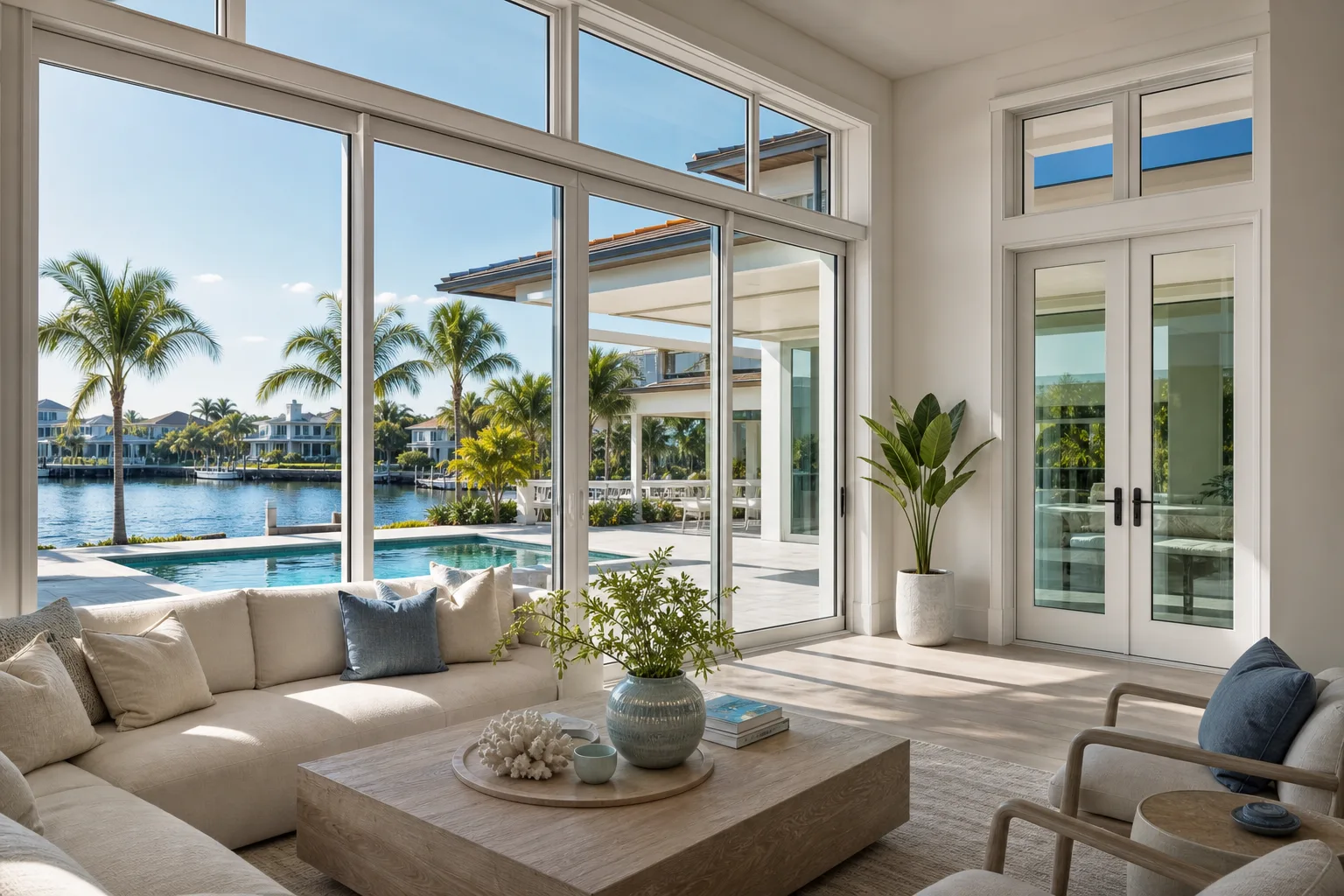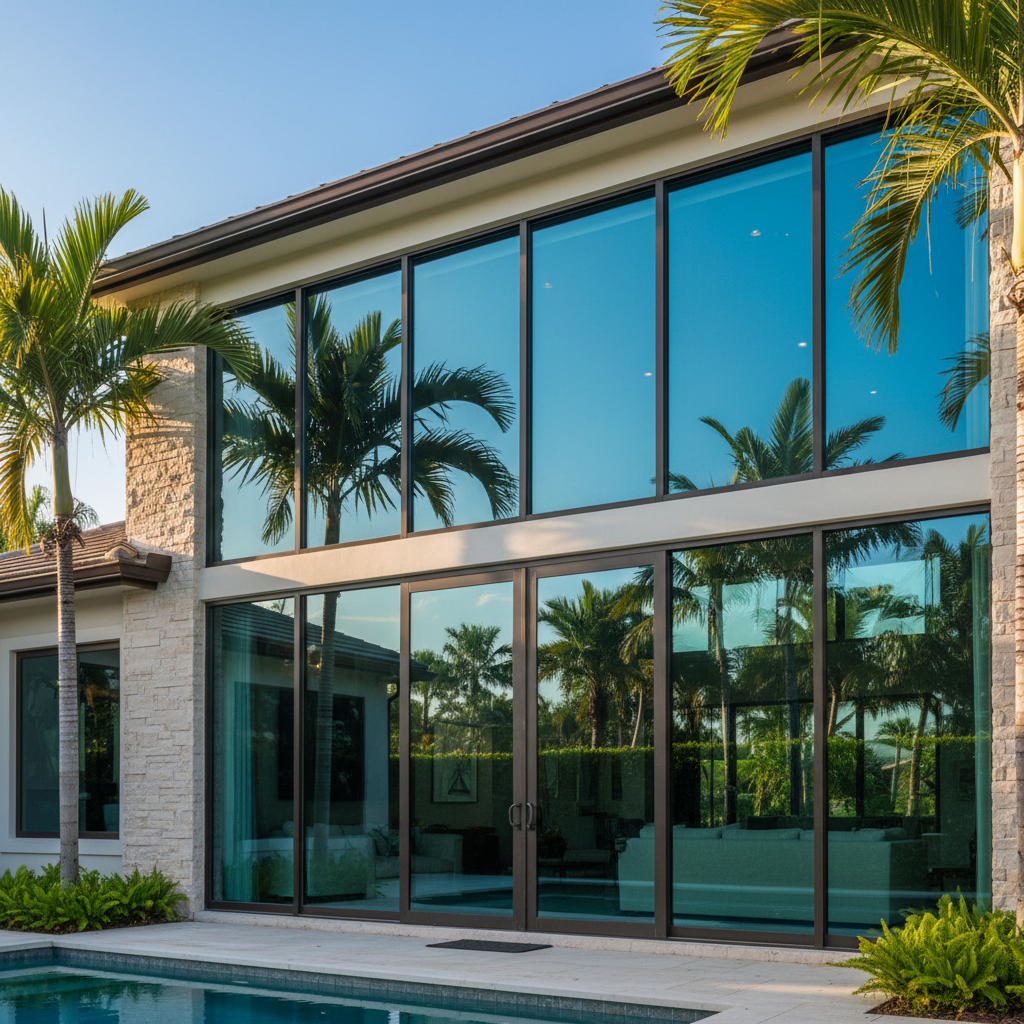
West exposure in South Florida is a different problem
If your home has west-facing windows, you already know the daily pattern: the rooms feel fine in the morning, then the afternoon sun turns the space into a heat box with glare you cannot ignore. In Palm Beach County and Broward County, that solar load is paired with hurricane risk, heavy rain events, and coastal corrosion concerns.
Choosing west facing windows impact rated is not just about passing a hurricane test. It is about finding the right combination of glass performance (solar control), structural performance (design pressure and impact), and installation details (water management and long-term durability).
Window Guys of Florida helps homeowners across cities like Boca Raton, Delray Beach, Boynton Beach, West Palm Beach, Lake Worth Beach, Wellington, Jupiter, Palm Beach Gardens, Fort Lauderdale, Hollywood, Pembroke Pines, Davie, and Coral Springs choose impact windows that make west exposure more comfortable without sacrificing storm protection. We are licensed and insured, with 25+ years of experience, and we install leading brands like PGT, CGI, ES Windows, Andersen, and more.
For a quick overview of our product options, start here: Hurricane Impact Windows.
Why west-facing windows run hotter than the rest
West-facing glass typically sees the most uncomfortable sun because it aligns with:
- Late-day solar intensity, when outdoor temperatures are near peak
- Lower sun angles, which increase glare and allow sunlight deeper into rooms
- Long exposure time across the afternoon, especially in open-concept layouts
In South Florida, this can translate into higher cooling demand. The U.S. Department of Energy notes that windows can account for roughly 25%-30% of residential heating and cooling energy use due to heat gain and heat loss through glazing. In our climate, the most relevant part is heat gain.
If you are searching for impact windows heat reduction south florida, the key performance specs are not just impact certifications. You need to understand Low-E coatings, tint, and the solar heat gain coefficient impact windows are built to achieve.
Start with the two numbers that matter most for west exposure: SHGC and VT
When homeowners ask what makes a window “good for heat,” they usually mean:
- Reduce how much solar heat enters the home
- Reduce glare without making the home feel like a cave
Those goals are mostly governed by two specs that appear on NFRC labels for many residential products.
Solar Heat Gain Coefficient (SHGC)
SHGC measures how much solar heat passes through the window (0 to 1). Lower is better for west-facing exposures in South Florida.
- A lower SHGC can reduce afternoon heat gain and make rooms more comfortable.
- It can also reduce HVAC runtime, especially in rooms with multiple west-facing openings.
Rule of thumb for South Florida west exposure: Many homeowners do well targeting a low SHGC option, commonly in the ballpark of 0.20 to 0.30, depending on daylight preferences and the specific product line.
Visible Transmittance (VT)
VT measures how much visible light comes through (0 to 1). Higher VT means more daylight, but potentially more glare.
For west-facing windows, you are usually trying to balance:
- Lower SHGC to reduce heat
- Moderate VT to keep rooms bright enough without harsh glare
A window can have a very low SHGC but also a very low VT, which may make interiors feel dim. The best fit depends on room use (living room vs home office), shading from landscaping, and whether the home has overhangs or lanais.
Low-E vs tinted impact glass: what is actually better for west-facing rooms?
Homeowners often compare tint vs low-e impact glass as if it is one or the other. In practice, many high-performing options combine multiple strategies, including tinted substrates plus spectrally selective Low-E coatings.
What Low-E does well
Low-E (low emissivity) coatings are designed to reduce heat transfer and, in many configurations, reduce solar heat gain while maintaining better clarity than darker tints.
For low-e impact windows palm beach county homeowners, Low-E is often the best starting point because:
- It can cut solar heat gain without overly darkening the view
- It can improve comfort near the glass (less radiant heat)
- It supports better overall energy performance while keeping curb appeal consistent
What tint does well (and where it can disappoint)
Tint can reduce glare and can reduce solar gain, but heavy tint may:
- Lower VT significantly, making rooms feel darker
- Change the exterior appearance, which can trigger HOA or condo concerns
- Still allow heat buildup if the overall glazing system is not optimized
If you live in an HOA-managed community in places like Palm Beach Gardens, Jupiter, Weston, Parkland, or Cooper City, appearance constraints may matter as much as performance. These guides help prevent delays:
- HOA and Condo Board Approval for Impact Windows
- HOA and Condo Approval Checklist for Impact Windows
- HOA and Condo Impact Window Specs Without Change Orders
The practical recommendation for west exposure in Palm Beach and Broward
For most homes, especially those with large west-facing openings, look for:
- A spectrally selective Low-E package designed for hot climates
- A low SHGC appropriate for strong afternoon sun
- A VT that fits your glare tolerance and daylight needs
We can help compare options across PGT, CGI, ES Windows, Andersen, and others based on your elevations and sun exposure. Start here for a no-pressure evaluation: Contact us for a free consultation.
Don’t forget the storm side: impact rating is necessary, but not sufficient
West exposure does not automatically mean higher wind pressure, but it often coincides with large glass areas (sliders, picture windows, corner windows) that can become critical openings in hurricanes.
When evaluating broward impact windows west exposure or Palm Beach County options, confirm these storm-performance fundamentals.
Large-missile impact and cycling
In hurricane-prone South Florida, impact windows are typically evaluated under large-missile impact criteria (among other requirements). Understanding the test helps you interpret what “impact-rated” really means for your home.
Helpful explainer: Impact Windows vs Debris: Large-Missile Test Explained.
Design Pressure (DP) ratings and why west-facing walls may need attention
DP ratings relate to how much positive and negative pressure a window assembly can handle. The required DP varies based on:
- Opening size
- Building height
- Exposure category and site conditions
- The specific wall location and geometry
Many homeowners mistakenly assume any “impact window” is automatically strong enough everywhere. That is not always true, especially with oversized openings or second-story elevations.
Deep dive: DP Ratings Explained for Impact Windows in South FL.
Wind-borne debris zones (WBD) in Palm Beach vs Broward
WBD requirements can differ depending on where the property sits relative to the coast and code-defined regions. If you are comparing quotes, make sure the product approvals match your jurisdiction and exposure.
Guide: Palm Beach vs Broward WBD Zones: Impact Window Guide.
Interior pressure and why a “weak link” matters
If a major opening fails during a storm, interior pressure can rise and increase uplift forces on the roof and other components. While many factors determine overall performance, protecting openings is a big part of the building envelope strategy.
Related article: Do Impact Windows Reduce Hurricane Interior Pressure?.
Heat, glare, and comfort upgrades that pair well with impact windows
Impact-rated glass is only one layer of the comfort solution for west-facing rooms.
Consider interior shading that does not fight the glass
If you pick a strong Low-E package with an appropriately low SHGC, you may be able to use lighter window treatments instead of heavy blackout solutions.
In rooms like a west-facing home office in Boca Raton or a living room overlooking a canal in Fort Lauderdale, combining:
- Low SHGC glass
- Light-filtering shades
- Strategic furniture placement
can significantly reduce glare without making the room feel closed-in.
Look at frame material and color for heat and longevity
Darker exterior frame colors can get hotter in direct sun. This does not automatically disqualify them, but it makes quality materials, finishes, and installation details more important.
If you are near the Intracoastal, the beach, or salt-influenced waterways (Palm Beach, Singer Island, Juno Beach, Hillsboro Beach, Lauderdale-by-the-Sea), corrosion resistance matters too.
Read more:
- Coastal Corrosion: Impact Windows for PBC & Broward
- Salt Air and Sun: Coastal Impact Window Maintenance
- Intracoastal vs Inland: Impact Windows and Seals
Water management is part of performance, especially in west-facing storms
West-facing walls often take driving rain when storms approach from certain angles, and South Florida thunderstorms can dump water fast.
Two common homeowner misconceptions:
- “Impact-rated” automatically means “leak-proof.”
- If a window is new, water intrusion cannot happen.
In reality, preventing leaks depends on correct flashing, perimeter sealing, drainage paths, and installation quality.
Recommended reading:
Retrofit vs full-frame replacement: why it matters for west-facing openings
Choosing the right installation method can affect:
- How much glass area you keep (daylight and view)
- How well the perimeter is sealed and flashed
- Long-term water performance
- How square and true the opening becomes (which affects operation)
If your west-facing windows are original to the home, especially in older construction common in Lake Worth Beach, Lantana, Pompano Beach, or mid-century neighborhoods in Fort Lauderdale, it is worth discussing whether a retrofit or full-frame approach is best.
Guides:
- Retrofit vs Full-Frame Impact Windows in PBC & Broward
- Retrofit vs Full Frame Impact Windows in South Florida
- Impact Window Retrofits for Mid-Century Homes
Permits, approvals, and product paperwork: avoid surprises
Palm Beach County and Broward municipalities can be strict about documentation, and condos often add another layer.
If you want your project to move smoothly in places like West Palm Beach, Boynton Beach, Deerfield Beach, or Hallandale Beach, you need alignment across:
- Product approvals (NOA, Florida Product Approval)
- Engineering and pressure calculations where required
- Permit plan sets and inspections
Start here:
- Reading PBC & Broward Impact Window Permit Plans
- Permit-to-Pass Checklist for Impact Window Inspections
Energy efficiency is real, but set expectations for payback
Energy-efficient upgrades can help, especially when you are addressing the hottest exposure on the home.
A few practical notes for energy efficient impact windows south florida homeowners:
- If your existing west-facing windows are single-pane or older aluminum frames with poor seals, the comfort difference can be dramatic.
- If you already have newer double-pane glass, your gains may be more about glare control, UV reduction, and better sealing.
- HVAC sizing, duct leakage, and attic insulation can strongly influence total savings.
The best approach is to treat west-facing impact windows as a combined investment in:
- Hurricane protection
- Daily comfort
- Noise reduction (often a bonus in areas near I-95, the Turnpike, or flight paths)
If noise is also a concern, these may help:
- Airport Noise and Hurricane Impact Windows in FL
- Do Impact Windows Reduce Noise Near I-95 & Airports?
Don’t fall for “quick fixes” for west-facing heat and storm prep
It is tempting to look for cheap film, DIY panels, or last-minute tricks when hurricane season ramps up and the house feels hot. Some solutions create warranty issues, reduce clarity, or do not perform when it matters.
Related read: 7 South Florida Hurricane ‘Quick Fixes’ That Fail.
If you are planning for the coming season, these guides are useful:
- 2026 Hurricane Season Forecast for South Florida Homes
- Storm Damage Prevention Tips for Florida Homes
West-facing doors and large openings: do not ignore the weakest link
Many west-facing elevations include sliders, patio doors, or French doors to pools and lanais. These openings often drive both heat gain and storm vulnerability.
If your hottest rooms connect to a patio in Coral Springs or a backyard in Wellington, upgrading the door system can be just as important as upgrading windows.
Explore options: Hurricane Impact Doors.
Maintenance: keep solar and storm performance working over time
Even the best glass package will not help if windows do not close properly, seals degrade, or hardware corrodes.
A good routine is especially important in coastal microclimates and on west walls that bake in afternoon sun.
Checklist: End-of-Season Impact Window Tune-Up Checklist.
Additional coastal wear guidance:
How we recommend choosing west-facing impact windows (a simple process)
Step 1: Map your west-facing openings and room priorities
Identify which rooms suffer most from heat and glare and which openings are largest. A west-facing family room in Delray Beach may need different glass than a small bathroom window.
Step 2: Choose the right solar-control glass package
Focus on:
- solar heat gain coefficient impact windows that match your tolerance for heat
- Visible light levels that keep rooms usable
- A finish and exterior look acceptable to your HOA (if applicable)
Step 3: Confirm structural requirements for your address
This includes WBD zone requirements, DP ratings, opening sizes, and height factors.
Step 4: Pick the right installation method and water management plan
Retrofit vs full-frame, plus perimeter detailing, matters for long-term performance.
Step 5: Validate documentation and schedule permits
We help homeowners navigate municipal permitting and inspections across Palm Beach County and Broward.
For an overview of where we work, visit: Service Areas.
Why Window Guys of Florida
West-facing impact window selection is one of those projects where details decide whether you love the result or regret it.
- Licensed and insured
- 25+ years of South Florida experience
- Authorized dealers for PGT, CGI, ES Windows, Andersen, and other top brands
Learn more about our team: About Us.
Get a free west-exposure assessment and quote
If your west-facing rooms in Palm Beach County or Broward are too hot, too bright, or you are worried about storm performance, we can help you compare impact-rated options that balance comfort and code compliance.
Request a free consultation and quote here: Contact Window Guys of Florida.
FAQ: West-facing impact windows in Palm Beach and Broward
Do impact windows reduce heat on west-facing rooms?
Yes, if you choose the right glass package. The biggest factor is selecting a low solar heat gain coefficient impact windows configuration (often via spectrally selective Low-E). Impact rating alone does not guarantee heat reduction. If you want help selecting the best option for your home, schedule a visit here: Contact us.
What SHGC should I look for on west-facing impact windows in South Florida?
Lower SHGC generally performs better for west exposure because it blocks more solar heat. Many homeowners in Palm Beach County and Broward target a low SHGC range suitable for hot climates, balanced with enough visible light to avoid overly dark interiors. Specific targets depend on window size, shading, and room use.
Is tint or Low-E better for glare and heat?
For many homeowners, Low-E is the better first choice because it can reduce heat while keeping clearer views than heavy tint. Tint can help with glare, but it may darken the home and can create HOA appearance issues. Often the best results come from a glass package that uses Low-E and, when needed, a modest tint.
Are west-facing windows more likely to leak during storms?
They can be, especially when wind-driven rain hits that elevation. Leak resistance depends heavily on installation details like flashing, sealant strategy, and drainage, not just the glass. This article explains a common failure mode in South Florida downpours: Stop Rain Bomb Leaks Around Impact Windows in FL.
Do I need different impact windows in Broward vs Palm Beach County?
Sometimes, yes. Requirements can vary by wind-borne debris zone location and local permitting expectations. This guide explains key differences: Palm Beach vs Broward WBD Zones: Impact Window Guide.
Can I upgrade my west-facing patio door too?
Absolutely, and it is often one of the biggest comfort and security upgrades because doors can have large glass areas. See options here: Hurricane Impact Doors, or request a project quote: Contact us.
Frequently Asked Questions
Do impact windows reduce heat on west-facing rooms?
Yes, when you choose a solar-control glass package, not just an impact rating. Look for a low Solar Heat Gain Coefficient (SHGC) and a spectrally selective Low-E coating designed for hot climates. For help selecting the best option for your home in Palm Beach County or Broward, request a free consultation here: Contact Window Guys of Florida.
What SHGC is best for west-facing impact windows in South Florida?
Lower SHGC generally performs better for west exposure because it blocks more solar heat. Many South Florida homeowners target a low SHGC range and then balance it with enough Visible Transmittance (VT) to maintain natural light. The ideal number depends on window size, shading, and room function, so it is best to compare product options in person. You can also review wind and code considerations here: Palm Beach vs Broward WBD Zones: Impact Window Guide.
Is tint or Low-E better for glare and comfort?
Low-E is usually the better starting point because it can reduce heat gain while preserving clearer views compared to heavy tint. Tint can help with glare, but it may darken interiors and can create HOA appearance issues. In many cases, the best result is a Low-E package with an appropriate SHGC for west exposure, sometimes combined with a modest tint.
Are west-facing impact windows more likely to leak in wind-driven rain?
They can be, depending on storm direction and how the opening is sealed and flashed. Water performance depends heavily on installation details, not just the window label. For common causes of water intrusion during intense downpours, read: Stop Rain Bomb Leaks Around Impact Windows in FL.
Do I need different impact window specs in Broward vs Palm Beach County?
Sometimes. Requirements can vary based on wind-borne debris zones, exposure, opening size, and local permitting documentation. This guide breaks down the main differences: Palm Beach vs Broward WBD Zones: Impact Window Guide.
Can you replace west-facing patio doors with impact-rated doors?
Yes. Large glazed doors often drive both heat gain and storm vulnerability on west elevations. Upgrading to impact-rated doors can improve comfort, security, and hurricane protection. Learn more here: Hurricane Impact Doors, or request a quote: Contact us.