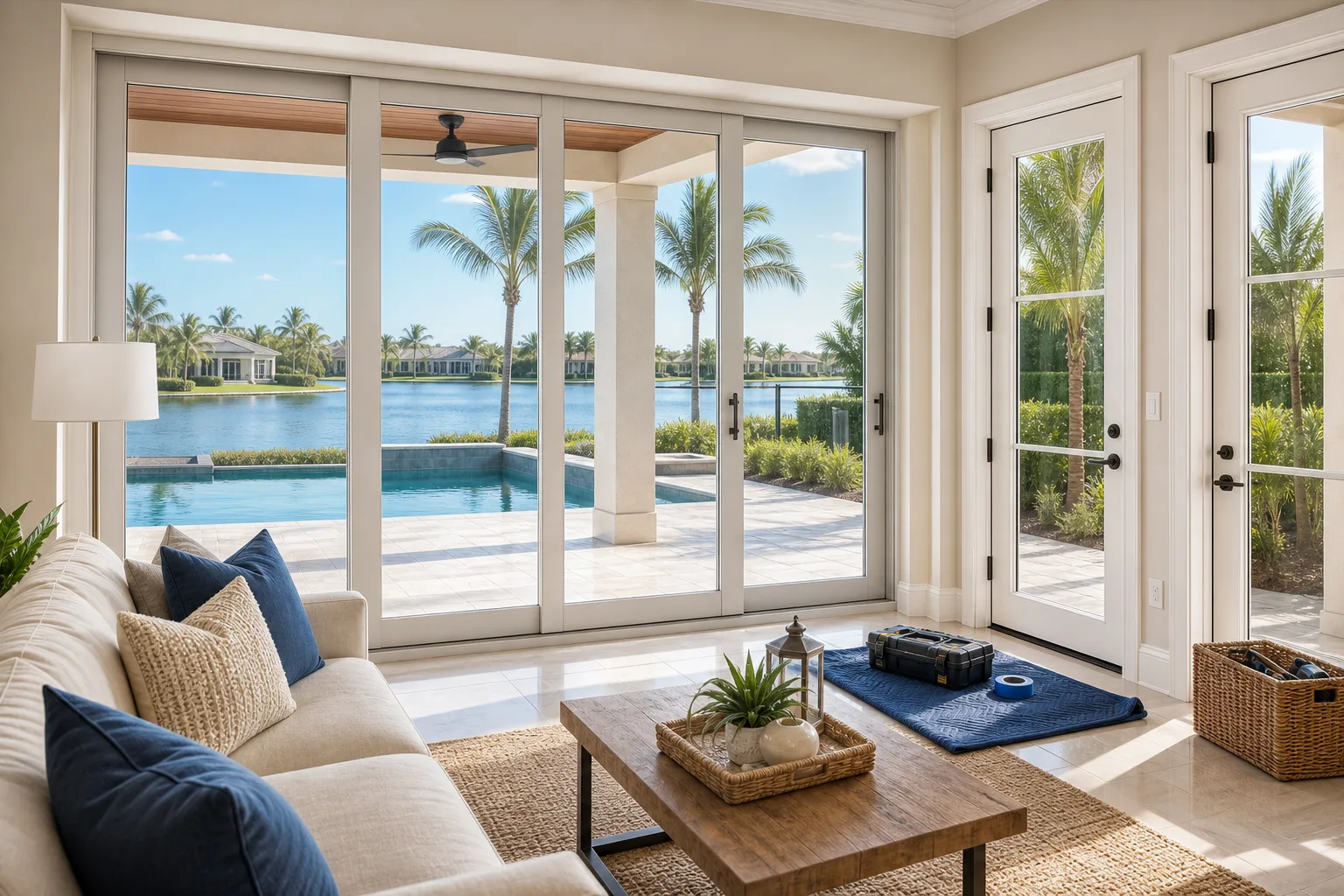
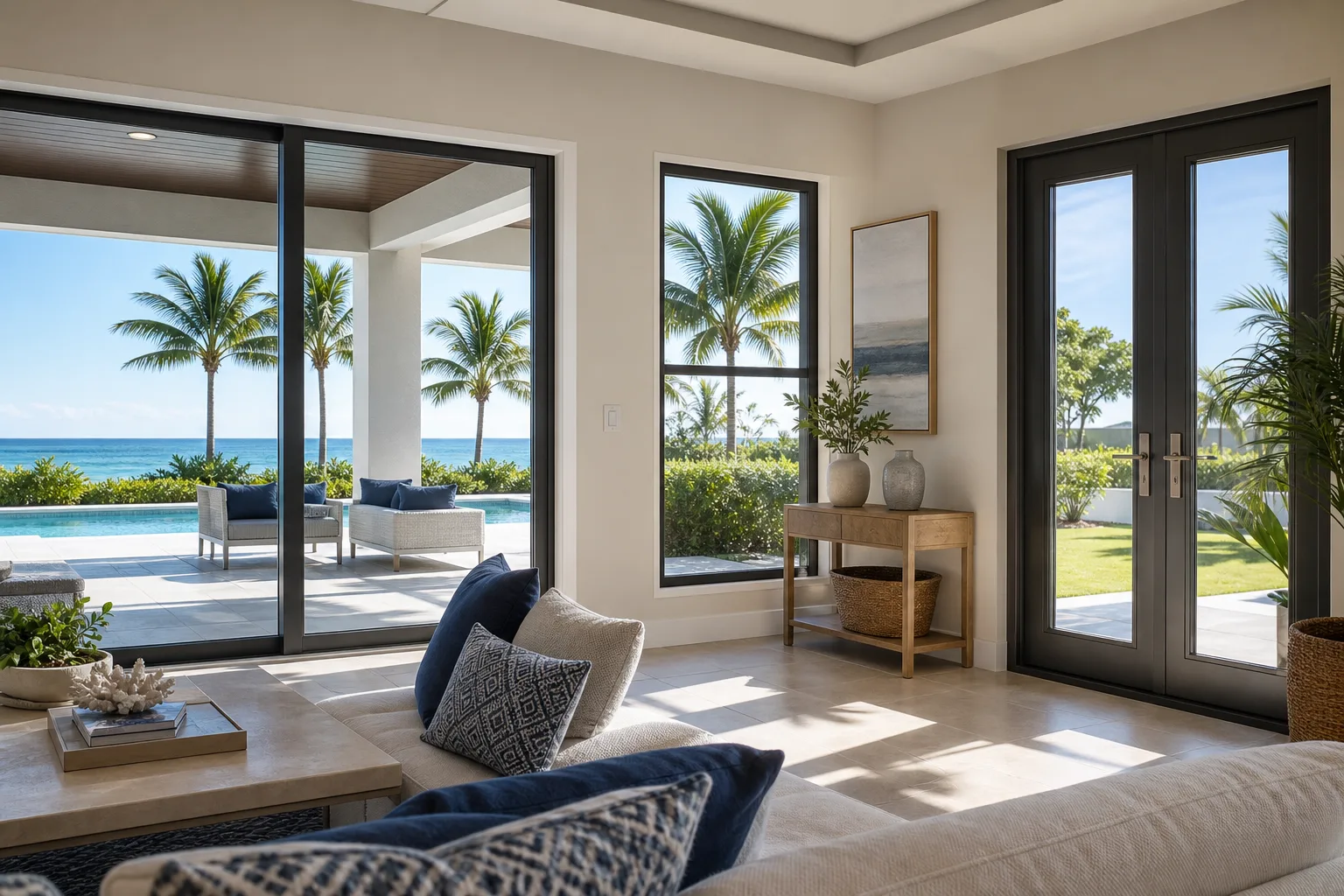
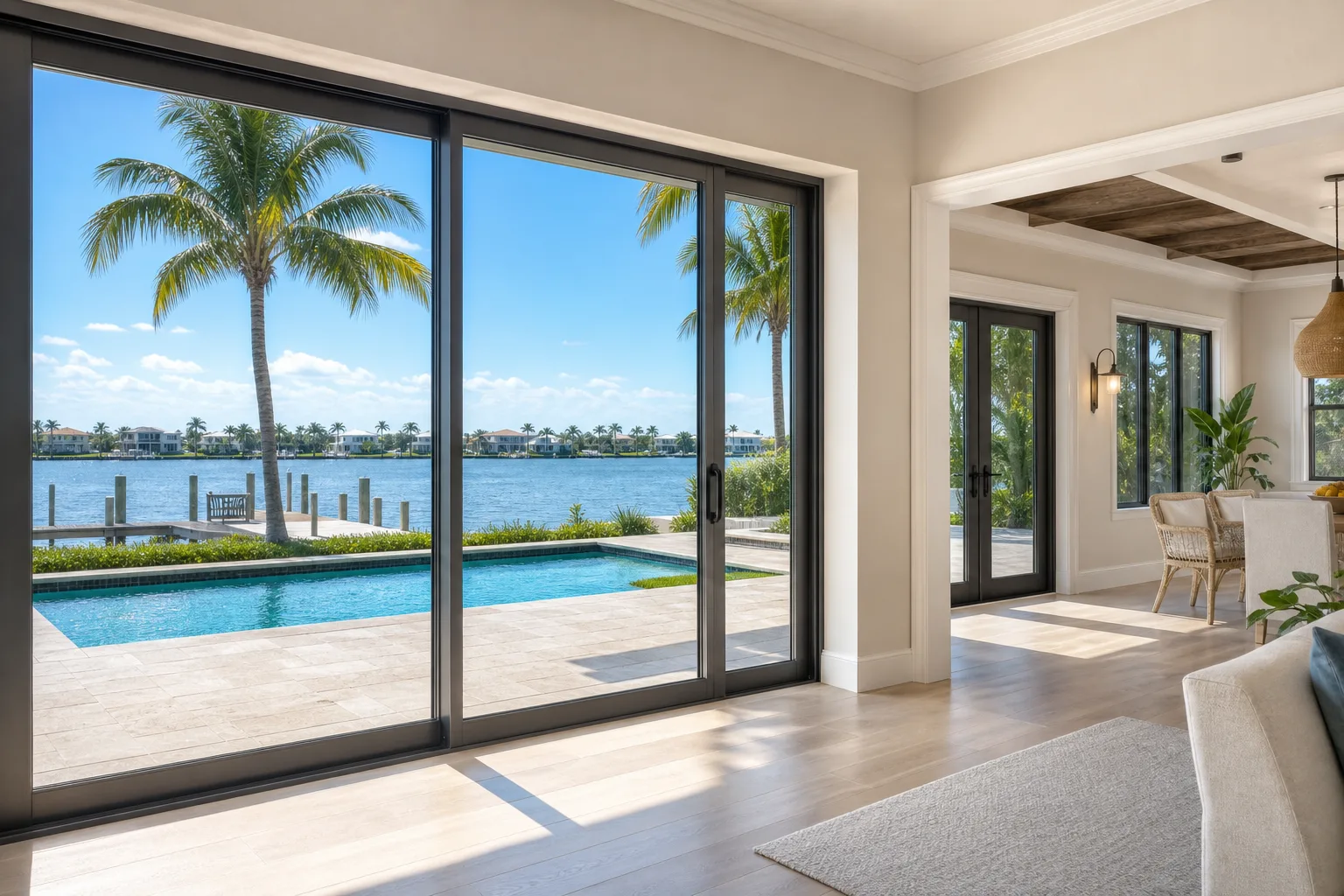
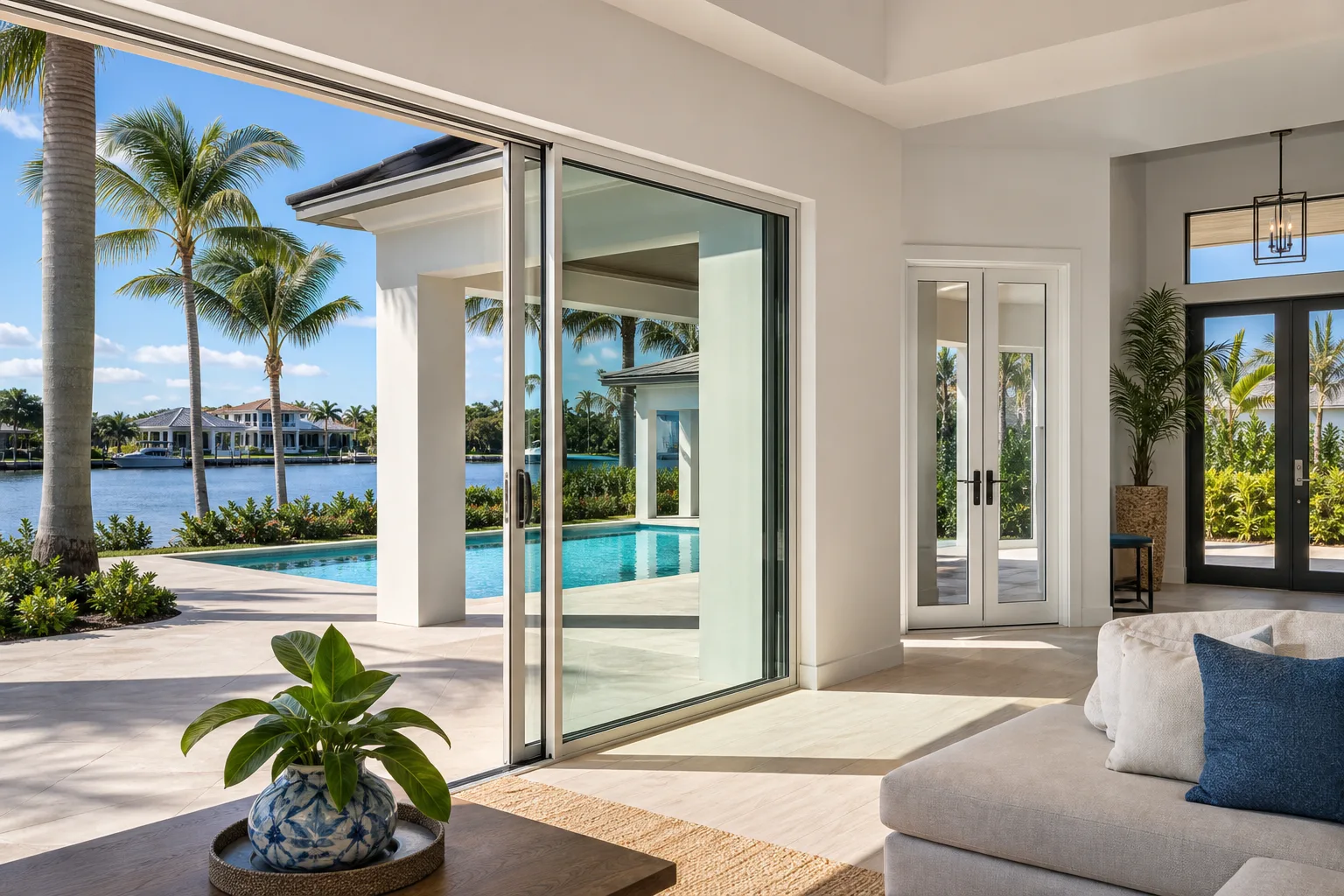
Why Intracoastal and Lake-Adjacent Homes Need a Different Window Strategy
If your home sits along the Intracoastal Waterway in places like Palm Beach, Singer Island, North Palm Beach, Boynton Beach, Delray Beach, Boca Raton, Fort Lauderdale, Lauderdale-by-the-Sea, or Hollywood, you live in a wind and salt environment that behaves differently than most inland neighborhoods.
If you are near Lake Okeechobee (or in communities influenced by the lake’s weather patterns, including western Palm Beach County areas such as Wellington, Loxahatchee, The Acreage, Royal Palm Beach, Belle Glade, Pahokee, and South Bay), you can see big, fast-changing squall lines and wide-open wind fetch. Those storms often bring heavy, horizontal rain and rapid pressure changes even when you are not directly on the coast.
That is why homeowners searching for impact windows intracoastal waterway and impact windows near lake okeechobee are usually dealing with more than just the standard question of “Are they code-approved?” They need windows and installation details that address:
- Wind-driven rain that finds tiny pathways
- Hurricane debris risks (large-missile impact requirements in many areas)
- Positive and negative pressure events that stress frames, sashes, and anchors
- Salt air corrosion (especially Intracoastal and barrier island homes)
- Water intrusion at seals, weeps, and perimeter connections
Window Guys of Florida helps homeowners across Palm Beach County and Broward County select and install the right systems for these conditions. We are licensed and insured, with 25+ years of experience, and we install leading brands like PGT, CGI, ES Windows, Andersen, and more. If you want help narrowing the best option for your exact address and exposure, start here: contact us for a free consultation.
The Three Biggest Threats: Wind-Driven Rain, Debris, and Pressure
Wind-driven rain is not “just a leak”, it is a pressure problem
When wind pushes rain against your home, the water is not gently falling downward. It is being driven sideways and upward, and it is often paired with pressure differences that actively pull water through small gaps.
Homeowners often assume water intrusion is a “bad window” issue, but it is frequently a combination of:
- Frame and sash design (how the window manages water)
- Condition and quality of gaskets and glazing seals
- Weep system performance (and whether it is blocked by paint, debris, or improper installation)
- Installation detailing at the perimeter, including flashing, sealant, and buck or substrate conditions
If you are specifically worried about wind driven rain impact windows and water intrusion impact window seals, you will want to pay extra attention to both product selection and the installation method.
Helpful related reading: Stop Rain Bomb Leaks Around Impact Windows in FL.
Hurricane debris is about more than “impact glass”
Impact windows are tested to resist debris strikes and then withstand cyclic pressure changes after impact. In South Florida, many properties must meet large-missile impact requirements, particularly in Wind-Borne Debris Regions (WBDR) and High Velocity Hurricane Zones (HVHZ, primarily Miami-Dade and Broward specific requirements).
Even in Palm Beach County, many neighborhoods fall within WBDR criteria based on code definitions and local wind speed maps. If you are on or near open water, debris risk often increases because storms can loft roof gravel, broken branches, fence components, and construction materials.
For a clear explanation of what “large-missile” testing really means, see: Impact Windows vs Debris: Large-Missile Test Explained.
Pressure events are what break weak links
Your windows are part of the building envelope. In hurricane conditions, they are exposed to:
- Positive pressure (wind pushing on the window)
- Negative pressure (suction pulling the window outward)
- Rapid pressure cycling that fatigues connections
Pressure is why DP ratings matter, and why hardware, anchoring, and opening size all influence performance.
If you want the deeper breakdown, read: DP Ratings Explained for Impact Windows in South FL.
Step 1: Identify Your Exposure Zone, Not Just Your ZIP Code
A home in East Boca Raton near the Intracoastal can require different design decisions than a home in West Boca, even though both are “Boca Raton.” Same for Fort Lauderdale beachside versus inland neighborhoods, or Delray barrier-adjacent streets versus communities west of I-95.
Use these guides to map your decision to real-world conditions:
- Palm Beach vs Broward WBD Zones: Impact Window Guide
- Palm Beach vs Broward: Choosing Impact Windows
- Palm Beach vs Broward: Impact Window DP by Area
Intracoastal microclimates: salt air plus higher gust exposure
Along the Intracoastal Waterway, your home often has:
- Lower surface roughness (water creates less friction, so gusts can stay stronger)
- Salt-laden air that accelerates corrosion of hardware and fasteners
- Higher likelihood of wind-driven rain on the water-facing elevation
This is why Palm Beach County impact windows waterfront and Broward County waterfront impact windows searches are usually tied to corrosion resistance and long-term seal performance, not only code compliance.
More on salt exposure: Salt-Air Microclimates: Impact Windows PBC vs Broward and Coastal Corrosion: Impact Windows for PBC & Broward.
Lake Okeechobee influence: big weather, wide-open fetch
Near Lake Okeechobee, storms can build quickly and push intense rain bands inland. Open terrain and fewer wind breaks in western communities can mean stronger gust impacts on broad wall surfaces, especially on single-story homes with large patio openings.
The practical takeaway for impact windows near lake okeechobee is that you should not automatically assume “inland means lower performance is fine.” You still need the right DP, proper attachment, and water management because squalls can dump large volumes of water under high wind.
Step 2: Match DP (Design Pressure) to Each Opening, Especially Waterfront Elevations
DP is one of the most important specs for best impact windows for waterfront homes, but it is often misunderstood. DP is a rating tied to how much pressure (positive and negative) a window is designed to resist.
What homeowners should do (simple version)
- Do not pick a single DP for the whole house based on a neighbor’s quote.
- Evaluate by opening size, story height, and exposure (water-facing walls and corners often need more).
- Pay special attention to large openings: sliding glass doors, picture windows, and multi-panel assemblies.
For a detailed explanation of DP and what it means in the real world: DP Ratings Explained for Impact Windows in South FL.
Corner lots, water-facing corners, and negative pressure
Waterfront homes frequently have open exposures at corners, and corner zones see higher suction forces. If you are on a corner lot in Coral Springs, Parkland, Boca Raton, Delray Beach, Boynton Beach, Lake Worth Beach, West Palm Beach, or Fort Lauderdale, you may be more exposed than your street suggests.
See: Impact Windows for Corner-Lot Homes in South Florida.
Step 3: Prioritize Water Management Features (Not Just “Impact Rated”)
Impact-rated does not automatically mean “leak-proof in wind.” For waterfront and lake-adjacent homes, look for systems that handle water intentionally.
Key features to evaluate for wind-driven rain
H3: Strong perimeter sealing and durable gaskets
Ask what gasket materials are used and how they are designed to compress over time. On the Intracoastal, salt and UV can accelerate aging. This is directly tied to water intrusion impact window seals.
H3: A weep system that actually drains
Weeps are supposed to manage incidental water that gets past the first line of defense. Problems happen when:
- Weeps are blocked by debris or paint
- Frames are installed out of level, so water does not drain properly
- Sealant and flashing details unintentionally trap water
If you have had “only during storms” leaks before, the cause is often at the perimeter install, not the glass.
Related guide: Common Impact Window Install Mistakes in South FL.
H3: Frame design that fits your exposure
Coastal installations frequently perform better when the frame and hardware are designed for repeated cycling and long-term corrosion resistance. For Intracoastal homes, selecting coastal-appropriate hardware finishes is not optional if you want performance after 5 to 10 hurricane seasons.
See: Coastal Corrosion: Impact Windows for PBC & Broward.
Step 4: Choose the Right Glass and Interlayer for Your Goals
Impact glass is typically laminated, meaning two panes of glass bonded with an interlayer. In South Florida, most homeowners are balancing:
- Hurricane protection
- Solar heat control (especially west-facing and water-reflective glare)
- Noise reduction (busy Intracoastal roads, bridges, and marine activity)
For a clear comparison of interlayers and heat options, read: Impact Window Glass Options for South Florida Heat.
West-facing waterfront walls get punished by heat and glare
Intracoastal homes often have big sunset exposures over water, and reflected light can raise glare and interior heat load.
Related: Impact Windows for West-Facing Homes in South FL.
Step 5: Select the Right Window and Door Types for Wide Openings
Waterfront homes in Boca Raton, Highland Beach, Delray Beach, Palm Beach Gardens, Jupiter, and Fort Lauderdale often feature large patio openings, zero-corner sliders, and Florida rooms.
Sliding glass doors and multi-panel systems
Large doors are common failure points in storms because of span, track drainage, and hardware demands. If you are choosing between different configurations, see:
- Pocket Sliding Doors vs Impact Windows for Patios
- For door options and installation: Impact Doors
Florida rooms and enclosed patios: what fails first
These spaces often have lots of glazing and complex connections. Wind-driven rain frequently finds the weakest detailing at transitions.
Read: Impact Windows for Florida Rooms: What Fails First?.
Step 6: Plan for Pressure Control, Not Just “Strong Glass”
One broken or compromised opening can allow internal pressurization, increasing uplift on the roof and stressing other windows and doors.
Learn how impact windows help manage pressure events: Do Impact Windows Reduce Hurricane Interior Pressure?.
Also consider that pressure loads can be higher upstairs and on taller wall sections, especially on open exposures near water.
Related: Do You Need Impact Windows Upstairs in South Florida?.
Step 7: Demand Installation Details That Resist Water Intrusion
For Intracoastal and lake-adjacent homes, installation quality is often the difference between “passes inspection” and “stays dry in a sideways rain event.”
What to ask your installer
H3: Retrofit vs full-frame replacement
The right method depends on wall type, existing frame conditions, and how you want to manage water at the perimeter.
Guide: Retrofit vs Full-Frame Impact Windows in PBC & Broward.
H3: How will the perimeter be sealed and flashed?
You want a plan for:
- Substrate condition and repairs
- Proper sealant selection for coastal exposure
- Continuity of water barrier around the opening
- Avoiding “seal it until it leaks somewhere else” shortcuts
If you have seen temporary “hurricane fixes” fail, you are not alone: 7 South Florida Hurricane ‘Quick Fixes’ That Fail.
H3: How will you prevent rain bomb intrusion?
South Florida storms often dump intense rainfall in short bursts. These events reveal weaknesses in window perimeter detailing.
Read: Stop Rain Bomb Leaks Around Impact Windows in FL.
Step 8: Understand Permits, NOAs, and Inspection Differences in PBC vs Broward
Permitting and inspections are not identical between counties. Broward also has a reputation for strict review and verification practices, particularly around product approvals and attachments.
Start here:
Step 9: Do Not Ignore Corrosion Resistance for Intracoastal Homes
Along the Intracoastal, corrosion is not cosmetic. It can affect:
- Lock operation and multi-point engagement
- Rollers and tracks on sliding doors
- Fasteners and anchoring performance
- Long-term gasket compression and seal consistency
If you want your investment to last across multiple hurricane seasons, choose systems and finishes designed for coastal environments.
Must-read: Coastal Corrosion: Impact Windows for PBC & Broward and Salt-Air Microclimates: Impact Windows PBC vs Broward.
Step 10: Compare Impact Windows vs Shutters for True Waterfront Ownership Cost
Some homeowners still consider shutters plus standard windows, especially for second homes along A1A or Intracoastal condos. But long-term cost includes maintenance, deployment time, corrosion, and insurance documentation.
See the 10-year comparison: Impact Windows vs Shutters: 10-Year Cost in South FL.
Also, if your home is in a condo or HOA community (common along the Intracoastal in Palm Beach, Boca Raton, and Fort Lauderdale), approvals can drive product and style choices.
- Impact Windows for HOA and Condo Approvals in South FL
- HOA and Condo Board Approval for Impact Windows
- HOA and Condo Approval Checklist for Impact Windows
Real-World Selection Tips by Location
Intracoastal Waterway homes (Palm Beach to Fort Lauderdale)
Prioritize:
- Coastal corrosion resistance in hardware and fasteners
- Strong water management design (weep paths, sill design)
- Higher DP on water-facing elevations and corner zones
- Glass options for glare control and heat reduction
This is the core of choosing impact windows intracoastal waterway homeowners can rely on season after season.
Lake Okeechobee and western communities
Prioritize:
- DP appropriate for broad exposure and squall conditions
- Careful perimeter sealing and flashing to prevent storm leaks
- Durable frames for frequent storm cycles
- Consideration for large patio openings and Florida rooms
This is what most homeowners are looking for when they search impact windows near lake okeechobee.
A Quick Note on Flooding vs Wind-Driven Rain
If you are directly on the Intracoastal or in low-lying coastal areas of Broward and Palm Beach County, you may also deal with king tide flooding and saltwater intrusion around doors and lower openings. That is a different problem than wind-driven rain through a window system.
Helpful distinction: King Tide Flooding vs Wind Rain: Impact Windows.
Maintenance Matters: Keep Seals and Hardware Performing
Even the best impact windows for waterfront homes need periodic checks. After hurricane season, we recommend:
- Cleaning tracks and weep paths
- Inspecting gaskets and seal continuity
- Checking locks, rollers, and alignment
- Verifying sealant condition at the perimeter
Use this guide: End-of-Season Impact Window Tune-Up Checklist.
How Window Guys of Florida Helps Waterfront and Lake-Adjacent Homeowners
We help you choose a system that fits your actual exposures, opening sizes, and code requirements, then we install it correctly with permit compliance in Palm Beach County and Broward County.
- Learn about our impact products: Hurricane Impact Windows and Hurricane Impact Doors
- See where we work: Service Areas
- Learn who we are: About Us
If you want help selecting the right DP, frame type, glass options, and install method for your Intracoastal or Lake Okeechobee area home, schedule a no-pressure visit: contact us for a free quote.
FAQ: Impact Windows for Intracoastal and Lake Okeechobee Homes
What are the best impact windows for waterfront homes near the Intracoastal?
“Best” usually means the right combination of DP rating for your exposure, strong water management design, and coastal-grade hardware to resist corrosion. Many Intracoastal homeowners in Boca Raton, Delray Beach, Palm Beach, and Fort Lauderdale benefit from upgrading DP on water-facing elevations and selecting finishes designed for salt air. You can also review microclimate factors here: Salt-Air Microclimates: Impact Windows PBC vs Broward.
Do impact windows stop wind-driven rain completely?
They are designed to resist wind and water intrusion to tested standards, but no window is “waterproof” under every possible storm condition. Proper installation, perimeter flashing, sealant detailing, and maintained weep systems are critical. For the most common leak pathway in South Florida storms, read: Stop Rain Bomb Leaks Around Impact Windows in FL.
How do I know what DP rating I need in Palm Beach County or Broward?
DP depends on wind speed, exposure category, story height, opening size, and where the opening sits on the wall (corner zones often require more). A reliable starting point is these guides: Palm Beach vs Broward: Impact Window DP by Area and DP Ratings Explained for Impact Windows in South FL. For a tailored recommendation, contact us.
Are hurricane debris protection windows required near the Intracoastal or Lake Okeechobee?
Many homes in Palm Beach County and Broward County fall within Wind-Borne Debris Region requirements, which typically means large-missile impact rated protection for glazed openings. The exact requirement depends on code maps and your site conditions. Learn how debris testing works here: Impact Windows vs Debris: Large-Missile Test Explained.
What causes water intrusion at impact window seals during hurricanes?
Common causes include aged or compressed gaskets, clogged weep paths, frames installed out of square, or perimeter sealing and flashing mistakes that trap water. Installation details matter as much as the product. See: Common Impact Window Install Mistakes in South FL.
Can you help with permits and inspections in both Palm Beach County and Broward?
Yes. Permitting and inspections vary between counties, and documentation (NOA approvals, DP schedules, and attachment details) matters. These articles explain what to expect: Reading PBC & Broward Impact Window Permit Plans and Broward vs Palm Beach Impact Window Inspections. To start your project, contact us for a free consultation.
Frequently Asked Questions
What are the best impact windows for waterfront homes near the Intracoastal?
The best choice is usually the system that matches your exposure and opening sizes with the right DP rating, strong water management (weep design and sill geometry), and coastal-grade hardware to resist salt corrosion. Start with: Salt-Air Microclimates: Impact Windows PBC vs Broward and then schedule a site-specific review via Contact Us.
Do impact windows prevent wind-driven rain leaks?
They significantly reduce risk, but performance depends on installation details and maintenance. Many storm leaks come from perimeter flashing and sealant issues, not the glass. See: Stop Rain Bomb Leaks Around Impact Windows in FL and Common Impact Window Install Mistakes in South FL.
How do I determine the right DP rating for my home in PBC or Broward?
DP depends on wind speed, exposure, story height, opening size, and whether the opening is in a corner zone. Use: Palm Beach vs Broward: Impact Window DP by Area and DP Ratings Explained for Impact Windows in South FL. For a DP schedule based on your exact elevations, request a free consultation: Contact Us.
Are hurricane debris protection windows required near the Intracoastal Waterway and Lake Okeechobee?
Many homes in Palm Beach County and Broward County fall within Wind-Borne Debris Region requirements, which commonly means large-missile impact rated protection for glazed openings. Confirming requirements involves code maps and product approvals. Learn the testing basics here: Impact Windows vs Debris: Large-Missile Test Explained.
Why do impact window seals leak in hurricanes even when the windows are new?
New-window leaks typically point to installation factors such as out-of-square frames, blocked weeps, incorrect sealant selection, missing flashing continuity, or substrate issues around the opening. Start with: Common Impact Window Install Mistakes in South FL, and if you want an evaluation, Contact Us.
Can Window Guys of Florida handle permits, inspections, and approvals in both counties?
Yes. We help homeowners navigate documentation and inspections in both counties, including product approvals and DP schedules. See: Reading PBC & Broward Impact Window Permit Plans and Broward vs Palm Beach Impact Window Inspections. To get started, request a free consultation: Contact Us.